St Edburgha’s Church, Yardley: A Medieval Parish Church in Birmingham
Site at a Glance
- Rating
- 4.7
- Popularity
- Medium
- Country
- United Kingdom
- Primary era
- Medieval
- Eras represented
- Medieval
- Civilizations
- English
- Site type
- Religious
- Remains
- Church
On this page12 sections
History
St Edburgha’s Church, Yardley, is a parish church in Birmingham, United Kingdom. Its foundation is dated to 1250, when Aston Church built it as part of the Diocese of Lichfield, a district administered by a bishop. The church is dedicated to Edburga of Winchester.
Dedication and parish history
Edburga was a granddaughter of Alfred the Great, a ninth-century king of Wessex, and a nun at St Mary’s Abbey in Winchester. She died in 960 and was canonized in 972, the formal recognition of a deceased person as a saint by a church. In that year, some of her remains were transferred to Pershore Abbey in Worcestershire, a monastic community governed by an abbot or abbess, when it was refounded as the Abbey of St Mary and St Edburgha.
Yardley formed part of Pershore Abbey’s original endowment, as stated in King Edgar’s charter of 972. Edgar was a tenth-century king of England. St Edburgha’s remained Yardley’s only church until Marston Chapel was consecrated in 1704.
Later changes and present role
A 1552 inventory lists two bells at Yardley. Their metal is believed to have been reused for three bells made in 1638. The next oldest bell was made by John Martin of Worcester in 1653, and William Bagly supplied a fifth by 1691. The five-bell ring lasted for about two centuries. Henry Bisseker rehung the bells in 1892. In 1902 James Barwell of Birmingham added a sixth bell and made new bearings, while the oak frame inside the spire was repaired.
The nave roof was replaced between April and December 1926. Services were first held in the churchyard, then moved to the parish hall when gnats made outdoor worship difficult. Deathwatch beetles, wood-boring insects whose larvae can damage timber, were found in the tower in 1949 and caused problems for bell-ringing. Ringing stopped on 1 May that year so the frame could be repaired and the bells recast. Michael Parker, Archdeacon of Aston, a senior cleric with diocesan responsibilities, dedicated the new ring on 9 September 1950.
The earlier organ had three manuals, or keyboards, as well as pedals and 34 speaking stops, the ranks that produce audible notes. Kingsgate Davidson renovated it in 1955, and Leighton Organs worked on it later. Organ Tuning Services of Stratford-upon-Avon installed the present organ in 1997. The church serves the parish of Yardley in the Church of England and has Broad Church churchmanship, an Anglican tradition that accommodates a range of theological views. It belongs to the Diocese of Birmingham within the Province of Canterbury, a grouping of dioceses. The building is Grade I listed and lies within the Old Yardley conservation area.
Remains
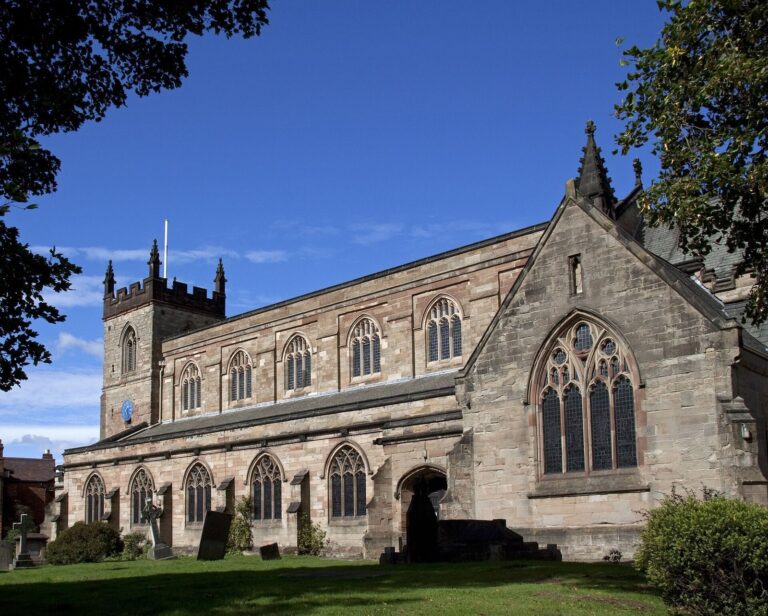
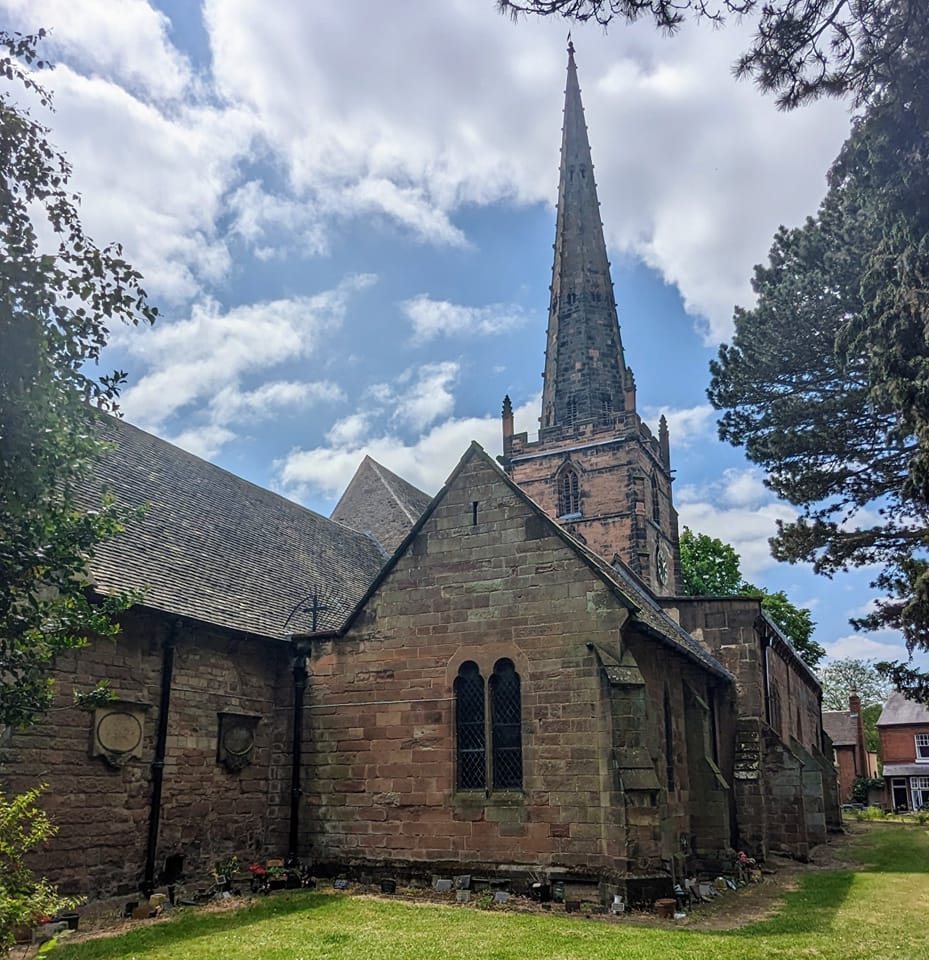
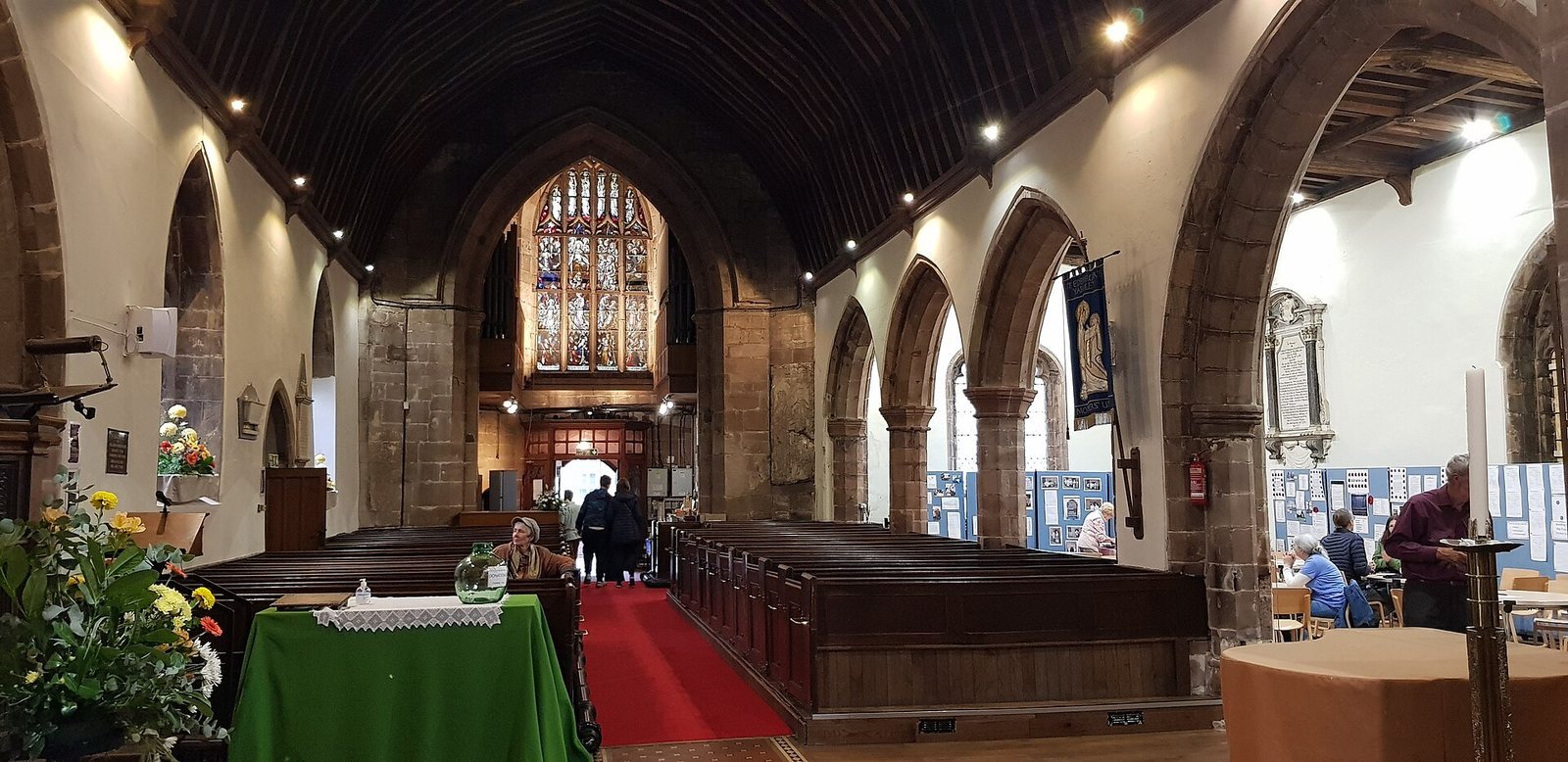
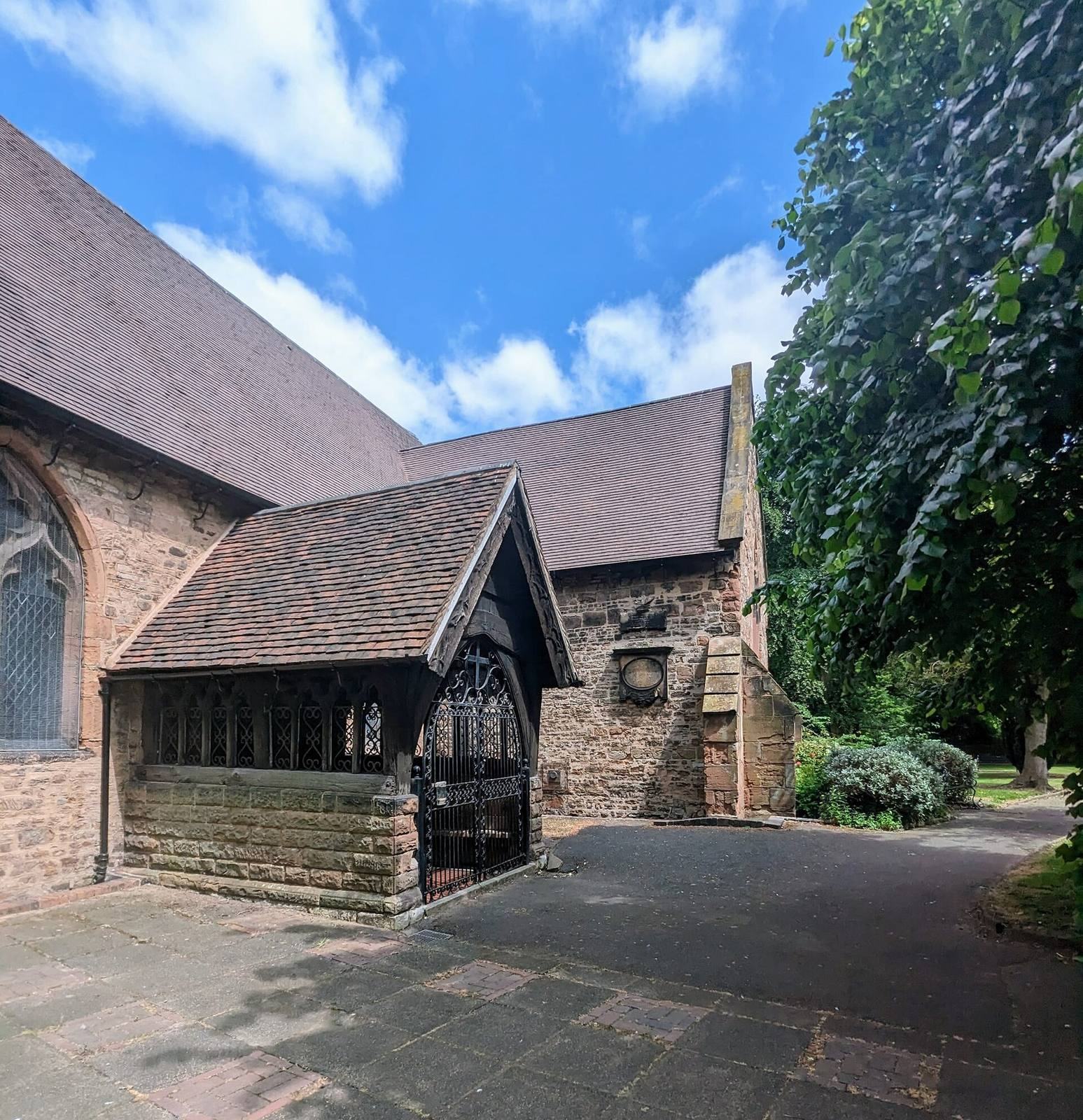
The medieval church includes a nave, the main body of the building, a north aisle, a side passage, and Becket Chapel, alongside its tower and spire. The nave, aisle and chapel date from the 14th and 15th centuries.
Medieval fabric
Nave, aisle and chapel
The nave, north aisle and Becket Chapel form the principal medieval parts of the church. Their construction spans the 14th and 15th centuries.
North-aisle doorway
Above the arch of the north-aisle doorway is a carving of a Tudor rose and pomegranate. It commemorates the marriage of Arthur Tudor, elder brother of Henry VIII and heir to the English throne, and Catherine of Aragon, a Spanish princess.
Est memorial slab
An alabaster slab set into an interior wall commemorates Thomas and Marion Est, who died in 1462. Its carved surface is now heavily worn.
Tower and bells
Tower and spire
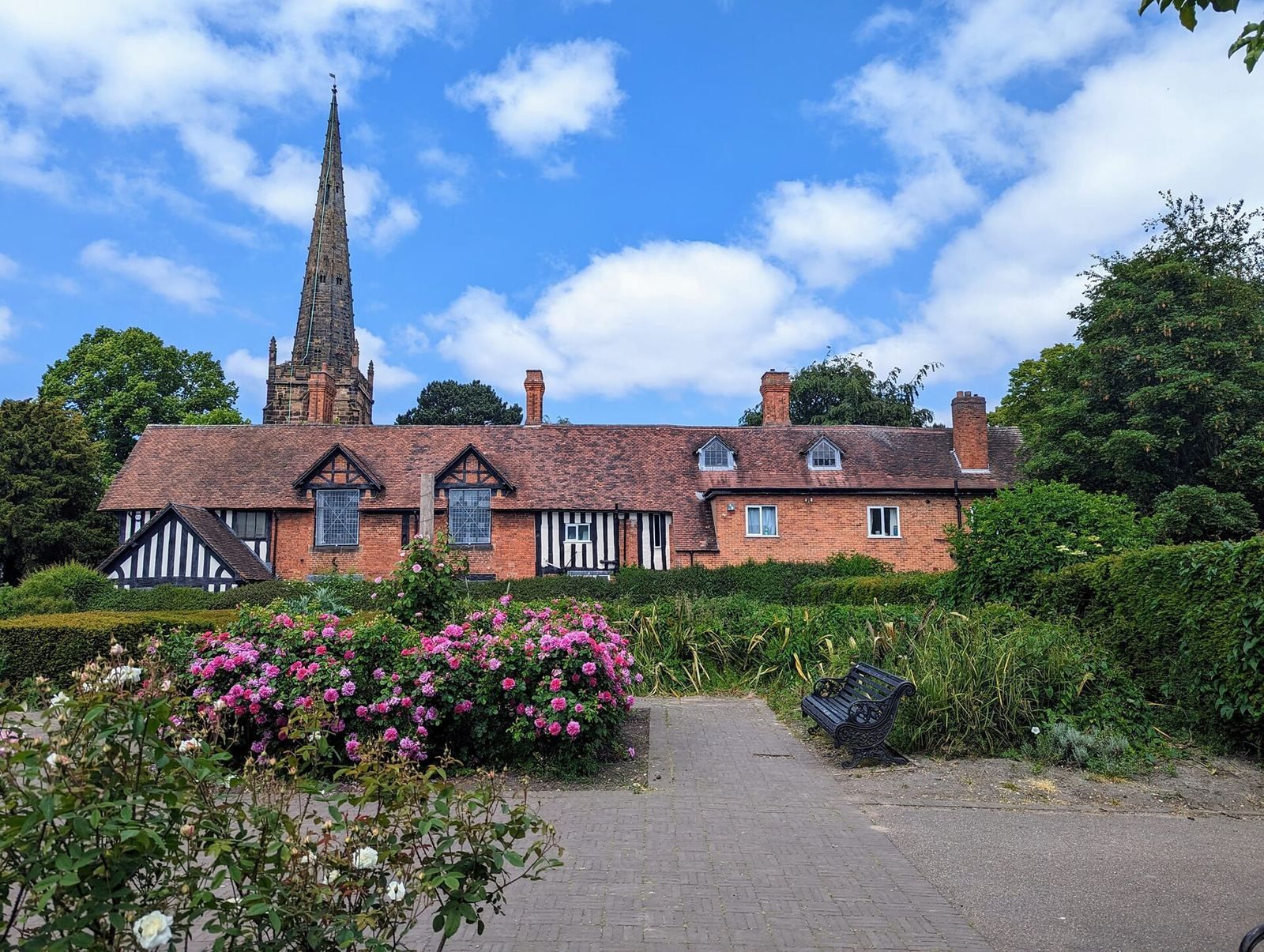
The tower and spire date from 1461, and the church stands 149 feet (45 metres) tall. The spire’s central section belongs to restoration work carried out in 1898. It may have been built by the same master mason, a senior stoneworker who directed a building project, as the spires at Sheldon and Kings Norton. Inscriptions in Sheldon’s stonework name Henry Ulm and date that tower to 1461.
Clock and cut marks
The tower clock has been replaced several times because of weathering. The original wooden clock repeatedly decayed and obscured an entire window. The present metal clock leaves the window visible behind it. Scraped marks at the tower’s base may have been used to sharpen tools, though their purpose is uncertain.
Bells
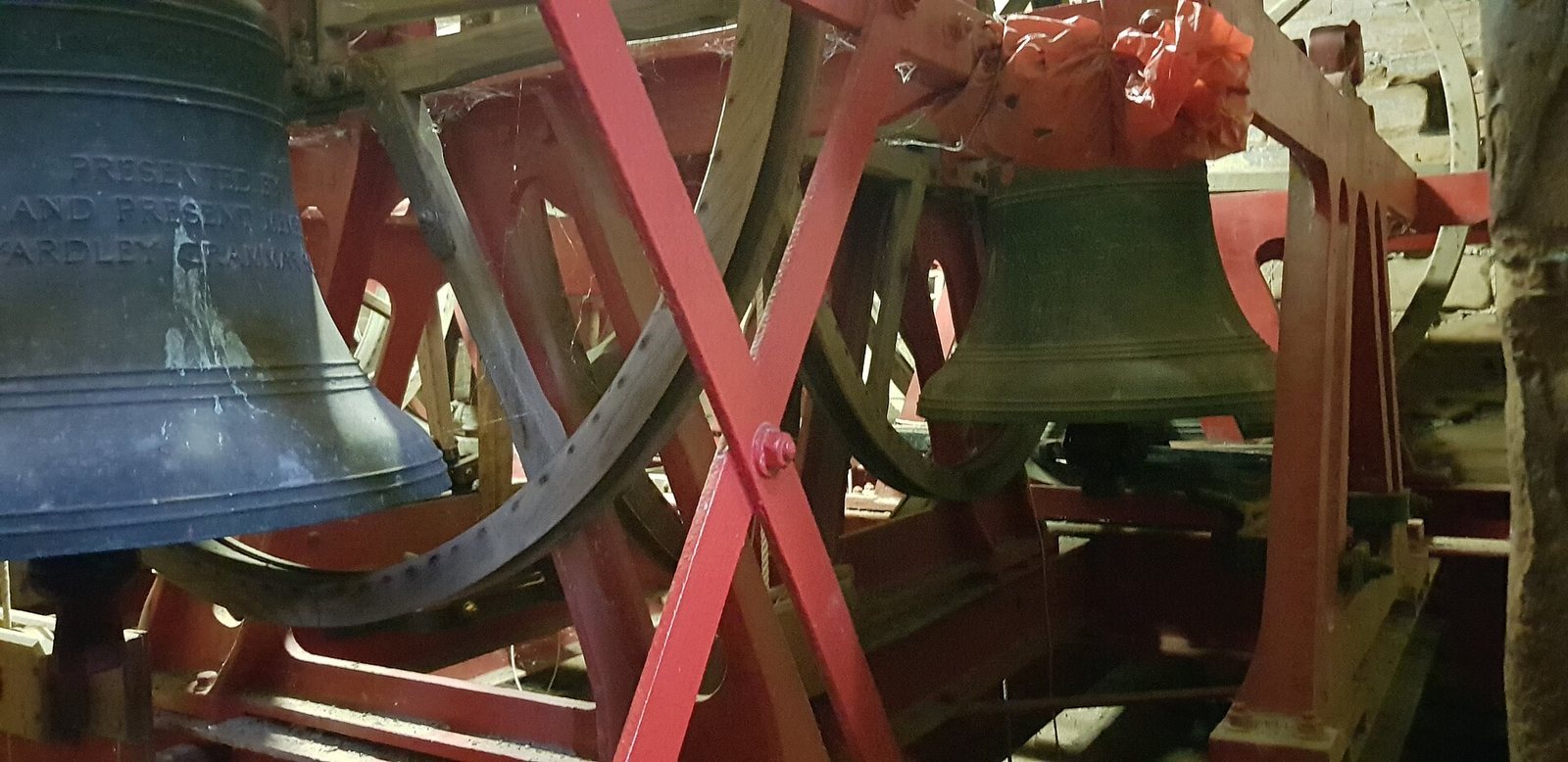
Eight bells hang in a frame made by John Taylor & Co of Loughborough. The ring dedicated in 1950 comprised six recast bells and two added trebles, the high-pitched bells in the set.