Horton Court: A Tudor Manor House in South Gloucestershire
Site at a Glance
- Rating
- 4.5
- Popularity
- Medium
- Country
- United Kingdom
- Primary era
- Medieval
- Eras represented
- Medieval, Early Modern
- Civilizations
- English, Norman
- Site type
- Domestic
- Remains
- Manor House
On this page9 sections
History
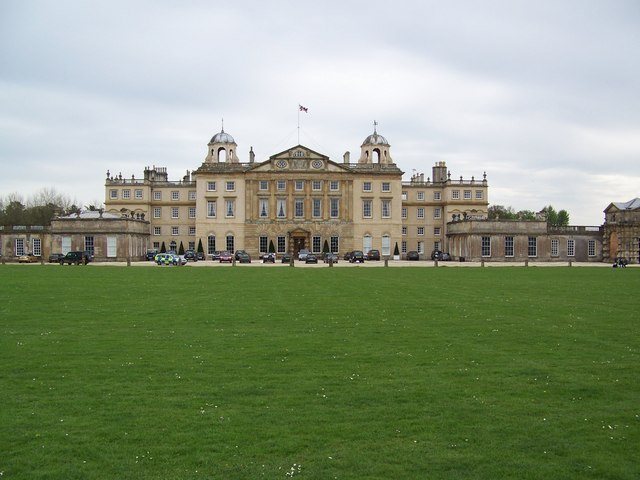
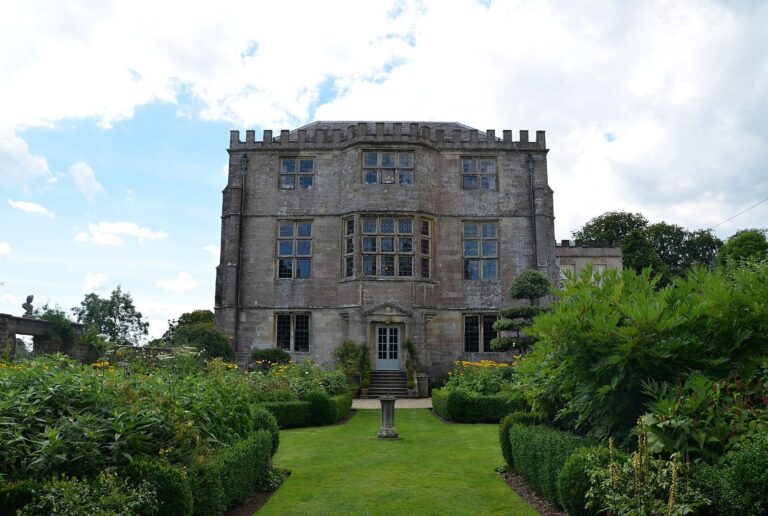
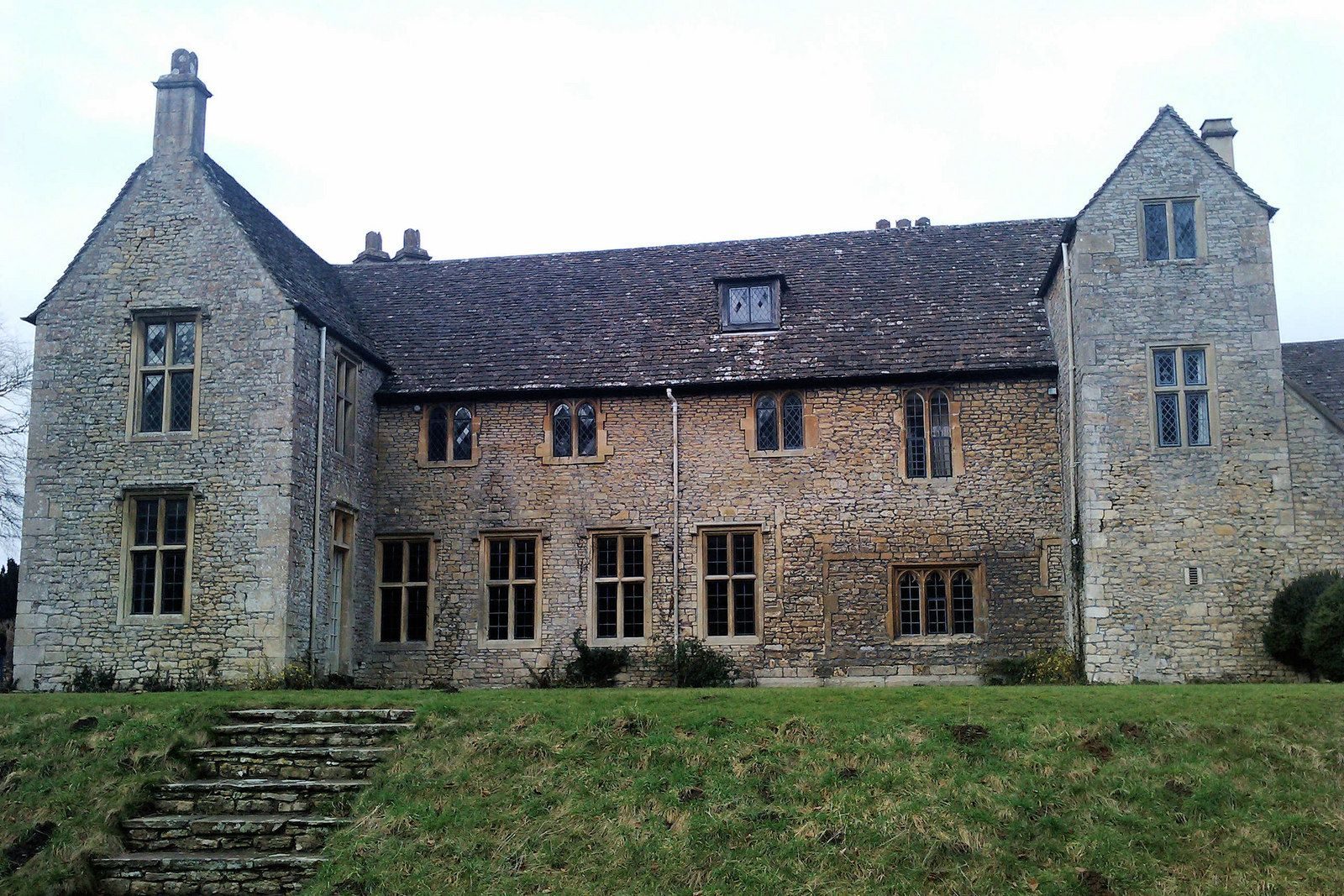
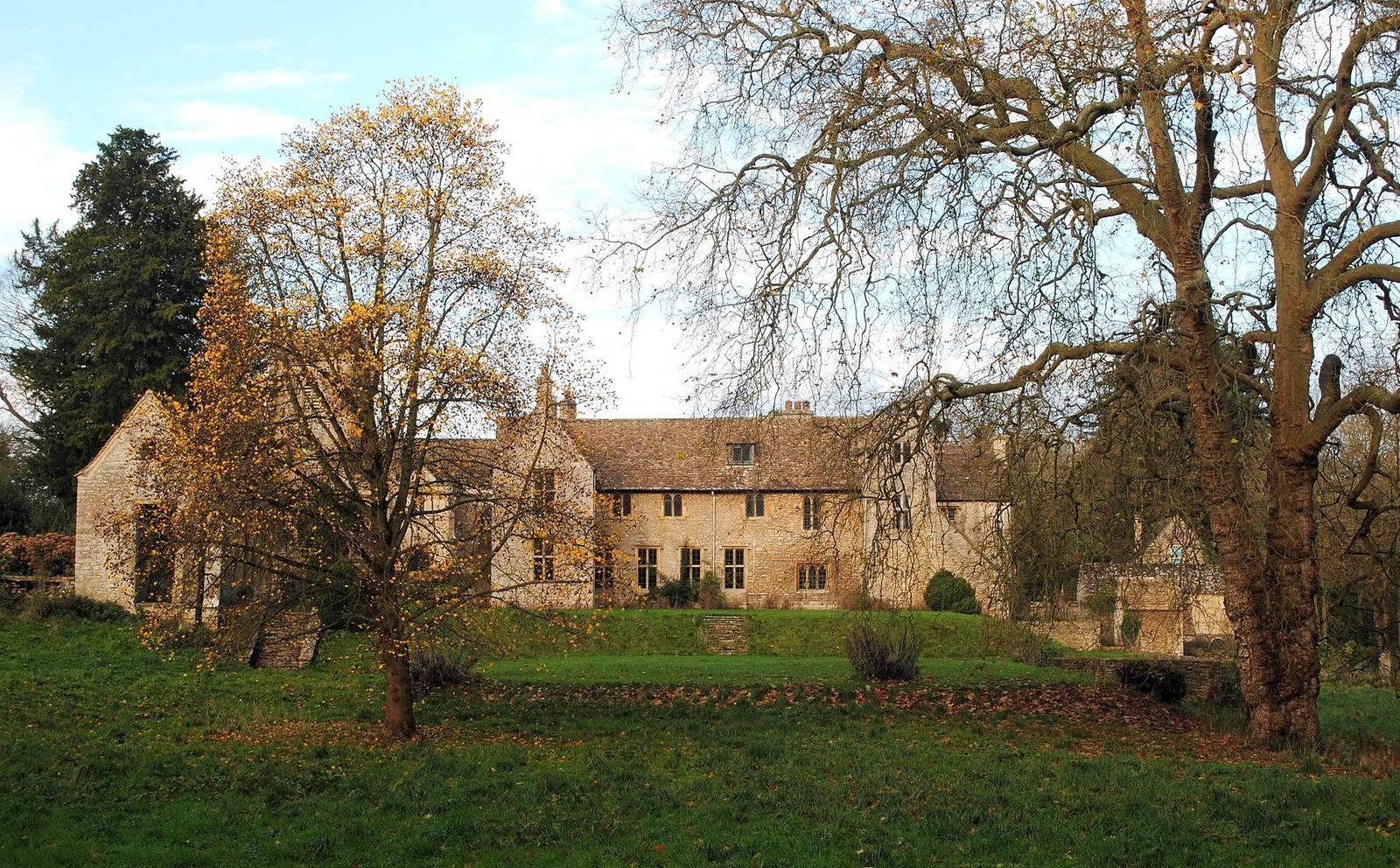
Horton Court is a manor house in Horton, near Chipping Sodbury in South Gloucestershire, United Kingdom. Its present house was built around 1521 by William Knight and displays some of the earliest Renaissance decorative motifs used in England.
From Norman manor to church estate
Horton began as a Norman manor. Early in the 12th century, Hubert de Rye gave it to the See of Sarum, the medieval bishopric of Salisbury. Income from the estate endowed a prebend, an income and associated office for a member of cathedral clergy. Robert de Beaufeu, the earliest known holder of the prebend, is believed to have built the Norman great hall around 1150.
William Knight and the Tudor house
William Knight became a prebendary at Horton in 1517 and built the present house around 1521. An English churchman and diplomat, he had studied at Oxford and Ferrara and made repeated journeys to Italy, where he encountered Renaissance art. Its motifs informed the design at Horton. Knight was a prothonotary, a senior notarial official in the papal administration, and later served as Bishop of Bath and Wells from 1541 to 1547. He attended Henry VIII at the Field of the Cloth of Gold in 1521 and negotiated with the pope in 1527 over Henry’s proposed divorce from Catherine of Aragon.
Changes in ownership
After the dissolution of the monasteries, Horton became Crown property. Edward VI first granted it to his uncle Edward Seymour, Duke of Somerset, who served as Lord Protector. Following Somerset’s fall, Sir Edward Paston received the estate in 1550. The Paston family moved to Horton after a fire destroyed their house at Appleton Hall in 1767. Soon after 1800, the last of the Pastons mortgaged Horton Court to the solicitor Fitzherbert Brooke. Brooke foreclosed on the mortgage and became proprietor of the manor.
The property later passed to Brooke’s grandson, Sir Frederick Richards, Admiral of the Fleet, who made extensive alterations in 1884. Hilda Proctor Wills bought Horton Court in 1937. After her death in 1946, she left it to the National Trust in memory of her nephew, Coldstream Guards officer Sir George Peter Vernon Wills, killed in action in Italy in 1945. The National Trust has owned the property since 1949. Horton Court was listed Grade I in 1952, as was its ambulatory, and renovations took place in 2018.
Remains
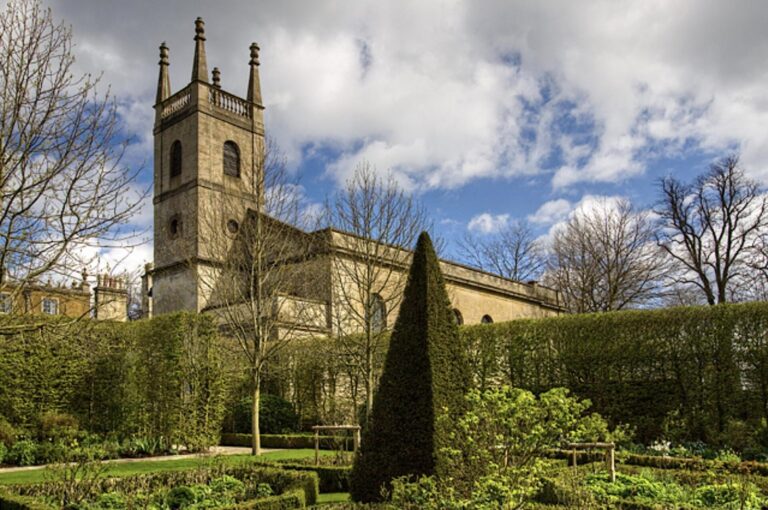
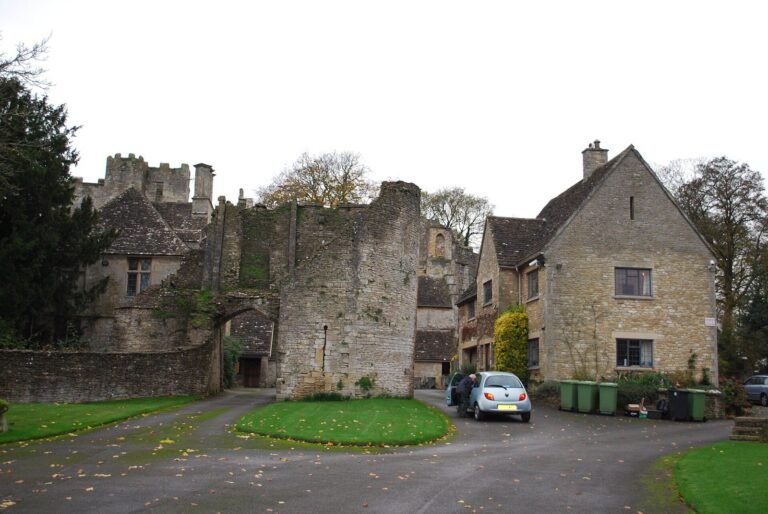
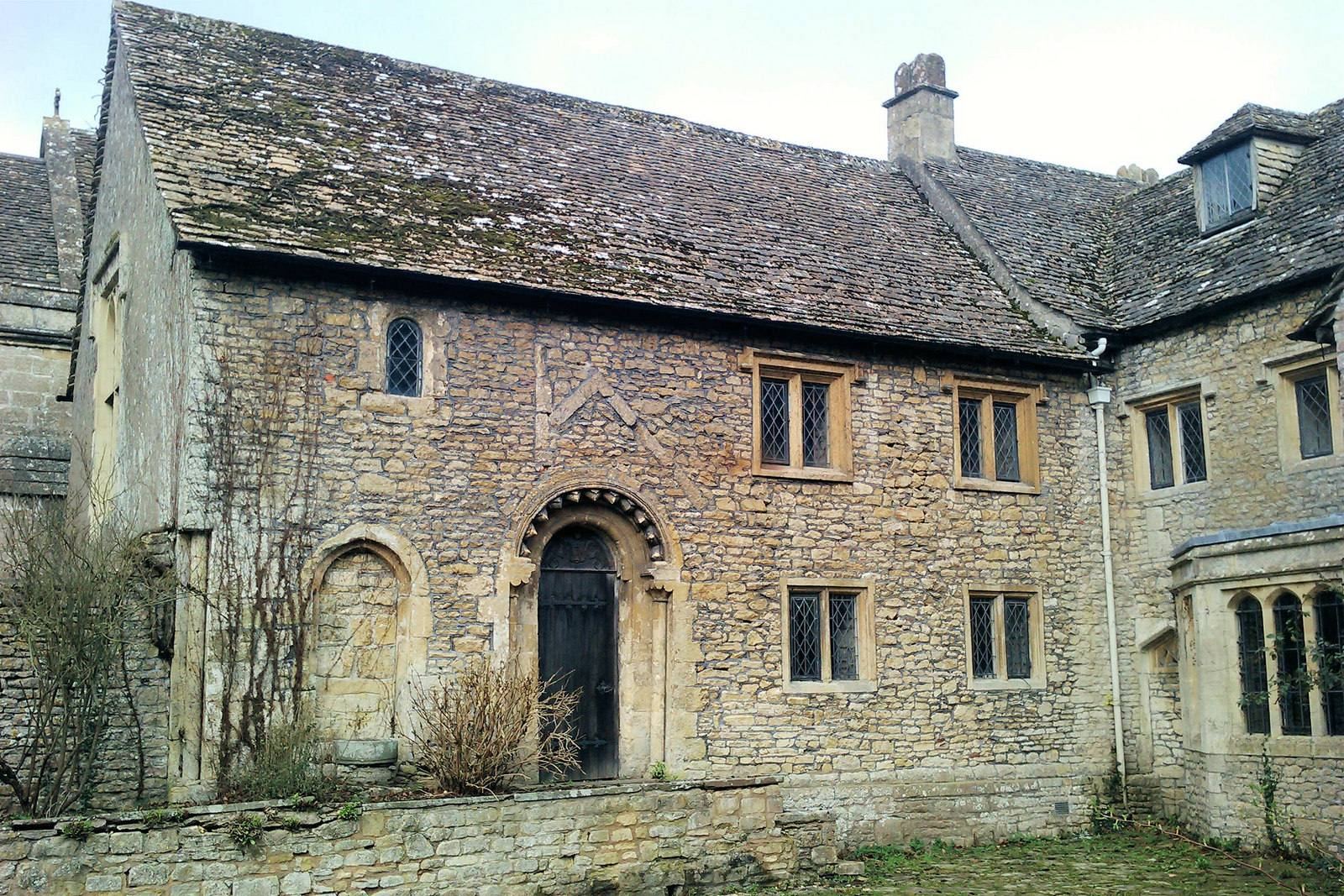
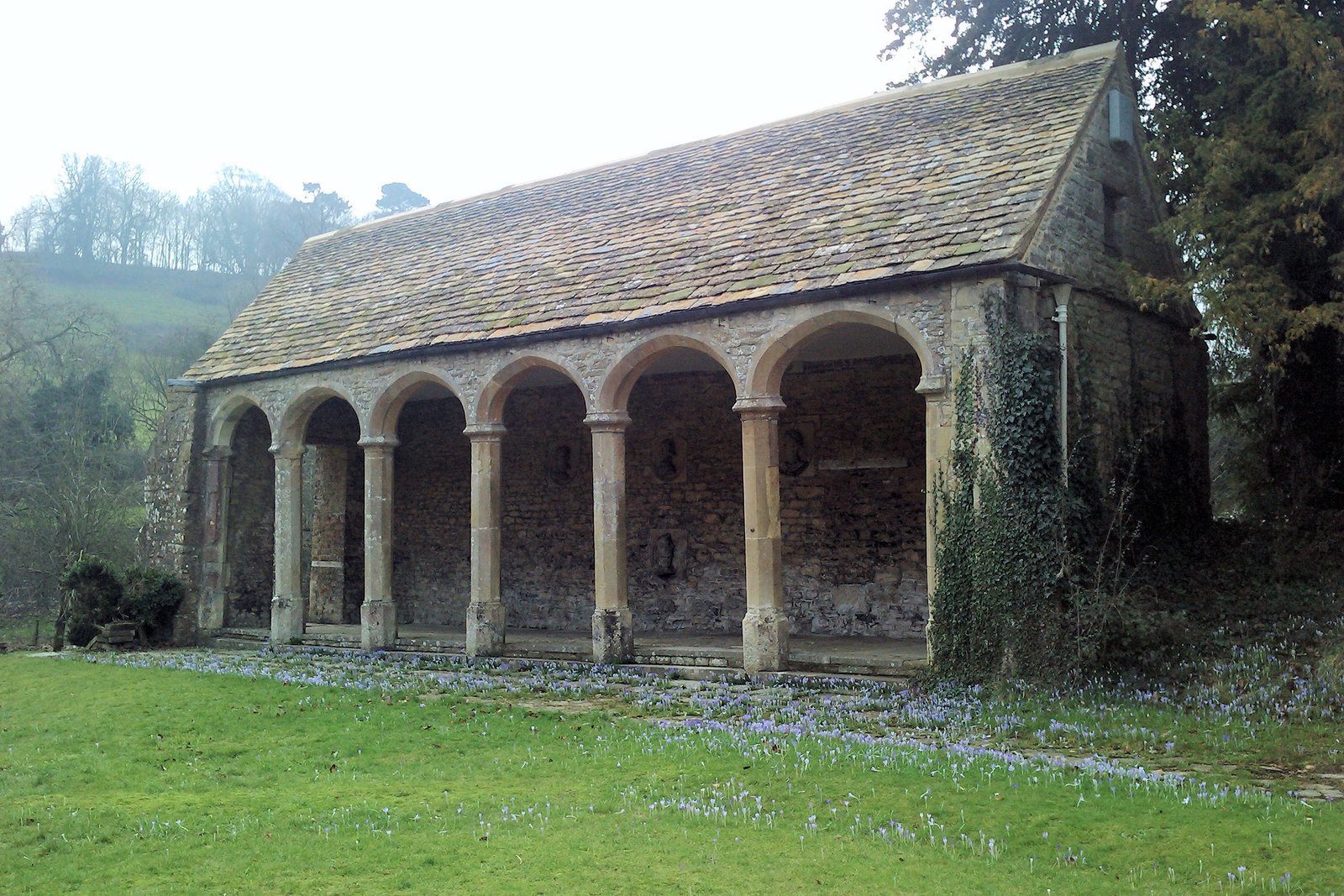
The stone-built house combines Norman and Tudor features. Its surviving great hall forms the core of the building, which was constructed around it. A separate Italianate gallery stands within the grounds to the southwest, while St James the Elder parish church is next door.
The manor house
The Norman hall
The Norman great hall survives as the central part of the house. The later building was arranged around this earlier structure, preserving it within the manor’s developing form.
The Tudor house and its decoration
The house’s Renaissance design is expressed in details such as the grotesque carvings on the upright sides of the front doorway. Knight’s heraldic designs appear above the door and above the entrance-hall fireplace. They show two bird heads and necks set back-to-back, rising from a half-sun, with grotesque mermaids flanking the shield. A black prothonotary’s hat sits above it, bearing three rows of tassels, compared with five rows on a cardinal’s hat.
The Italianate gallery
Built for Knight around 1527–29, the detached ambulatory is a covered, open-sided gallery, also known as a loggia. It stands about 20 yards southwest of the house within the grounds.