Bakócz Chapel in Esztergom Cathedral: A Renaissance Burial Chapel
Site at a Glance
- Popularity
- High
- Country
- Hungary
- Primary era
- Early Modern
- Eras represented
- Early Modern, Modern
- Civilizations
- Austrian Empire, Habsburg, Habsburg Austria, Hungarian
- Site type
- Religious
- Remains
- Chapel
On this page10 sections
History
The Bakócz Chapel in Esztergom Cathedral is a Renaissance burial chapel in Esztergom, Hungary, commissioned by Cardinal-Archbishop Thomas Bakócz between 1506 and 1511. It became one of the leading Renaissance works of the Jagiellonian era, when members of that dynasty ruled Hungary, and the only Hungarian Renaissance building to survive intact.
Bakócz’s commission
The chapel stood beside the medieval Cathedral of Saint Adalbert on Esztergom Castle Hill. Bakócz laid its foundation stone himself and dedicated it to the Annunciation, the Christian account of the angel Gabriel telling Mary she would bear Jesus. He sought an achievement comparable to contemporary Italian architecture while also aspiring to the papal tiara.
The plans came from Italy. The artist and writer Giorgio Vasari credited them to Andrea Ferrucci, an Italian Renaissance sculptor and architect, although that attribution is disputed. Stone-carving workshops led by Ioannes Fiorentinus made the interior from local stone. The altar, also attributed to Ferrucci, was produced in Italy in 1519. Ferrucci was then working in the sculpture workshop at Florence Cathedral; Michelangelo later employed him to supervise work at the Medici Chapel.
Burial and Ottoman period
Bakócz died on June 15, 1521, and was buried in the chapel. During the 1543 siege of Esztergom, the Cathedral of Saint Adalbert was badly damaged, but the chapel remained intact. Ottoman occupiers broke its statues of saints and converted it into a mosque, a place of Muslim worship. After Ottoman forces were expelled in 1683, a Christian hymn of thanksgiving, the Te Deum, was sung in the chapel.
Restoration and relocation
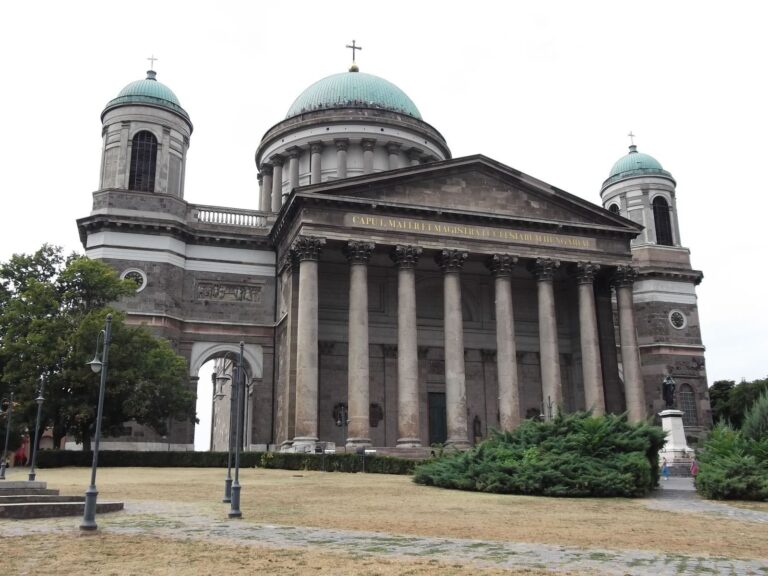
In 1686, Archbishop György Széchényi commissioned repairs because the chapel had deteriorated. The neighboring cathedral ruins were cleared. During the basilica’s prolonged rebuilding, Archbishop Sándor Rudnay commissioned architect János Packh in 1823 to adapt the chapel to the new cathedral, which stood in a different orientation and 11 metres lower. The relocation and reconstruction took six months and is considered Europe’s first monument-preservation project of its kind.
Remains
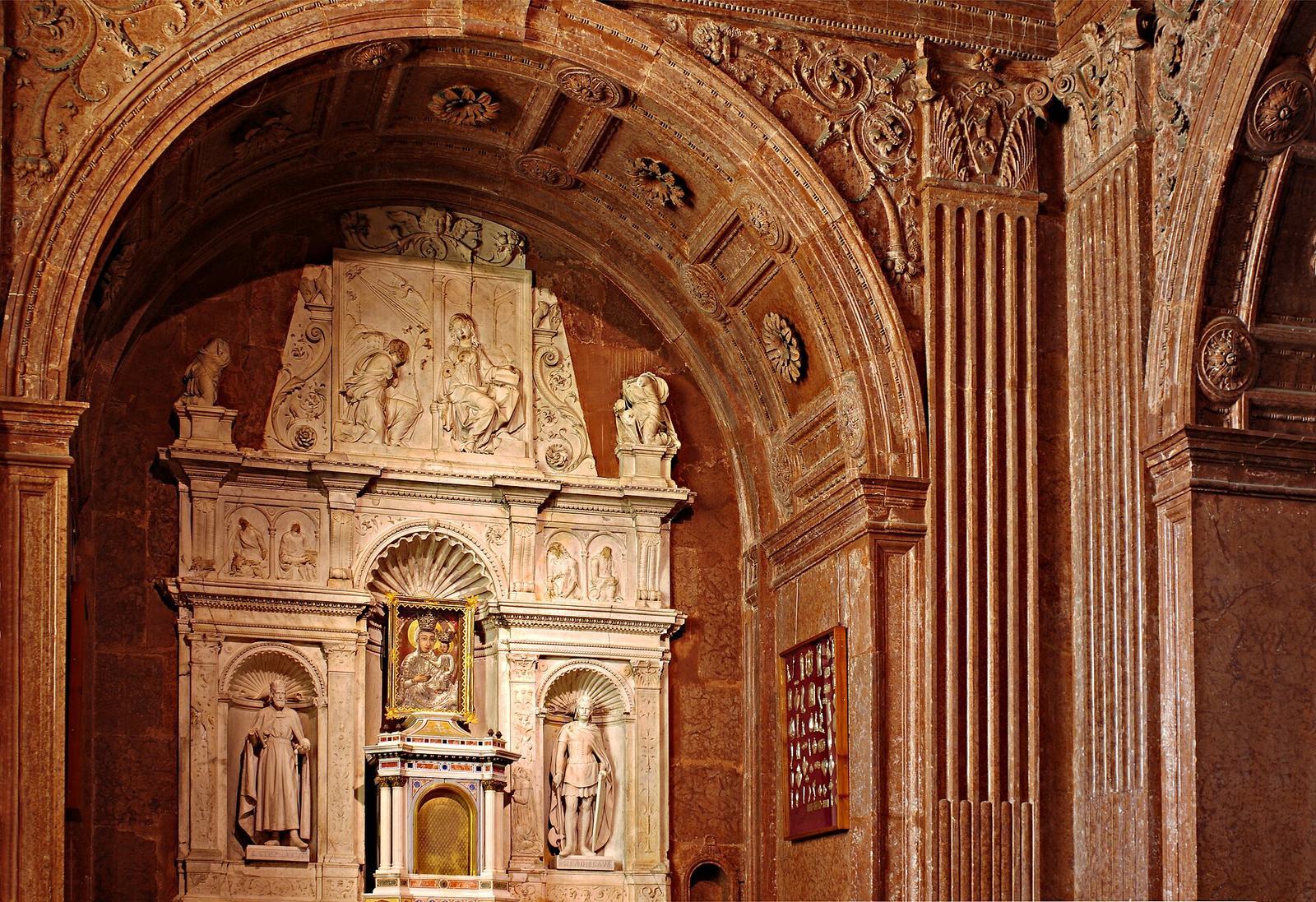
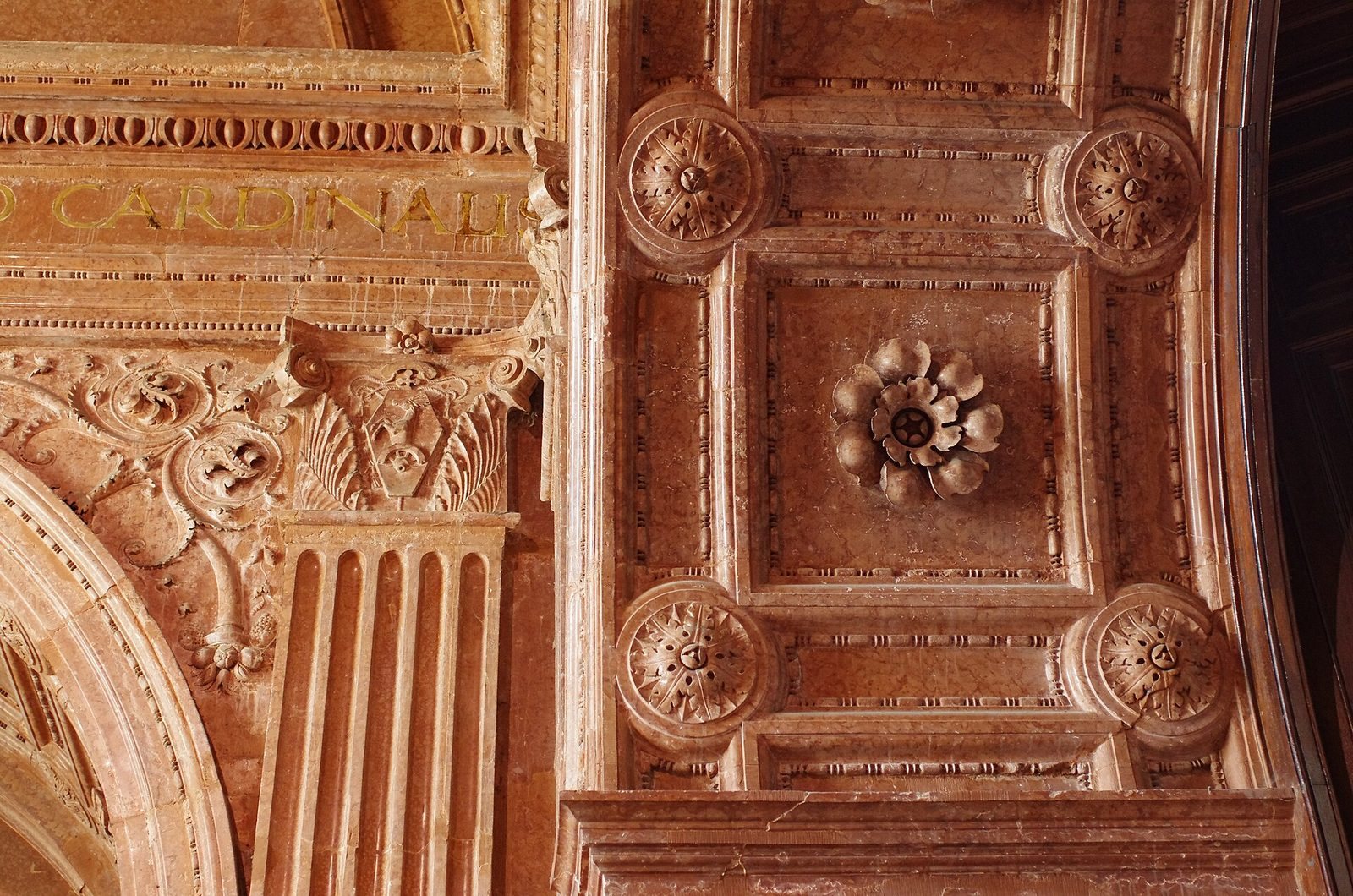
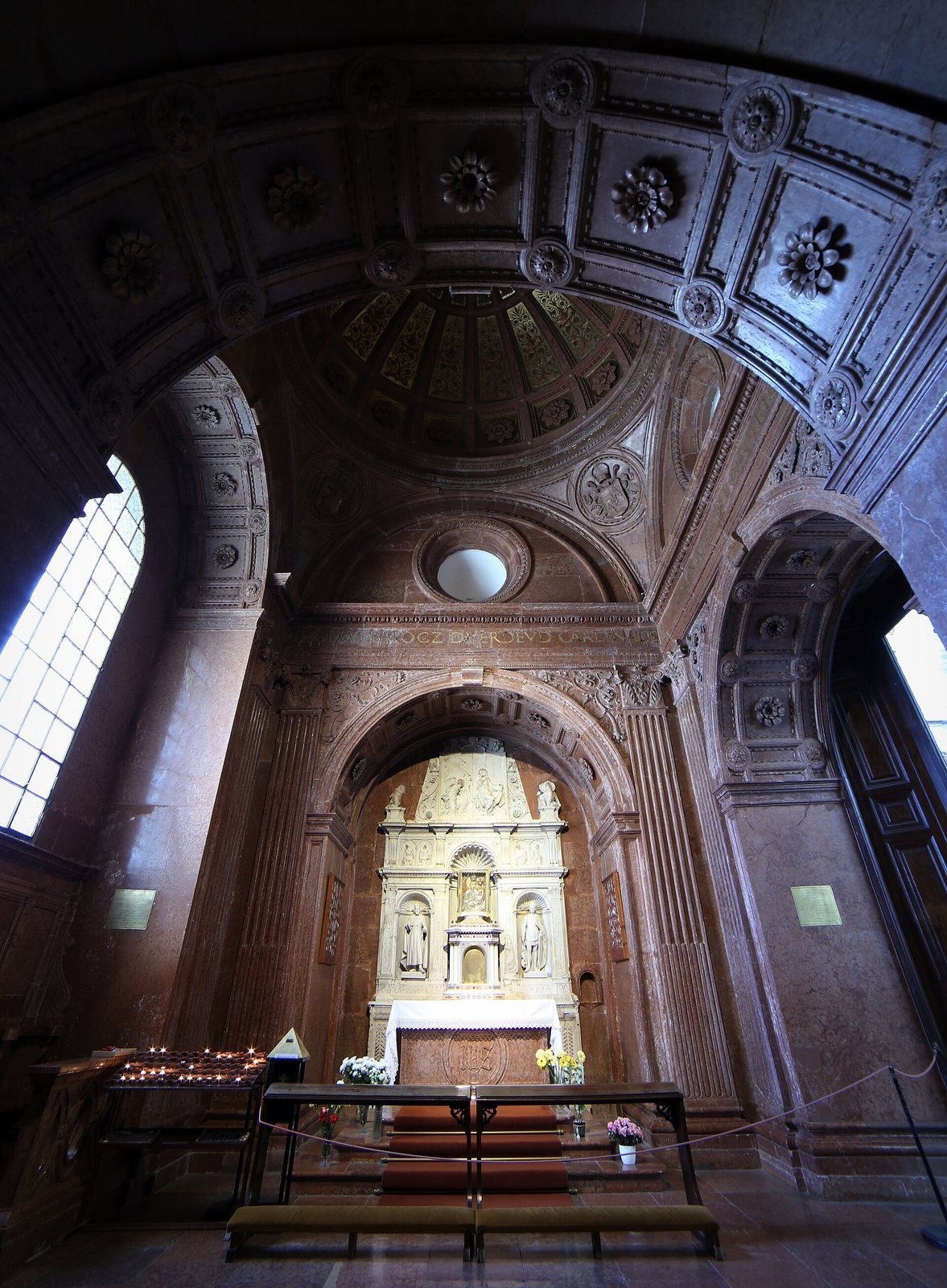
Now incorporated into the basilica as a side chapel, the building retains a square plan extended by arched recesses to form a cross. Its interior is made almost entirely of Süttő red marble, a solid limestone. The altar is the exception, fashioned from white marble said to come from either Carrara or Lucca.
Interior and dome
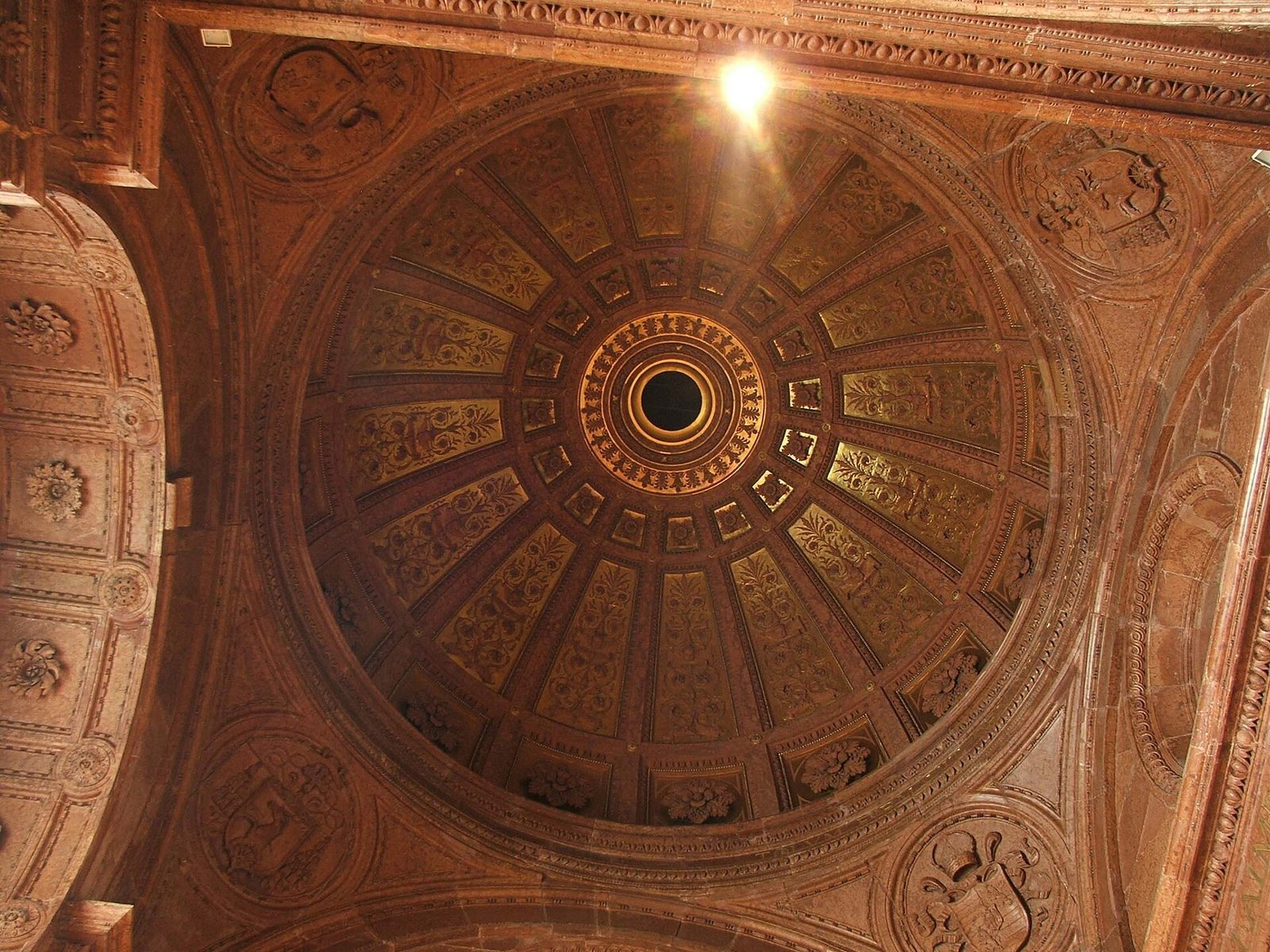
The chapel’s elongated elliptical dome was originally carried by 24 iron ribs and ornamented with 96 recessed bronze panels, gilded and silvered. A drum-shaped lantern above the dome once brought light through eight windows, each two metres high; the lantern was removed in 1686. Four coats of arms decorate the pendentives, curved supports that carry a dome over a square room. An inscription above the gallery identifies Bakócz as cardinal of Esztergom, names the Virgin Mary as the chapel’s dedicatee, and gives the year 1507.
The altar
Lower register and figures
The altar has four levels, though an altar table placed in front after the rebuilding hides its base. Three openings mark the main level. A statue of the Madonna, a title for Mary, occupies the central recess; female saints probably once stood in the two side recesses, but Ottoman occupiers destroyed those figures. Later, statues of Saint Stephen and Saint Ladislaus, carved by Pietro della Vedova, were placed there. A damaged relief on the right-hand pilaster, a shallow wall projection resembling a column, shows Bakócz kneeling before the Madonna.
Upper reliefs and profile
Reliefs of the Evangelists decorate the third level. Above them, a semicircular pediment, a decorated architectural crown, bears a marble Annunciation scene with kneeling angels on either side. The pediment was broken during the Ottoman period, and its missing sections were not replaced. The altar now stands on a stepped platform, leaving its main cornice out of alignment with the chapel’s cornice; its curved upper end also rises close to the vault.
Alterations and reconstruction
The 1686 restoration narrowed the opening between the chapel and cathedral to make a doorway, removed the lantern, and added a tiled hipped roof. The altar, which remained in relatively good condition, was altered and put back in its original position. For the 1823 rebuilding, workers cut the red-marble interior into 1,600 numbered pieces and reassembled it within the new cathedral. They turned the chapel 180 degrees and moved its entrance to the opposite side, changes that affected its original artistic design. Parts of its façade carvings are preserved in the basilica’s crypt, an underground chamber.