Baou de Saint-Marcel: A Fortified Celto-Ligurian Settlement
Site at a Glance
- Rating
- 4
- Popularity
- Very Low
- Country
- France
- Primary era
- Iron Age
- Eras represented
- Iron Age, Classical
- Civilizations
- Unclassified
- Site type
- Settlement
On this page10 sections
History
Baou de Saint-Marcel is an ancient fortified Celto-Ligurian settlement near Marseille, France, associated with the Segobriges, an ancient people of the Marseille region. Founded in the first quarter of the sixth century BCE, it remained occupied into the last quarter of the second century BCE.
Occupation and abandonment
The settlement’s defenses were strengthened through the end of the fourth century BCE. From the middle of that century until the beginning of the second century BCE, occupation became limited but continued. Building and economic activity revived around 150 BCE, before the settlement was finally abandoned in the last quarter of the second century BCE.
Interpretation and archaeological study
Archaeologist François Villard proposed that the settlement was a Massaliote surveillance post, meaning a post associated with Massalia, the ancient Greek city at Marseille, and intended to protect the surrounding area. Later excavations supported a different interpretation: Baou de Saint-Marcel appears to have been an indigenous settlement closely connected with Marseille, although its subordination to the city has not been established.
Count Henry de Gérin-Ricard excavated the site in 1930. Paul Agostini studied it from 1964 to 1972 and wrote a thesis on the pre-Roman settlement; Guy Rayssiguier and C. Guichard later resumed excavation. The remains and surrounding soils with archaeological potential have held French Historic Monument status since 23 August 1990.
Remains
Setting and defenses
Plateau and landscape
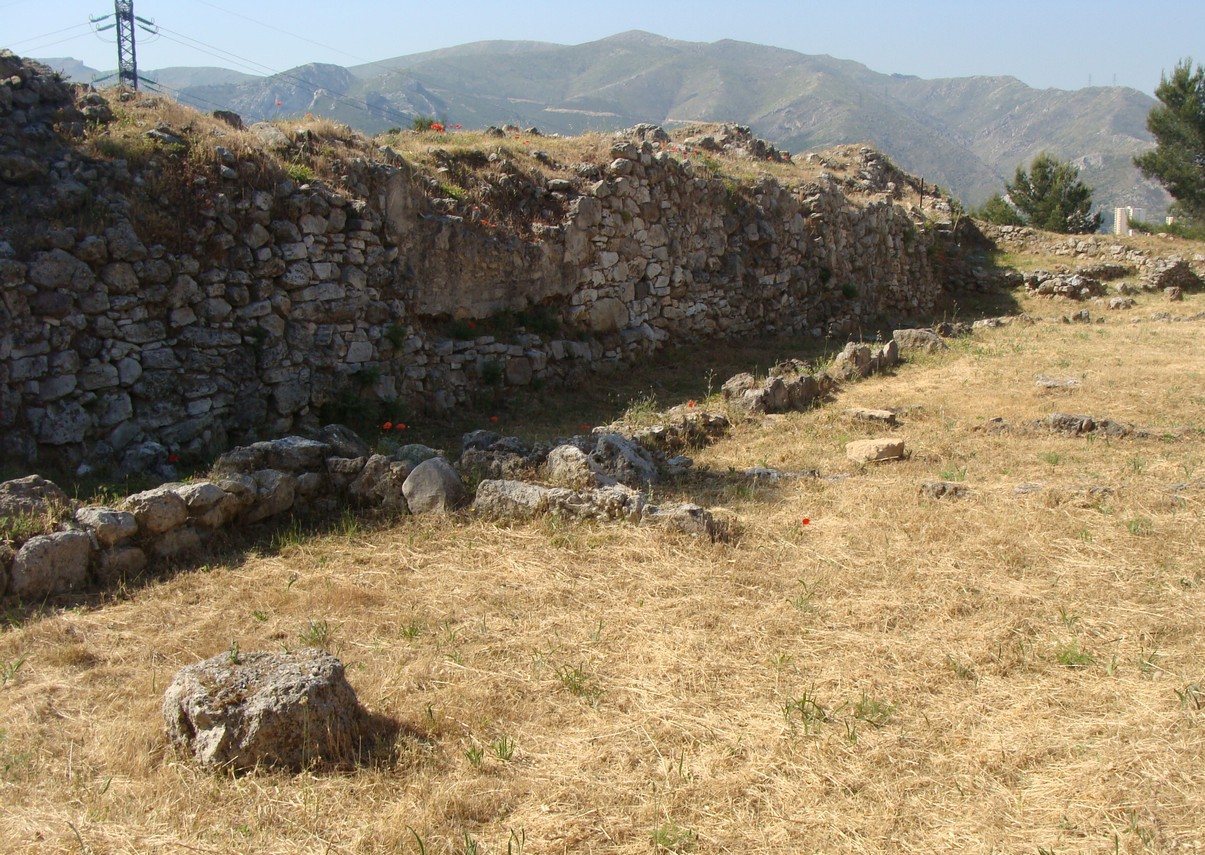
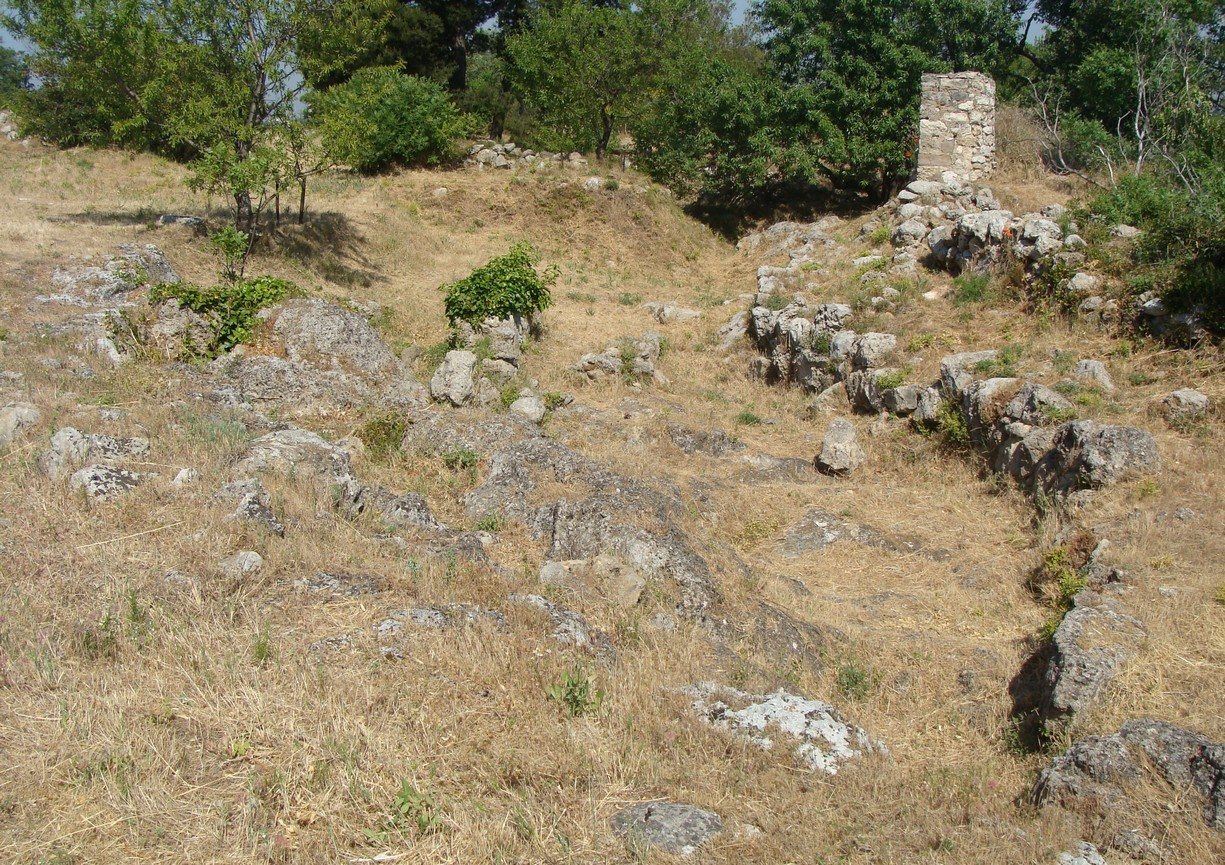
The settlement covered about 3 hectares on a plateau of tufa, a calcium-carbonate deposit, at an elevation above 167 metres. It stood about 7 kilometres from Marseille’s Old Port, where the Huveaune valley narrows between the Étoile range to the north and the Saint-Cyr massif to the south. A steep rocky cliff forms the western side. It was intermittently used as a shelter during the Paleolithic, long before the settlement’s foundation. The other, more gently sloping sides were protected by the defenses.
Rampart
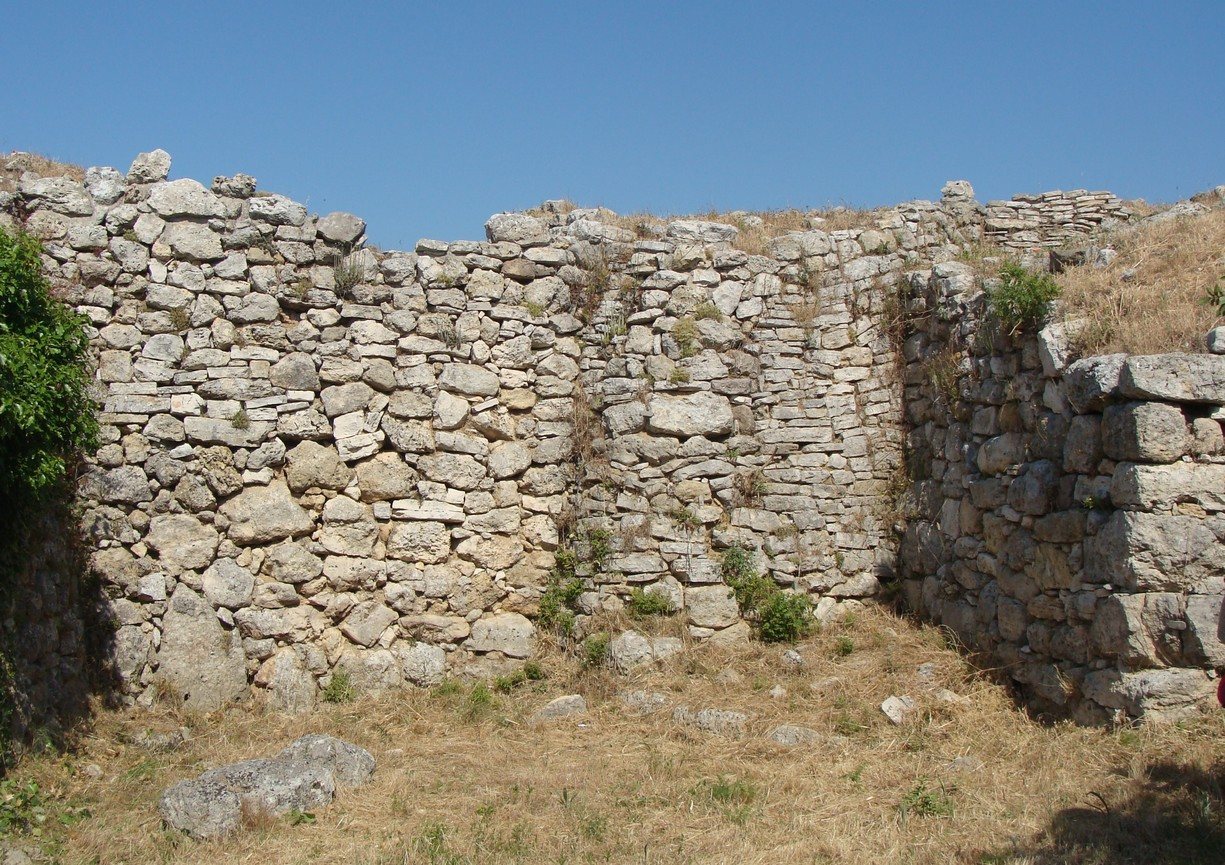
A monumental rampart of travertine slabs, another calcium-carbonate deposit, was built from the second quarter of the sixth century BCE and modified several times. The local design combined a curtain wall, the stretch of defense between towers, with an oval-shaped tower. On the north, the curtain wall is 2.5 metres thick and consists of irregular tufa blocks measuring about 0.6 by 0.5 metres.
Dwellings and pottery
Dwellings
Single-room houses appeared from the second half of the sixth century BCE. Their average area was about 12 square metres. Across the centuries, builders continued to make the wall bases from two outer faces of travertine and tufa rubble, bonded with clay.
Ceramics
Handmade pottery is the most abundant ceramic material, with urns, cups, and bowls among its common forms. Wheel-thrown regional wares include monochrome gray cups and kraters, large vessels used for mixing wine and water. Local pale-clay pottery imitated vessels from Campania in southern Italy. Imported Greek and Etruscan pottery reached the settlement through the beginning of the fifth century BCE. From the second quarter to the end of that century, imports were mainly black-glazed pottery from Attica, the region around Athens, while red-figure vessels were less common. Imports from the end of the second century BCE were chiefly Italian, particularly Campanian pottery. Rare Iberian imports include gray pottery from the Catalan coast and painted vessels.