Lancaster House: A Neo-Classical Mansion and Diplomatic Venue in London
Site at a Glance
- Rating
- 4.5
- Popularity
- Medium
- Country
- United Kingdom
- Primary era
- Modern
- Eras represented
- Modern
- Civilizations
- British
- Site type
- Domestic
- Remains
- Elite Residence
On this page14 sections
History
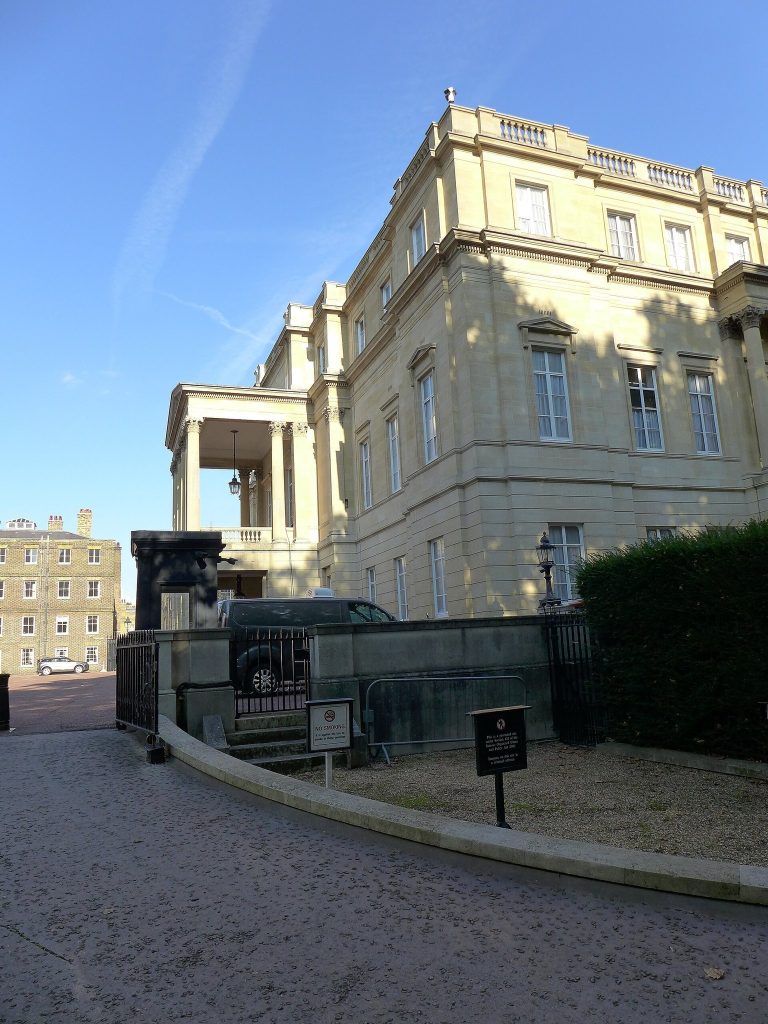
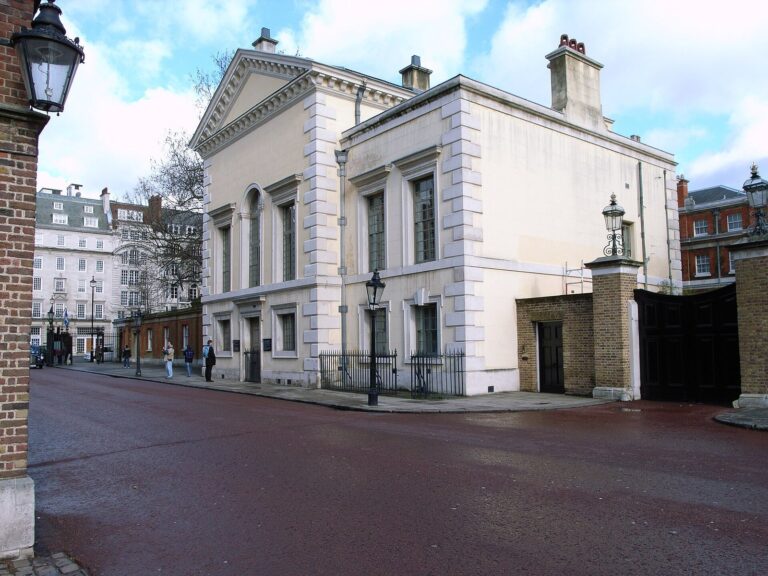
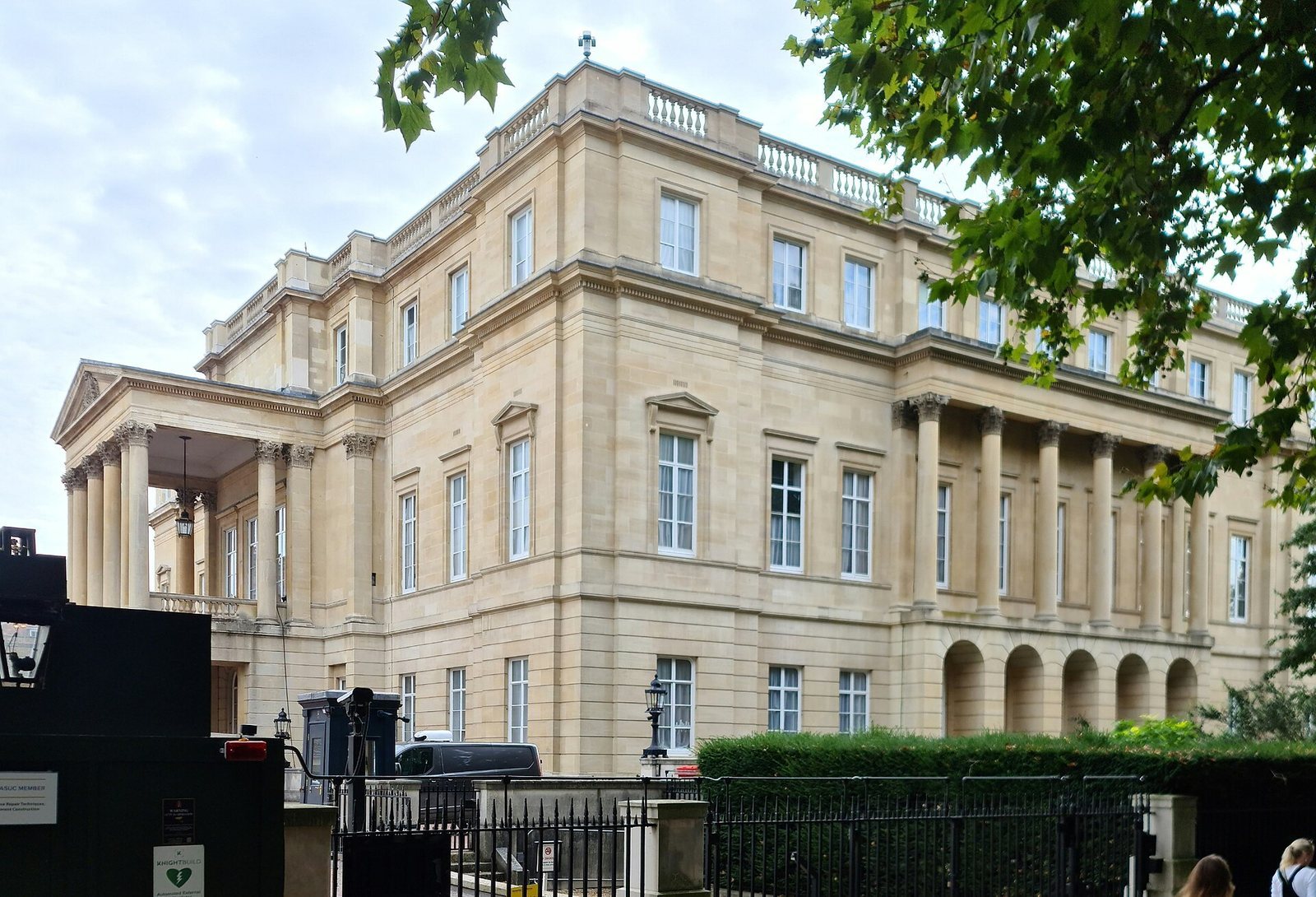
Lancaster House is a mansion in the neoclassical style, a revival of classical architecture, on The Mall in St James’s, Westminster, London, United Kingdom. Construction began in 1825 for Prince Frederick, Duke of York and Albany, the second son of King George III. First called York House, it later served as a private aristocratic residence and a setting for national and international diplomacy.
York House and Stafford House
Frederick leased the site in 1807, when Godolphin House stood there. A new 99-year lease was granted on 10 October 1825, and work began on a replacement mansion. Sir Robert Smirke was initially commissioned to design it, but Benjamin Dean Wyatt took over after Frederick’s mistress, Elizabeth Manners, Duchess of Rutland, intervened. The building remained unfinished when Frederick died in 1827. The British government then bought the house and its lease for £81,913.
George Leveson-Gower, then the 2nd Marquess of Stafford and later the 1st Duke of Sutherland, took charge of completing the mansion. Work under his direction is dated to 1833–1838; the house was completed in 1838 and formally opened in 1840. After giving up the lease because of the expense of finishing the building and adding a storey, he secured a new 99-year lease on 5 July 1841 for £72,000. The house became known as Stafford House and kept that name through the rest of the nineteenth century.
A Sutherland residence and social centre
The Sutherland family occupied Stafford House from 1829 until it passed to the nation in 1913. Their liberal politics and support for the arts brought a varied circle of guests. These included the Earl of Shaftesbury, a factory reformer; Harriet Beecher Stowe, an American writer known for her anti-slavery work; and Giuseppe Garibaldi, an Italian revolutionary. In 1848, the Polish composer and pianist Frédéric Chopin performed for Queen Victoria and Prince Albert, and gave private lessons to Lady Constance of the Sutherland family. Victoria is said to have told the Duchess of Sutherland that she had come “from my House to your Palace.”
During the Russo-Turkish War of 1877–1878, fought between the Russian and Ottoman empires, the 3rd Duke of Sutherland established a committee at the house to aid Ottoman refugees and wounded soldiers. The house lost royal favour after Anne, Duchess of Sutherland, died in 1888; within months, her husband married Mary Caroline Blair, his former mistress.
National ownership and diplomacy
In 1912, the 4th Duke of Sutherland sold the lease to industrialist and philanthropist Sir William Lever, later Viscount Leverhulme. Lever named the building Lancaster House after his native Lancashire and gave it to the nation in 1913. A Government Wine Cellar has been based there since 1922. The London Museum occupied the house from 1924 until shortly after the Second World War. It is now used by the Foreign, Commonwealth and Development Office for diplomatic receptions and other government functions. Lancaster House was designated a Grade I listed building in 1970.
The Allied governments’ European Advisory Commission, which considered Europe’s political and social future, met at Lancaster House throughout 1944 and into 1945. Envoys concerned with occupied Austria held a special meeting there in January 1947. In 1953, Winston Churchill hosted Queen Elizabeth II’s coronation dinner in the Long Gallery. A treaty known as the Lancaster House treaty was signed in the State Drawing Room in 1954. An agreement concerning Malaya’s independence followed in 1956, and South Africa affirmed its intention to become a republic within the Commonwealth, an association of states, many formerly part of the British Empire, in 1961.
The Lancaster House Agreement of 1979 led to the independence of Rhodesia, now Zimbabwe, from the United Kingdom. The house hosted the G7, a forum of major industrialized economies, in 1984 and 1991. In 2017, Prime Minister Theresa May set out the UK’s intended future relationship with the European Union in a speech there, following the 2016 referendum vote to leave. In June 2025, Chinese and United States delegations met at Lancaster House to discuss their ongoing trade war.
Remains
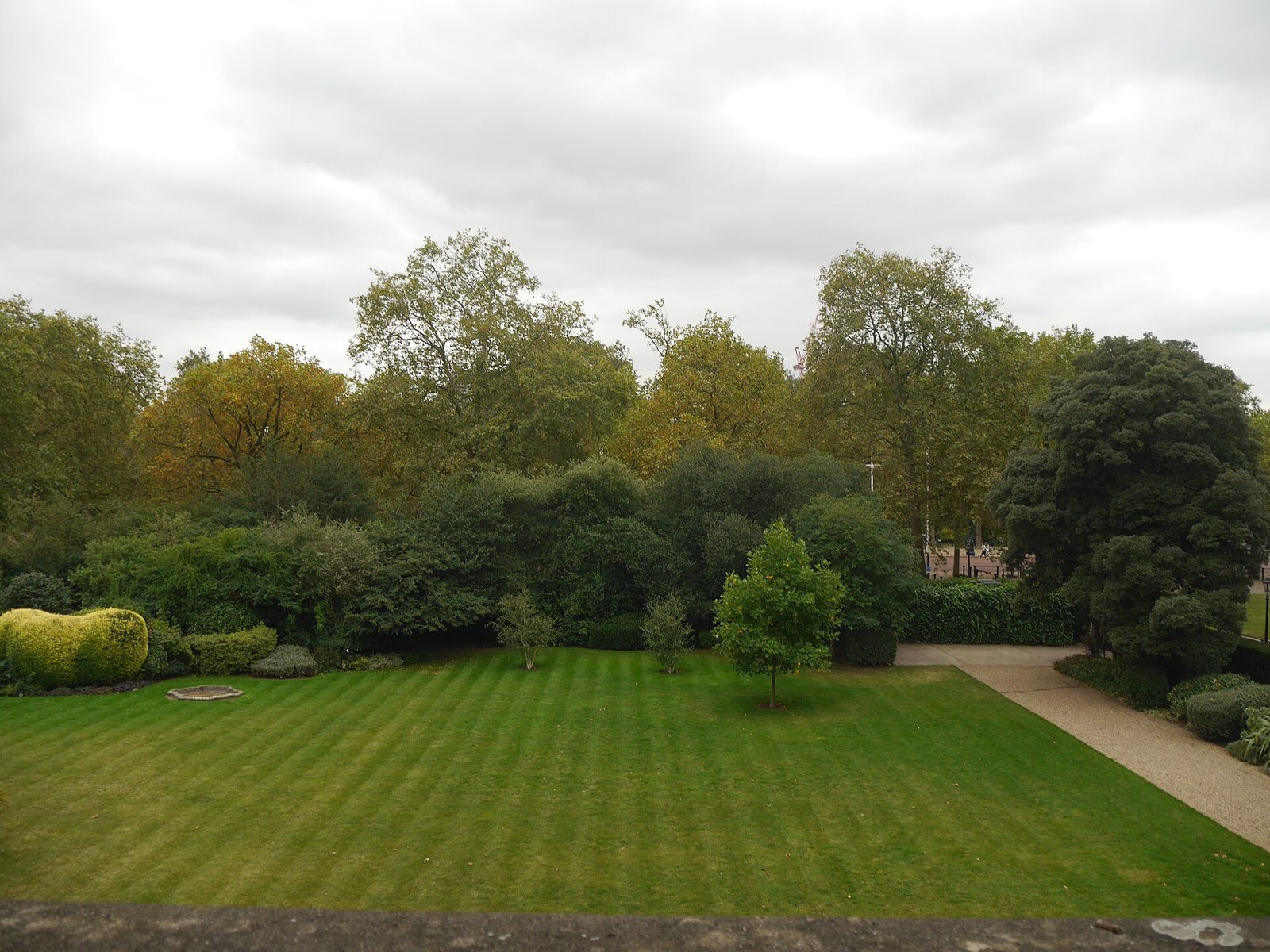
Lancaster House is a three-storey building with a basement, constructed from Bath stone. It stands on a site that partly formed part of the grounds of St James’s Palace, beside Green Park and close to Clarence House and St James’s Palace. The state rooms occupy the first, principal ceremonial floor; family living rooms were on the ground floor and bedrooms on the second. Service rooms and a wine cellar occupied the basement.
Entrance and staircase
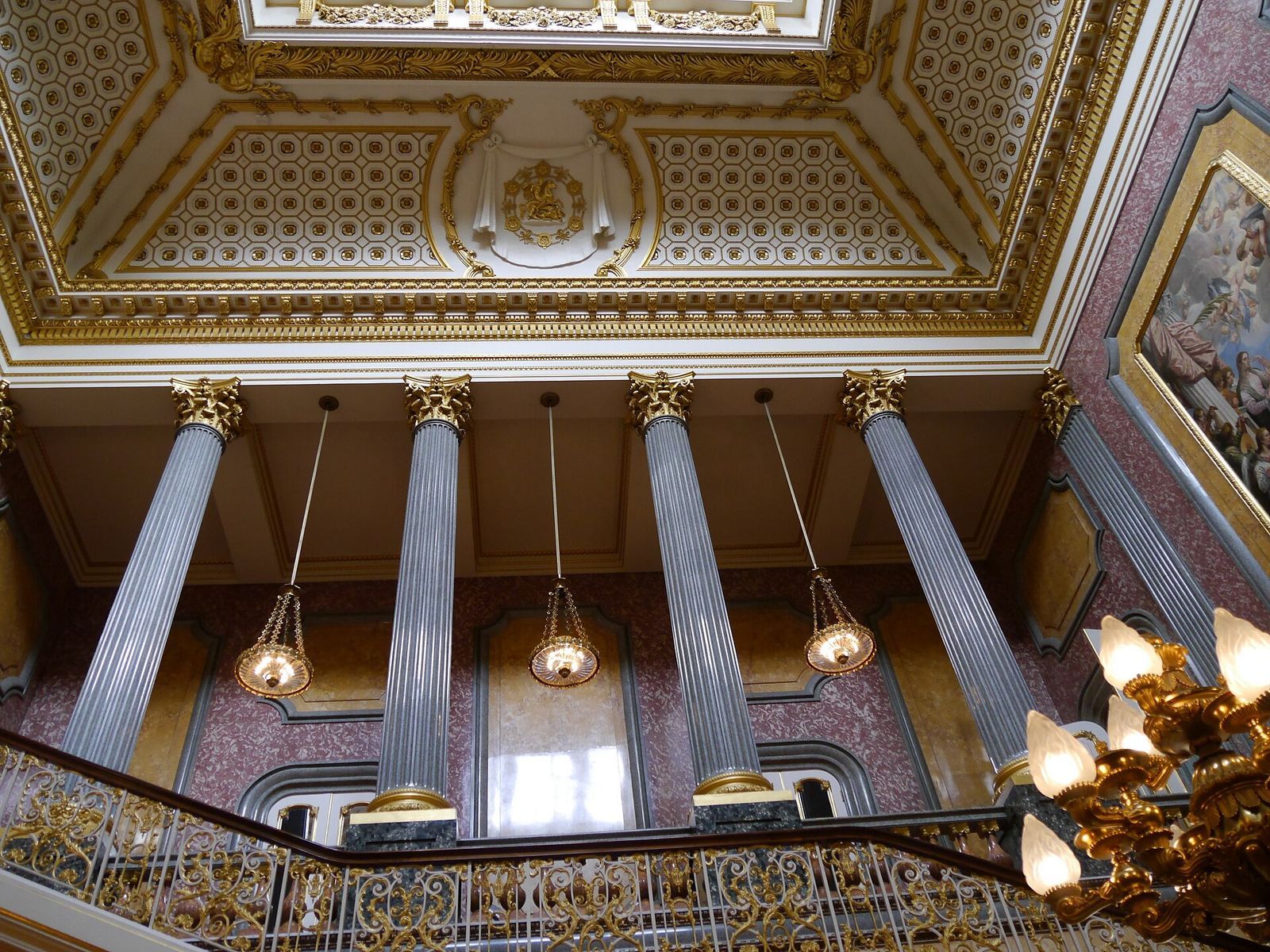
The entrance hall leads from a columned portico to the grand staircase. Benjamin Dean Wyatt is credited with the staircase’s design, and Sir Charles Barry is also associated with it. Its ornate rococo balustrade, a railing in a richly decorative style, drew inspiration from the Palace of Versailles. Barry is credited with later additions to the entrance hall, including a large skylight and light-coloured wall finishes. Scagliola, a decorative plaster mixture with coloured material and mineral fragments, was used to imitate marble on the walls and granite on columns. Wyatt is associated with the house’s exterior and interior design, while Barry and Smirke are also credited with interior work. The rooms are richly decorated, including in the formal French court style associated with Louis XIV.
The Long Gallery
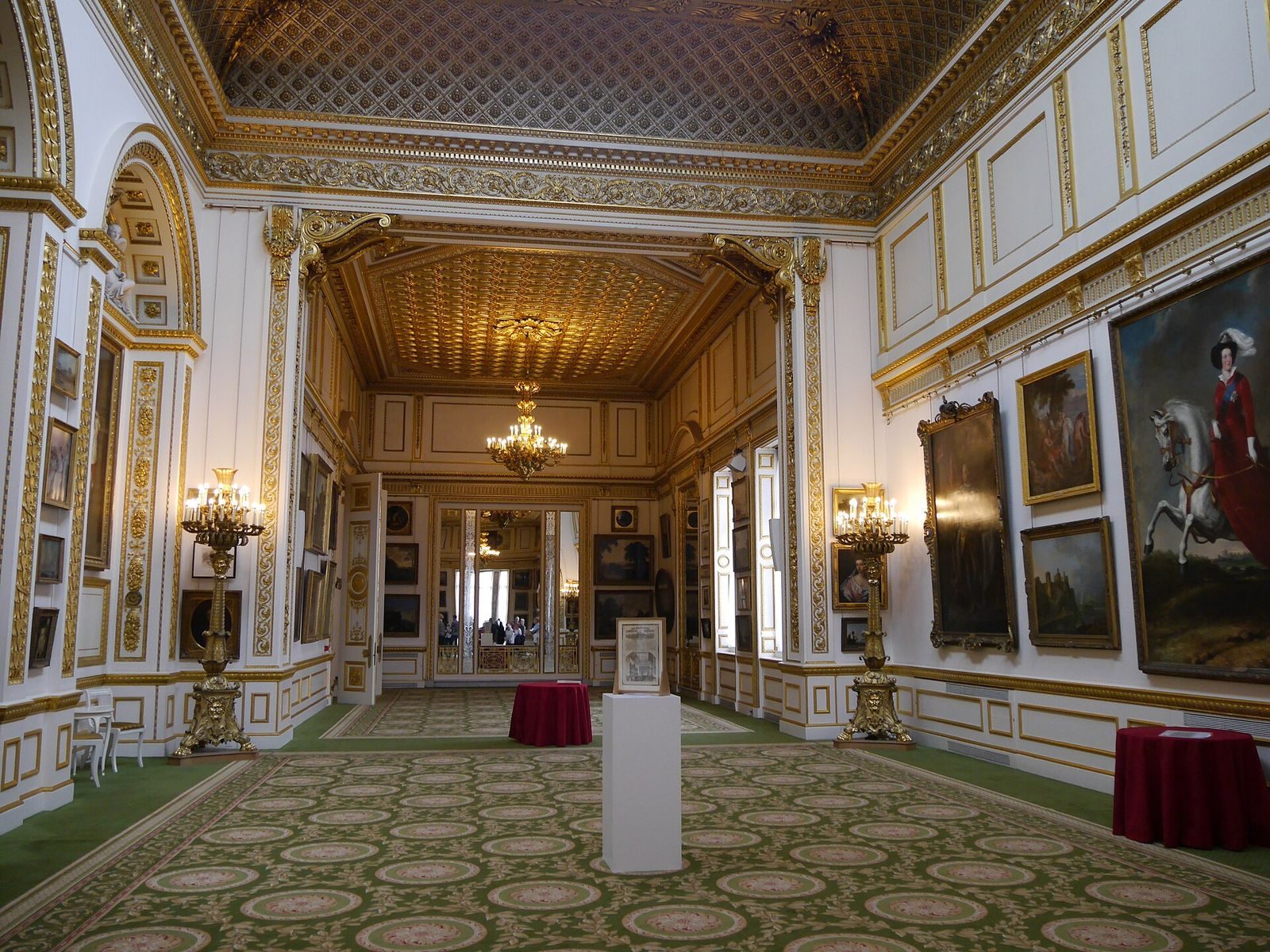
On the east side of the house, the Long Gallery extends for more than 35 metres and has 18 large windows. A decorated skylight brings daylight into the room. Its ceiling canvas, Saint Chrysogonus in Glory, depicts Saint Chrysogonus being carried heavenwards by angels. Attributed to the Italian Baroque painter Guercino and dated 1622, the painting was stolen from Rome’s church of San Crisogono in 1808. The fireplace has gilded bronze details brought from France, while figures representing Architecture and Painting support the mantel. At the gallery’s end, an adjoining room contains Zelotti’s painting Cupid Receiving an Apple from the Graces; the doors carry the Sutherland family monogram. A 35-foot (10.7-metre) table was made for major negotiating sessions in the gallery in 1991.
Other state rooms
Music Room
The Music Room has windows opening onto a terrace overlooking Stable Yard, as well as Corinthian columns, a classical form with ornate capitals. Its space can be arranged for a conference table seating 36 people, theatre seating for 100, or meals for 76.
State Drawing Room
The State Drawing Room faces St James’s Park. Candelabra decorated with angels stand between its windows, and crystal bell pulls, once used by the house’s servants, adorn the walls. The ceiling is richly ornamented.
Green Room
The ceiling of the Green Room depicts the solar system and all the signs of the zodiac. Carved figures of summer and winter appear on the fireplace; tradition identifies them with two of the Duchess of Sutherland’s children. The room retains its original furniture from the 1820s in its original condition.
State Dining Room
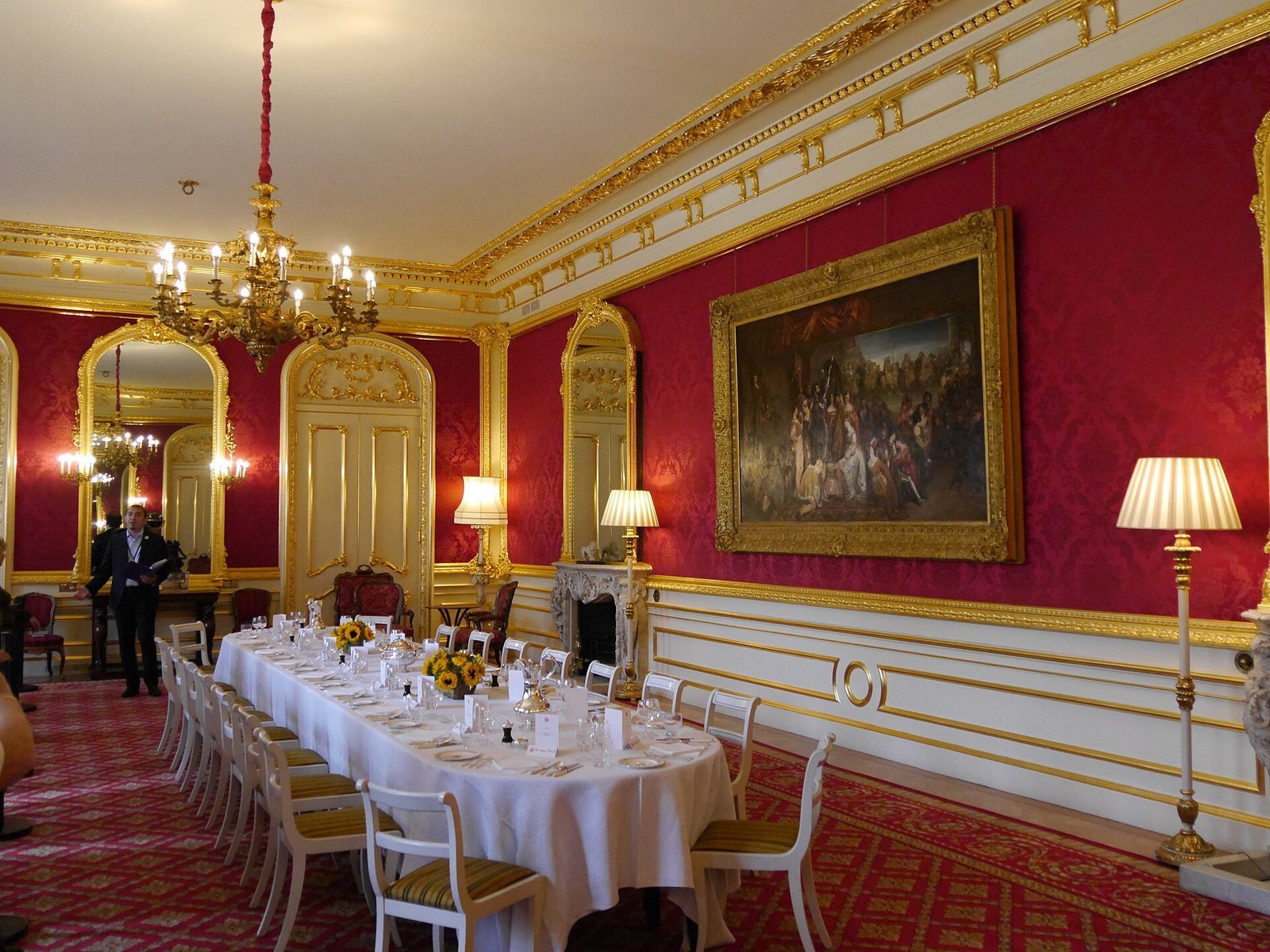
The State Dining Room is decorated in the French antique style. Formerly the Sutherland family’s reception room, it looks towards The Mall and St James’s Park. A clock on a table at the west end is attributed to the period when Napoleon Bonaparte served as First Consul, the head of the French government before he became emperor.
Gold Room
The Gold Room housed the Cheapside Hoard, a collection of Elizabethan-era jewellery and gemstones discovered in London, while the London Museum occupied Lancaster House. Objects from the room’s original furnishings include a nineteenth-century chandelier and an antique clock made by Thuillier of Paris.
Eagle Room
Two eagle statues give the Eagle Room its name. Their bases once supported a large mirror table. Parts of the Sutherland family’s art collection are displayed in the house.