Acland Barton: The Acland Family’s Historic Seat in Devon
Site at a Glance
- Popularity
- Medium
- Country
- United Kingdom
- Primary era
- Early Modern
- Eras represented
- Medieval, Early Modern
- Civilizations
- English
- Site type
- Domestic
- Remains
- Manor House
On this page8 sections
History
Acland Barton is a historic house and the former seat of the Acland family near Landkey in North Devon, England. The estate was the family’s earliest known seat by 1155, and the house was rebuilt in the fifteenth century before Hugh Acland’s major rebuilding in 1591, during the Tudor period (1485–1603).
Family origins and medieval estate
The estate gave the family its name, originally recorded as de Acland. Its place-name probably derives from an Anglo-Saxon landholder called Acca and has been interpreted as “Acca’s lane.” Acca was also associated with a substantial estate in the district, including nearby Accott, a name interpreted as “Acca’s farmstead.” By the end of the twelfth century, Acland’s estate covered about 400 acres. Devon historian Risdon placed the family’s residence there in the reign of Henry II, king of England from 1154 to 1189.
Risdon recorded that five early members of the family were called Baldwin. The historian Hoskins took the repeated use of this Flemish name as grounds to suggest that the family had come from Flanders soon after the Norman Conquest of 1066. The family historian Anne Acland later maintained that every branch of the wider family descended from the line established at Acland.
The estate was held under socage, a form of land tenure based on fixed, non-military obligations, from the manor of Bishop’s Tawton. The manor belonged to the See of Exeter, the diocese governed by the Bishop of Exeter, and Landkey parish lay within its bounds.
Rebuilding and family use
The house was rebuilt in the fifteenth century and included a private domestic chapel licensed by the Bishop of Exeter. In 1591 Hugh Acland (c. 1543–1622), who lived at Acland throughout his life, modernized and rebuilt the house. His work lowered the great hall by adding a ceiling and creating a room above it.
Tenancy and later ownership
In the seventeenth century Sir John Acland, 1st Baronet, a hereditary rank below a baron, moved his residence from Acland to Columb John. The family kept the estate, but tenants occupied it, and the house became a farmhouse known as Acland Barton.
A 1726 survey valued the farm at £79 a year. It named Edward Ratclyffe and Gregory Davy among those leasing its land and identified Samuel Wreford as tenant. The survey also described an aisle in Landkey parish church where Acland ancestors were buried. The farm’s owner was responsible for repairs, although church rates were also charged. After a dispute, the parish’s claim prevailed on the basis of established usage. The survey proposed that family members had built the aisle for their own use. The estate remained in Acland family ownership after the move to Columb John, until Sir Richard Thomas Dyke Acland, 15th Baronet, sold the house to its tenant in 1945. Acland Barton and its chapel have held Grade I listing since 1965, England’s highest category for buildings of exceptional architectural or historic interest.
Remains
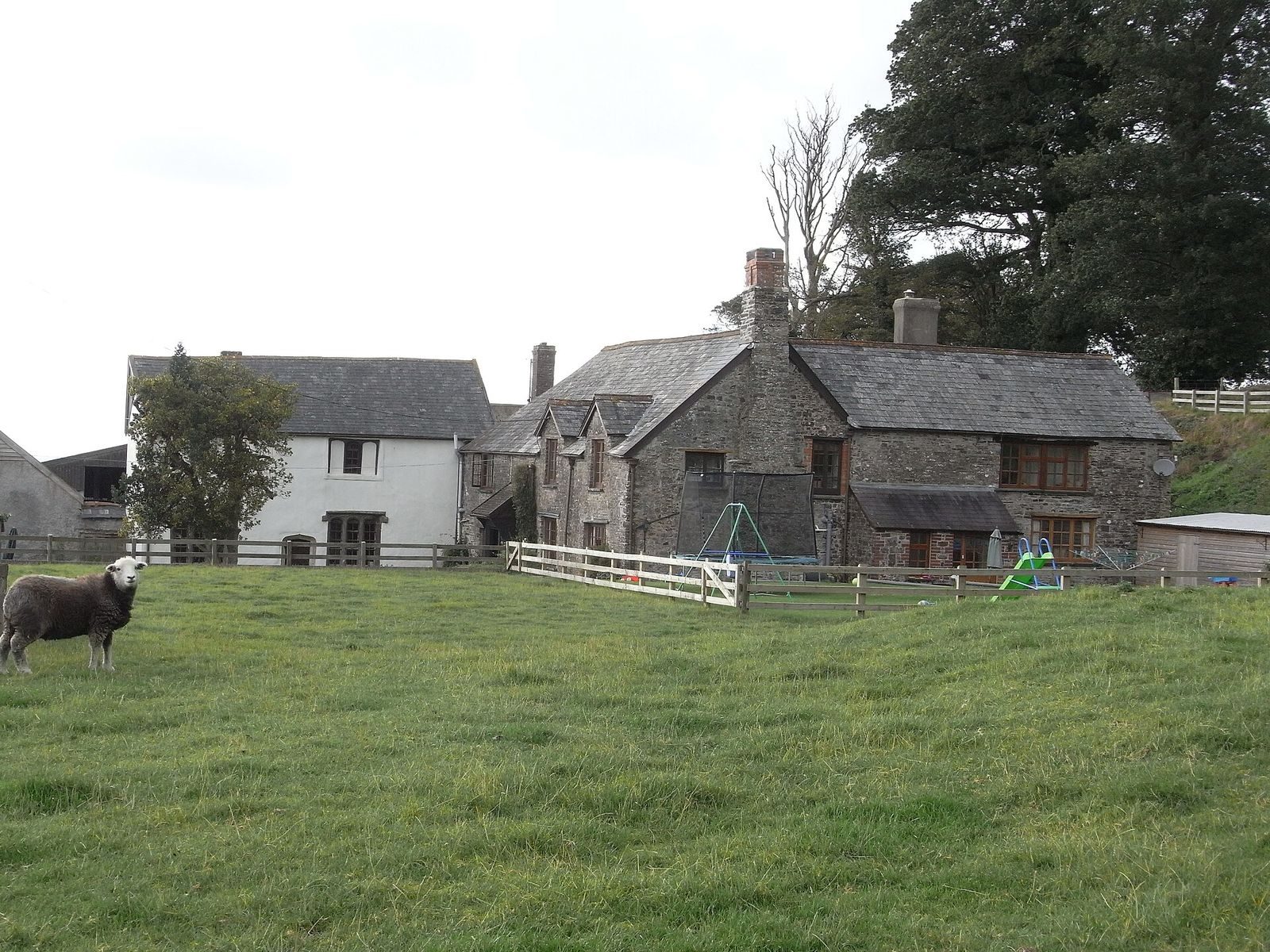
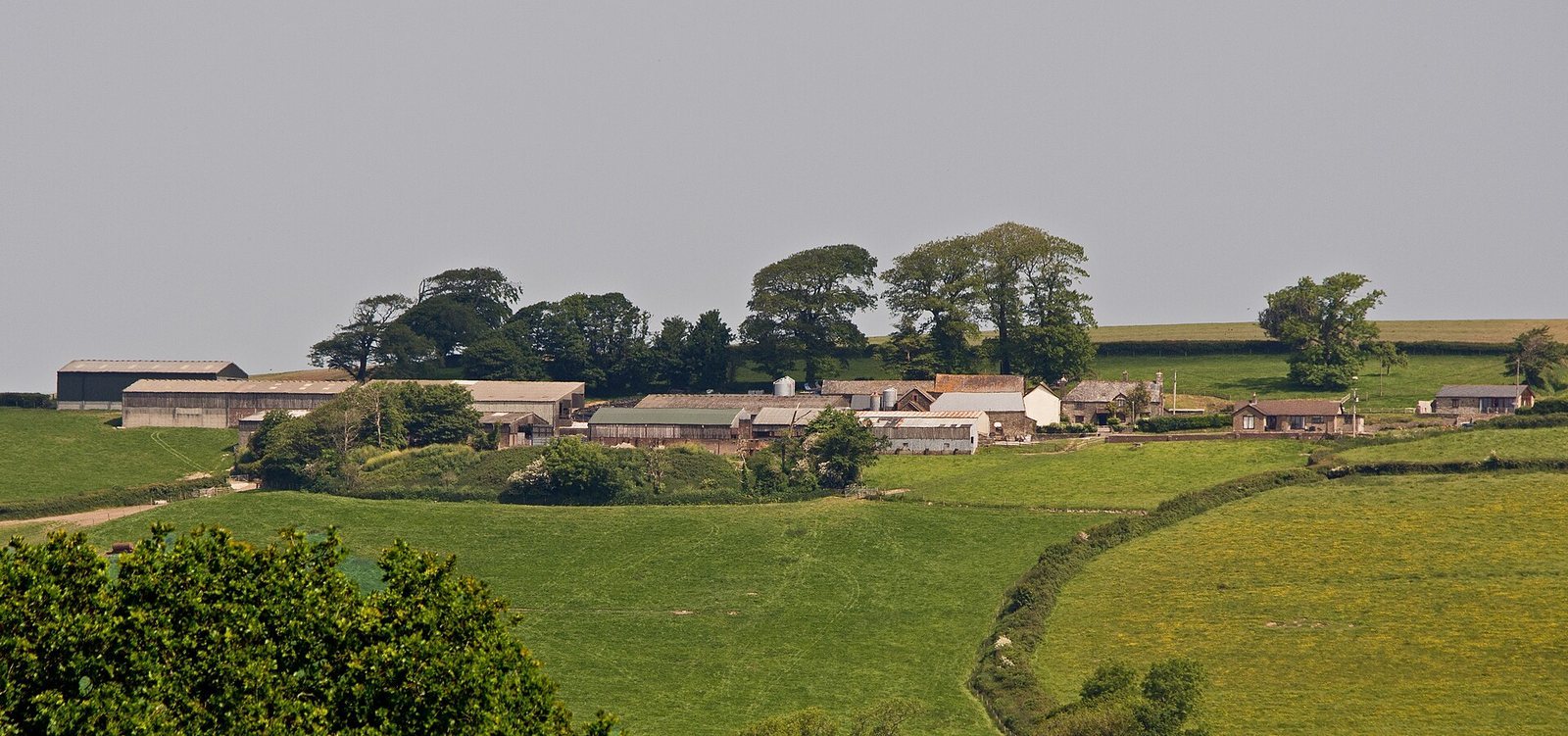
The surviving house consists of the main range and west wing of the Tudor building, on a hillside about three-quarters of a mile northeast of Landkey and near Barnstaple. The A361 North Devon Link Road now runs between the house and the village. The house’s private chapel was separate from the Acland Chapel in Landkey parish church.
Acland Barton
The main range retains a wooden hall screen and screens passage, the passage separating the great hall from service rooms. Its windows were altered later. The great hall has the ceiling and room above it added during Hugh Acland’s rebuilding. A carved date of 1591 on the wooden porch marks that phase of work.
Acland Chapel at St Paul’s Church
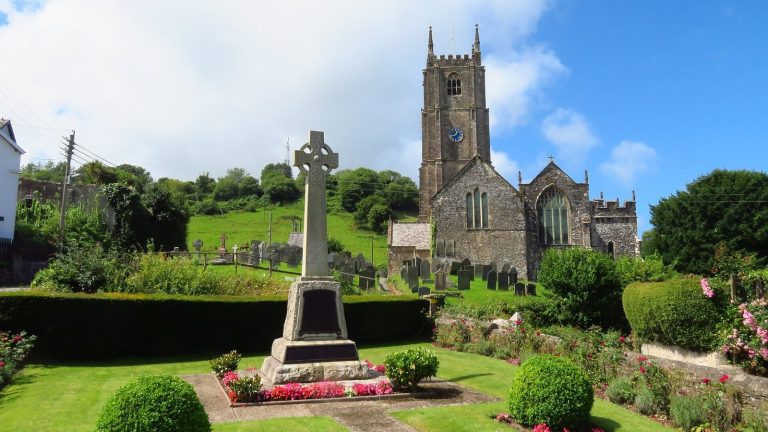
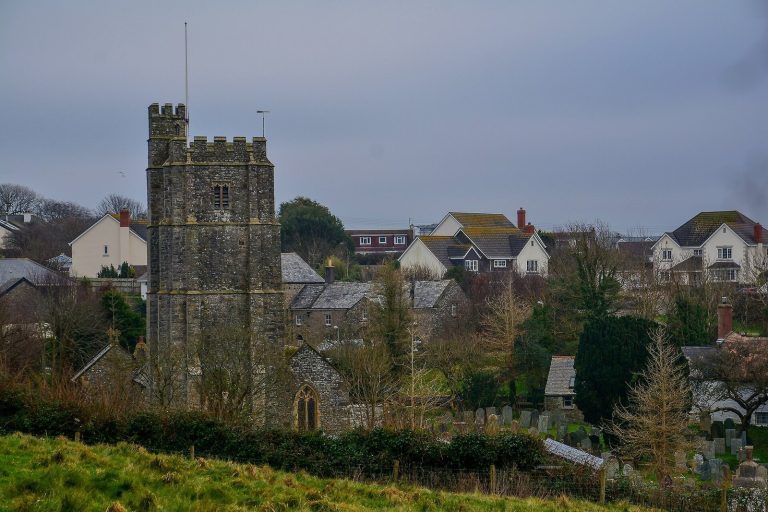
The Acland Chapel occupies the south transept, the crosswise part of the church that intersects its nave, at St Paul’s Church in Landkey. It contains a monument to Arthur Acland, Hugh’s eldest son and heir, who died in 1610. The monument includes an effigy and an inscription.
The 1758 estate map
A map made for the 1758 survey of the Acland estates depicts Riverton Manor, Acland Barton, Westcott, East Bathey, West Bathey, and a cottage at Newland, all in Landkey parish. Its Rococo decoration, an eighteenth-century style of flowing ornament, includes acanthus leaves, field plants, a lamb, a winged putto (a child figure), scrolls, and a cornucopia of fruit and flowers.