Rehman Dheri: An Early Urban Settlement in Pakistan
Site at a Glance
- Popularity
- Medium
- Country
- Pakistan
- Primary era
- Bronze Age
- Eras represented
- Bronze Age
- Civilizations
- Unclassified
- Site type
- Settlement
- Remains
- Town
On this page9 sections
History
Rehman Dheri is a pre-Harappan settlement in the Dera Ismail Khan region of Pakistan, on the Gomal River Plain. The Harappan, or Indus, Civilization was a Bronze Age urban civilization of South Asia. Rehman Dheri’s occupation is dated broadly to c. 3300–1900 BCE and is regarded as one of South Asia’s earliest urbanized centers. Its sequence is divided into three periods, c. 3300–2850, c. 2850–2500, and c. 2500–1900 BCE.
Early settlement and cultural sequence
The earliest phase, known as RHD1 and dated c. 3300–2800 BCE, preceded the Kot Diji culture and lay outside the Indus Civilization. Rehman Dheri is also an early example of a cultural tradition first excavated at Kot Diji. The Tochi-Gomal phase, a regional sequence associated with the end of the Neolithic in the Gomal Plain and Bannu Basin, followed the local Neolithic phase represented at Jhandi Babar and preceded Kot Diji. Kot Diji culture later appeared at Rehman Dheri and nearby Gumla.
Comparable pre-Harappan levels are known at Banawali, Kot Diji, and Amri. Kot Diji and Amri share indigenous cultural elements that preceded contact with Harappan culture. The Tochi-Gomal period also saw a shift from handmade pottery to vessels made on a wheel.
Indus-era changes and abandonment
Seals and pottery fragments from the Tochi-Gomal phase may have contributed to the development of the writing system used in the Mature Indus phase, the later urban stage of the Indus Civilization. Animals and symbols on an early seal from Rehman Dheri have been compared with imagery used in that later phase.
The settlement was abandoned around the middle of the third millennium BCE, near the beginning of the Mature Indus phase, and was later occupied again on a limited scale. A nearby Harappan settlement at Hisham Dheri, which remains unexcavated, has been taken to suggest that Kot-Diji and Harappan communities coexisted in some regions.
Archaeology and later interpretations
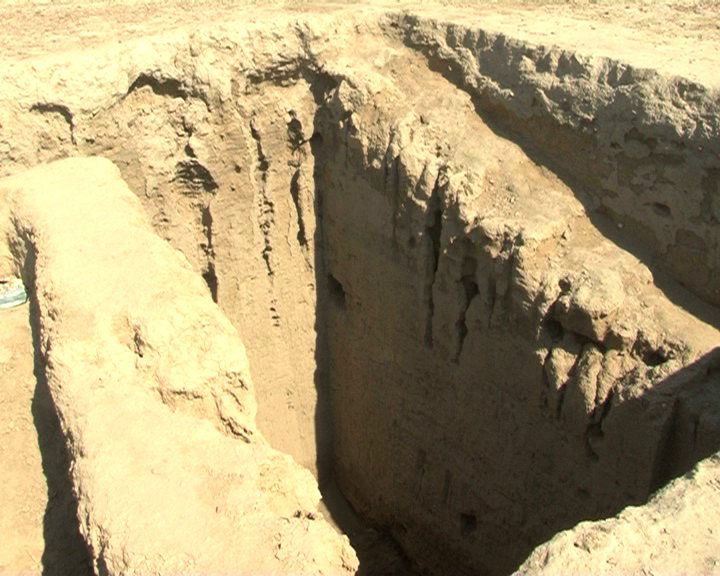
The town’s population has been estimated at approximately 10,000–15,000. Deep trenches cut into lower deposits have not exposed enough of the settlement to establish how craft activities were distributed. Rehman Dheri may also have been occupied earlier than its known sequence indicates.
A modern proposal identifies Rehman Dheri as the birthplace of Rama, a central figure in the Hindu epic Ramayana. It links the Gomal River with the Gomati and connects Ayodhya with the name Ram Dheri. This is an interpretation, not an archaeological conclusion.
Remains
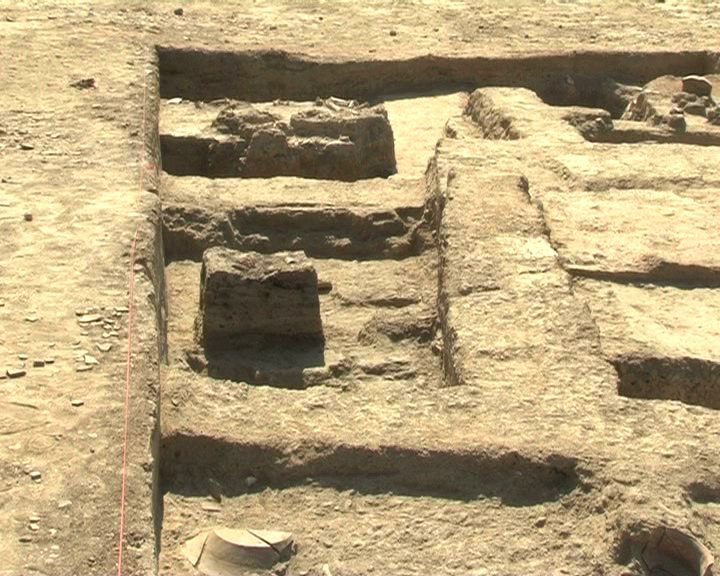
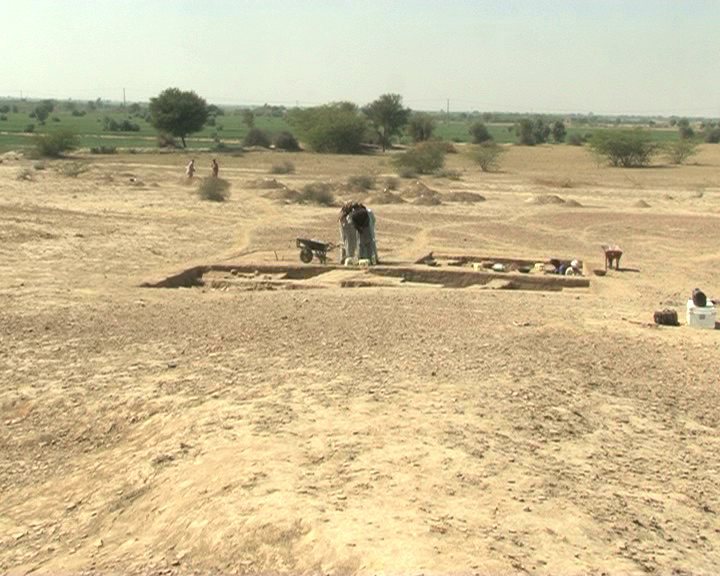
The site occupies a low, rectangular mound on the Gomal River Plain, within the Indus watershed and near the confluence of the Zhob and Gomal rivers. About 22 km north of Dera Ismail Khan, the mound covers roughly 22 hectares and rises approximately 4.5 m above the surrounding fields. Its remains reveal an enclosed settlement with a planned street network and areas of craft production.
Enclosure and town plan
A substantial wall enclosed the settlement from its earliest occupation, with an extension beyond the town to the south. It was built from dressed blocks made of clay slabs. Inside the enclosure, a grid-like street system and formal plan were extended in later phases. Walls marking individual buildings and the frontages of avenues remain visible. Modern development has disturbed parts of the settlement’s plan.
Craft areas and material finds
Production areas
Small-scale industrial areas can be identified within the settlement. Eroded kilns and scatters of slag mark these zones, although the limited area exposed by excavation has made it difficult to establish how craft activities were arranged across the town.
Artifacts and marks
Finds include pottery, stone and metal tools, and abundant lapis lazuli and turquoise beads, reflecting a well-developed bead-making industry. Early terracotta, or fired-clay, figurines resemble examples from Gumla and Mehrgarh IV; later figures developed a distinctive local style. Seals were made from ivory, fired steatite, a soft stone that can be worked and fired, and shell. Some square seals were designed to hang from a string, a form that later became common in Indus cities. Pottery bears engraved or painted marks that closely resemble symbols in the Mature Indus system.