Segura Bridge: A Roman Road Crossing Between Portugal and Spain
Site at a Glance
- Rating
- 4.6
- Popularity
- Medium
- Country
- Portugal
- Primary era
- Classical
- Eras represented
- Classical, Modern
- Civilizations
- Portuguese, Roman
- Site type
- Infrastructure
- Remains
- Bridge
On this page6 sections
History
Roman construction and route
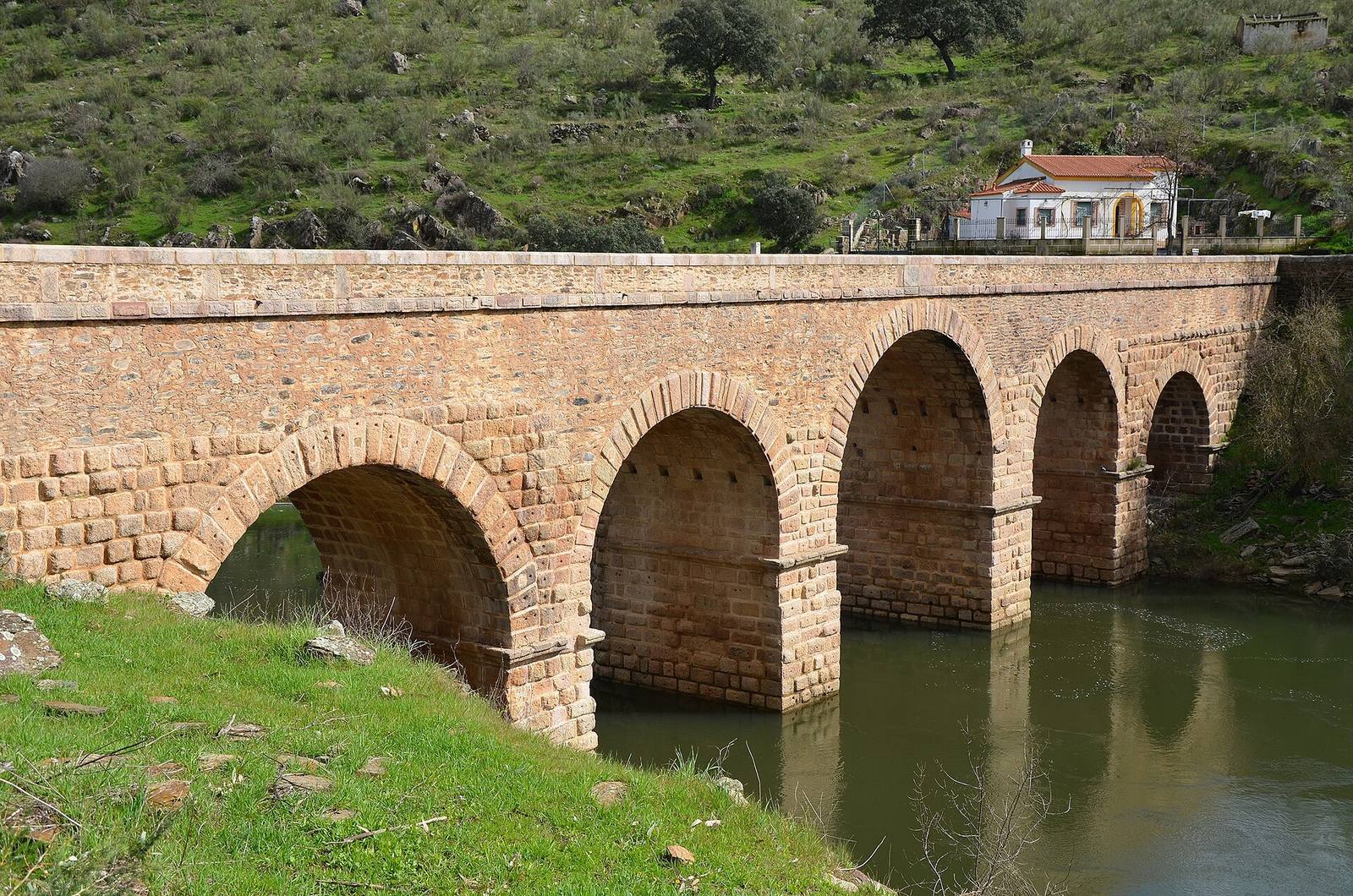
Segura Bridge is a Roman stone crossing over the Erges River between Segura, Portugal, and Alcántara, Spain. Built in the early second century AD in the Roman province of Lusitania, in the western Iberian Peninsula, it dates to Emperor Trajan’s reign (AD 98–117); a construction date around AD 106 has been proposed. Its building was contemporary with the nearby Alcántara Bridge. The Roman architect Gaius Julius Lacer, associated with that bridge, has been suggested as Segura’s engineer, though the attribution is uncertain.
The bridge carried a road across the river. One proposed route connected Norba Caesarina, modern Cáceres, on the Roman Via de la Plata, with the Roman civic community at Idanha-a-Velha and Bracara Augusta, modern Braga. The road’s exact course and purpose remain uncertain. A broader route may also have linked Emerita Augusta, modern Mérida, and continued via Viseu toward Bracara Augusta.
Rebuilding and continued use
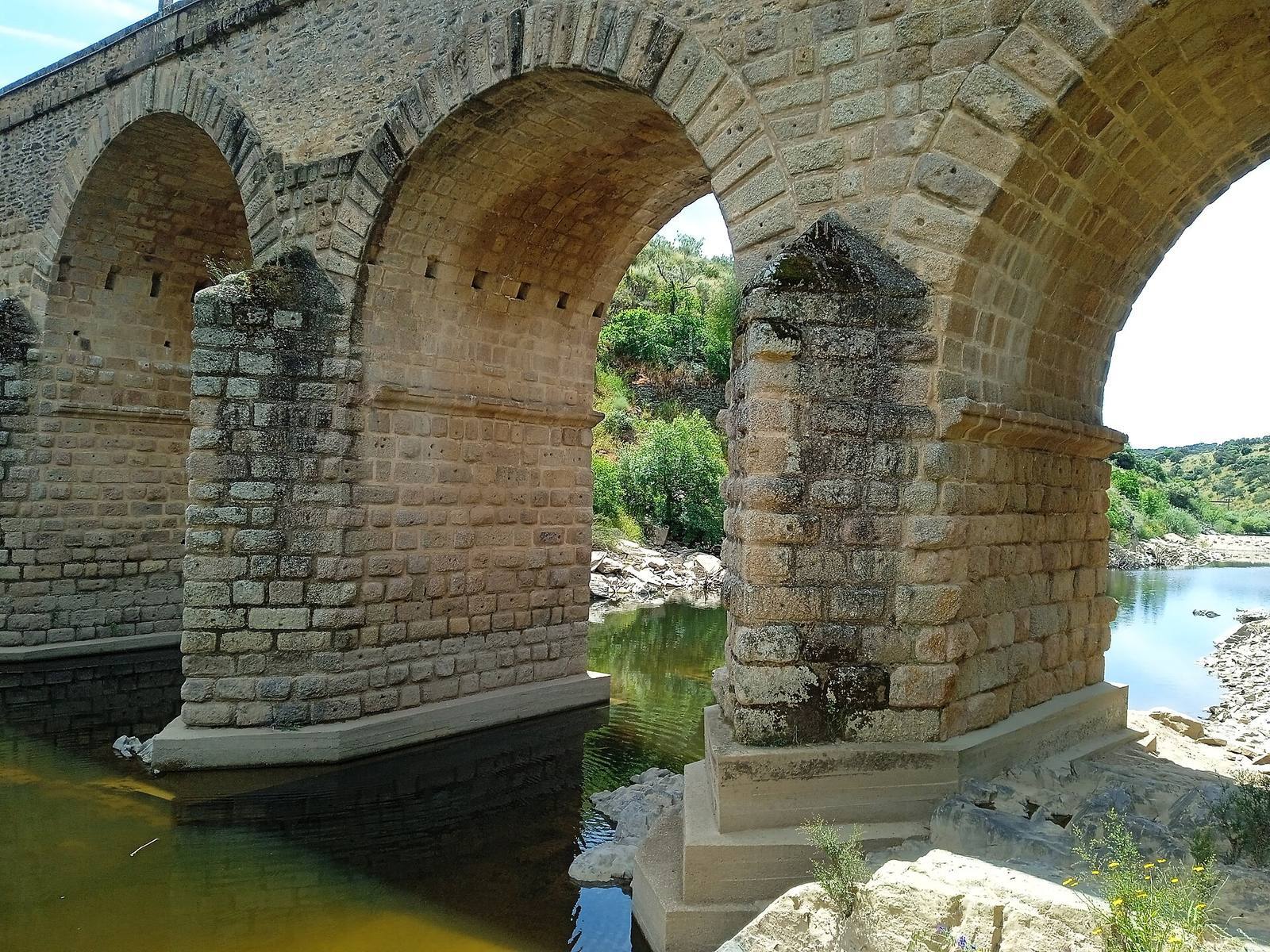
The bridge has remained a road crossing between what are now Portugal and Spain. Two arches were rebuilt in 1571, and further rebuilding took place in the nineteenth century. In 2007, work covered the pier footings and cutwaters with reinforced concrete, prompting controversy.
Remains
Form and setting
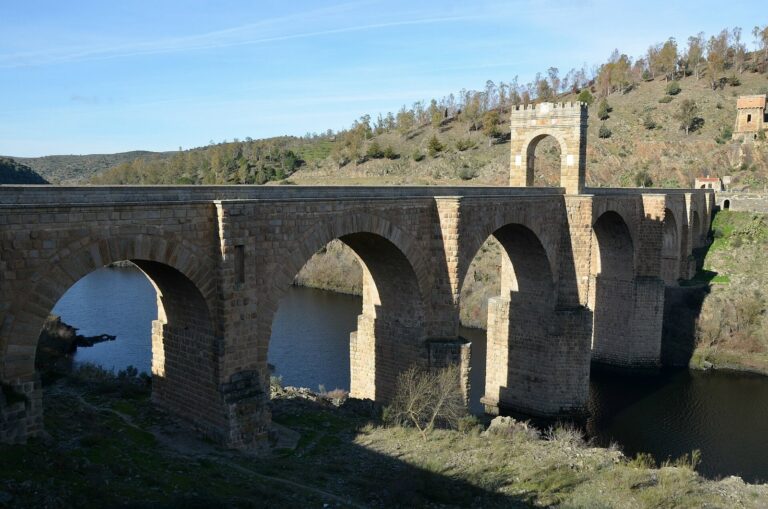
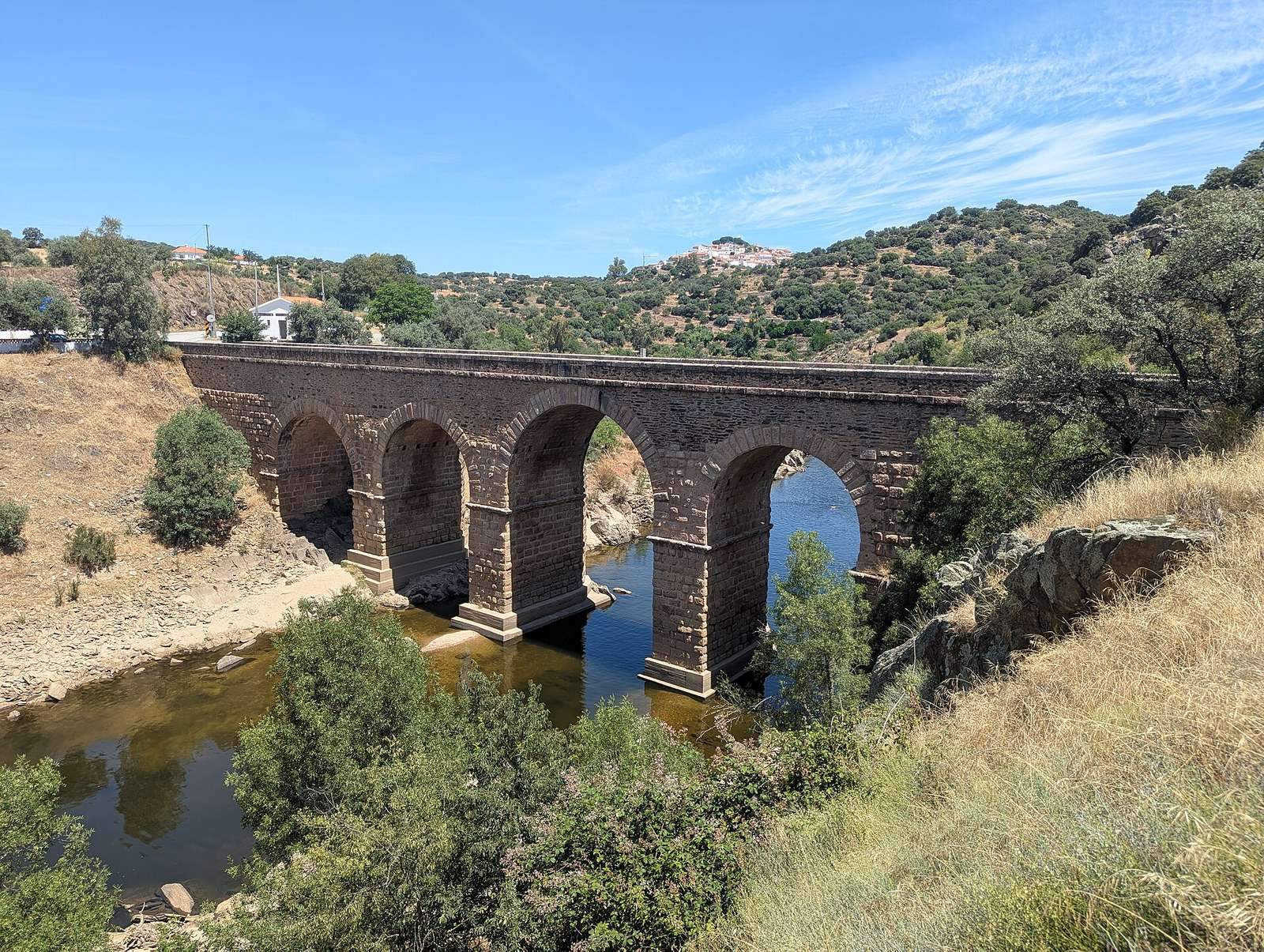
The five-arch bridge spans a gorge cut into local slate, where the Erges River forms the border between Portugal and Spain. It is about 41 m long and 6 m wide, and its roadway has no central rise. The central arch is about 15 m high and spans 10.5 m; each of the four side arches spans about 7.5 m. The arches have barrel vaults, continuous arched passages beneath the roadway.
Stonework and surviving fabric
Founded on bedrock, the bridge is built of cut pink-granite blocks with roughened faces, described as 2.85–3 m in section. It has four original supports, each with a triangular cutwater, a projection that helps deflect water, rising to 1.20 m. The two arches nearest the riverbanks are Roman work, as are all four supports; the other three arches are later reconstructions. Masonry from the 1571 rebuilding of two arches is barely distinguishable from the original work. A side wall about 0.60 m high is believed to have been added later. Remnants of small figures can be seen on two bridge stones. The bridge is in good condition, with reinforced concrete covering its footings and cutwaters following the 2007 works.