Israelite Tower: An Iron Age Fortification in Jerusalem
Site at a Glance
- Rating
- 4.5
- Popularity
- Low
- Country
- Israel
- Primary era
- Iron Age
- Eras represented
- Iron Age, Classical
- Civilizations
- Israelite
- Site type
- Military
- Remains
- Tower
On this page11 sections
History
Iron Age defenses and the Babylonian conquest
The Israelite Tower is an Iron Age fortification in Jerusalem’s Jewish Quarter, Israel. The Iron Age is the archaeological period that includes its earlier phase. It was probably built in the eighth century BCE, although construction in the seventh century BCE, possibly during the reign of Judah’s King Manasseh, is also proposed. The tower may have formed part of a gatehouse protecting Jerusalem’s northern edge.
Its relationship to the nearby Broad Wall is uncertain. Judah’s King Hezekiah built that wall in preparation for the Assyrian king Sennacherib’s campaign against Jerusalem in 701 BCE. The Israelite Tower may have entered use later, after the Broad Wall had ceased to serve as a defense.
The First Temple period, the era associated with Jerusalem’s First Temple, ended with Babylon’s conquest of the city in 586 BCE. After a siege lasting about a year and a half, Babylonian forces under King Nebuchadnezzar breached Jerusalem’s walls, destroyed the Temple, and deported people to Babylon. The Israelite Tower may have been involved in this assault.
Hasmonean fortifications
In the second century BCE, Jerusalem’s Hasmonean rulers built the First Wall, a major later fortification. The Hasmoneans were a Jewish ruling dynasty. Jonathan Maccabeus began the work, and his brother Simon completed it. Josephus, a first-century Jewish historian, described the wall in The Jewish War, but mistakenly credited its construction to David, Solomon, and the kings of Judah.
Discovery and excavation
The tower was first uncovered by chance when foundations were being dug for a modern residence during the postwar restoration of the Jewish Quarter. With funds and staff for a rescue excavation unavailable, the building was designed to preserve the buried remains. Organized excavation followed several years later. Between 1969 and 1982, archaeologist Nahman Avigad excavated about five acres in the quarter, uncovering three well-preserved sections of late Iron Age defenses, including the Israelite Tower. The work helped establish that, by the end of the First Temple period, Jerusalem’s walls extended west to the Hinnom Valley and enclosed the southwestern hill.
Remains
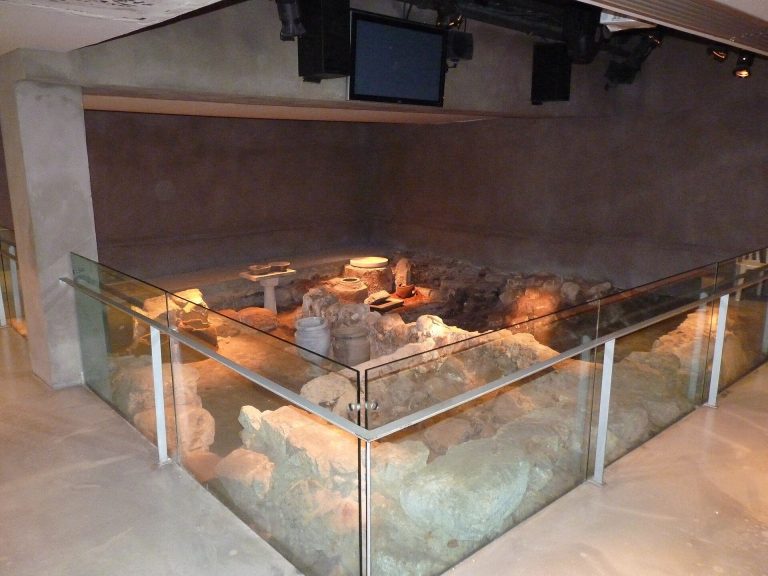
The remains lie beneath a school in the Jewish Quarter and preserve parts of two fortification phases. The Iron Age tower and the later Hasmonean defenses show different construction methods and are separated by about five centuries.
Iron Age fortifications
The Israelite Tower
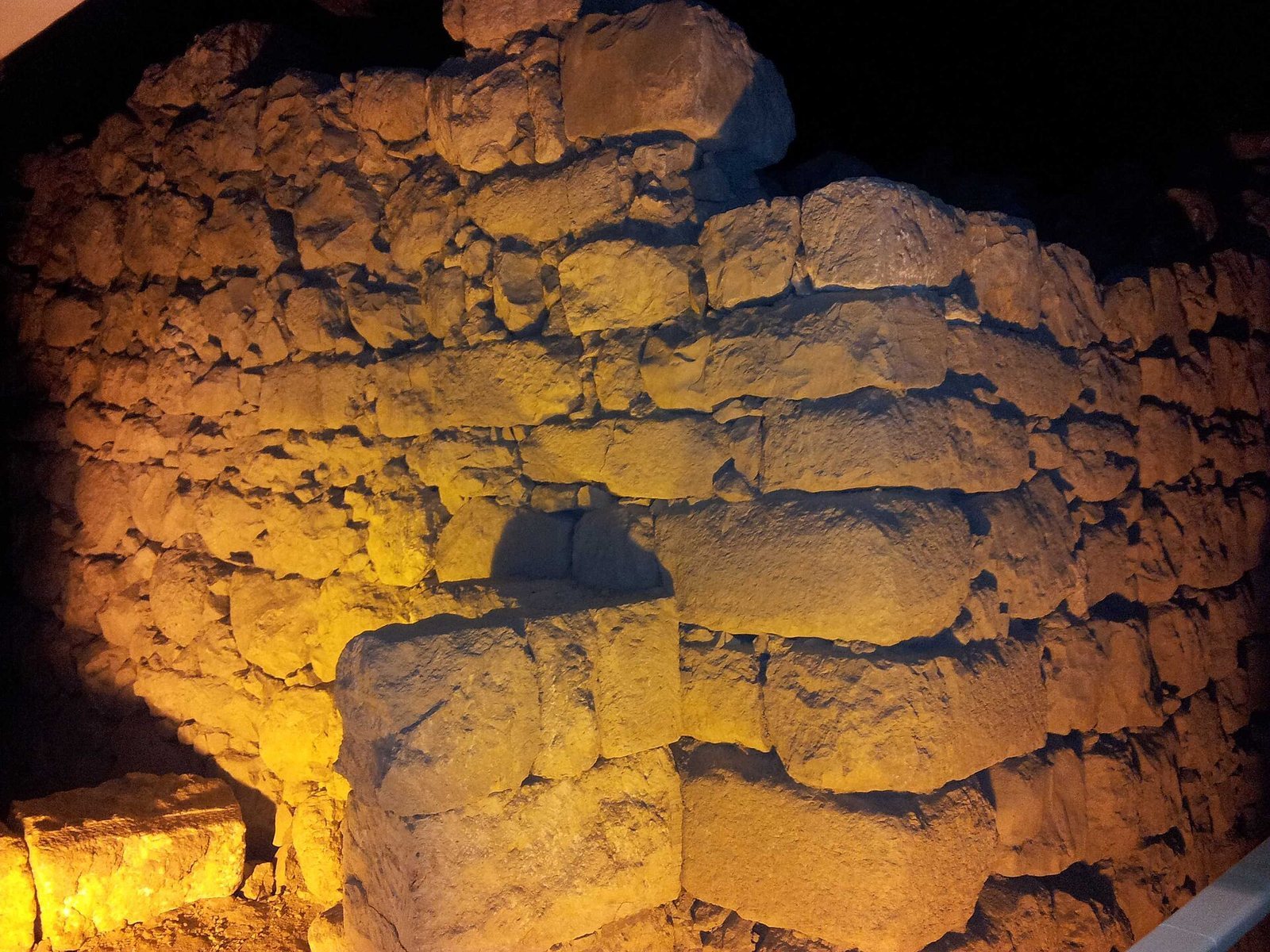
The tower survives as two perpendicular walls, interpreted as the corner of a gatehouse. One extends 12 metres east to west and the other 8 metres north to south. Both are about 4 metres thick and stand up to about 7 metres high, on bedrock 45 feet below the modern ground level. Large, roughly worked fieldstones form horizontal rows along the walls’ faces, while smaller stones fill their interiors.
A compacted-earth surface abutted the tower and was covered by ash and soot. Pottery fragments from this layer date to the eighth or seventh century BCE. Four arrowheads, made of iron and bronze, were found in the ash and soot at the tower’s base. One bronze example has three triangular fins and a hollow socket for its shaft. Its type was used by Babylonian archers after 600 BCE, and the arrowheads are considered likely remains of the 586 BCE siege.
The Broad Wall
The Broad Wall lies a few metres from the tower, but the two defenses may not have been built or used at the same time, nor did they necessarily form one continuous line. The tower may occupy a stream channel that the Broad Wall bypassed.
Hasmonean fortifications
The Hasmonean tower and wall
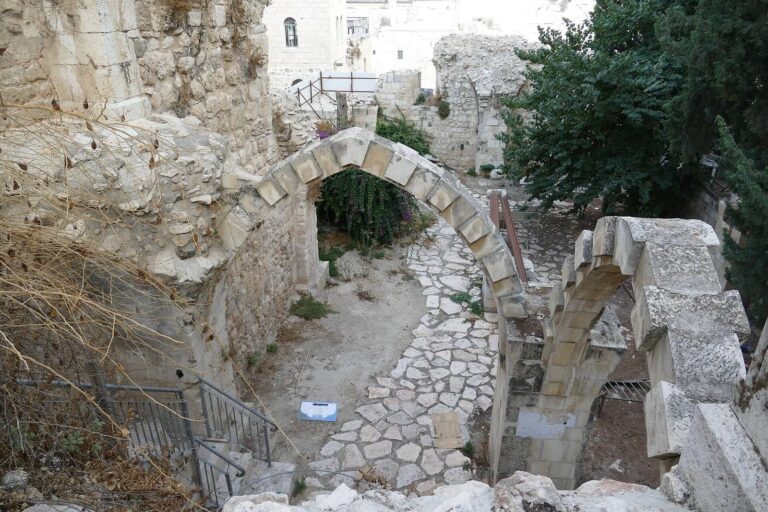
The later tower and wall meet and incorporate the Israelite Tower. The tower projects north from the wall in a plan resembling the letter pi. Its walls are about 9 metres long and 2.5 to 3 metres thick. They consist of medium-sized, carefully cut rectangular stone blocks fitted closely together. The masonry and associated pottery indicate a date in the first or second century BCE.
Course of the First Wall
The First Wall enclosed the City of David and Mount Zion to the south, while following the Cross Valley along Jerusalem’s northern boundary, near the line of modern David Street. A gap between nearby wall fragments may mark a city gate, possibly the Gennath Gate. The Israelite Tower’s identification with a particular gate remains uncertain.