Library of Pantainus: A Roman-Era Library in the Athenian Agora
Site at a Glance
- Popularity
- Medium
- Country
- Greece
- Primary era
- Classical
- Eras represented
- Classical
- Civilizations
- Roman
- Site type
- Civic
- Remains
- Library
On this page13 sections
History
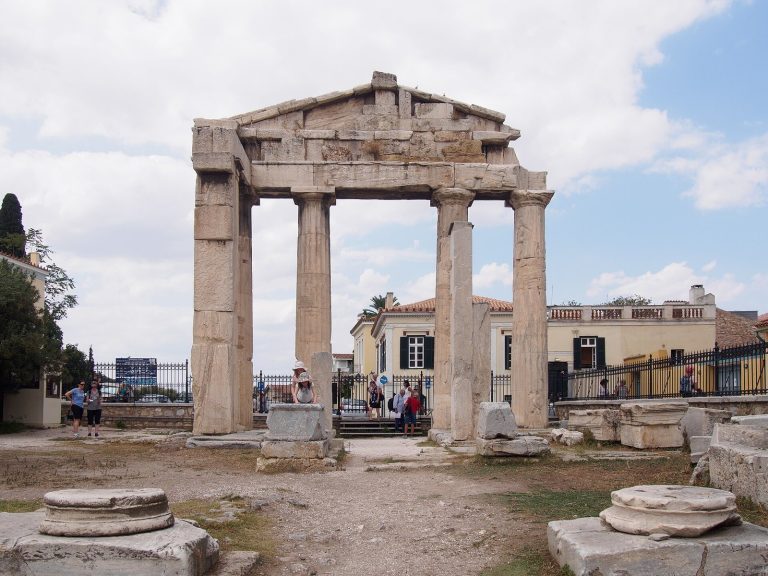
The Library of Pantainus is a Roman-era library in the southeastern part of the Athenian Agora in Athens, Greece. Athenian magistrate and philosopher Titus Flavius Pantainos built it between AD 98 and 102, during Emperor Trajan’s reign. The library connected philosophical study with the cult of the Muses, goddesses associated with artistic and intellectual pursuits. An inscription identifies Pantainos as a priest of the philosophical Muses and as the son of Flavius Menander, who had succeeded to the leadership of a philosophical school.
Pantainos and his children, Flavius Menander and Flavia Secundilla, paid for the building and dedicated its porticoes, courtyard, library, books, and ornaments to Athena Polias, the civic-protective aspect of Athena, to Trajan, and to the people of Athens. The building was completed before Trajan took the honorific title Dacicus, associated with his victories over Dacia. An inscription setting out the library’s rules stated that books were not to be removed and that the library opened from the first through the sixth hour.
Destruction and later use
The Heruli, a people involved in incursions into Roman territory in late antiquity, destroyed the library in AD 267. In the fifth century, the remains were incorporated into a large colonnaded courtyard complex. A later fortification wall and one of its towers partly covered the library’s western ruins.
Excavation
Excavations began in 1933, when the inscribed entrance lintel was the first find. It was published in 1935, and work exposed the western part of the building. Excavation of the eastern area followed in 1970.
Remains
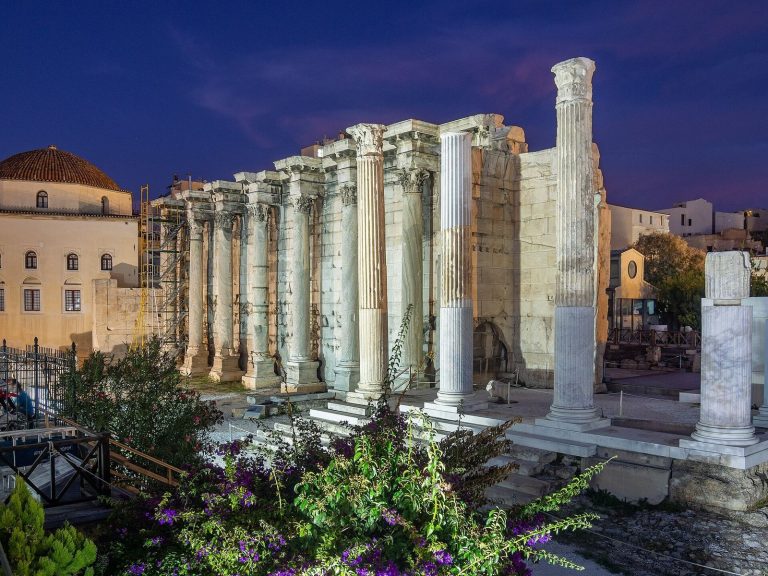
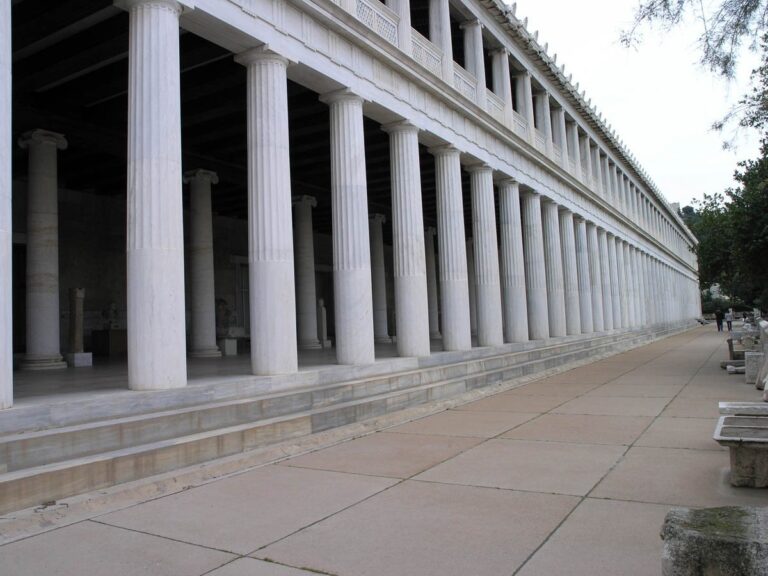
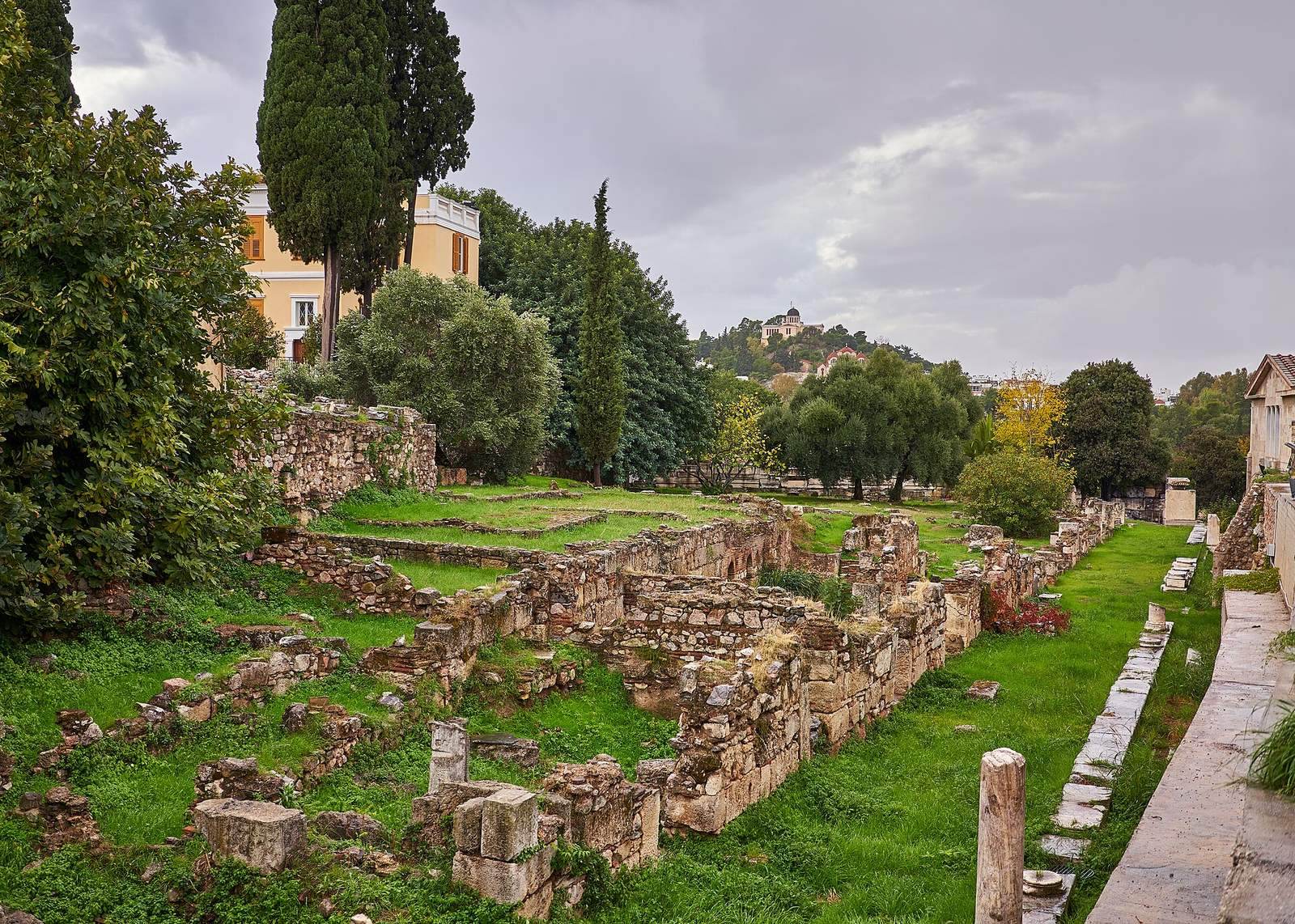
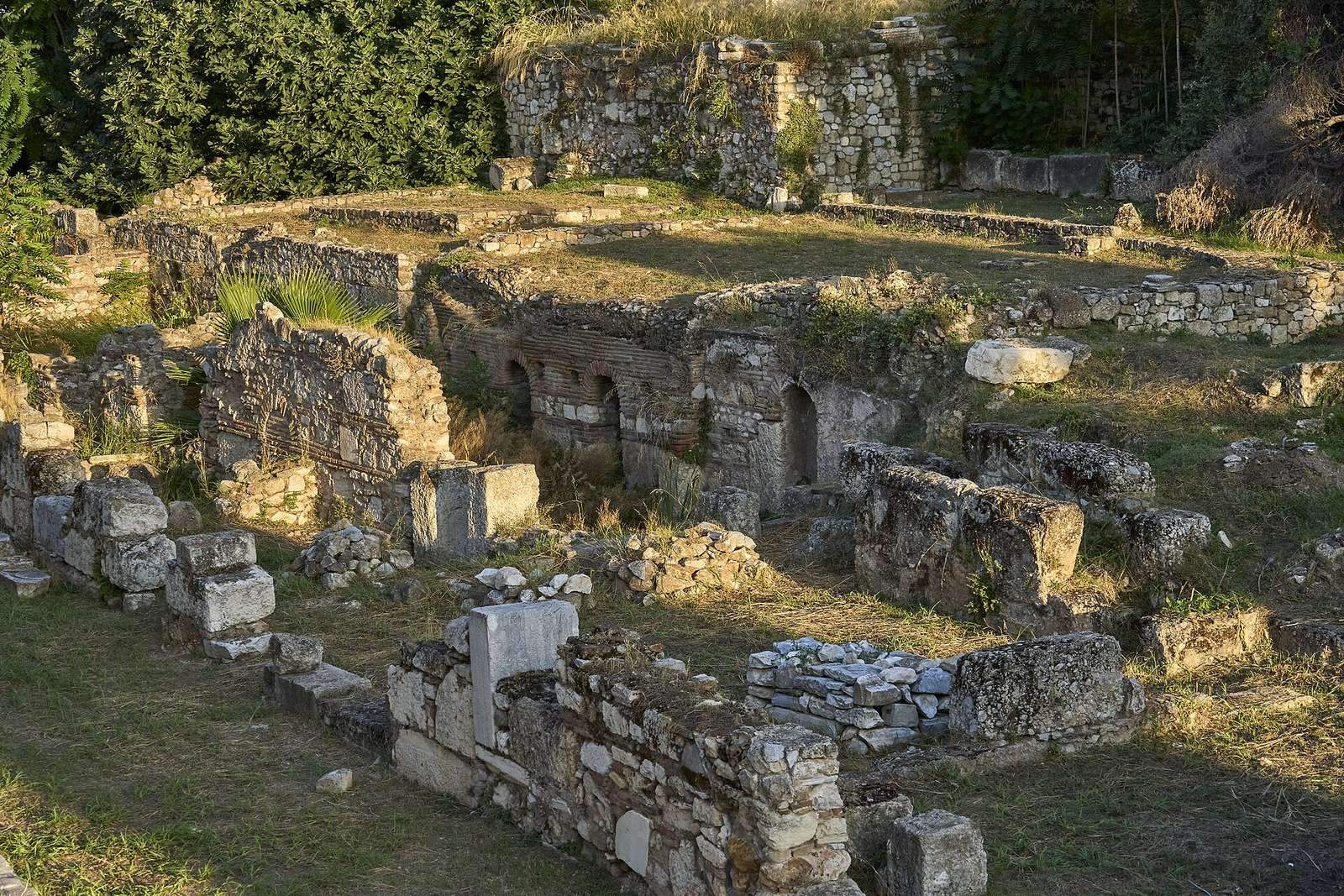
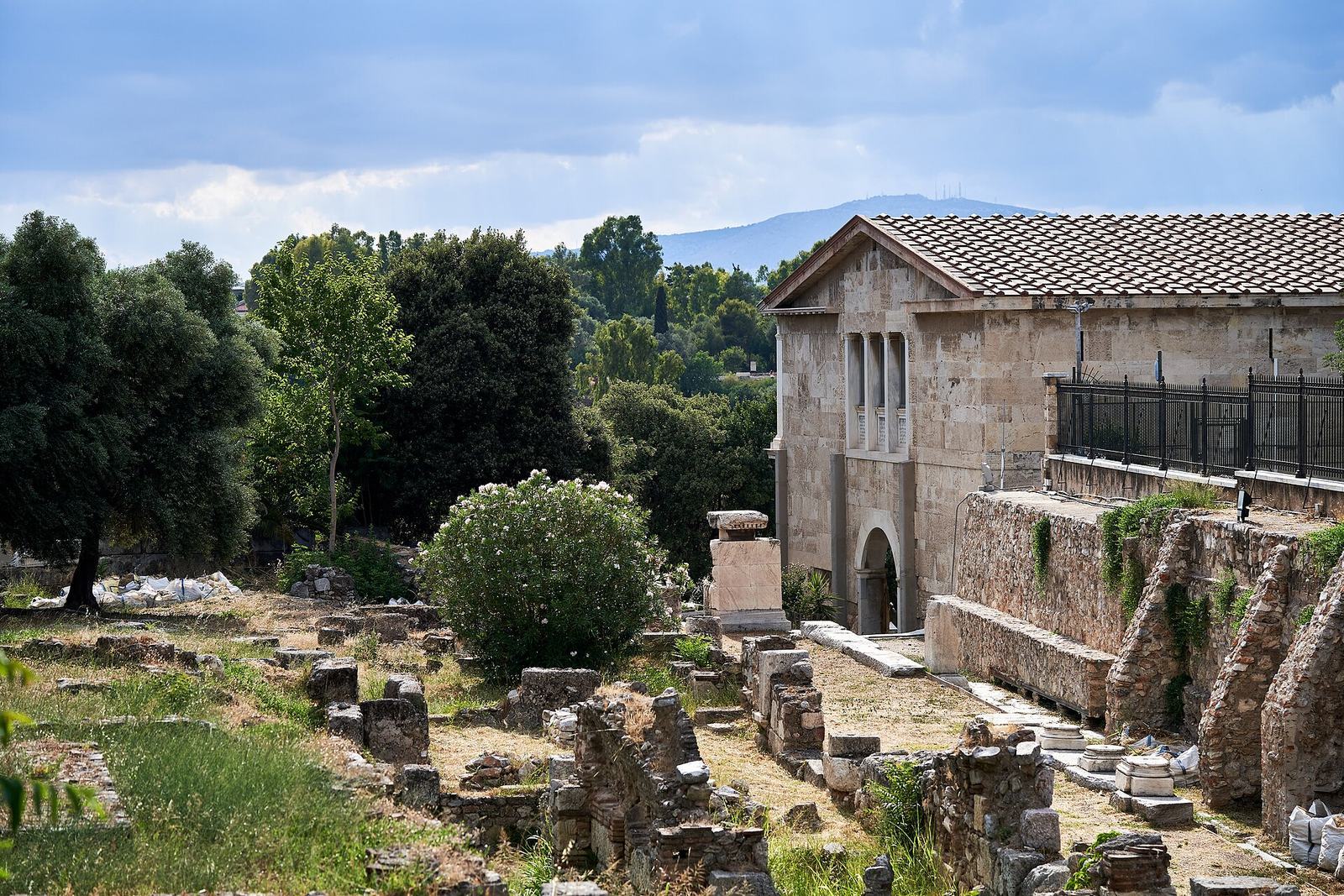
The library had an unusual plan adapted to irregular ground, drawing on an earlier Greek library tradition while differing from other known Roman libraries. Three separate colonnades of blue marble framed its outer areas. The building stood south of the Stoa of Attalus, with its porticoes opening toward the Panathenaic Way and the road to the Roman Agora.
Plan and porticoes
One colonnade ran along the western front beside the Panathenaic Way, where the entrance was located; the inscribed lintel was found directly below its original position. A shorter portico stood opposite the end wall of the Stoa of Attalus. The northern portico extended for about 45 metres beside the road leading to the Roman Agora.
Courtyard and rooms
Central courtyard and square room
Behind a row of rooms at the front lay a courtyard measuring about 20 by 13.5 metres. A colonnade was later added around it. Its paving included irregular marble pieces set in mortar, with marble slabs across the central area. A square room, with sides measuring 10 metres, opened onto the courtyard. Marble slabs covered its floor, and marble lined its interior walls. The room may have served as a meeting place.
Northern rooms and workshop
Two smaller rooms to the north also opened onto the colonnaded courtyard and may have held book rolls. Two rooms in the southwest were used as a sculptor’s workshop.
Northeast room
A paved room on the northeastern side may have been used for the imperial cult. Its front wall was set back by nearly a metre, and the opening between the entrance columns was wider than usual by about 30 centimetres. The two columns at the front measured 68 centimetres across, compared with 60 centimetres for the others. Wear on the platform beneath them probably marks where statue bases once stood.
Masonry and reused architectural pieces
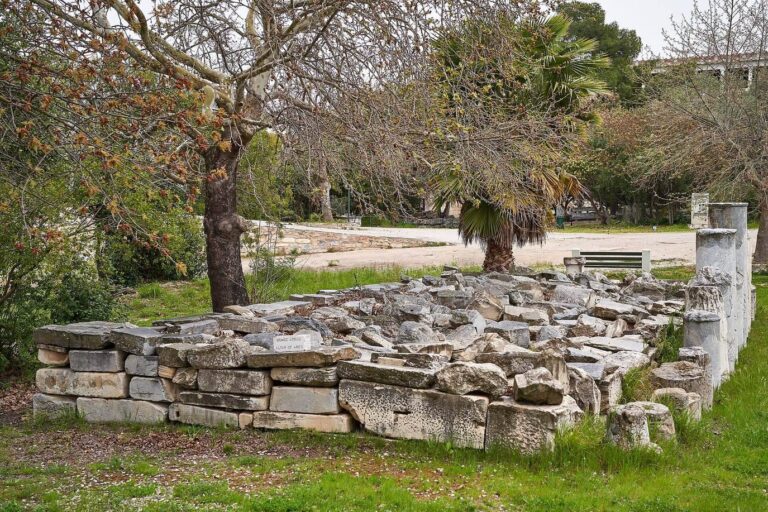
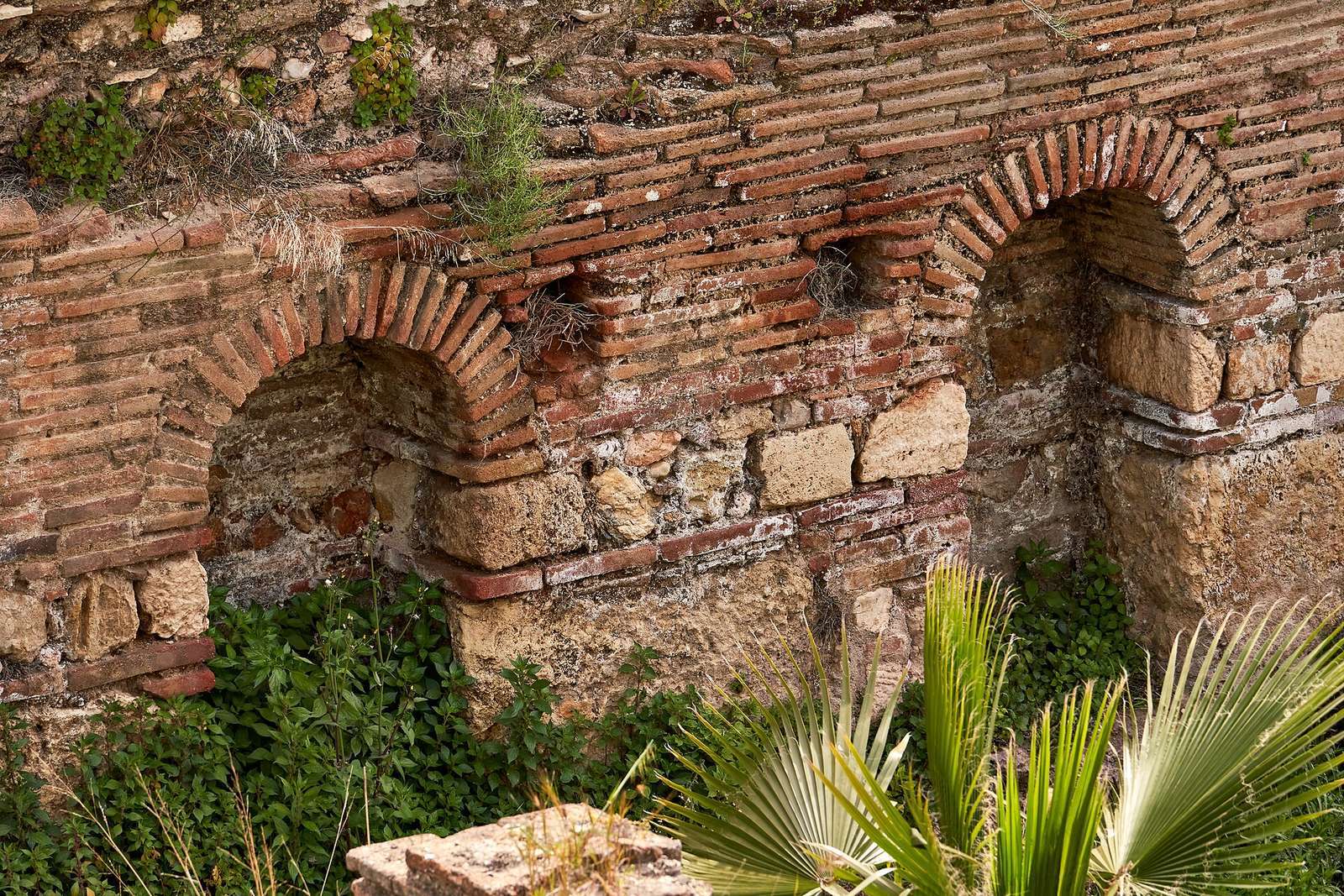
Rubble-stone walls formed the building’s relatively plain construction. The remains survive in fragments, partly concealed by the later Roman wall and a large tower. Many architectural pieces, including horizontal blocks from above the columns, flat wall supports, bases, and portico columns, were carefully reused in the wall along the library’s western side. When exposed, this stretch of wall stood 3.40 metres high.
Inscriptions and sculpture
Inscriptions
The inscribed lintel from the main entrance remains embedded in the later wall. A second library inscription, carved on a white-marble pillar, was reused in a rebuilt section of the library’s north wall. It is now held in the museum of the Stoa of Attalus.
Sculpture
Sculptures associated with the library and its surroundings include personifications of the Iliad and the Odyssey. The Odyssey figure bears scenes involving Scylla, a sea monster; Aeolus, associated with the winds; Polyphemus, a Cyclops; and the Sirens, whose songs lured sailors. The Iliad figure has a sword at its side, and an inscription on its base suggests that Homer was later added to the group. Other associated remains include a statue of Trajan with a kneeling, subdued Dacian.