Necropolis of Cyrene: An Ancient Burial Ground in Libya
Site at a Glance
- Popularity
- High
- Country
- Libya
- Primary era
- Iron Age
- Eras represented
- Iron Age, Classical
- Civilizations
- Ancient Greek, Roman
- Site type
- Burial
- Remains
- Necropolis
On this page11 sections
History
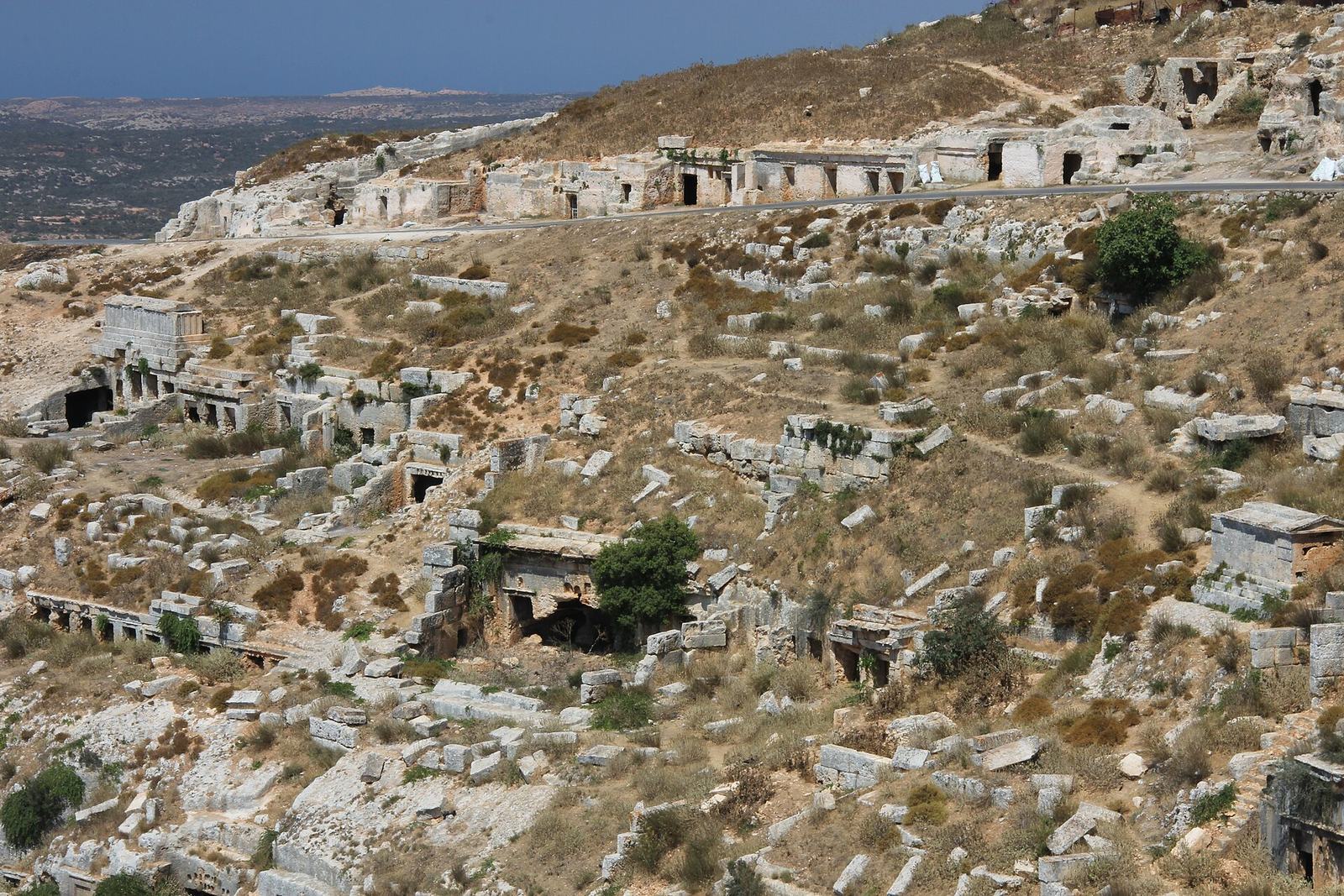
The Necropolis of Cyrene is an ancient cemetery in Libya, extending between the ancient Greek city of Cyrene and its port of Apollonia. Burial vaults and sarcophagi, or stone coffins, at the site date to about 600 BCE.
James Hamilton, a Scottish travel writer, visited in 1856 and reported that tombs had been extensively disturbed and their contents looted. He considered the search for valuable objects the likely reason.
Excavation and protection
Excavation at the necropolis began by the nineteenth century. Richard Norton worked there in 1911, followed by Giacomo Oliverio in 1925 and Burton Brown in 1947. Alan Rowe surveyed and excavated tombs from 1952 to 1957, carrying out the first extensive study of the cemetery. Luciano Beschi excavated two tombs in 1963. Many objects recovered by Rowe and Oliverio are now thought to be lost.
The Archaeological Site of Cyrene was inscribed on UNESCO’s World Heritage List in 1982. In 2013, local residents bulldozed parts of the necropolis to clear land for development. The damage extended for about two kilometres, destroying around 200 tombs and burial vaults and damaging a road-carrying structure dating to about AD 200. Ancient objects were also thrown into a nearby river. Cyrene was added to the List of World Heritage in Danger in 2017.
Remains
Layout and tomb architecture
The cemetery landscape
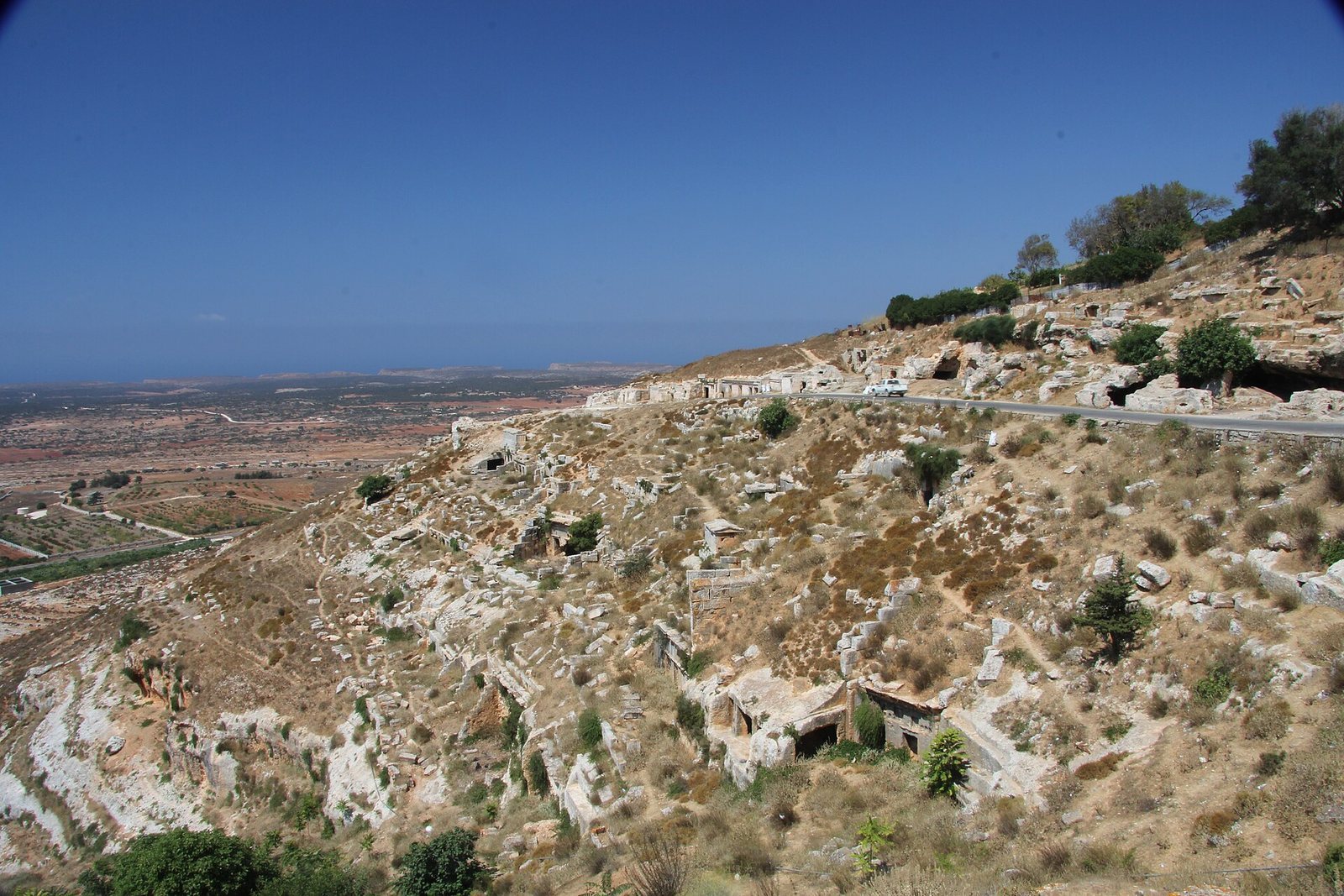
The necropolis covers about 10 square kilometres on the western slope of Wadi Haleg Shaloof hill, between Cyrene and Apollonia. Early Greek tombs are arranged on terraces near the ancient road to the port. Tombs and burial chambers also extend along both sides of a road leading toward the centre of ancient Cyrene. Hamilton described the cemetery as spreading along the hillsides, across the plain, and south over the plateau. He believed burial use began on the northern face of the eastern hill, and considered some monuments near a fountain on the Apollonia road among the earliest, based on their style.
Rock-cut monuments
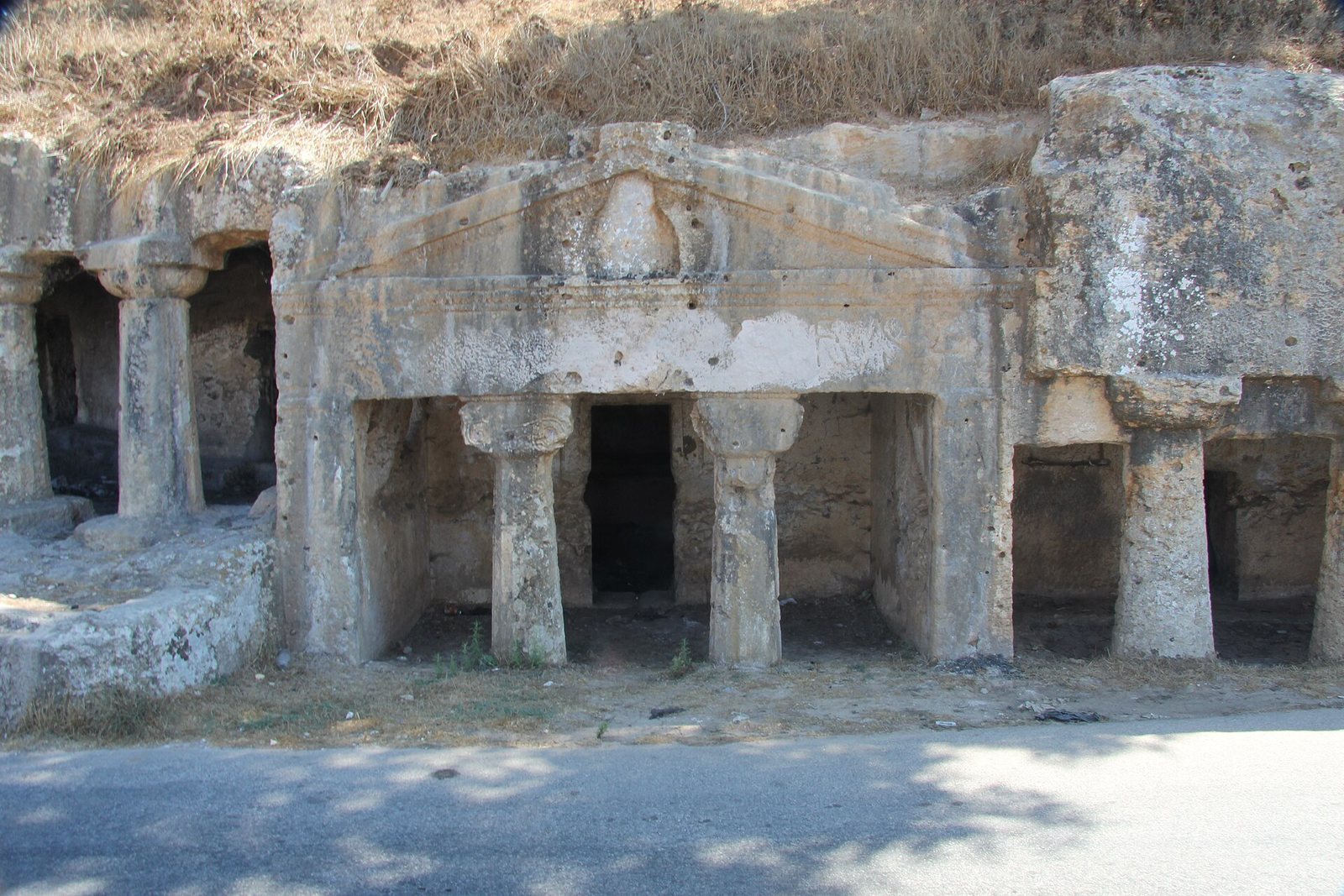
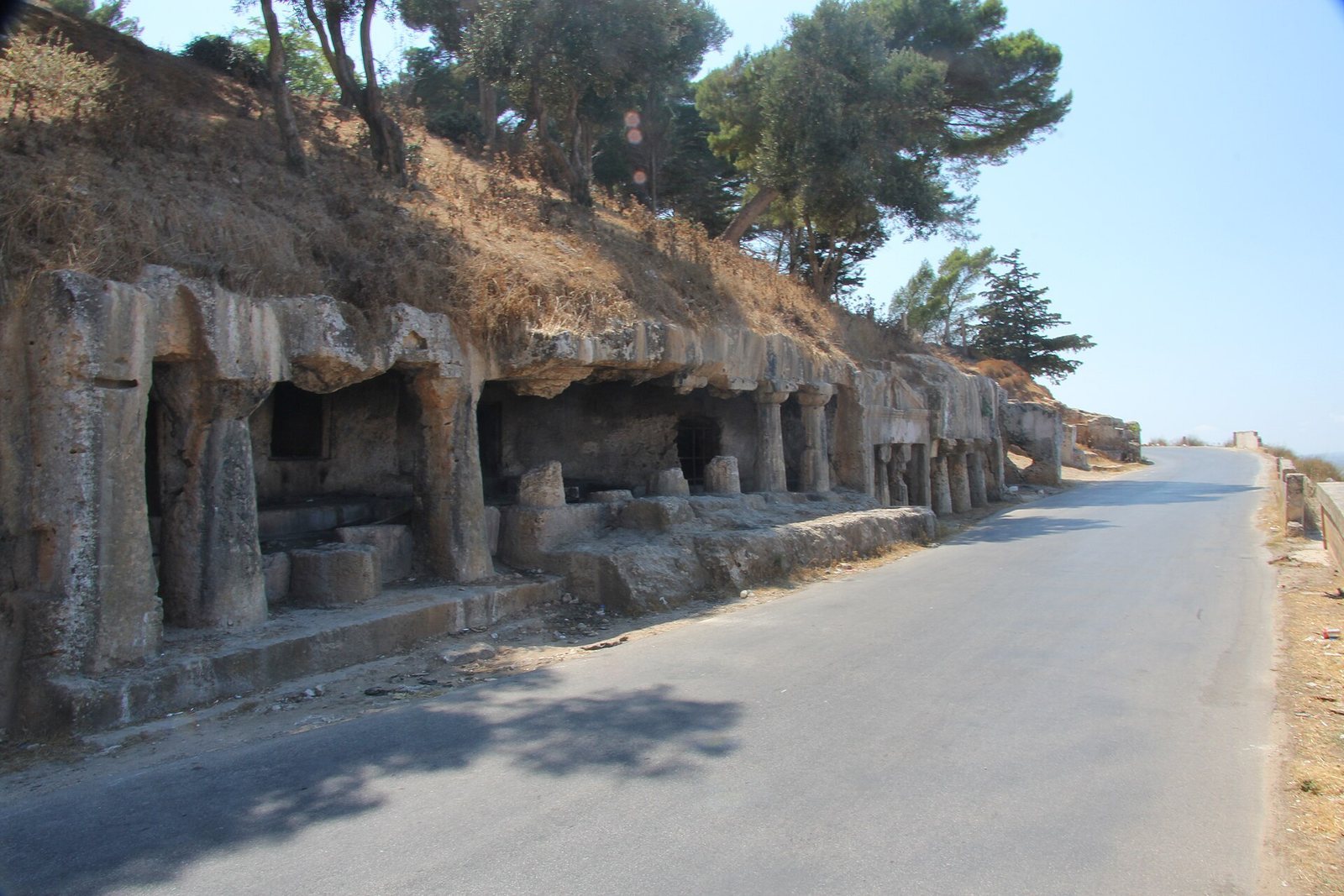
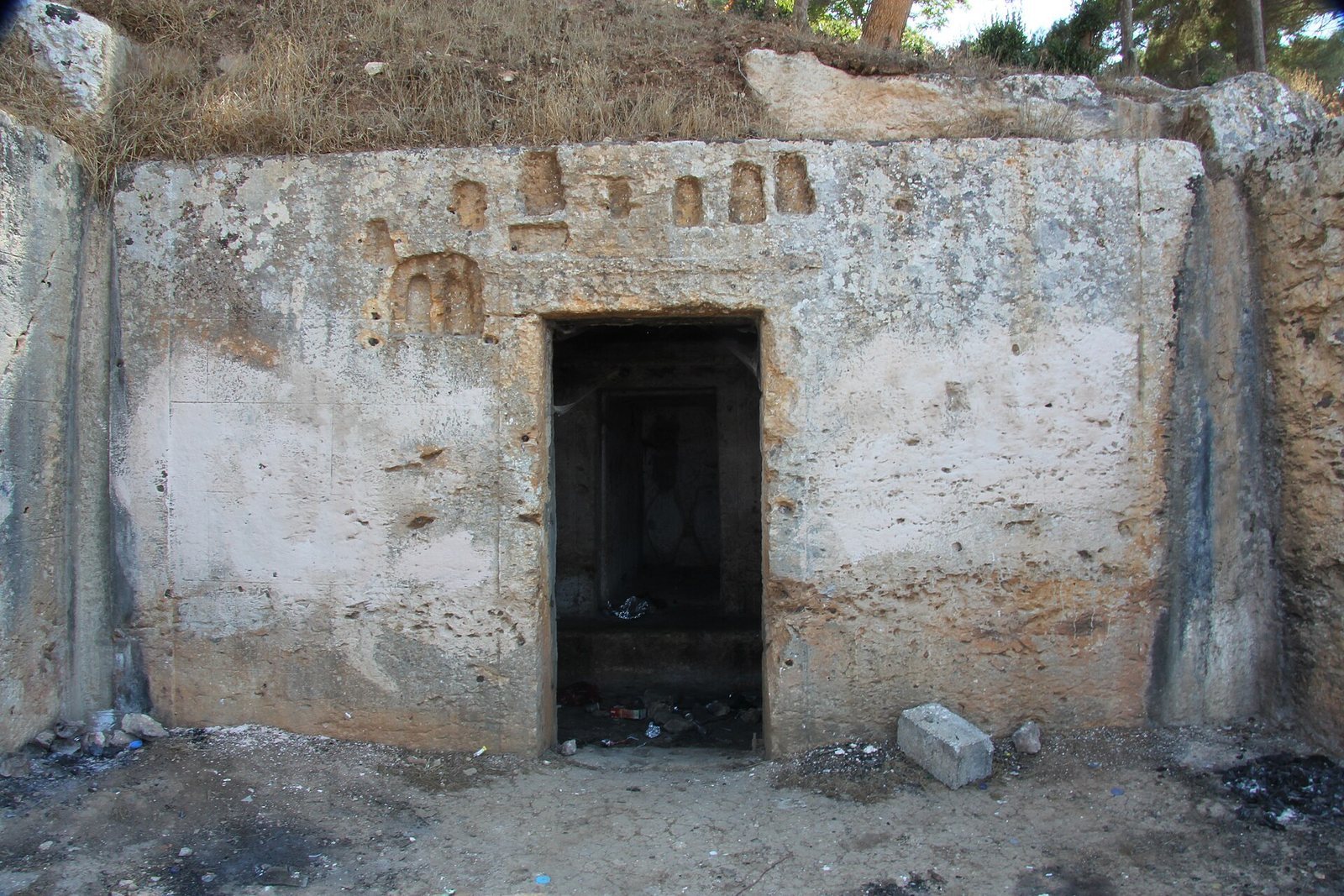
Some large tombs have façades cut into solid rock, with porticoes, or roofed entrance spaces. Hamilton described their forms as early Greek and compared them to Egyptian architecture. He grouped tombs carved wholly from rock, without masonry additions, into two stylistic phases. The earlier examples were rough in finish but imposing in their scale, while later ones had more elaborate, graceful decoration. In some tombs, lines scored into smoothed stone imitate masonry and give the façades the appearance of stuccoed houses. The cemetery includes both simple stone coffins and elaborate mausolea, meaning monumental tombs.
Carved scenes and excavated finds
Inscriptions and athletic scenes
Inscriptions on damaged tomb surfaces were scarcely legible. Hamilton thought they gave the names of visitors. Images on two damaged sides include chariot races, gladiators, wrestlers, and boxers. One scene shows two wrestlers and a third person who may be leaping over them or lying defeated. A judge watches from a corner, holding what Hamilton thought might be a prize cup or oil for anointing.
Musical and dramatic figures
Near a doorway, one figure appears to beckon a youth inside. Hamilton speculated that this might represent the youth’s introduction to rhetoric or poetry, and associated the scene with the beginning of the inscriptions. The actions of the next two figures were unclear. Elsewhere, an ivy-crowned figure in a long robe holds a lyre, an ancient stringed instrument, and extends one hand. A person with a scroll appears as an orator or poet, and the crowned figure is shown again playing the lyre. A damaged group includes eight ivy-crowned figures, preceded by a naked figure carrying a square chest; the fourth person in the group blows a double horn. Another sequence includes a headless figure and a lyre player surrounded by seven people. A man wearing a tragic mask appears to address a masked woman among seven women crowned with garlands.
Animal combat and hunting
Scenes beside a doorway show an animal fight and a hunt. In one, a lion attacks a bull while a tiger prepares to spring toward the bull’s neck. Above them are stags, a gazelle, dogs, and a jackal, with spears shown across the scene. Hamilton compared the style of the images to paintings from Pompeii and suggested that they might date to that period or later.
Excavated objects
Finds from Rowe’s work include fragments of a cinerary urn, a vessel for cremated remains, from the Ptolemaic period, when the dynasty founded by Ptolemy I ruled Egypt after Alexander the Great’s conquests. They also include a figure of Theia, a Greek Titan goddess associated with sight and light. Burton Brown excavated two sarcophagi and a Roman burial in 1947.