Boralday: An Early Iron Age Necropolis in Kazakhstan
Site at a Glance
- Popularity
- Medium
- Country
- Kazakhstan
- Primary era
- Iron Age
- Eras represented
- Iron Age
- Civilizations
- Scythian
- Site type
- Burial
- Remains
- Necropolis
On this page6 sections
History
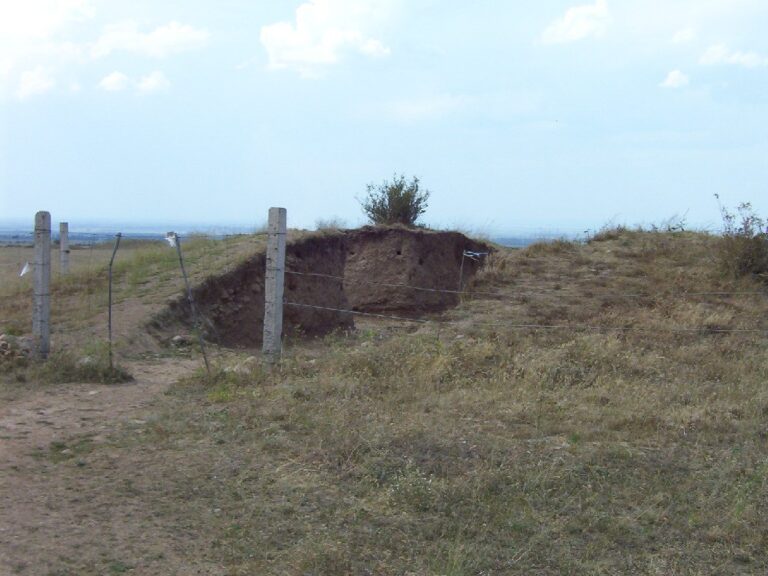
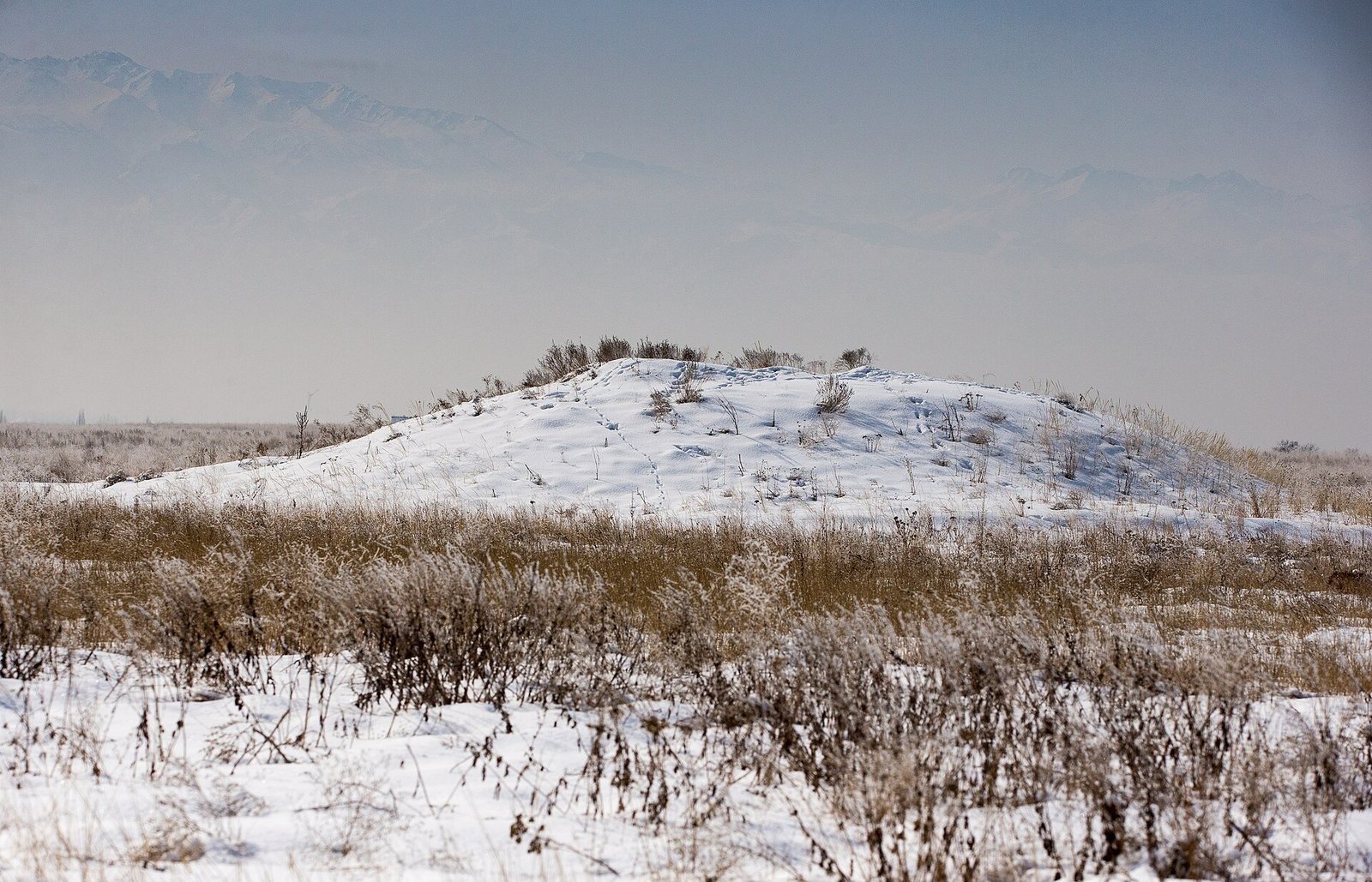
Boralday is an Early Iron Age burial-mound necropolis northwest of Almaty, Kazakhstan, associated with the Saka and Wusun, ancient peoples of Central Asia. Its 47 mounds date broadly from the sixth to third centuries BCE.
Archaeological recognition and protection
Archaeologist Ageeva first scientifically described and registered the necropolis in 1956. In the early 1990s, a nearby brickworks whose clay reserves were depleted proposed extracting clay from 60 hectares of the burial ground. The Institute of Archaeology was prepared to accept the proposal in exchange for the cost of preliminary excavations, while the Kazproektrestavratsiya Institute opposed it. Geologists identified clay deposits elsewhere, and the brickworks moved its quarries farther from Boralday.
On 28 March 2006, the territory containing the mounds came under the jurisdiction of the Museum of Almaty, with plans to establish the Boralday Sak Barrows Archaeological Park as an open-air museum. The proposal also included an ethnopark devoted to Kazakh nomadic architecture and everyday life. Archaeologist Baipakov argued that a modern museum was overdue, noting that feather grass and weeds had overgrown the mounds.
Park proposals and local status
The mounds retained local-monument status in Almaty’s State List of Historical and Cultural Monuments, approved on 10 November 2010. The boundaries of the site’s protection zones were approved in 2014. In 2016, M. M. Nurpeisov of the Association of Museums of Almaty proposed an ecopark as the main development concept, with small groves around the site and the landscape near the central mound kept as intact as possible.
Remains
The necropolis occupies 430 hectares on the high left bank of the Bolshaya Almatinka River, at the southeastern edge of Boralday village. It extends about three kilometres in length and 800 metres in width, with its southern end reaching the Big Almaty Canal. The mounds form chains running south to north and southwest to northeast. The largest, near the centre, stands 14 metres high and measures 100 metres across. Several others are 5–6 metres high and 60–80 metres across; medium-sized mounds are about 3 metres high and 30–40 metres across, while the smallest are 1–1.5 metres high and 10–20 metres across. Boralday is the only monument in the vicinity of Almaty to retain its topography and landscape.
Burials and preserved materials
Boralday’s dry climate preserved and mummified human remains, clothing, and other objects. A separate area of horse burials has also been found.
Dwelling models and festival displays
Models of ancient Saka dwellings show a central stone hearth and living spaces divided for cooking, sleeping, and craftwork. A niche represents storage for grain, barley, and other winter provisions. Displays at a 2017 festival in the park included the find known as the “Sarmatian Priestess,” from the Taksai 1 mound, alongside gold jewellery and objects associated with Saka culture. The Sarmatians were an ancient nomadic people of the Eurasian steppe.