Aghmat: A Medieval Berber City and Archaeological Site
Site at a Glance
- Popularity
- High
- Country
- Morocco
- Primary era
- Medieval
- Eras represented
- Medieval, Modern
- Civilizations
- Almoravid
- Site type
- Settlement
- Remains
- Town
On this page16 sections
History
Aghmat, now an archaeological site at the modern village of Ghmat in Morocco’s Ourika valley, was a Berber city established before Marrakesh. It is also known as Joumâa Aghmat.
Early rule and competing accounts
A later Berber tradition says that Christian Berbers lived at Aghmat when the forces of Uqba ibn Nafi conquered it in 683. The story was written nearly seven centuries after the event, and many historians consider it unreliable. The early Muslim historian al-Baladhuri gives a different account, saying that the Umayyad commander Musa ibn Nusair conquered the Sous region and built a mosque at Aghmat.
After Idris II died in 828, Morocco was divided among his sons. Aghmat then became the capital of the Sous under the Idrisid prince Abd Allah. The Idrisids were an early Moroccan ruling dynasty.
Trade and Almoravid rule
By the eleventh century, Aghmat was a prosperous trading city. The geographer al-Bakri described its Sunday market, where sellers slaughtered 100 cattle and 1,000 sheep, and noted that residents chose their own leader. The city traded with Sijilmassa and other places. In the twelfth century, al-Idrisi described it as a major crossroads for caravans carrying copper, woollen cloth, turbans, glass and stone ornaments, medicines, and perfumes. The Atlantic port of Qūz, about three days’ journey to the west, served the city. Al-Idrisi also included Aghmat on the Tabula Rogeriana, a medieval world map.
The Almoravids, a Berber Muslim dynasty, advanced north from the Sahara under the religious leader Abd Allah ibn Yasin. Aghmat’s defender, Laqūt, led the Maghrawa tribe, but was defeated. The Almoravid army entered the city on June 27, 1058. Aghmat became a base for the Almoravid advance, served for a time as their capital, and had a mint workshop.
Zaynab an-Nafzawiyyat, Laqūt’s wealthy widow, married the Almoravid leader Abu Bakr ibn Umar and placed her considerable wealth at his disposal. When Abu Bakr returned to the Sahara in 1071, she married his successor, Yusuf ibn Tashfin. Aghmat’s population had grown considerably around 1068–1069. Abu Bakr founded Marrakesh in 1070, after which Aghmat began to decline.
Decline and conflict
The Almoravids continued to use Aghmat as a place of exile. Al-Mutamid, the deposed ruler of Seville and Córdoba and a noted poet, was sent there, and his tomb became a pilgrimage destination. Abdallah ibn Buluggin, the former ruler of Granada, also lived in exile at Aghmat, where he wrote his memoirs.
Aghmat was caught up in fighting between the Almoravids and the Almohads, a successive Berber Muslim dynasty, in 1126, 1127, and 1130. After Almoravid forces suffered major defeats across Morocco and Algeria, the Almohad ruler Abd al-Mu’min entered Aghmat without resistance on June 27, 1146.
From the fourteenth century, following the end of the Almohad empire, the city declined further. Its palace and bathhouse were abandoned, while the mosque continued in reduced use. Officials and wealthy residents left, partly replaced by poorer inhabitants. Farming persisted, and mystical Muslim communities settled among the ruins.
Modern history and archaeology
During French colonial rule, Moroccan nationalists associated with the Istiqlal party held a demonstration at Al-Mutamid’s tomb on November 18, 1950. Police acting on the orders of Boujane, a local tribal administrator, violently suppressed it. The resulting tensions between Boujane’s superior, Marrakesh’s Pasha T’hami El Glaoui, and Sultan Mohammed V contributed to the sultan’s brief overthrow.
Excavations beginning in the early 2000s, led by archaeologist Ronald Messier after former US ambassador Frederick Vreeland drew attention to the site, revealed the breadth of Aghmat’s buried remains. Excavations in 2017 uncovered mosaic floors, while geological prospecting indicated substantial archaeological remains below ground.
Remains
Aghmat lies at the foot of the High Atlas, on the massif’s northern foothills and at the southern edge of the Haouz plain. The archaeological area occupies only part of the former city, at the site of the modern village of Ghmat. The Ourika River and irrigation channels supported intensive fruit and vegetable cultivation from the medieval period. The surviving remains include sections of wall, buildings, and a water system that crossed the urban area.
Walls and water system
City wall
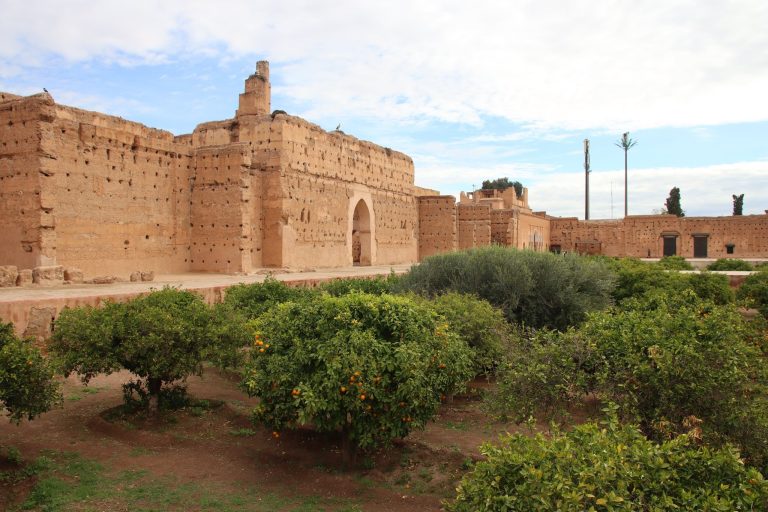
A surviving stretch of the city wall extends for about 100 metres. It was built using compacted earth and stone, and forms part of the visible remains of the former settlement.
Canals and reservoirs
A large irrigation canal divided the city into two parts. The water system also included three square reservoirs, several underground galleries, and other hydraulic structures. Irrigation channels remain visible at the site.
Buildings and archaeological finds
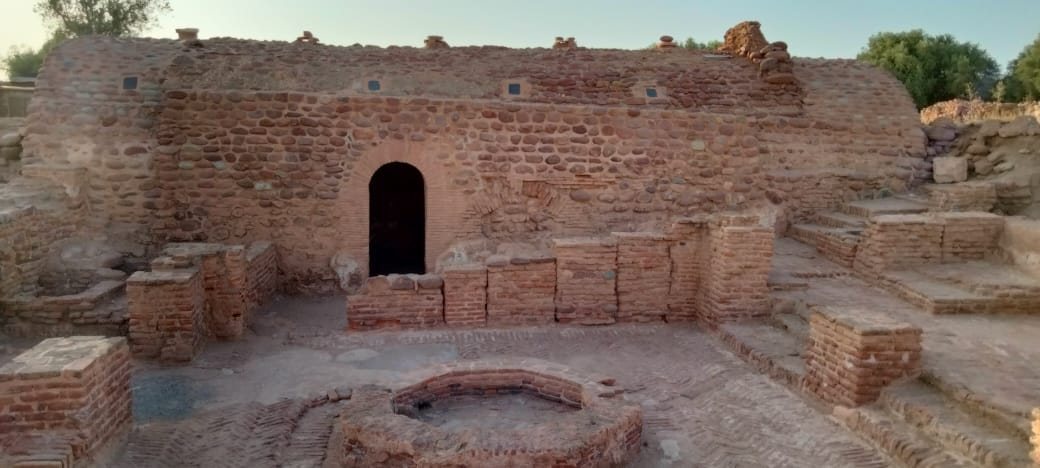
Bathhouse
Excavations revealed a large hammam, or bathhouse. After the city’s decline, potters established workshops in its remains, giving the abandoned structure a later working use.
Palace, houses, and villas
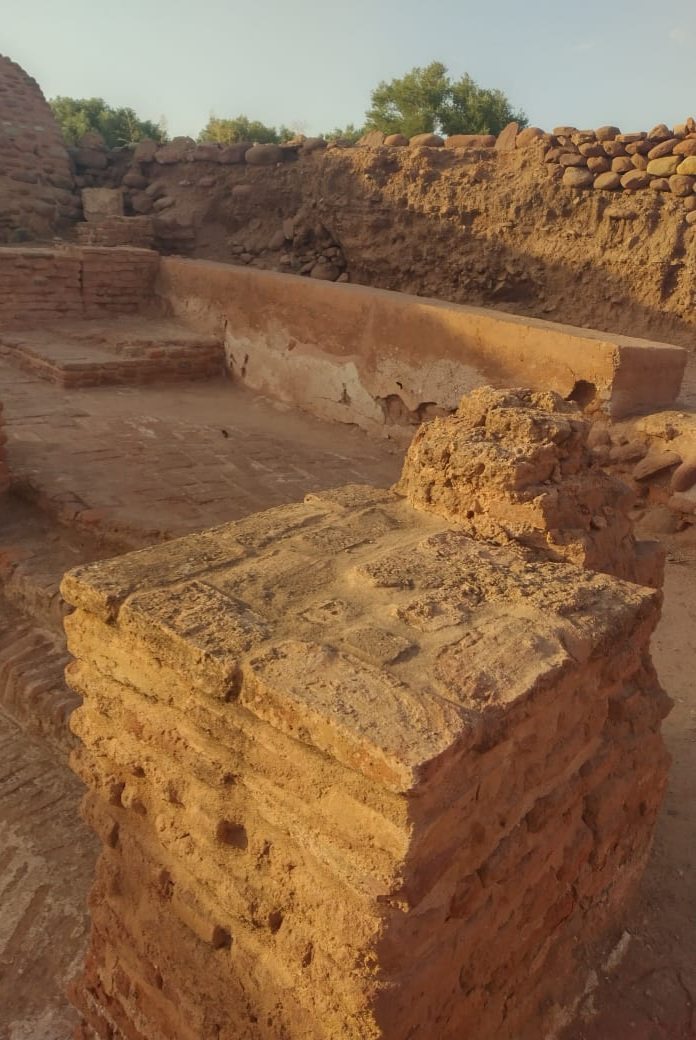
The excavated remains include a palace, villas, and parts of houses. Floral stucco decoration formed part of the palace complex. These structures belong to the wider urban settlement represented by the archaeological area.
Mosque
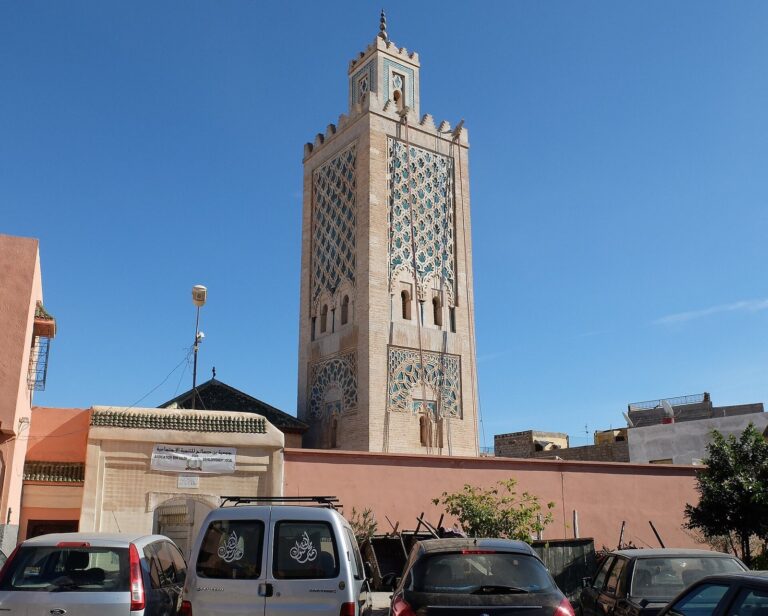
A mosque’s ablution basin, used for washing before prayer, connects a surviving archaeological find with a fourteenth-century text that mentions it. In one section, the mosque had a movable pulpit; another had a prayer-direction wall oriented differently from the first.
Mosaic floors
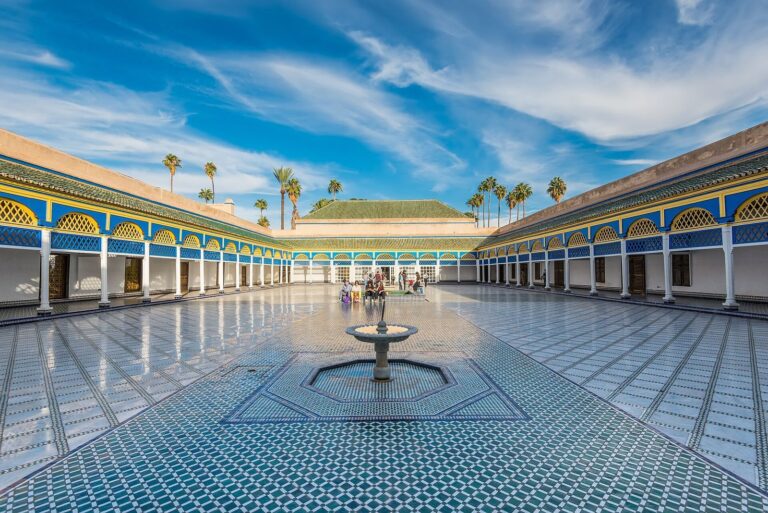
Floors uncovered in 2017 are made of blue, grey, and white tiles. Small tiles set diagonally create a central diamond pattern, bordered by rectangular tiles. The mosaics have been attributed to Aghmat’s prosperous eleventh- and twelfth-century period. Similar diamond designs appear at El Badi Palace in Marrakesh.
Glazed pottery
Excavations also recovered glazed pottery made using cuerda seca, a technique in which separating lines keep different glaze colors apart. Such pottery had been associated with Andalusia and previously regarded as imported to North Africa. The Aghmat finds provide evidence of local production.
Al-Mutamid’s mausoleum
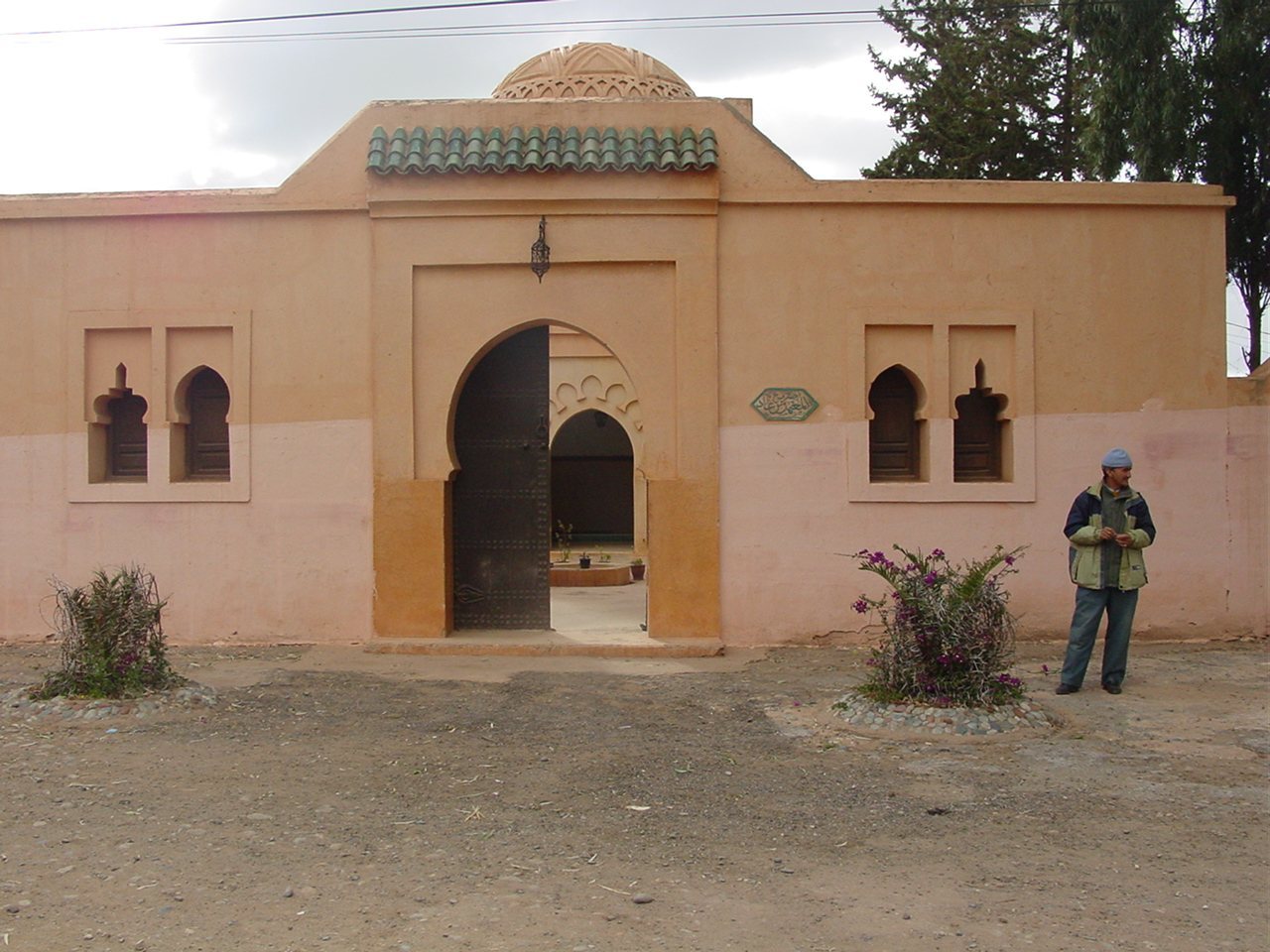
A mausoleum marks Al-Mutamid’s tomb. Its dome follows the Almoravid style and bears verses composed by the poet-king. Al-Mutamid is buried there with his wife, I’timad al-Rumaykiyya, and their daughter.