Dundrennan Abbey: A Cistercian Monastery Above the Solway Firth
Site at a Glance
- Rating
- 4.5
- Popularity
- Medium
- Country
- United Kingdom
- Primary era
- Medieval
- Eras represented
- Medieval
- Civilizations
- Kingdom of Scotland
- Site type
- Religious
- Remains
- Monastery
On this page7 sections
History
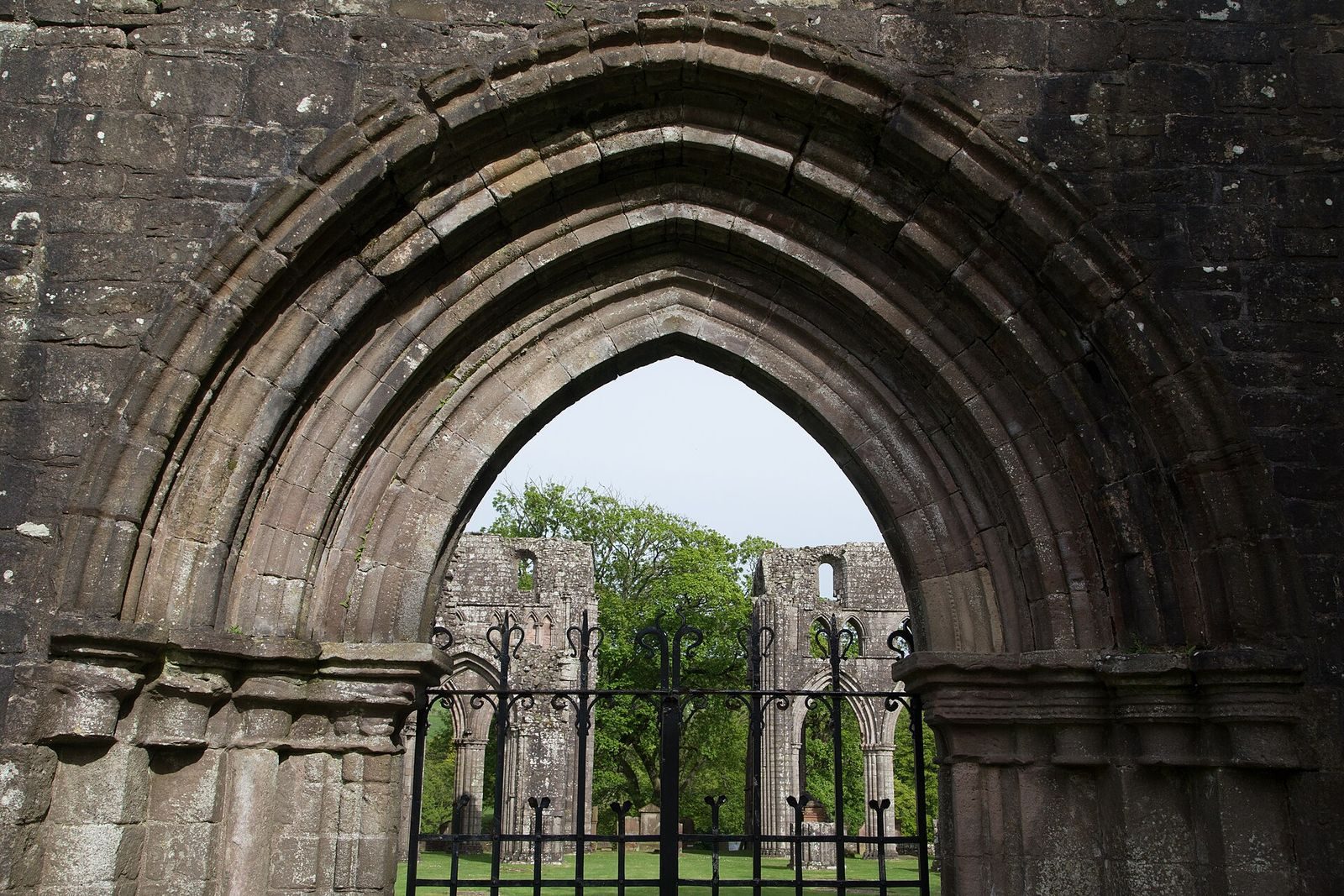
Dundrennan Abbey is a Cistercian monastery in the United Kingdom, founded in 1142 by Fergus of Galloway and David I of Scotland. Cistercian monks probably came from Rievaulx Abbey to form its first community. The Cistercians developed from the Benedictine tradition and emphasized communal discipline and simplicity. The abbey was dedicated to St Mary, and its church was built during the transition from Romanesque architecture, associated with rounded arches and massive forms, to Gothic architecture, marked by pointed arches and greater vertical emphasis.
Foundation and growth
Rievaulx was Dundrennan’s mother house, meaning the monastery from which it was founded, and the abbey’s institutional lineage extended to Clairvaux. Tradition credits Fergus with selecting its site. The name Dundrennan is thought to derive from a Gaelic expression meaning “fort of thorn bushes.” Building work was complete by the late 12th century. Aelred of Rievaulx, an influential Cistercian writer and abbot, visited Dundrennan repeatedly while he led Rievaulx.
Dundrennan became the mother house of Glenluce Abbey, founded in the late 12th century, and Sweetheart Abbey, founded in 1273. It also controlled the churches of Kirkmabreck and Rerrick.
Conflict and decline
In 1296, the Cistercian Order reached an agreement with Edward I of England. It did not prevent repeated damage during the early 14th-century wars between Scotland and England, when Dundrennan was burned several times.
The abbey was in steep decline by the early 16th century. In 1523, its last abbot, James Hay, became Bishop of Ross, and a lay administrator was appointed to manage the buildings. By 1529, parts of the abbey were collapsing and its value had fallen to one-sixteenth of its medieval level.
Reformation and later history
The Scottish Reformation, a 16th-century movement that established Protestant reform in Scotland and transformed religious institutions, brought a further decline in monastic life. The date of Dundrennan’s formal dissolution is uncertain. In 1562, Edward Maxwell of Terregles became administrator and refused an order to destroy the abbey. The church continued to serve as a parish church into the 17th century.
On 15 May 1568, Mary, Queen of Scots, spent her last night in Scotland at Dundrennan. She had been defeated at the Battle of Langside after previously escaping from Lochleven Castle. From nearby Port Mary, she crossed the Solway Firth to Workington and was soon taken prisoner by the English.
The abbey lands passed to the Crown in 1587. The site was subsequently used to shelter livestock, and local people later quarried its remains. After Maxwell’s death in 1599, John Murray became administrator. In 1606, Parliament created a temporary lordship from the abbey and granted it to Murray, who later became Earl of Annandale. Dundrennan is now a scheduled monument, a nationally protected historic or archaeological site in Scotland, maintained by Historic Environment Scotland.
Remains
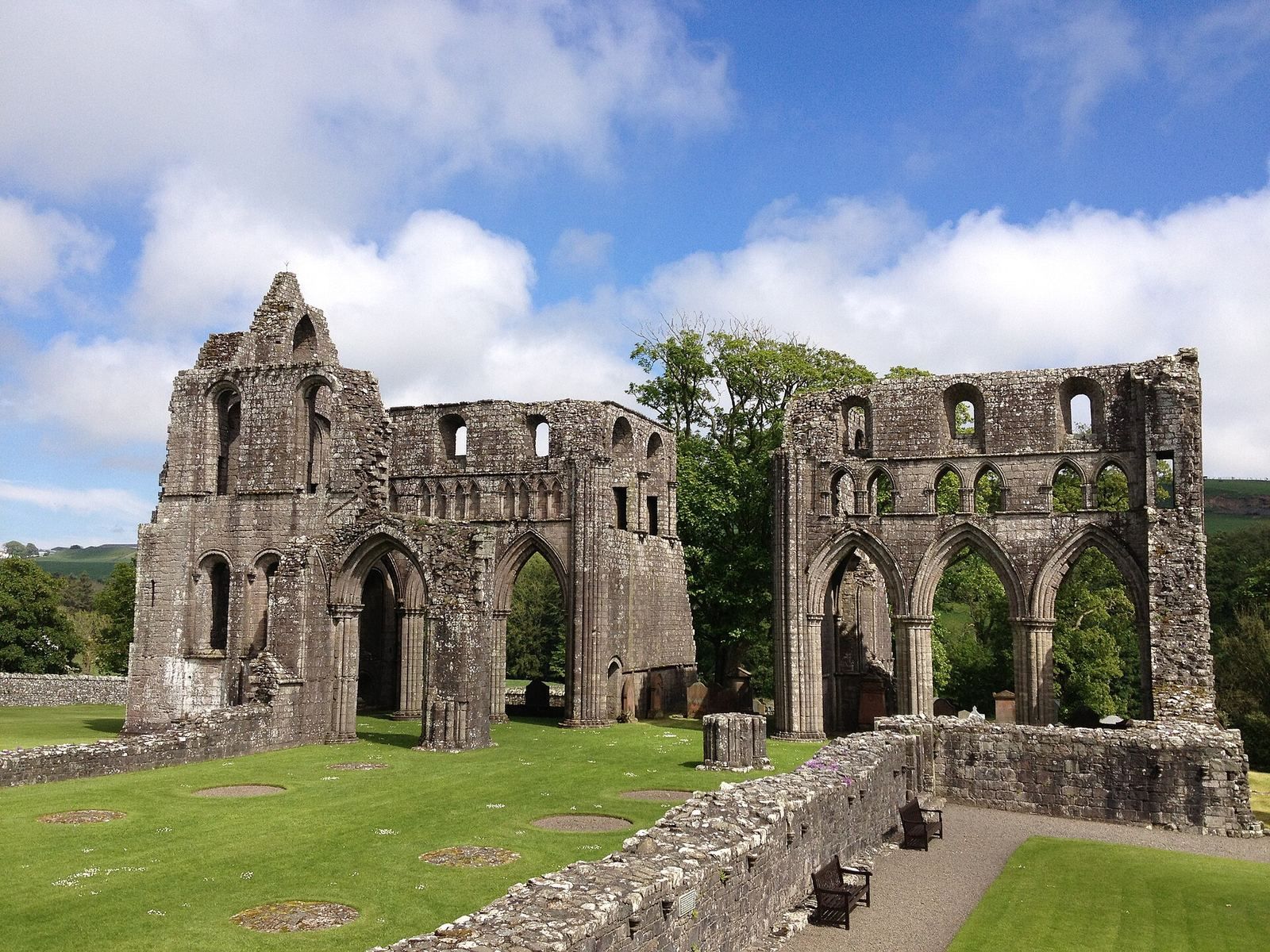
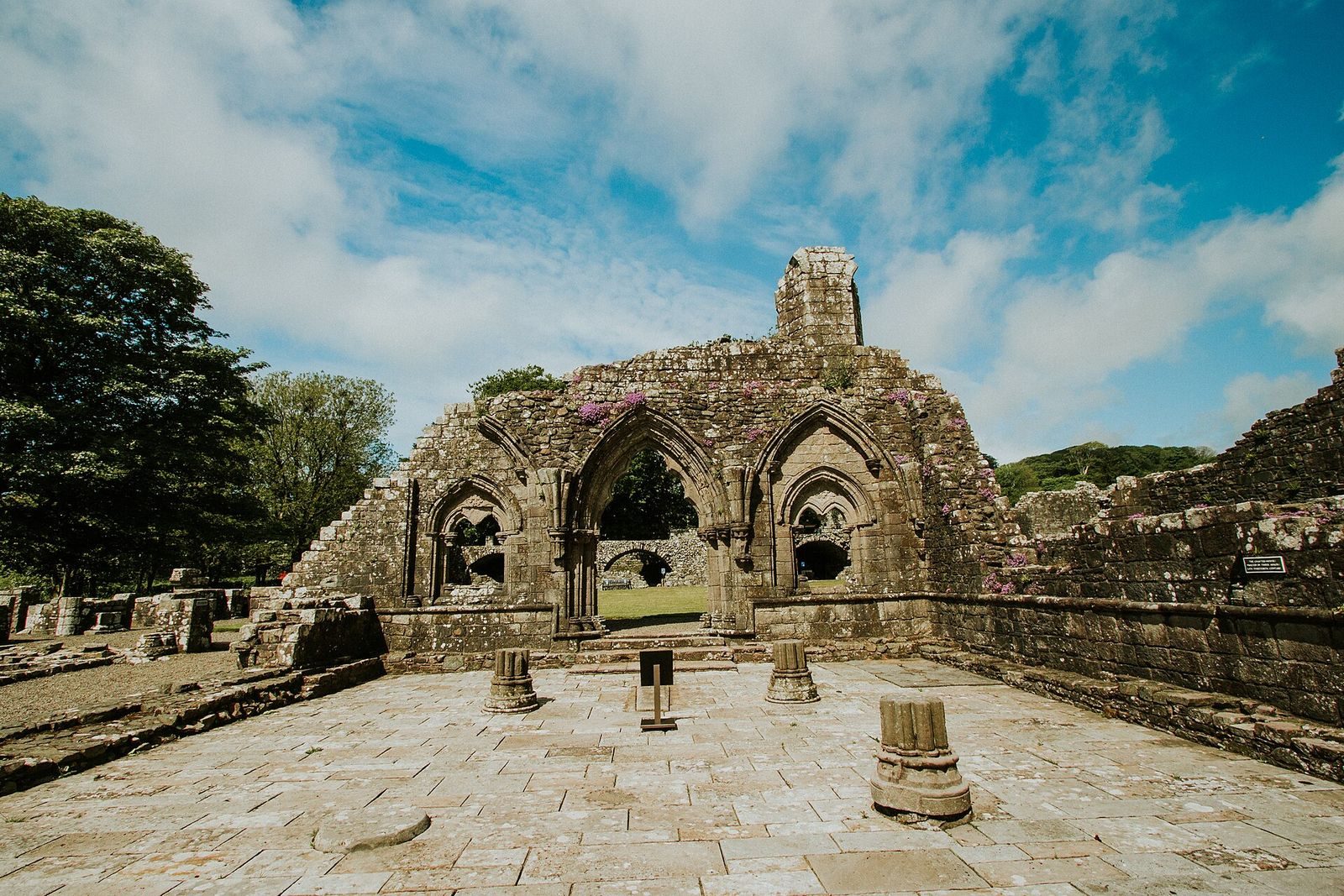
The remains include a ruined church and excavated features from the southeast part of the cloister, a covered walkway around a courtyard. The abbey stands above the Solway Firth amid heathland and marshes. Its restrained Cistercian design uses durable grey sandstone, and the buildings’ original forms and mouldings are well preserved.
Church remains
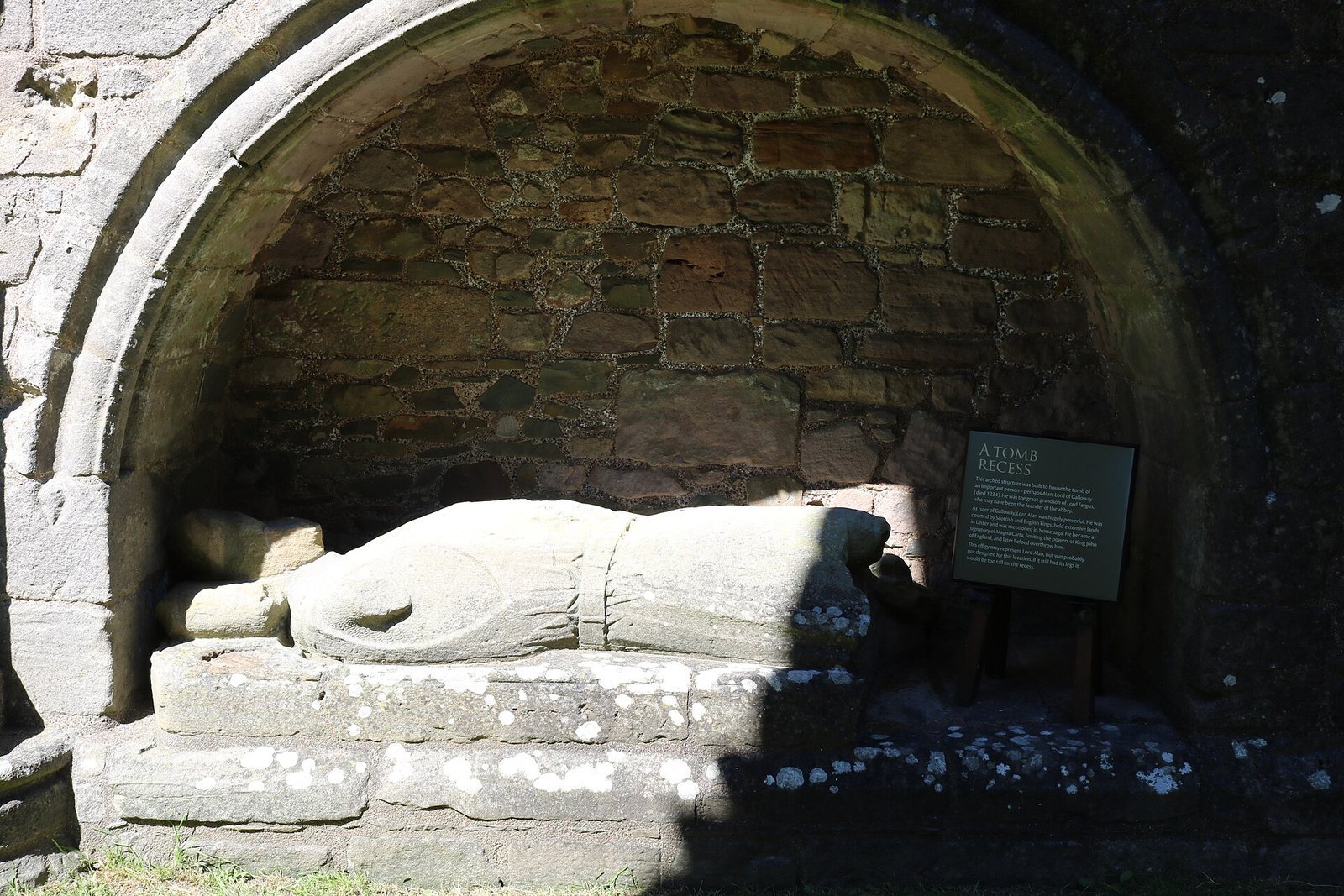
The church is extensively ruined. Its transepts, the crosswise arms of the church, are the principal surviving sections, and each has three chapels. Parts of the nave, the main body of the church, and the choir, the area used by clergy for services, also remain. The façade of the chapter house, the monastery’s communal meeting room, survives. Beside the church entrance is a grave slab for an unidentified abbot. It depicts a dagger in the abbot’s heart and, at his feet, the murderer with his abdomen ripped open.
Cloister buildings
Excavation in the cloister’s southeast corner uncovered parts of a warming house, a heated room in a monastery, and a day room for novices. The finds also included a large drain and the undercroft, a lower-level space beneath a building, of a latrine block.