Hollenders’ Palace in Wrocław: A Neo-Renaissance Family Residence
Site at a Glance
- Rating
- 5
- Popularity
- Very Low
- Country
- Poland
- Primary era
- Modern
- Eras represented
- Modern
- Civilizations
- German
- Site type
- Domestic
- Remains
- Elite Residence
History
Hollenders’ Palace, a family residence in Siedlec, Poland, was built in 1886, when Siedlec was a village outside Wrocław. Its design combined Neo-Renaissance forms, a 19th-century revival of Renaissance architecture, with traditions of the Northern Renaissance in northern Europe. The palace stood on an estate belonging to Fritz Hollender.
The palace survived the wartime events of 1945 without being destroyed. It was later divided into municipal apartments, then damaged by a fire in 1996. The building was rebuilt in 2005, and restoration work followed after 2006.
Remains
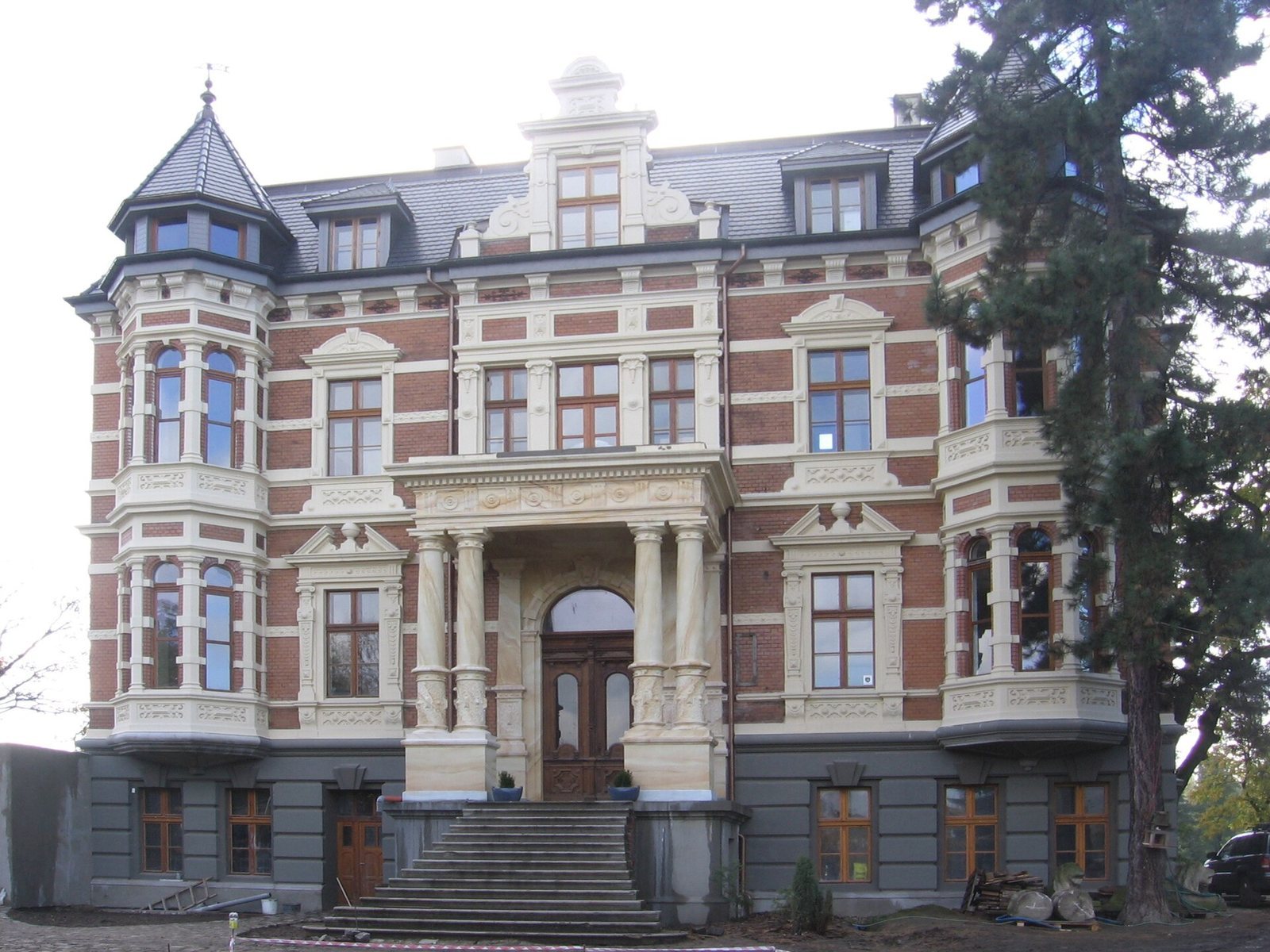
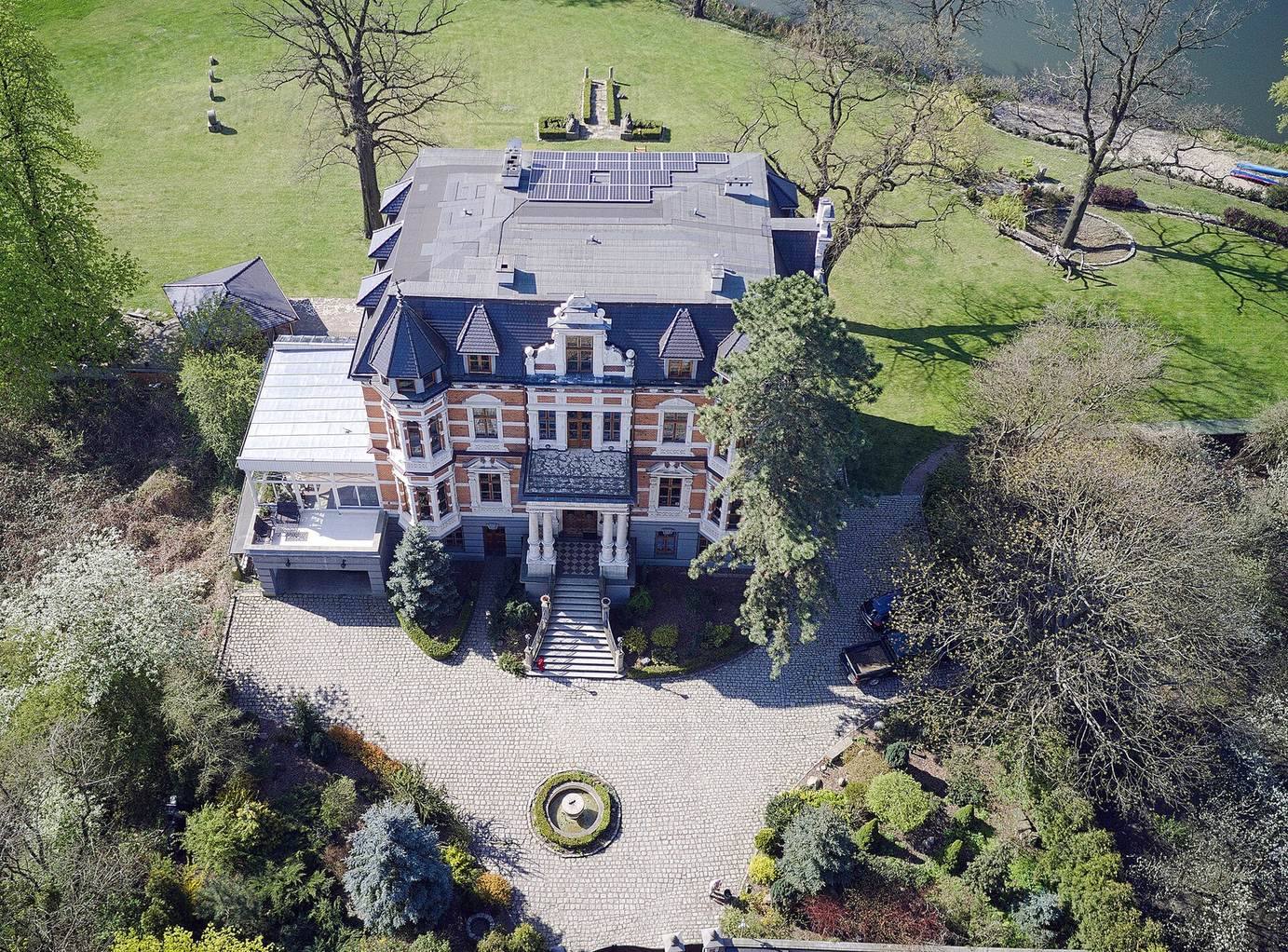
The palace stood in a bend of the Oława River, within a landscape park and beside farm buildings. It has a rectangular plan and two storeys of masonry beneath a hipped mansard roof, with steep lower slopes on all sides. Several projecting sections shape the exterior.
On the main façade, bands of rough-faced sandstone covered the ground floor, below a crowning horizontal ledge. A columned entrance porch on the central axis was reached by steps and flanked by bay windows. Turret-like bay windows marked the two ends of the façade.
The side façades had central projections topped by gables. On the south side, a single-storey projection contained five window bays. The rectangular windows were topped by gable-shaped caps. Inside, stucco and painted decoration adorned the interiors.