Mariental Abbey: A Cistercian Monastery in Germany
Site at a Glance
- Popularity
- Medium
- Country
- Germany
- Primary era
- Medieval
- Eras represented
- Medieval, Modern
- Civilizations
- Duchy of Brunswick, German, Holy Roman Empire
- Site type
- Religious
- Remains
- Monastery
On this page9 sections
History
Mariental Abbey is a former Cistercian monastery in Germany, founded in 1138 by Friedrich II of Sommerschenburg. The Cistercians were a monastic order that developed from the Benedictine tradition. The abbey’s church combines Romanesque and Gothic forms. Mariental was a daughter house, a monastery founded by another community, of Altenberg Abbey, and belonged to the Cistercian line descending from Morimond. Dedicated to Mary, it fell within the Diocese of Hildesheim, a territorial church jurisdiction governed by a bishop.
Foundation and medieval growth
The first community consisted of Abbot Bodo of Amelungsborn and twelve monks from Altenberg. When the Sommerschenburg dynasty ended in 1179, most of the abbey and its possessions passed to Henry the Lion, a Welf duke and a major ruler in Saxony and Bavaria. The monastery prospered, with estates extending as far as Magdeburg, Jüterbog, and Braunschweig. It founded Hude Abbey in 1232, while its decline began toward the end of the fourteenth century.
Reformation and later use
A Lutheran monastic school opened in the abbey buildings in 1542. The Cistercian community was dissolved in 1569 as a consequence of the Protestant Reformation, the sixteenth-century movement that led to the establishment of Protestant churches and institutions. The school continued until 1745, and a teacher-training seminary remained until 1773, when it moved to Helmstedt. The cloister was demolished in 1840.
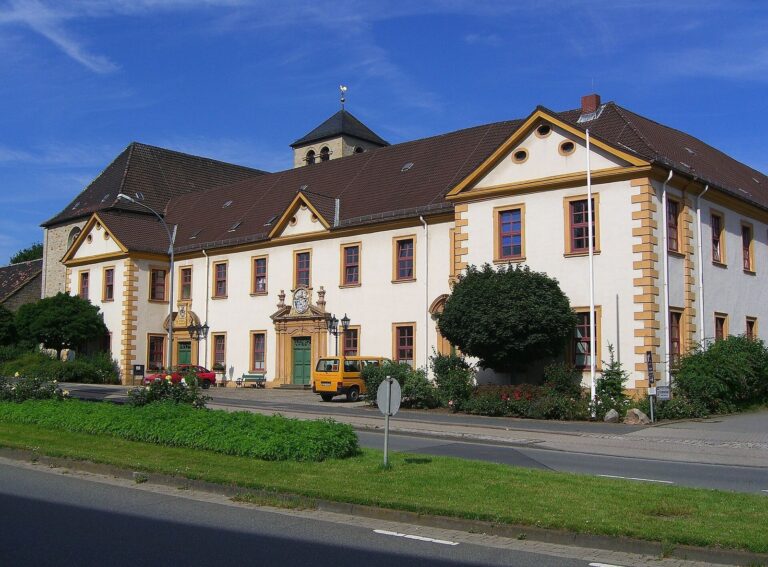
After the dissolution, the monastic property passed to the Brunswick United Monasteries and Study Fund, established in 1569. Joachim Karl (1573–1615), provost of Strasbourg Cathedral, a senior official of its cathedral chapter, was buried at the abbey; from 1608 he had his court at Calvörde. Today, the complex and its associated agricultural estate belong to the Foundation for Cultural Heritage in Braunschweig, while the church belongs to the Evangelical Lutheran parish of Mariental.
Remains
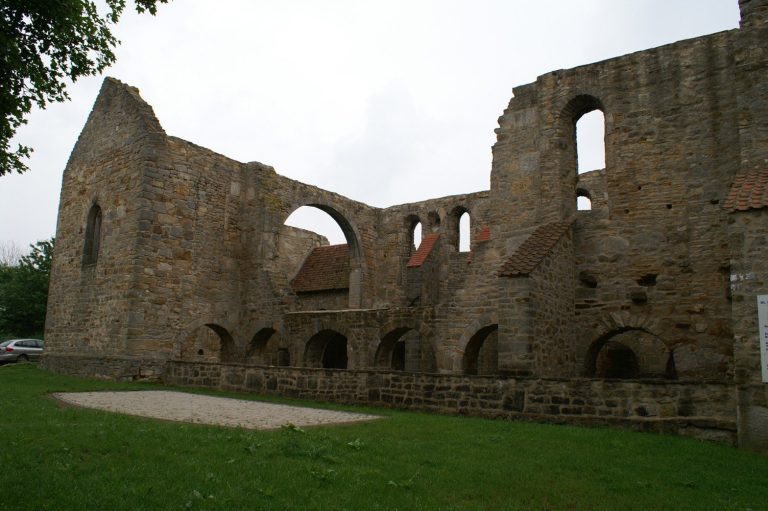
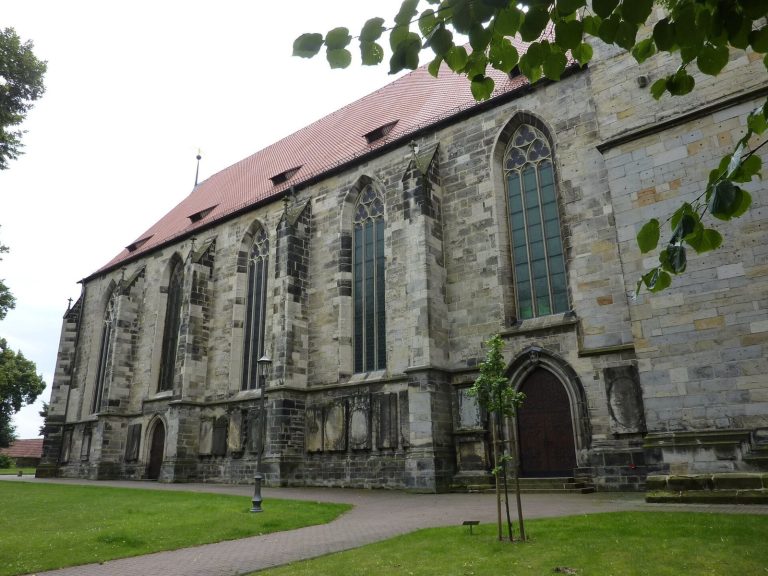
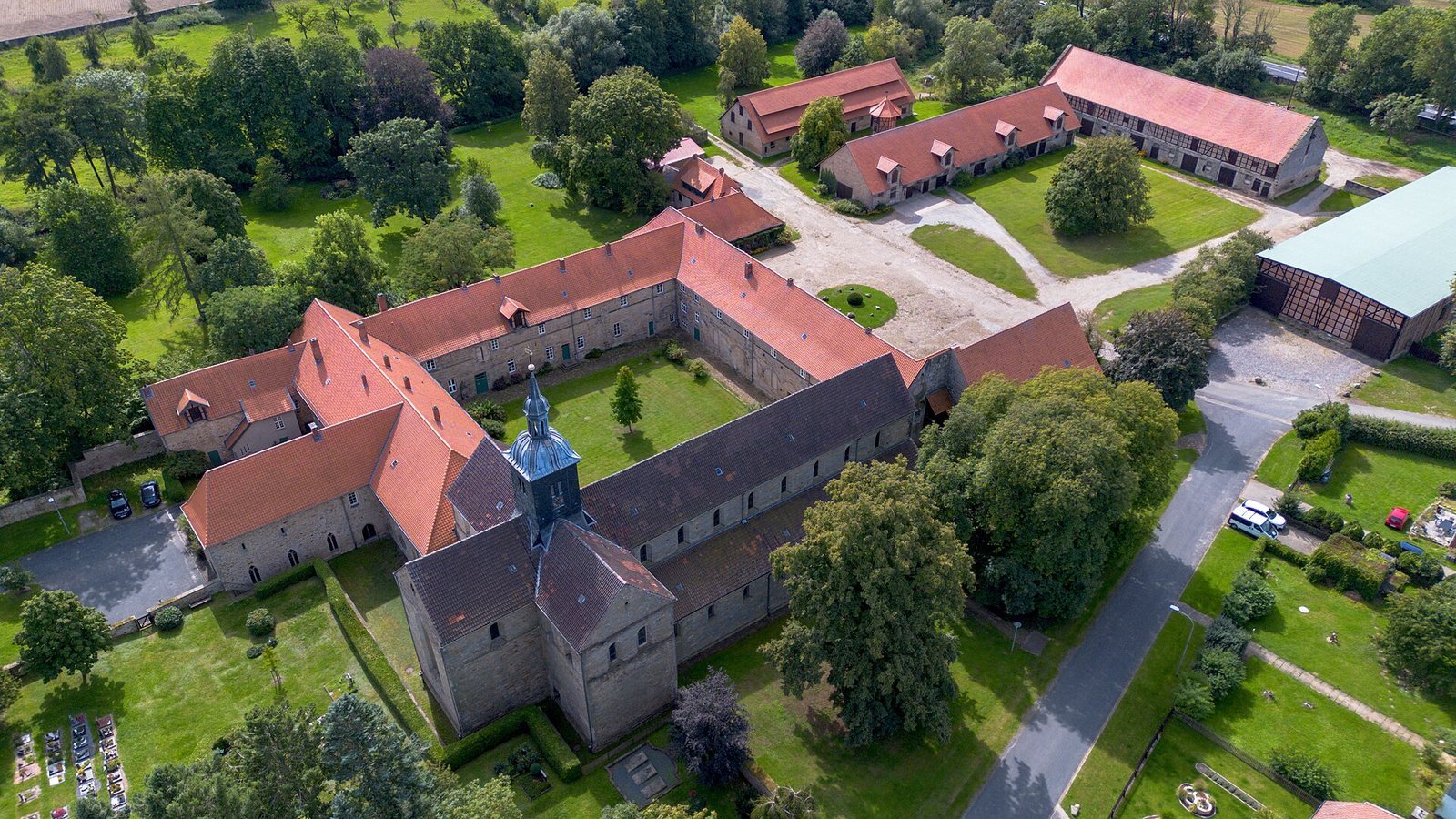
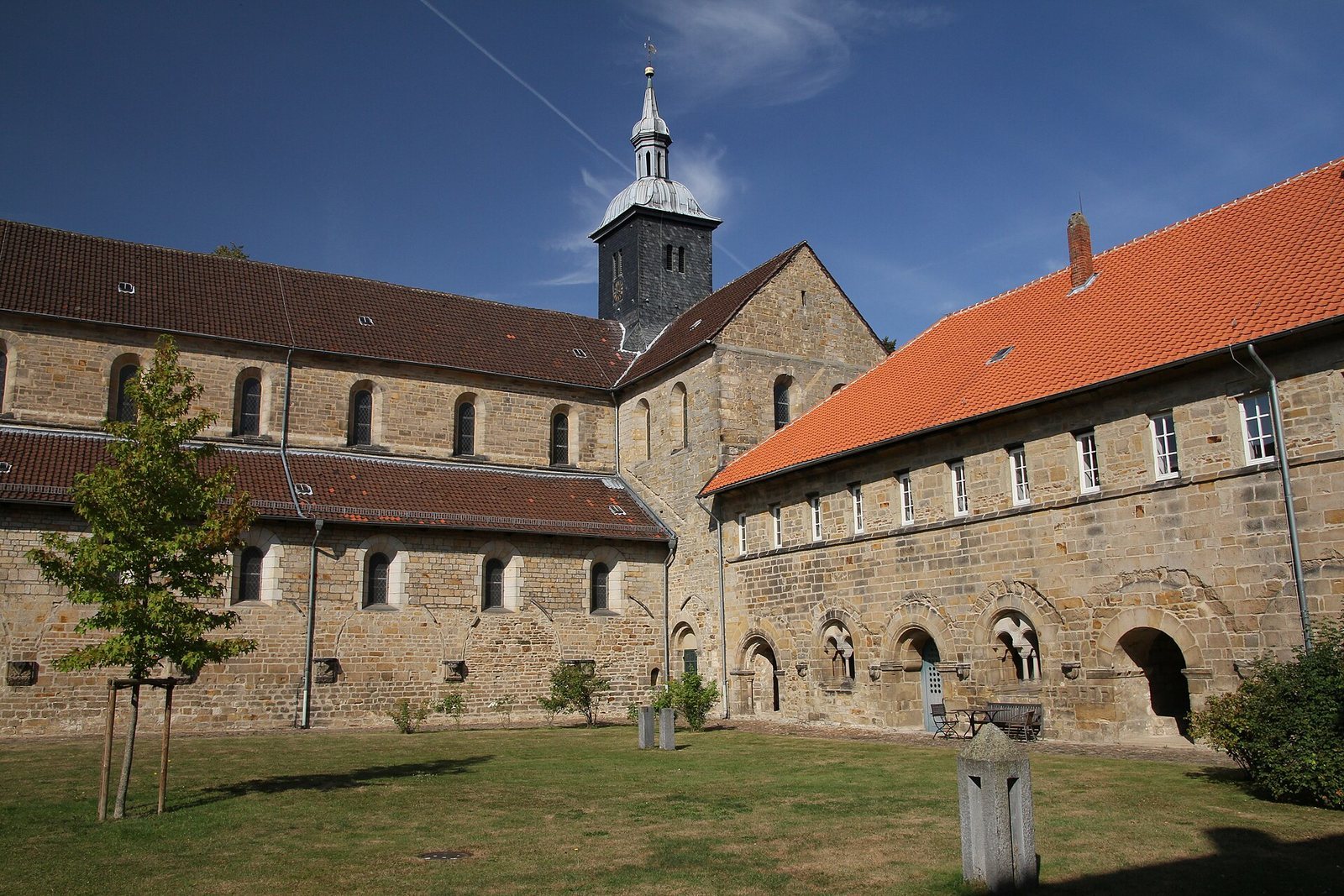
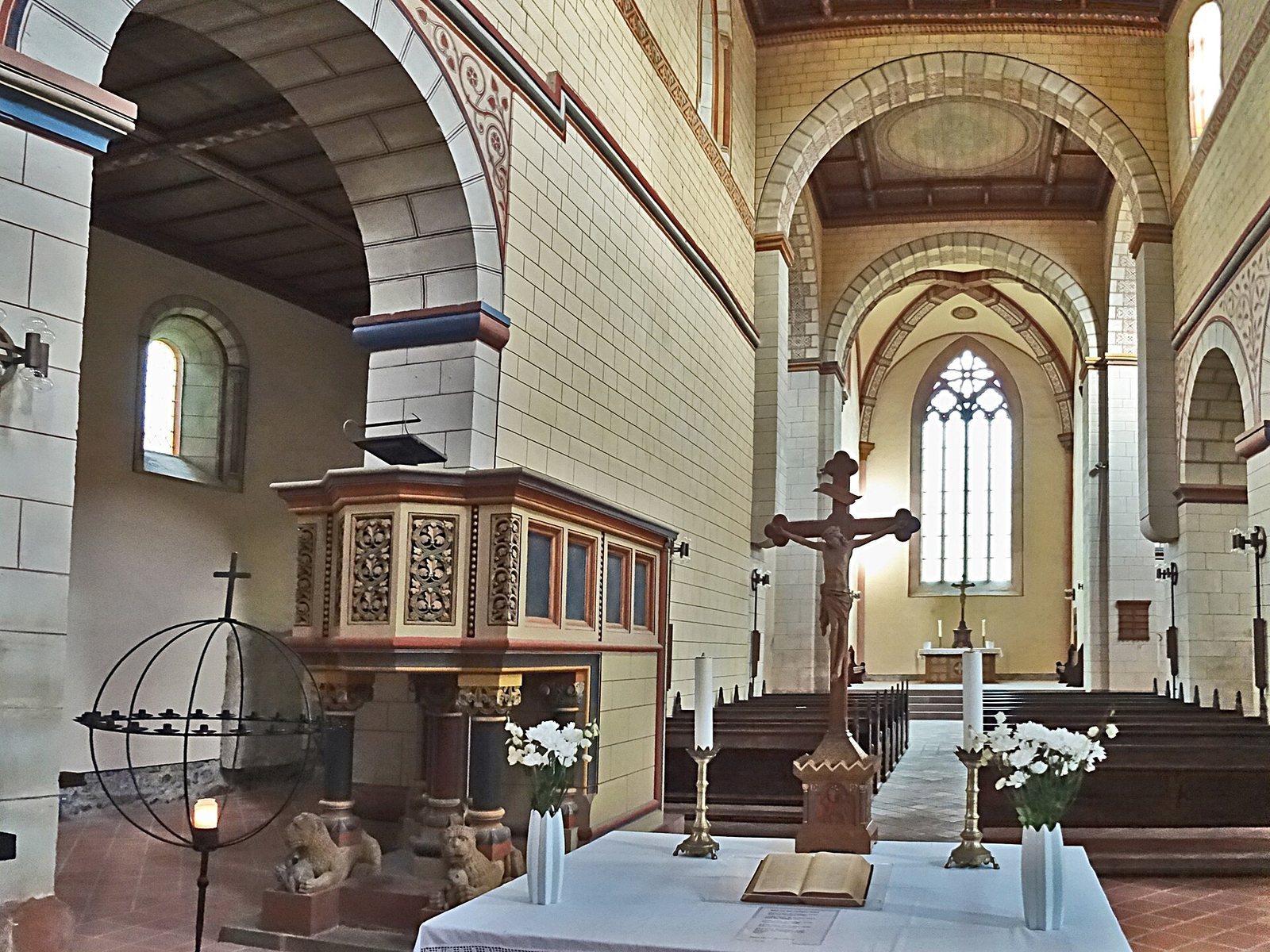
The surviving complex comprises the church and a monastic enclosure to its south, with east and west wings still standing. The church follows a three-aisled pillar-basilica plan, with rows of pillars dividing its interior into lengthwise spaces.
Abbey church
The nave is divided into eight structural bays, and both it and the transept, the church’s cross arm, have flat ceilings. The choir, at the eastern end of the church, terminates in a straight wall and has a band-rib vault, a ribbed ceiling with broad, band-shaped ribs. The south aisle is one step lower than the central nave. Walls divide the two eastern bays of the north aisle from both the central nave and the transept.
Monastic enclosure
East wing
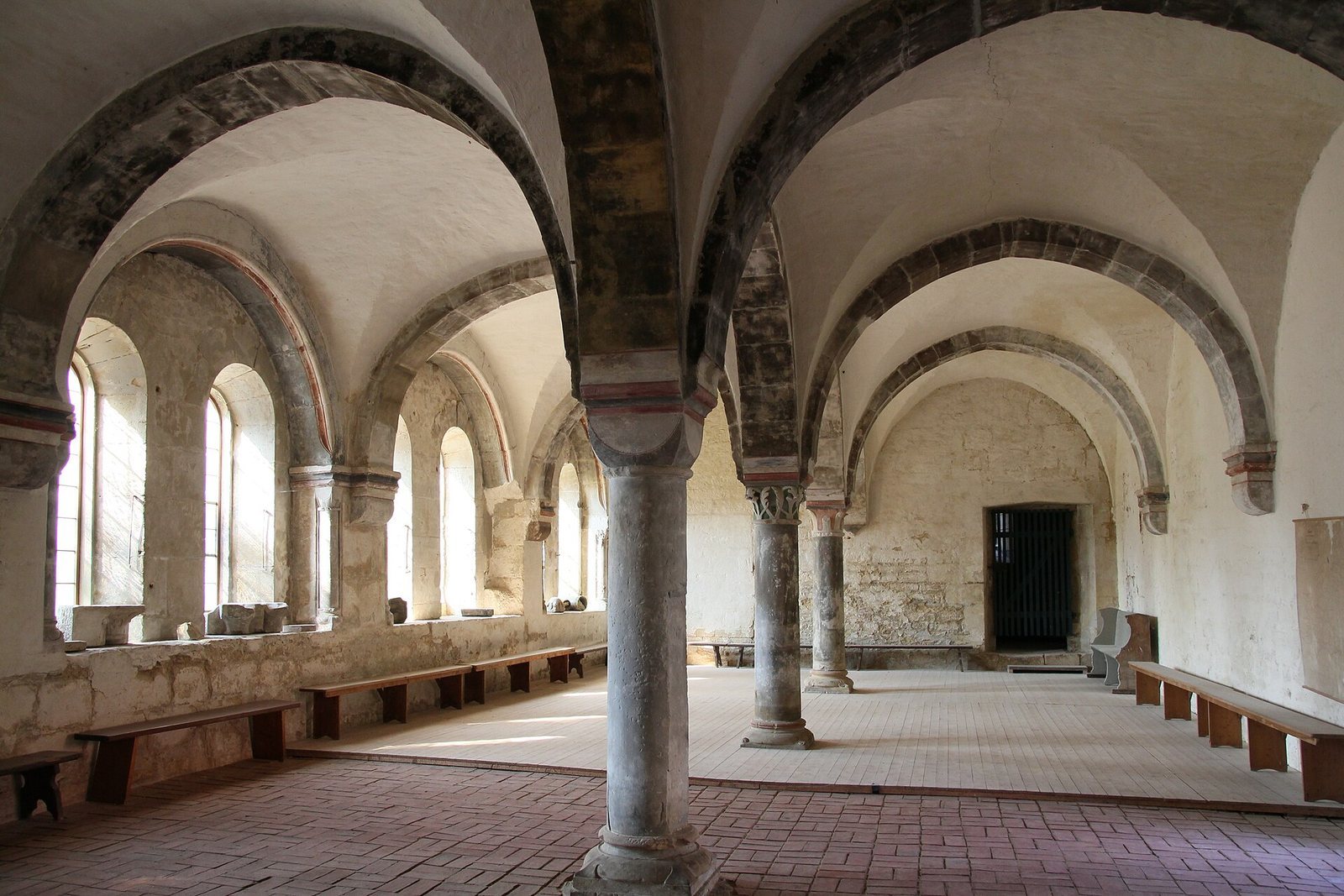
The surviving east wing contains a square chapter house divided into nine structural bays, where the monastic community met for business. It also has a chapel and a square room with a central support. The upper floor holds a dormitory, or shared sleeping room, which was divided into individual cells in the late Middle Ages.
West wing and family chapel
The west wing contains a seven-bay refectory, the dining hall of the lay brothers, non-ordained members of the community often associated with manual work. In the fourteenth century, the passage between the church and its south aisle was extended westward, providing access to the von Alvensleben family chapel. The chapel has a ceiling formed by intersecting ribs.
Organ
The organ stands on the west gallery and has a historically styled front of exposed pipes. Built in 1890 by P. Furtwängler & Hammer, it has a tonal design that emphasizes fundamental tones, or the basic pitches heard in notes. Its 18 stops select groups of pipes; two manuals are hand keyboards, and the pedal is a foot keyboard. Cone chests use cone-shaped valves to control wind to the pipes, while mechanical action transfers key movements to the valves through physical linkages. Couplers connect manual II to manual I and manual I to the pedal. The instrument also has a bellows-attendant call, a wind-release control, and a full-organ pedal. After several alterations, organ builder Christoph Grefe thoroughly restored it in 2002.