Palácio Cruz e Sousa: Government Palace and Historical Museum in Florianópolis
Site at a Glance
- Rating
- 4.7
- Popularity
- Very High
- Country
- Brazil
- Primary era
- Early Modern
- Eras represented
- Early Modern, Modern
- Civilizations
- Portuguese
- Site type
- Civic
- Remains
- Palace
On this page6 sections
History
Palácio Cruz e Sousa is an eighteenth-century palace in Florianópolis, Brazil, built between 1739 and 1749. For many years, it served as the seat of Santa Catarina’s state government.
Imperial visits and political upheaval
Brazilian emperors Pedro I and Pedro II visited the palace in 1826 and 1865, respectively. The palace was also the birthplace of historian Afonso d’Escragnolle Taunay and Aderbal Ramos da Silva, who later governed Santa Catarina from 1947 to 1951.
In 1891, revolutionaries opposed to Floriano Peixoto’s policies stormed the palace during the Federalist Revolution, an armed conflict in southern Brazil in the early republican period. Peixoto was then the republic’s vice president.
Restoration and later uses
Under Santa Catarina governor Hercílio Luz, the palace underwent restoration between 1894 and 1898. The building was restored again in 1977 and 1984, and preservation work has continued.
In 1979, it was named Palácio Cruz e Sousa in honor of João da Cruz e Sousa, a poet associated with Santa Catarina. The building ceased to house the governor’s office in 1984. Since 1986 it has served as the Historical Museum of Santa Catarina and also houses the museum of the Historical and Geographical Institute of Santa Catarina.
Remains
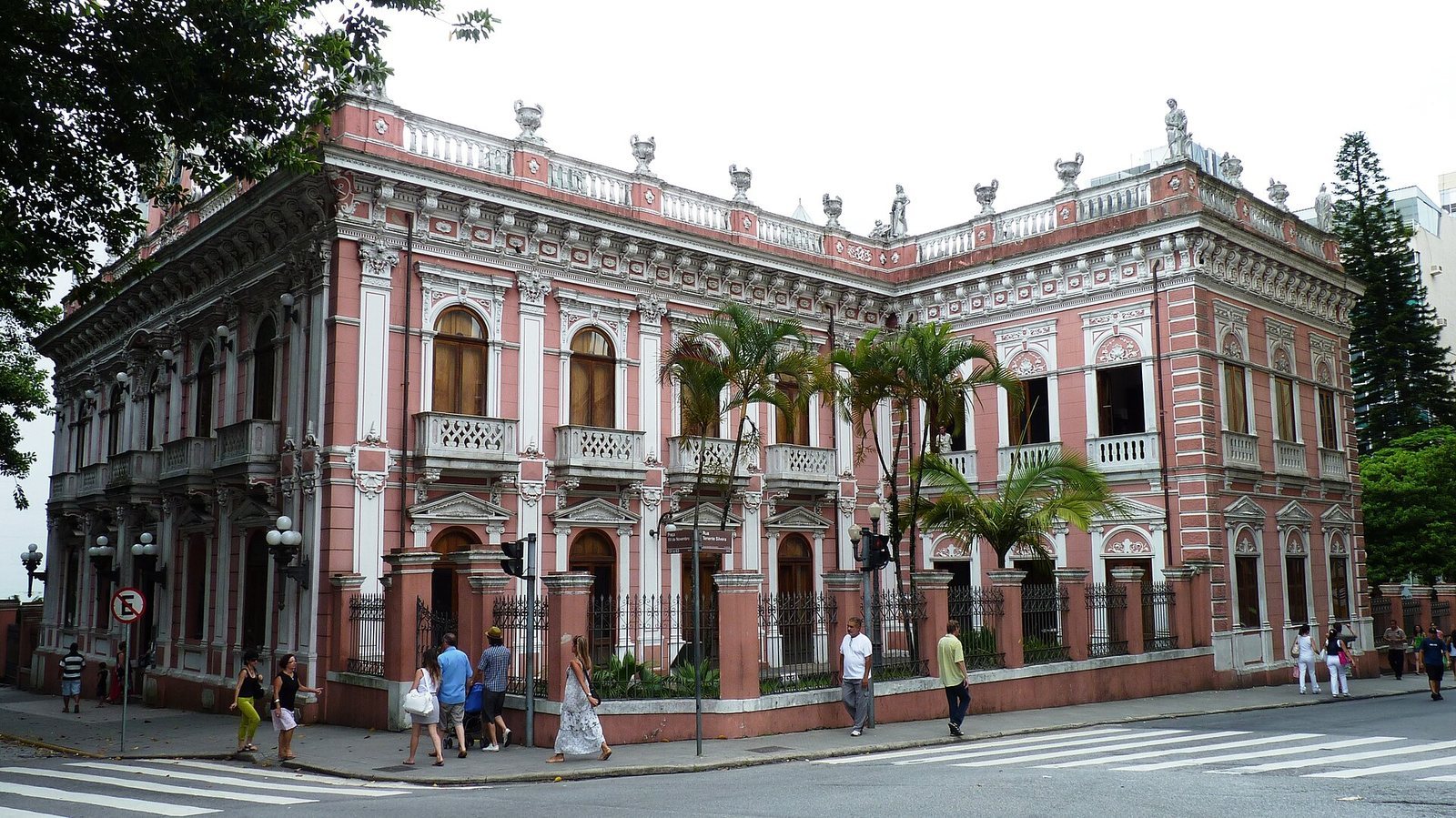
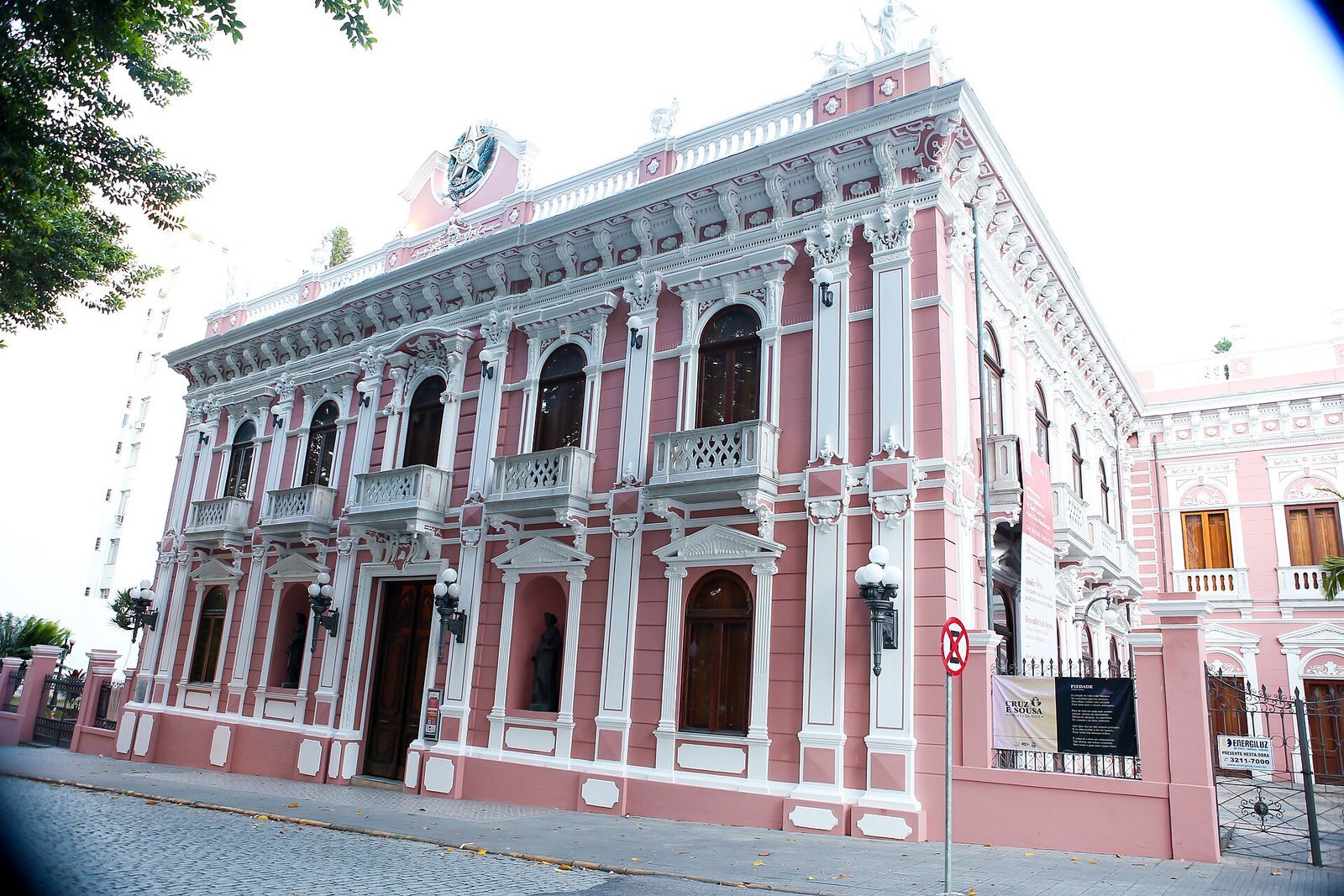
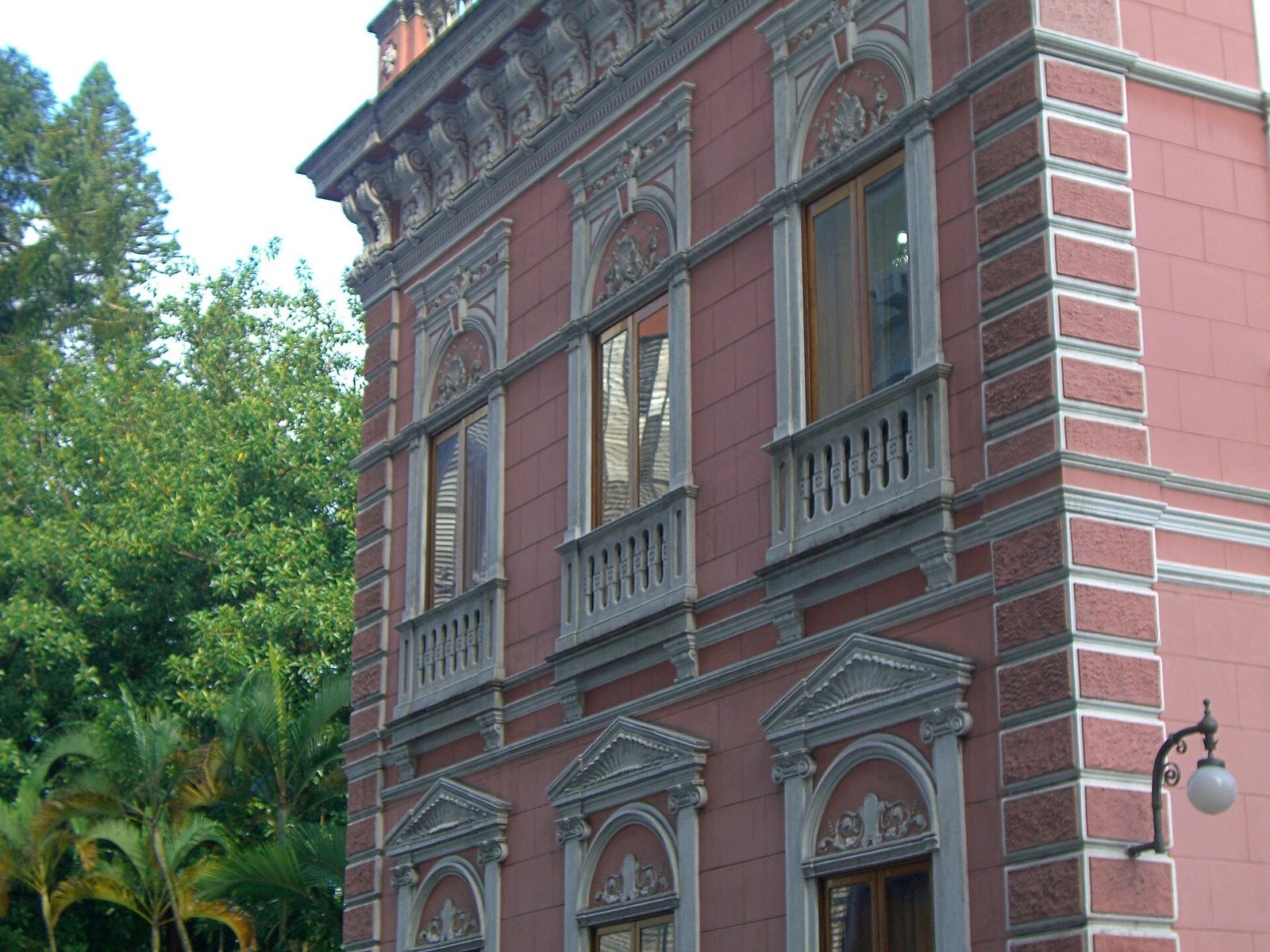
Set on XV de Novembro Square in Florianópolis’s historic center, the palace’s decoration reflects changes made over time. The 1894–1898 restoration removed some original colonial features and introduced ornament drawing on varied influences.
Façade and exterior paving
Ten allegorical statues by Italian artist Gabriel Sielva decorate the façade. They include Saint Catherine, the state’s patron saint; Amphitrite, a sea deity from Greek mythology; and Mercury, the Roman god associated with commerce. Mercury carries two barrels that refer to commerce and industry in Santa Catarina. Imported tiles laid in 1910 cover the exterior floor.
Staircase and decorative features
A monumental staircase features balustrades of Carrara marble, quarried near Carrara, Italy. The palace’s decoration also includes balconies worked in Italy, bronze statues of medieval knights, and a stained-glass window in the Art Nouveau style, known for its flowing decorative forms.