Piruz Nahavandi Mausoleum: A Disputed Shrine in Kashan
Site at a Glance
- Popularity
- Very High
- Country
- Iran
- Primary era
- Medieval
- Eras represented
- Medieval
- Civilizations
- Unclassified
- Site type
- Religious
- Remains
- Tomb
On this page5 sections
History
The Piruz Nahavandi Mausoleum stands on the outskirts of Kashan, Iran. Its original building dates to the Mongol period. The shrine is popularly identified as the grave of Abu Lu’lu’a, also identified as Piruz Nahavandi, a Persian enslaved man who assassinated Umar ibn al-Khattab in Medina in 644. Umar was the second caliph, a successor and political leader of the early Muslim community. Abu Lu’lu’a died in Medina shortly afterward, and the identification of the Kashan tomb as his grave is disputed.
Shrine Traditions
Visits to the site preceded its association with Abu Lu’lu’a. Their purpose is unclear, though they may have involved a Sufi saint, a revered figure in Islam’s mystical tradition. Visits were associated with dates in early Rabi al-Awwal and late Dhu al-Hijja; the latter period coincided with the traditional anniversary of Umar’s death.
A later legend says Ali ibn Abi Talib, Muhammad’s cousin and son-in-law and a figure revered in Shia Islam as the first Imam, used a special prayer to save Abu Lu’lu’a from pursuers and bring him miraculously to Kashan. In this story, Abu Lu’lu’a married and lived out his life there. The shrine’s association with him grew over time, particularly as internet use spread.
Festival and Changing Political Climate
During the Safavid dynasty, which ruled Iran from 1501 to 1736 and promoted Shia Islam, an annual festival called Omar Koshan, or “the Killing of Umar,” developed around the shrine in the 16th century. It commemorated Umar’s killing and celebrated Abu Lu’lu’a as a defender of the faith against an oppressive caliph. In this tradition, he was also called Baba Shuja al-Din, meaning “Father Courageous of the Faith.”
The festival was held on 26 Dhu al-Hijja, while some places also observed 9 Rabi al-Awwal; the observance later spread elsewhere in Iran. From the Qajar period, when the Qajar dynasty ruled Iran from 1789 to 1925, political sensitivities concerning Sunni Islam contributed to the festival’s decline in major cities. In 1979, the Islamic Republic banned the festival as well as visits and celebrations at the tomb. Secret observances continued during 9–27 Rabi al-Awwal, and some Sufi groups continued visiting during 13–27 of that month.
Modern Dispute and Closure
The mausoleum entered Iran’s National Heritage List on 6 September 1975. In the mid-2000s, Al-Azhar, a major Sunni religious institution and university in Cairo, called for its demolition, regarding the shrine as offensive and un-Islamic from a mainstream Sunni perspective. The dispute led to a break in relations between Al-Azhar and Iranian authorities.
Iran’s government closed the complex in 2007 after pressure that included intervention by the International Union of Muslim Scholars, an international organization of Muslim scholars. The government also stated that the tomb had no connection with Abu Lu’lu’a. Most of the tomb was demolished in April by unidentified people. The government did not comment, while opposition figures blamed it for the damage; the heritage listing was cited as a reason the government had not demolished the site. The complex has remained closed since 2007 and is administered by Iran’s Cultural Heritage, Handicrafts and Tourism Organization.
Remains
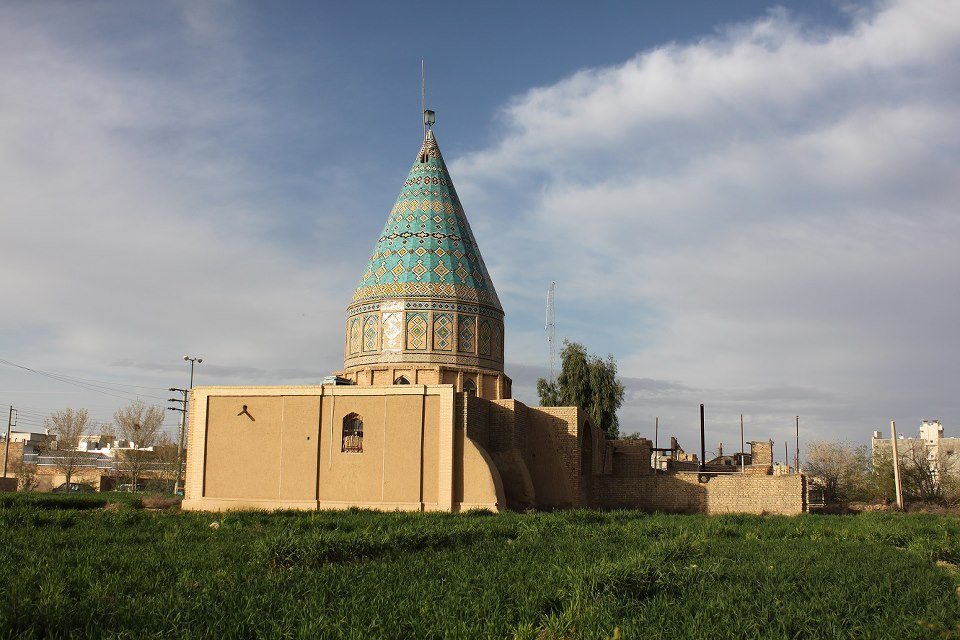
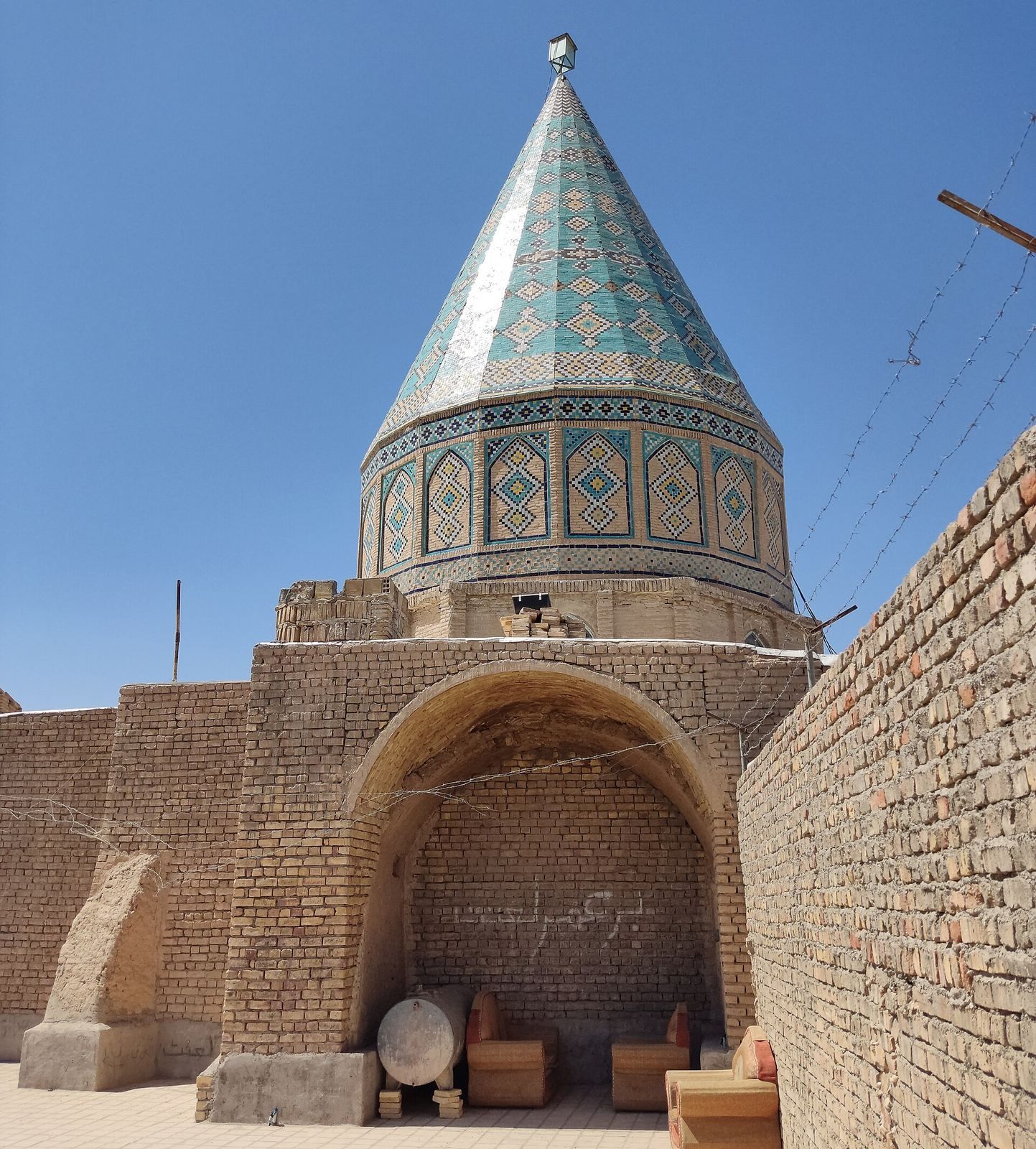
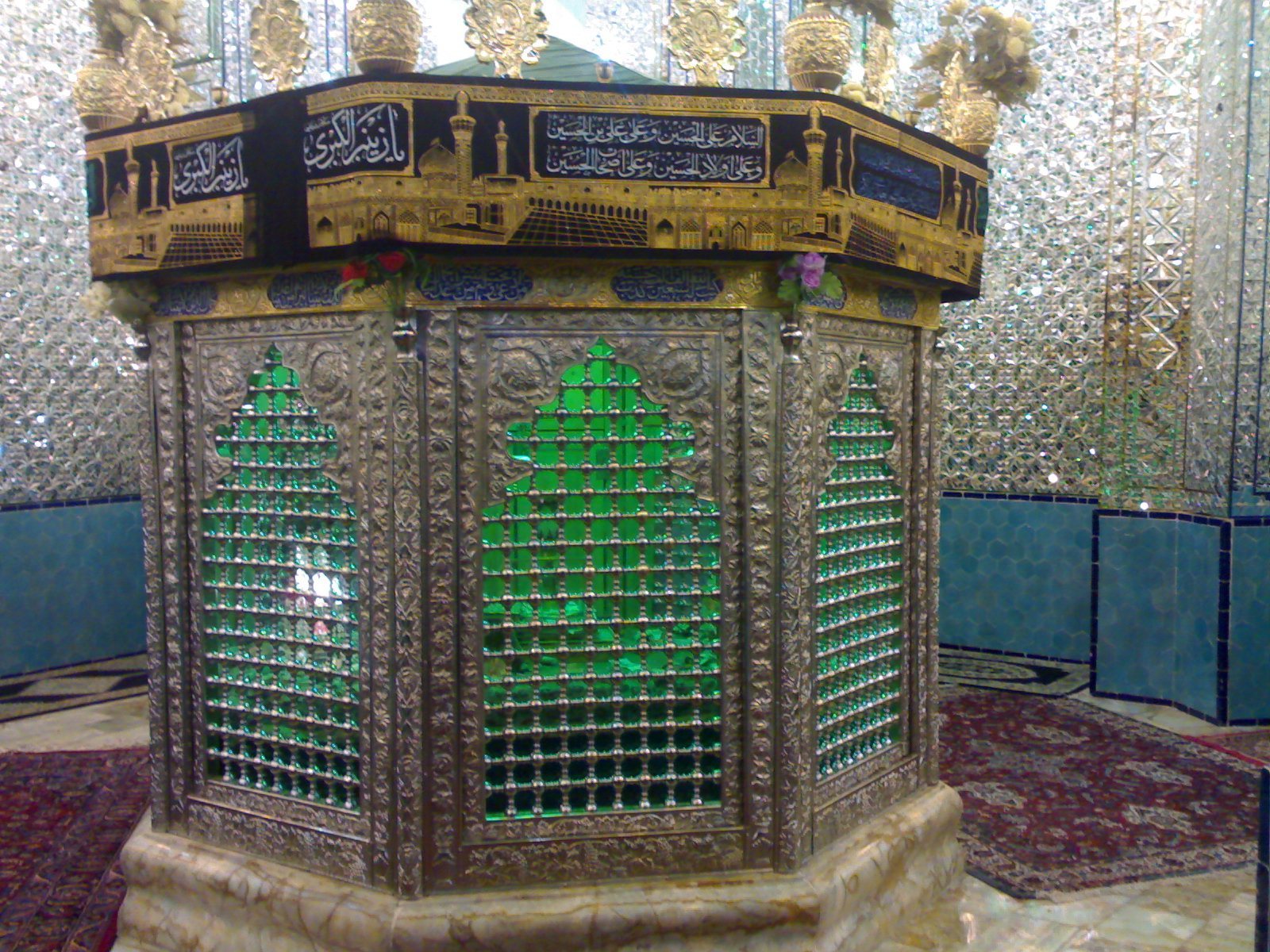
The mausoleum stood on a parcel measuring 1,000 square metres, at an elevation of 956 metres. The twenty-sided building was made of adobe, brick, mortar, and tile, and had an interior area of 200 square metres. Its principal features included an iwan, a vaulted space open on one side, and a single conical dome with an exterior height of 19 metres.
The structure’s architectural character is associated with Mongol, Safavid, and Qajar periods. Its completion is dated to 1375/76 and its formal opening to 1375. The dome and open-sided hall date to the Safavid period or later, and the building underwent renovations in the 19th century. A 2017 depiction shows the closed mausoleum with its open-sided hall and conical dome.