La Boissière Abbey: A Cistercian Monastery in Anjou
Site at a Glance
- Popularity
- Medium
- Country
- France
- Primary era
- Medieval
- Eras represented
- Medieval, Early Modern
- Civilizations
- French
- Site type
- Religious
- Remains
- Monastery
On this page9 sections
History
La Boissière Abbey is a former Cistercian monastery in France, founded in Anjou in 1131. Its church was Romanesque in the Cistercian style and began construction in the late twelfth century; Bishop William of Beaumont consecrated it on 26 May 1212. The abbey’s history was shaped by its monastic affiliations, the veneration of a relic that drew pilgrims, and damage during the Hundred Years’ War.
Foundation and Cistercian affiliation
La Boissière began as a daughter house of Savigny Abbey, meaning it was institutionally linked to that parent monastery. In 1147, it became Cistercian as Savigny entered the Cistercian Order, a monastic order that formed at Cîteaux in Burgundy. La Boissière was also linked to Clairvaux, a major Cistercian abbey. At the Council of Reims in 1148, Abbot Serlo transferred La Boissière to Cîteaux. The monastery lay in the Diocese of Avranches, a district under a bishop’s authority.
The Counts of Anjou granted the abbey numerous privileges. Richard the Lionheart made a donation in 1190, as construction of the church began late in the century.
The relic and wartime disruption
In the early 1240s, Jean d’Alluye brought a fragment of the True Cross, traditionally identified as the cross on which Jesus was crucified, to La Boissière. He had received it from Thomas, Bishop of Hierapetra on Crete. The abbey paid 533 livres tournois, a medieval French currency, for the relic. Jean also endowed three lamps to burn continually before it. The relic drew worshippers and pilgrims.
In 1357, Tard-Venus mercenary bands allied with English troops and pillaged Louroux Abbey. Fearing a similar attack, La Boissière’s monks entrusted their relic to two Dominican friars from Angers. In 1359, Louis I, Duke of Anjou, placed it in the chapel of Angers Castle, where it stayed until 1388.
Louis II, Duke of Anjou, returned the relic to Angers in 1399. Yolande of Aragon had a new chapel rebuilt there from 1405; the relic was displayed in it from 1412 and represented on the keystone of its third vault. English forces pillaged La Boissière in 1428, destroying its charter archive and part of its buildings. The relic returned to the abbey in 1456 and remained there until the French Revolution, the political upheaval that began in 1789. At the end of the Hundred Years’ War, the series of conflicts between England and France from 1337 to 1453, fourteen monks remained. They obtained papal indulgences between 1456 and 1476 to help fund repairs. In Catholic teaching, an indulgence remits temporal punishment associated with sin.
Commendation, dissolution, and preservation
From the early sixteenth century, the abbey was held under the commendatory system, in which an abbot could hold its title or revenues without leading the resident community. The conventual buildings were almost entirely rebuilt in the eighteenth century. Four monks remained at the abbey in 1790 and asked to leave; the community was dissolved that year. On 30 September, the relic was moved to the sacristy of a church in Baugé and then to the Hospice for Incurables. The relic later formed the basis of the Cross of Lorraine, a two-barred cross associated with Lorraine.
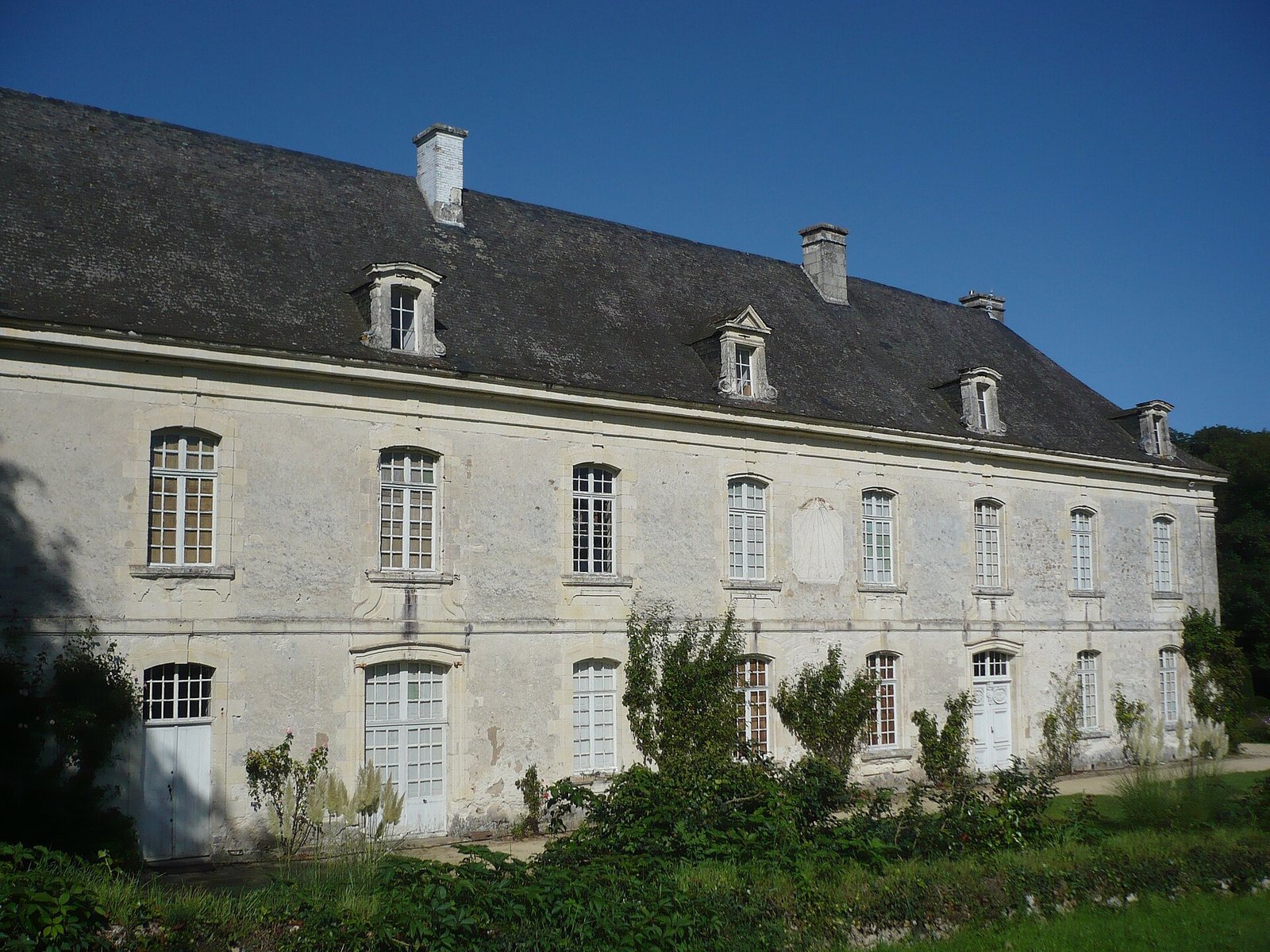
The church’s altar fell out of use after the Revolution, and the two remaining cloister galleries were destroyed in 1795. The Chapel of the True Cross was classified as a historic monument in 1923. The former church apse was registered in 1928, and the façades and roofs of the conventual buildings were registered in 1954.
Remains
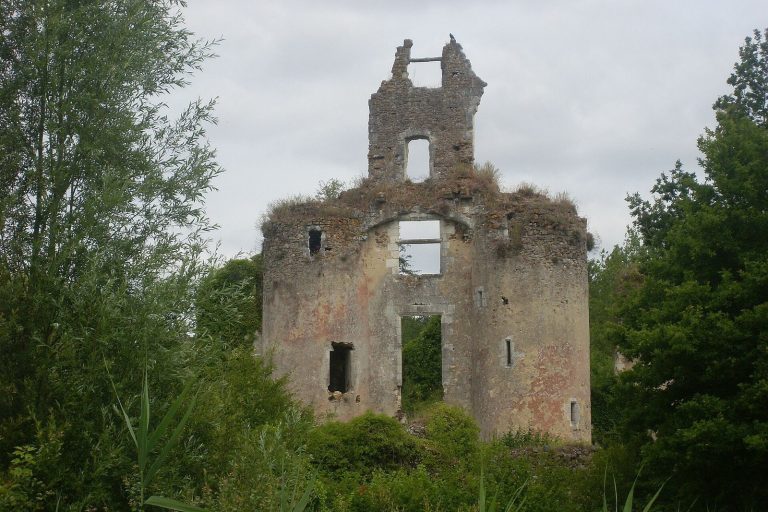
The abbey occupies a small valley crossed by the Marconne River. Its surviving remains include parts of the church, the Chapel of the True Cross at the former enclosure’s edge, and conventual buildings. The church is Romanesque, a medieval style characterized by rounded arches and massive masonry, and reflects Cistercian architectural practice.
Church and transept
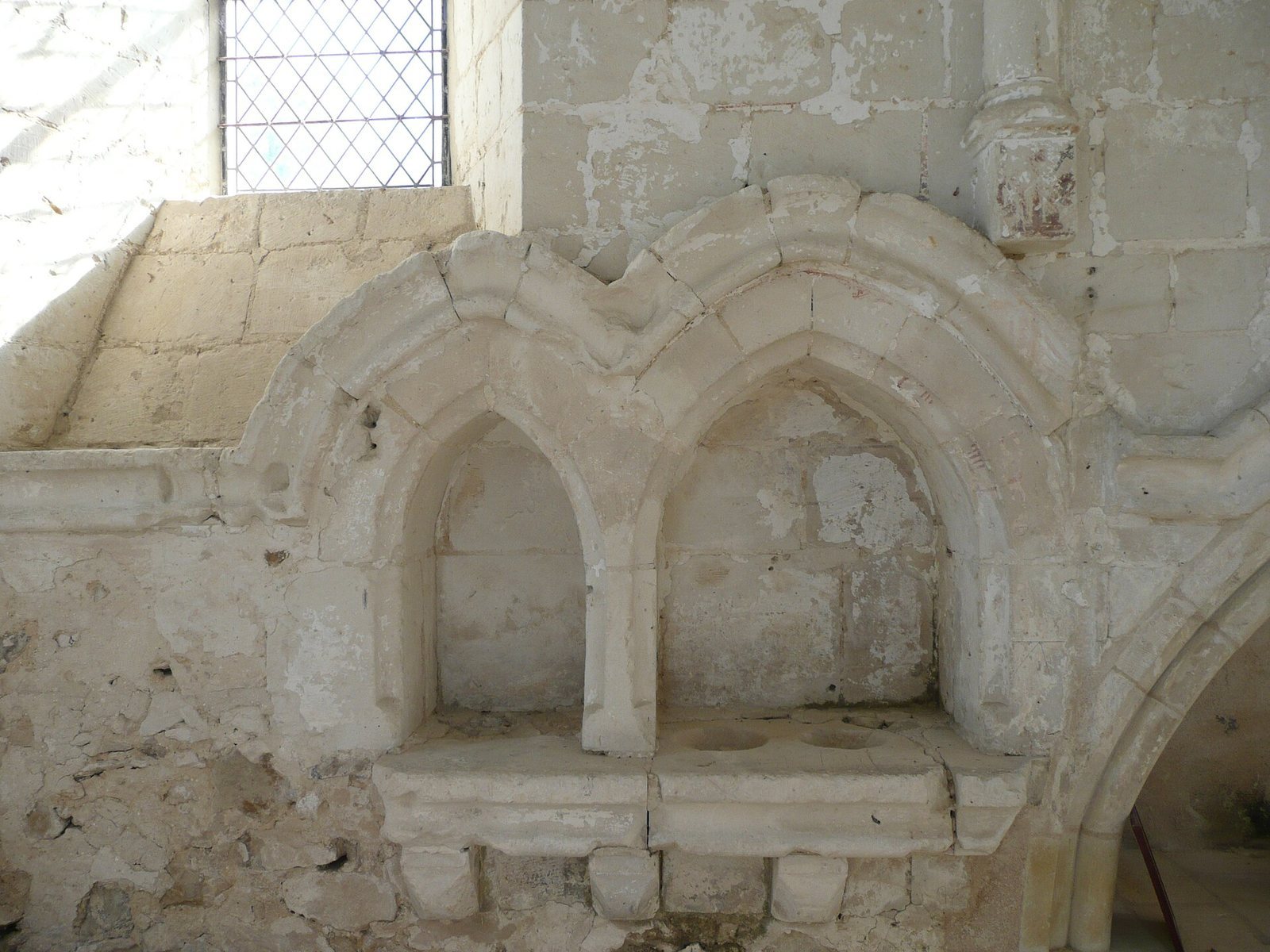
The church’s surviving twelfth-century choir ends in a semicircular apse, the rounded end of the building, pierced by five windows. Two rectangular chapels opened onto the transept, the crosswise arm of the church; an open transept and three Gothic openings also survive. The church had a seventeenth-century altar, which fell out of use after the Revolution.
Chapel of the True Cross
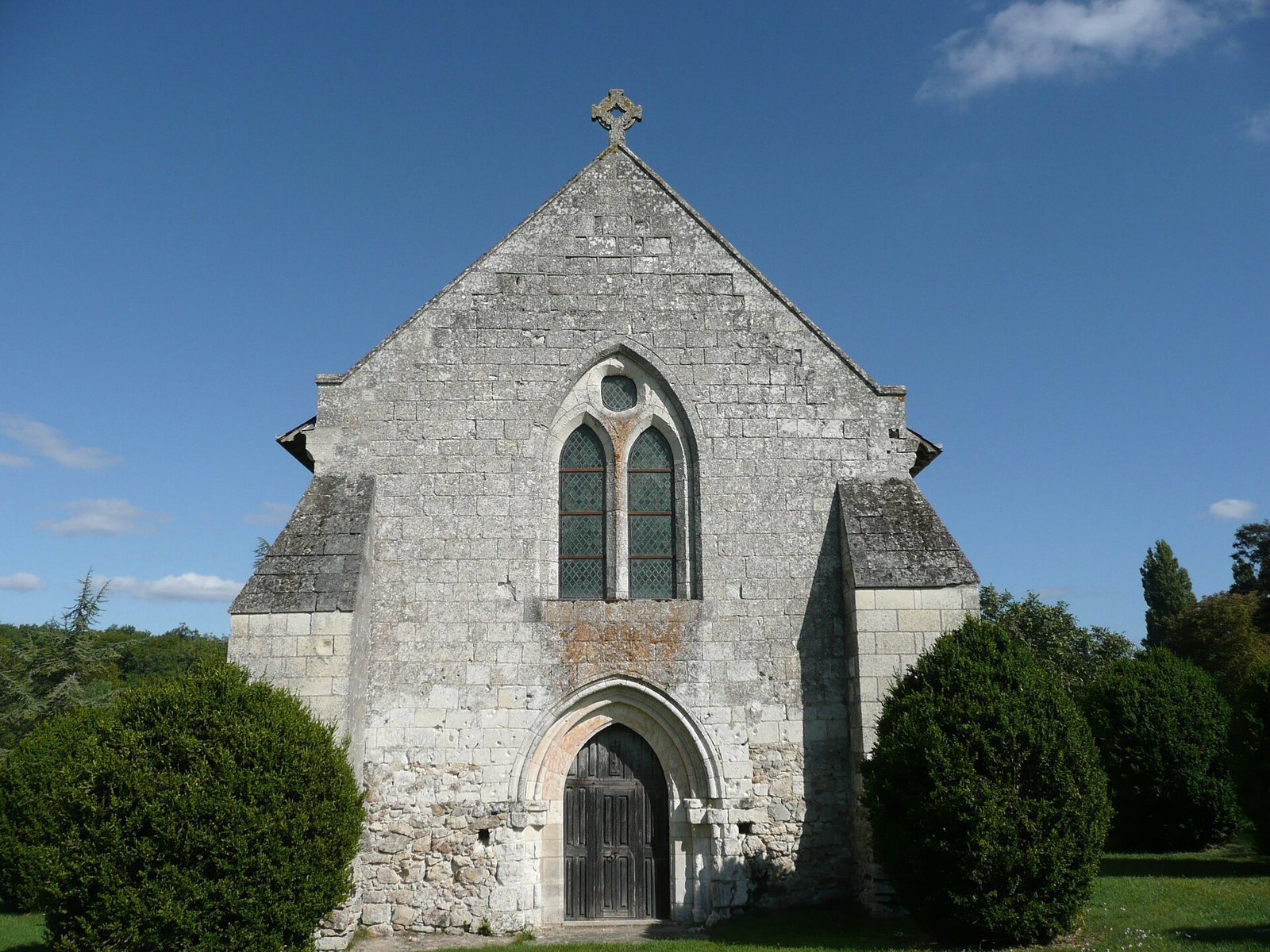
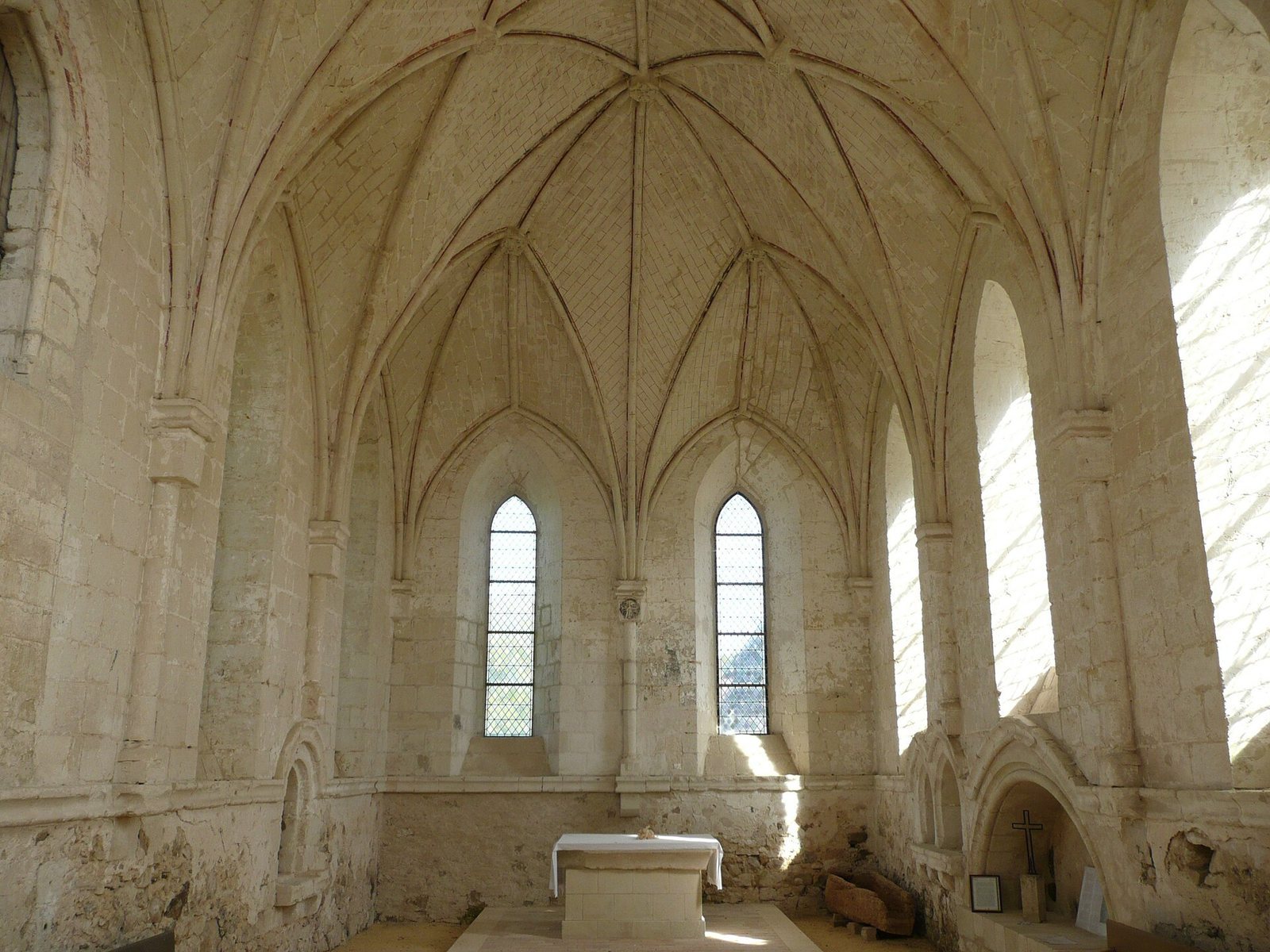
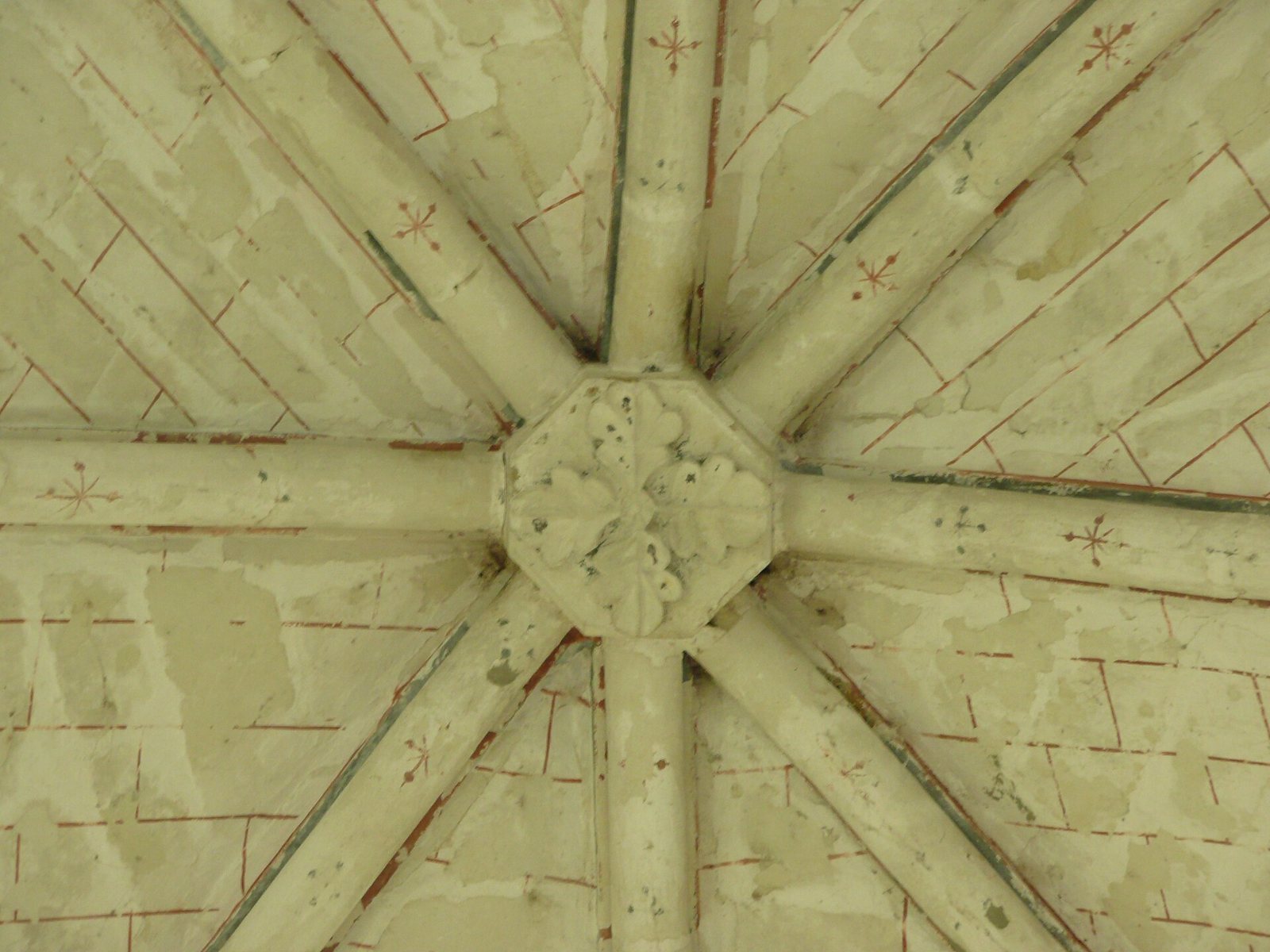
Built in 1246, the Chapel of the True Cross also served as a guest chapel. It stood at the abbey entrance, on the edge of the former enclosure, so pilgrims could venerate the relic. Its three Gothic bays, structural sections between supports, are covered by a complex Angevin vault, a domed ribbed ceiling associated with Anjou. The vault’s pattern includes liernes, short ribs connecting the main ribs, and tiercerons, secondary ribs branching from the main ribs.
Conventual buildings
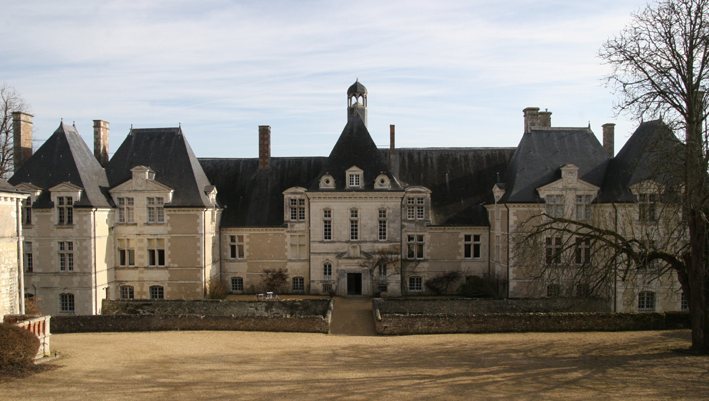
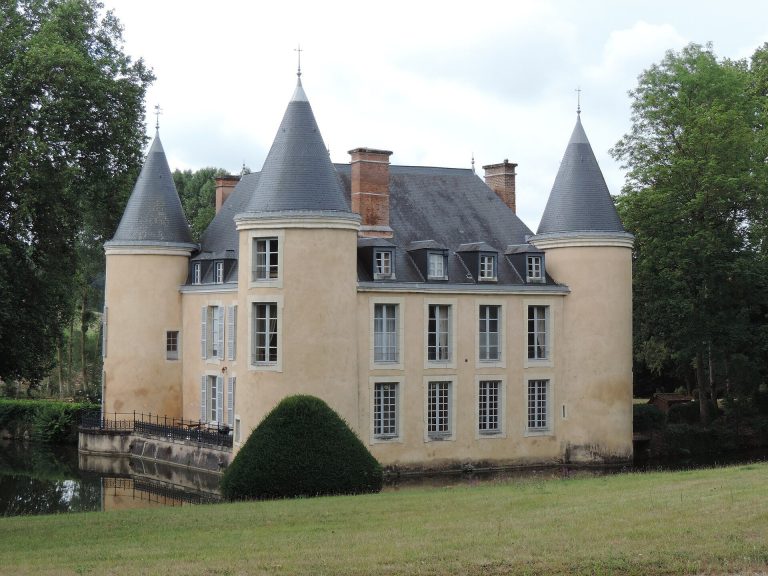
The surviving west wing retains an earlier state of the conventual buildings. It was originally used by lay brothers, members of the monastic community who performed practical work. From the sixteenth century, the wing served as a residence for commendatory abbots.
The relic
The fragment of the True Cross once kept in the abbey chapel is now held at the Hospice for Incurables in Baugé.