New Palace, Kolhapur: A Royal Residence and Museum
Site at a Glance
- Popularity
- Very High
- Country
- India
- Primary era
- Modern
- Eras represented
- Modern
- Civilizations
- British
- Site type
- Domestic
- Remains
- Palace
On this page6 sections
History
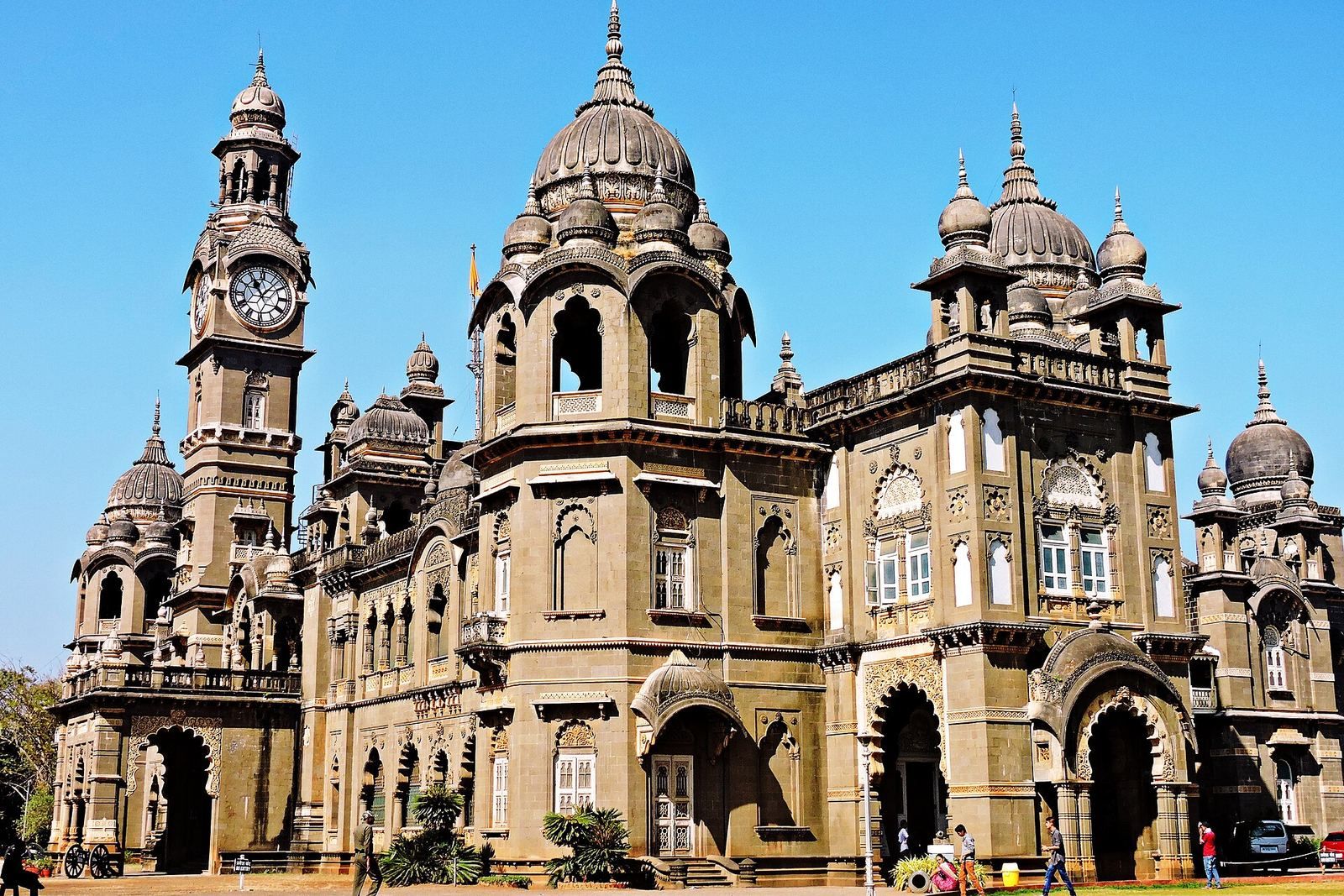
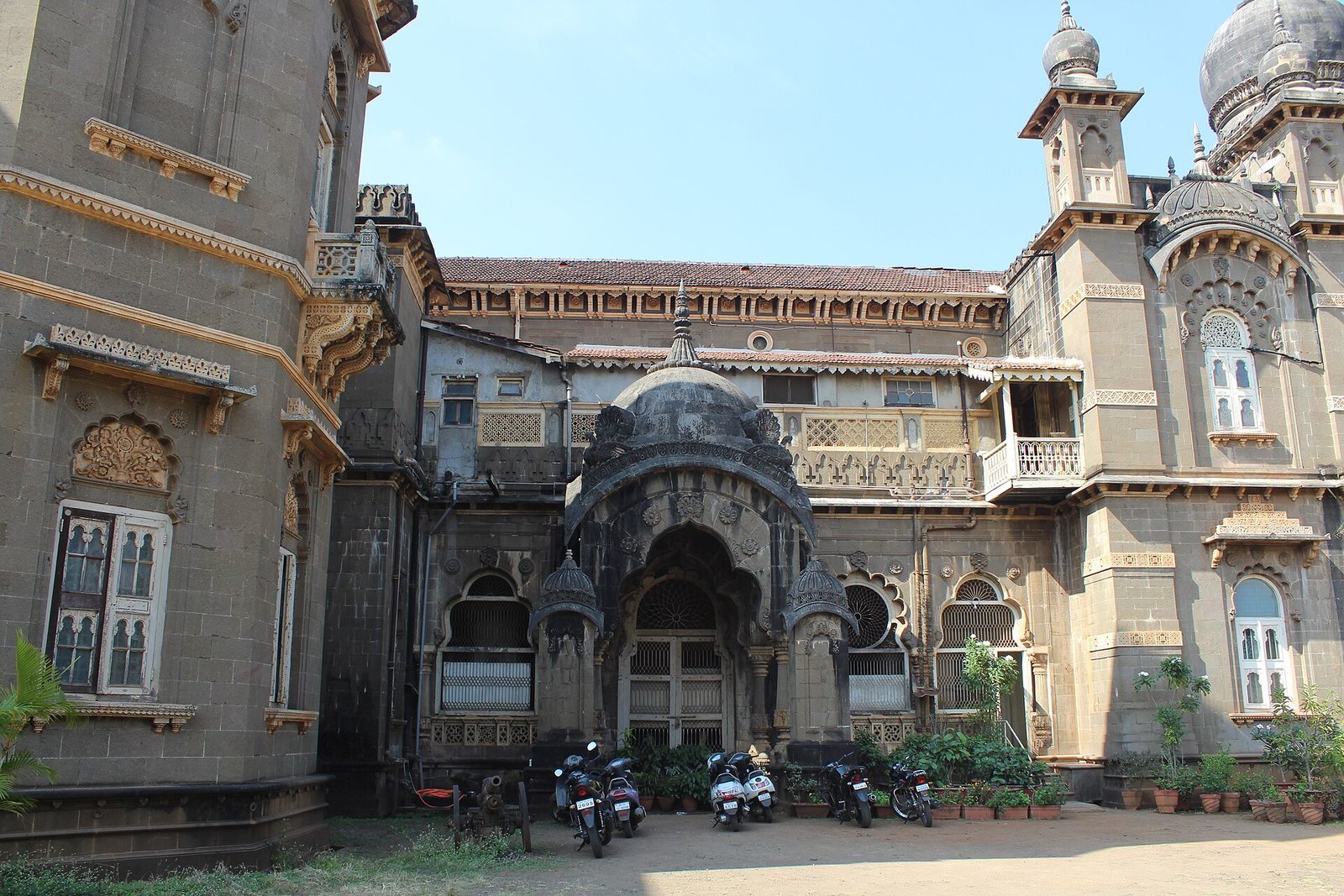
New Palace, Kolhapur, is a royal residence in India whose construction took seven years, from 1877 to 1884. Its architectural style combines Neo-Mughal forms, drawing on Mughal architecture, with temple-inspired elements. Shahu, a member of Kolhapur’s royal family, is a direct descendant of Shivaji Maharaj, the Maratha ruler who founded the Maratha Confederacy.
Remains
Exterior and grounds
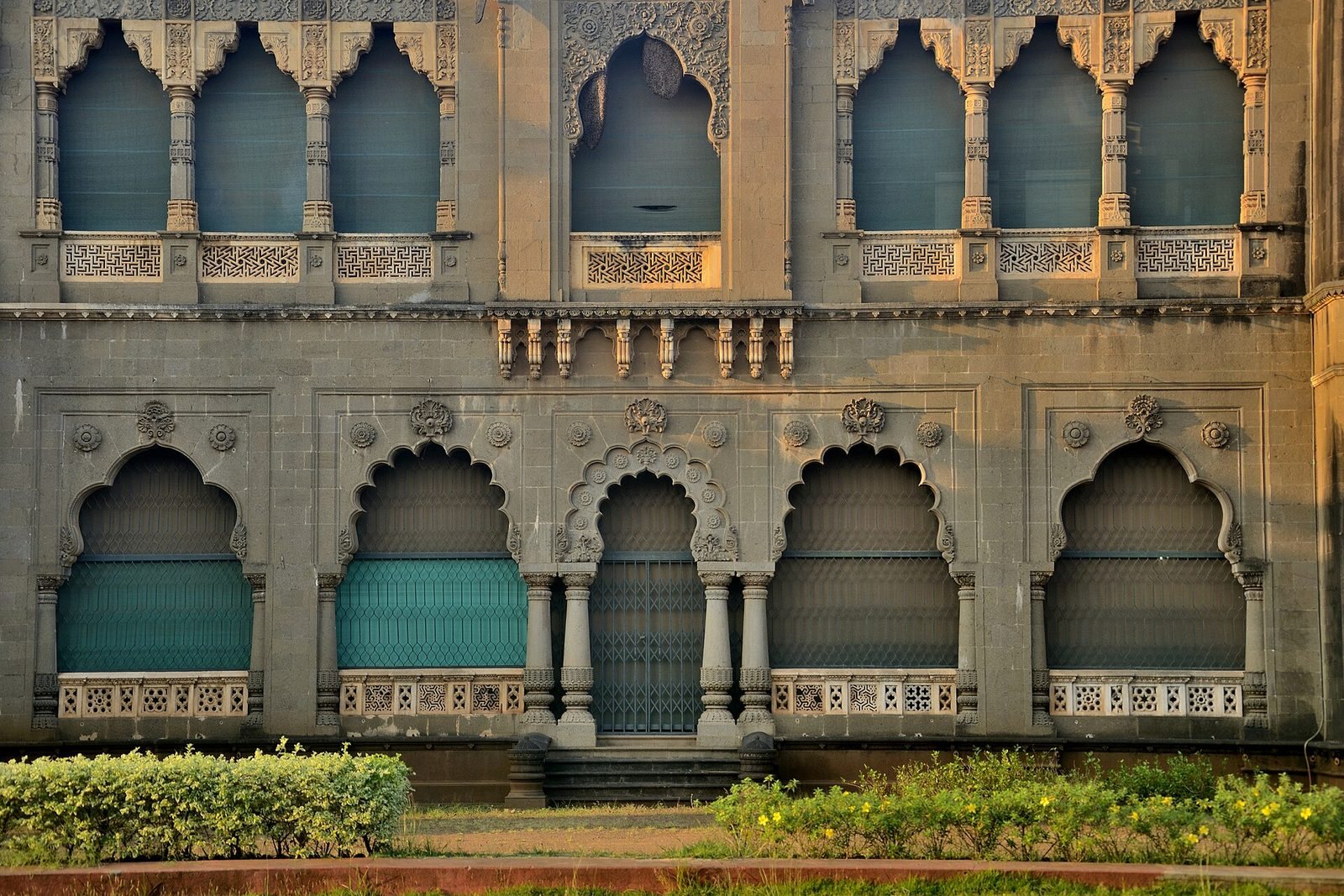
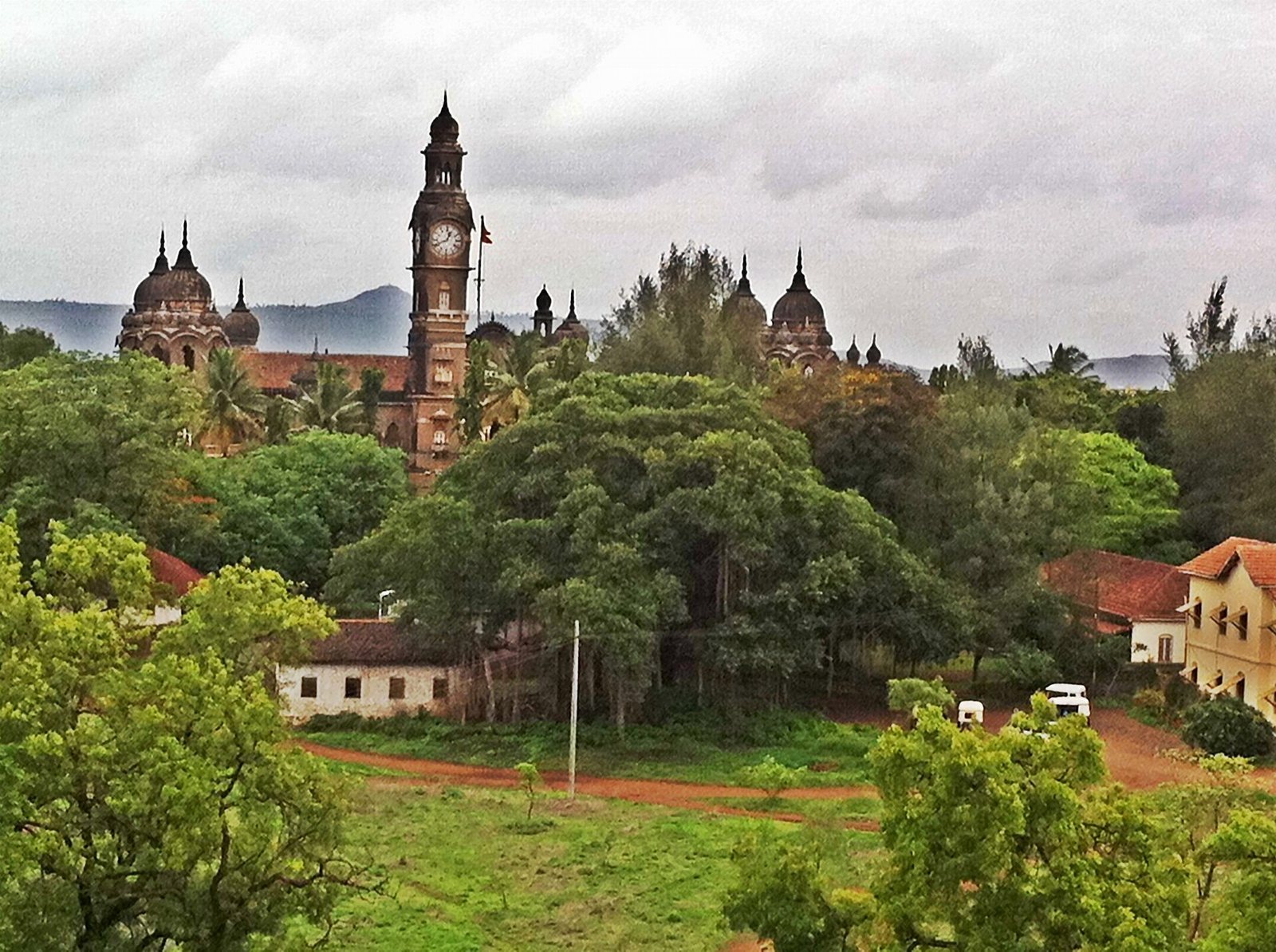
The palace has an octagonal plan organized around a central tower, with smaller towers spaced around it. A clock was installed on the central tower in 1877. The building uses polished black stone alongside contrasting basalt and sandstone. On the south, the principal two-storey façade has lower arches with rounded lobes in Neo-Mughal forms and upper temple-like columns and brackets. Three-lobed arches, topped by curved cornices and small domes, interrupt this arrangement and also crown the octagonal corner towers. The grounds include a garden, a fountain, a wrestling ground, a zoo, and a lake.
Interior
Darbar Hall
The double-height Darbar Hall (a court or audience hall) contains stained-glass panels set into lobed arches along its side walls. Painted glass throughout the palace depicts episodes from Shivaji’s life. In the hall, carved columns with temple-like brackets support a cast-iron balcony, and a raised throne stands at one end. Photographs there include a maharaja, a traditional Indian title meaning roughly “great king,” pictured with his hundredth dead tiger, images of elephant hunts, and a sequence showing cheetah training.
Shahaji Museum
The ground floor houses the Shahaji Museum, which displays possessions of Kolhapur’s rulers. Its collections include costumes, weapons, games, jewellery, embroidery, silver elephant saddles, a letter from a British official who held the offices of viceroy and governor general of India, and a sword belonging to Aurangzeb, a Mughal emperor. Stuffed-animal displays include tigers and tiger heads, wild dogs, sloth bears, a wild buffalo, lions, black panthers, wild boar, blackbuck and other deer, and a Himalayan black bear.