Gut Oheimb: A Historic Estate in Porta Westfalica, Germany
Site at a Glance
- Popularity
- Medium
- Country
- Germany
- Primary era
- Early Modern
- Eras represented
- Early Modern, Modern
- Civilizations
- Brandenburg-Prussia, Holy Roman Empire
- Site type
- Domestic
- Remains
- Manor House
On this page9 sections
History
Gut Oheimb is an estate in Holzhausen, within the city of Porta Westfalica, Germany. It first appears in the historical record in 1099, when Reinmildes received an estate belonging to a bishop, the senior church authority in a diocese, for her lifetime use.
Medieval transfers and ownership
In 1170, Bishop Werner of Minden bought the estate back from Reinmildes’s daughter, Reinmuldis, who was then an abbess, the head of a women’s religious community, at Wunstorf.
The estate was also known as Grauer Hof, Gronen Hof, and Gut Holzhausen. A deed dated 24 June 1319 records Ludolf and Dethard von Slon giving up their bailiwick over St Margaret’s Chapel on Wittekindsberg. A bailiwick was a jurisdiction that could involve the secular protection or administration of church property. Ludolf, a squire (a rank below a knight), was the next known owner, holding the estate from 1339 to 1344.
Grone and Oheimb ownership
Johann von Grone was recorded as owner in 1620. After the last male member of the von Grone family died in 1772, the estate passed to his daughter Charlotte Lucie, who was married to Colonel Georg Wilhelm von Oheimb. The estate remained with the von Oheimb family until the mid-20th century.
Alexander Wilhelm Heinrich von Oheimb became owner in 1868 and served as district administrator of Minden. His heir was his son Bodo von Oheimb (1852–1907); ownership then passed by inheritance to Hans Joachim Oheimb (1880–1960). The estate covered 800 Morgen, a traditional area measure that varied by region and period, including 350 Morgen of woodland.
Twentieth-century uses
In the final years of the Second World War, the property served as a hospital. After the war, it first became a private clinic. The German Red Cross, Germany’s national Red Cross society, bought the buildings in 1952 and operated a mothers’ convalescent home, followed by a mother-and-child convalescent home, until the 1980s.
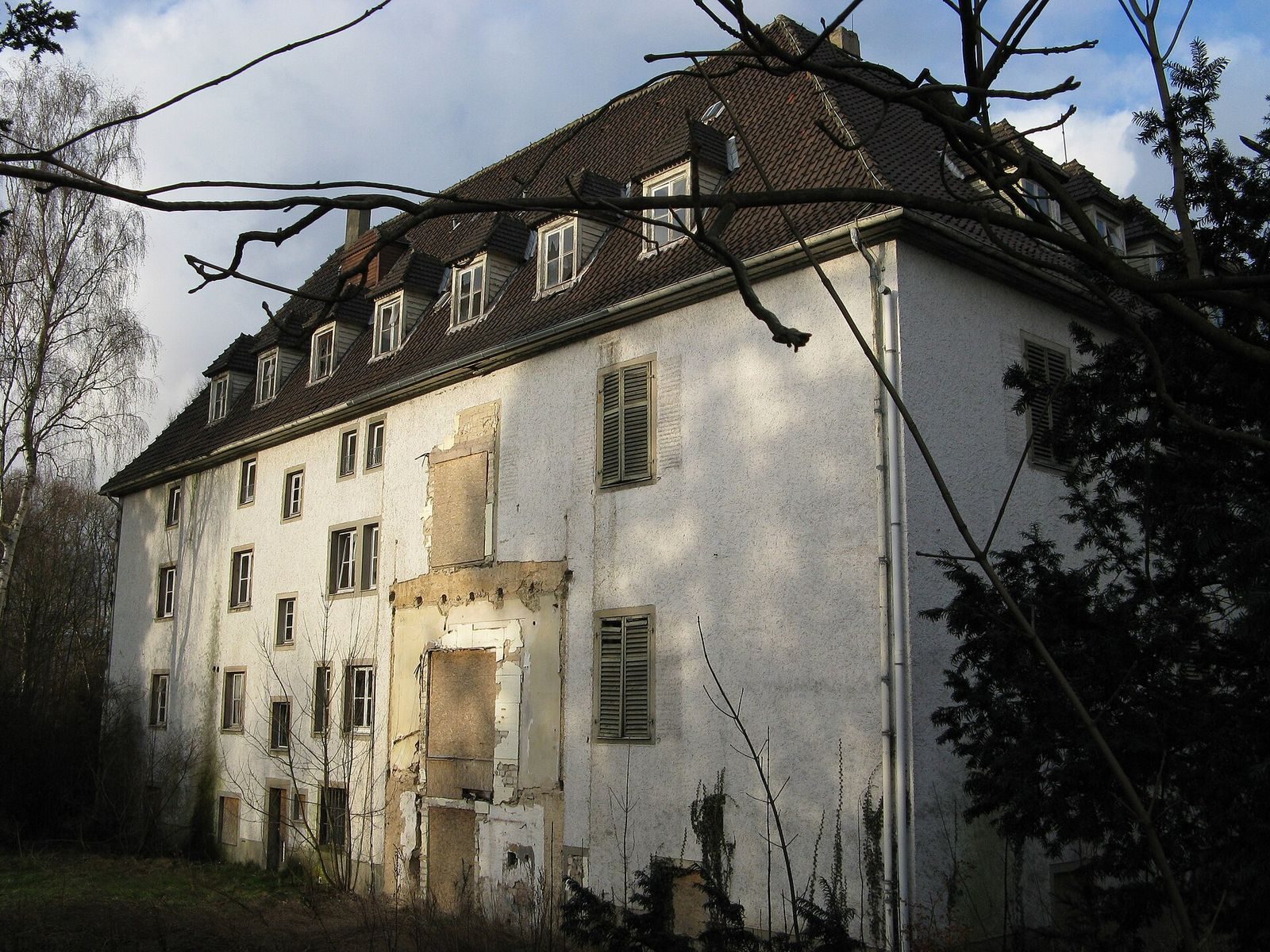
The property later served as a home for older people and then as accommodation for asylum seekers. It is privately owned by Habitat Seniorenwohnheime, based in Bad Sassendorf, while the local community maintains the park.
Remains
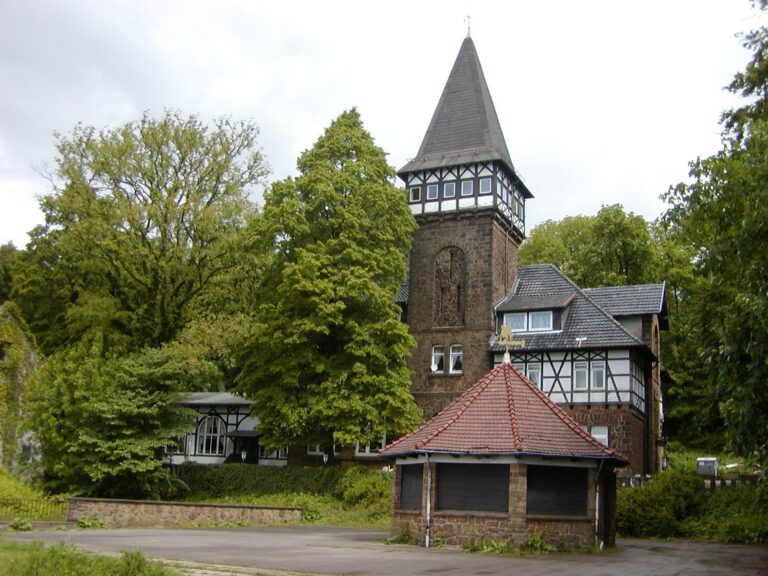
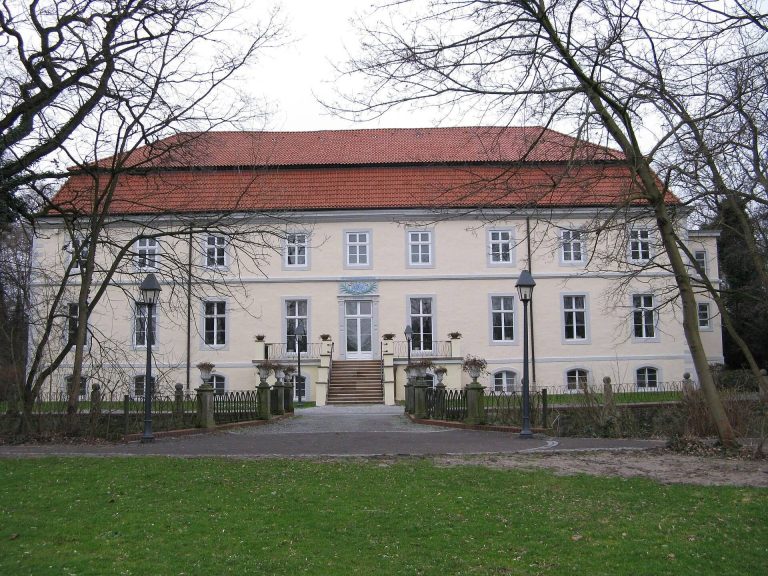
The estate lies south of the Wesergebirge and east of the Weser. Its grounds include a manor house, a park with a pond and lawns, and a hereditary burial ground at the park’s western edge.
Estate grounds
Manor house
A manor house was built on the estate in 1690.
Park
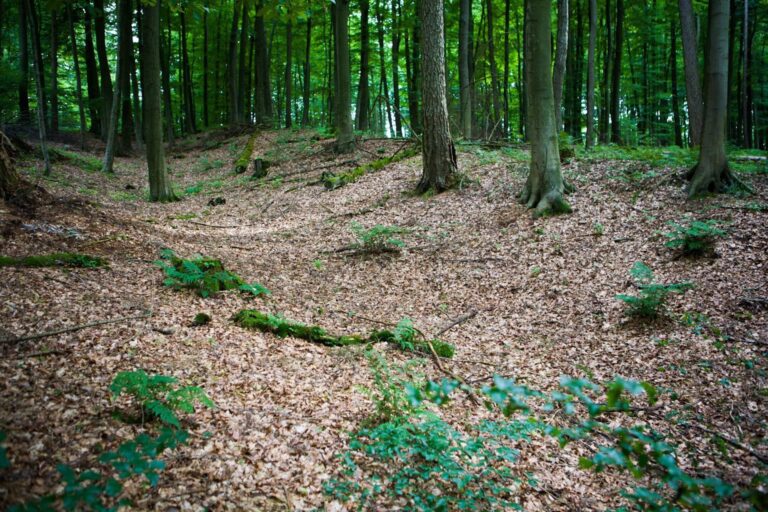
After the German Red Cross acquired the buildings, the park was renovated and enlarged with play and sunbathing lawns and a pond. Some old trees remain, while much of the grounds is heavily overgrown.
Von Schellersheim burial ground
The hereditary burial ground of the von Schellersheim family lies at the western edge of the park. The family was associated with the manor estate at Eisbergen.