Fort Mosta: A British Fort on Malta’s Victoria Lines
Site at a Glance
- Popularity
- Medium
- Country
- Malta
- Primary era
- Modern
- Eras represented
- Classical, Modern
- Civilizations
- British, Roman
- Site type
- Military
- Remains
- Fort
On this page6 sections
History
Fort Mosta is a British-built fort in Malta, constructed as one of three major strongpoints on the Victoria Lines, a defensive system intended to separate northern Malta from the more densely populated south. Approved in 1873, it was in use by 1880.
Construction and military role
Fort Mosta was the last of the three major forts on the line to be built. Work began at Fort Binġemma in 1875 and at Fort Madalena in 1878. When General Lintorn Simmons inspected Mosta in February 1878, construction had yet to start; building began soon afterward.
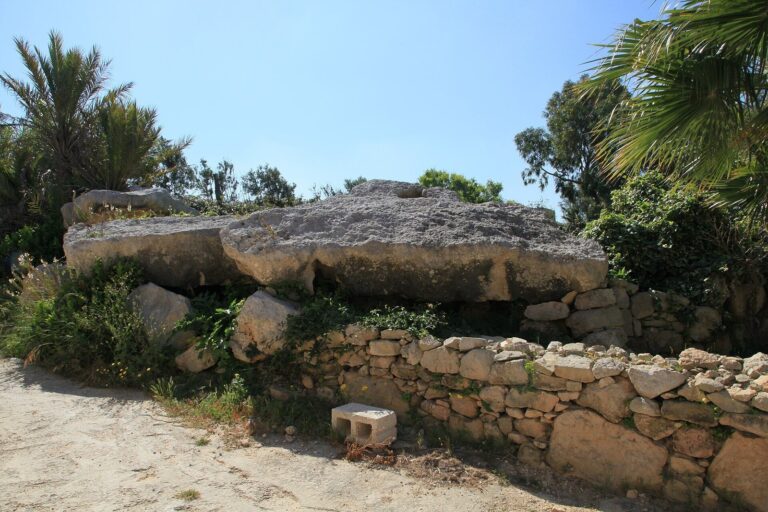
French architect Giorgio Grognet de Vassé proposed that the location had earlier strategic importance and described a Bronze Age citadel and village there. British building work may have disturbed prehistoric remains, but the settlement he described has not been verified.
Fort Mosta was a land fort rather than a coastal-defence work. Its initial artillery included 64-pounder guns with smooth barrels, loaded from the muzzle. Six-inch guns loaded from the rear were installed later.
Abandonment and continued use
The Victoria Lines were abandoned in 1907, eight years after their completion, because their defensive value was considered doubtful. Fort Mosta consequently lost most of its military value, while Fort Binġemma and Fort Madalena continued in coastal-defence service. By 1940, Mosta had become an ammunition depot.
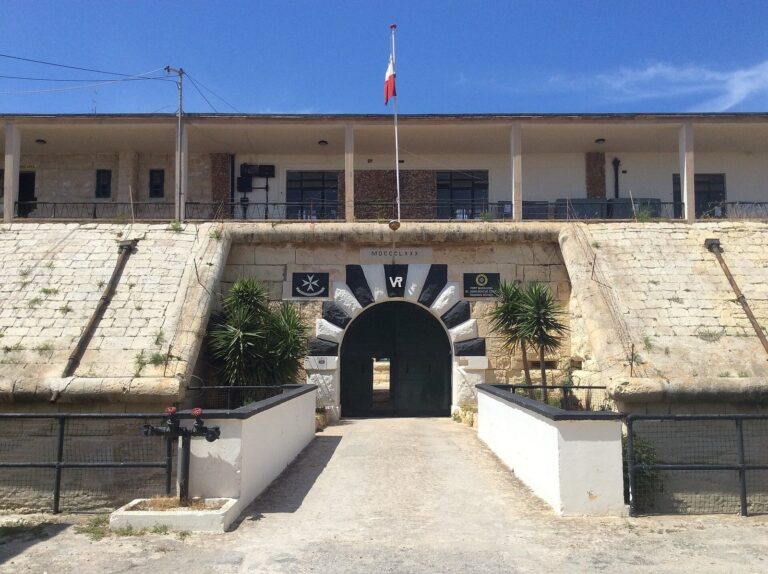
The Armed Forces of Malta continues to use Fort Mosta as an ammunition depot. The Malta Police Corps Dog Section is also based within the fort.
Remains
Defensive layout and construction
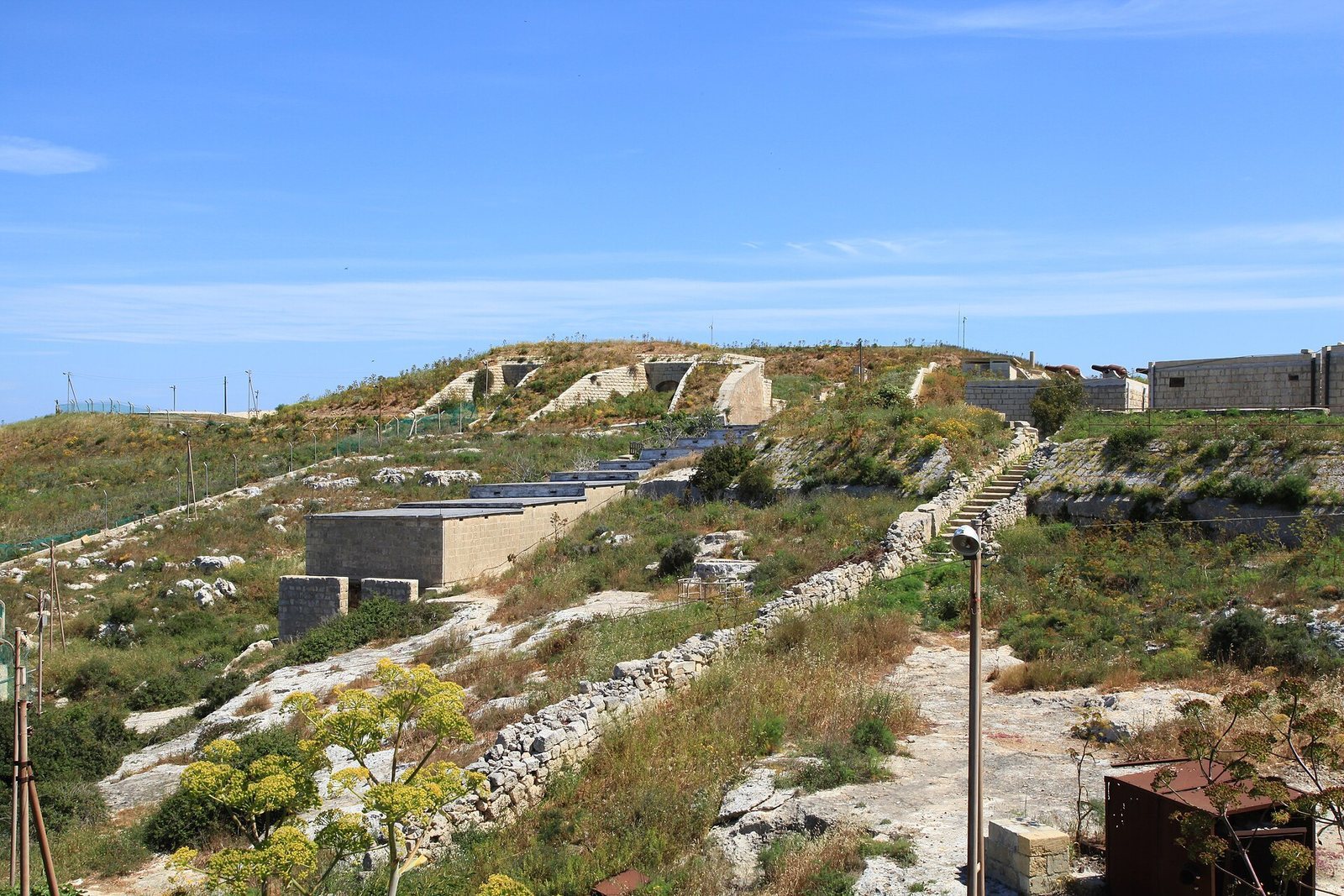
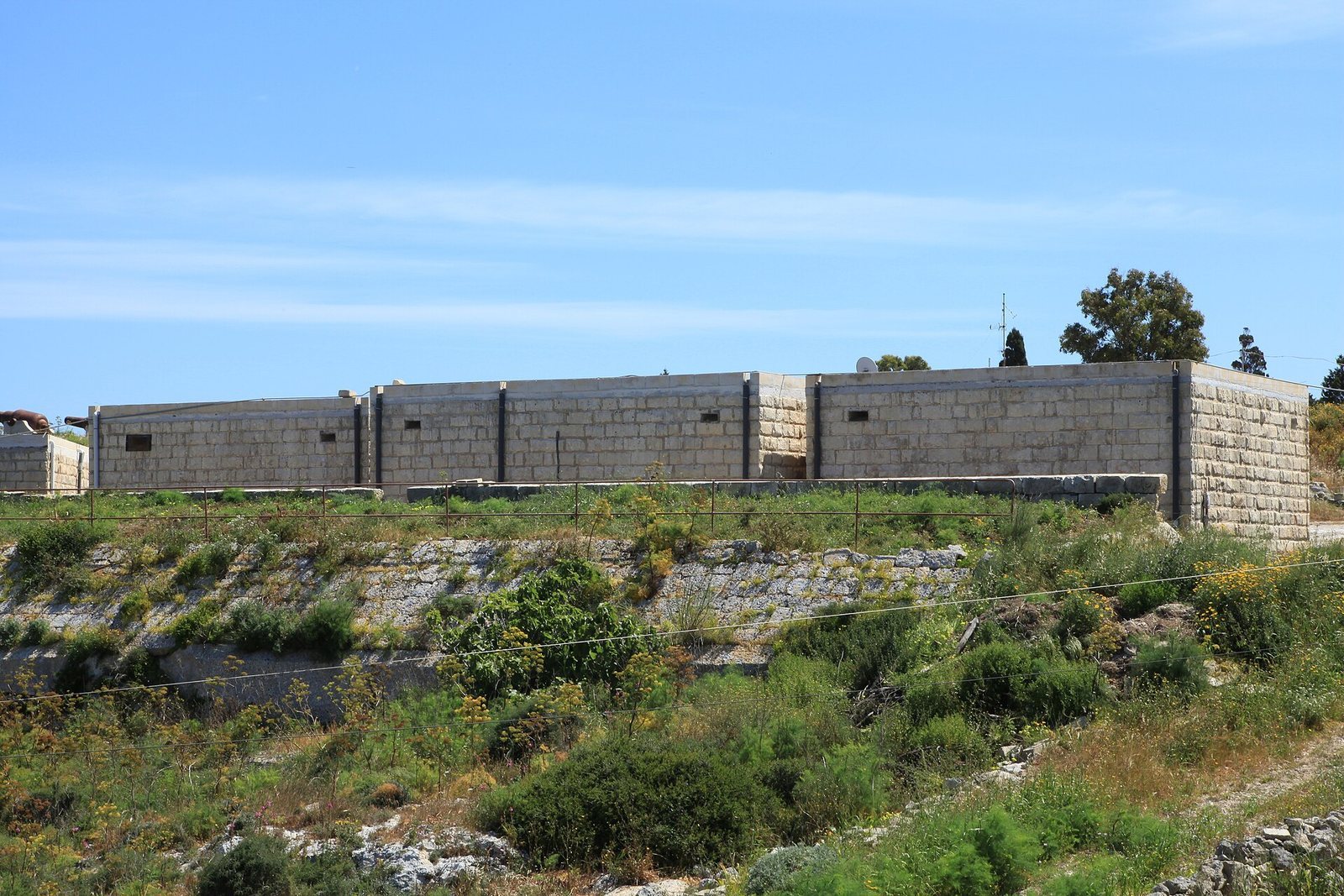
The fort occupies the cliff face at the mouth of the Wied il-Għasel valley. Its two main parts are a pentagonal fortified inner stronghold surrounded by a ditch and an artillery battery outside it, joined by a controlled passage. Limestone and concrete form the intact fort, which stands mainly on blue clay that is damaging the structure.
Catacombs
Catacombs dating to the fourth or fifth century AD lie beneath the fort and remain there.