Fort Cuyo: A Spanish Colonial Defensive Fort in the Philippines
Site at a Glance
- Popularity
- Medium
- Country
- Philippines
- Primary era
- Early Modern
- Eras represented
- Early Modern
- Civilizations
- Habsburg, Habsburg Spain, Spanish
- Site type
- Military
- Remains
- Fort
On this page7 sections
History
Fort Cuyo is a Spanish colonial fortification on Cuyo in the Philippines, built in 1680 by the Recollect Augustinians to protect the local population from raids. The Recollect Augustinians were a reformed branch of the Catholic Augustinian order. The fort’s construction followed the looting of Cuyo by Muslim raiders in 1636, when pillage and abduction posed continuing dangers. It was intended to shelter the community as well as the Augustinian church and convent. Friar Juan de San Severo supervised the work and was also associated with the construction of three other forts in the Calamianes Islands.
Colonial defense and records
In 1739, Governor Fernando de Valdés counted 125 Spanish fortifications in the Philippines and reported that the Augustinian order paid for five of them: Fort Romblon and the four Calamianes forts at Cuyo, Culion, Agutaya, and Linapacan. A 1777 description of the Philippines’ fortified places, garrisons, and forts also included the Cuyo citadel.
Later history
In 1899, Trinidad Legarda was born inside the fort after her parents sought refuge there during looting in Cuyo by bandits led by Kausapin. Legarda later became the Philippines’ first woman ambassador, taking office in Vietnam in 1958. The National Historical Commission of the Philippines declared Fort Cuyo a historical landmark in 1939. Its survival is attributed to the Augustinian order’s continued presence there until 1973.
Remains
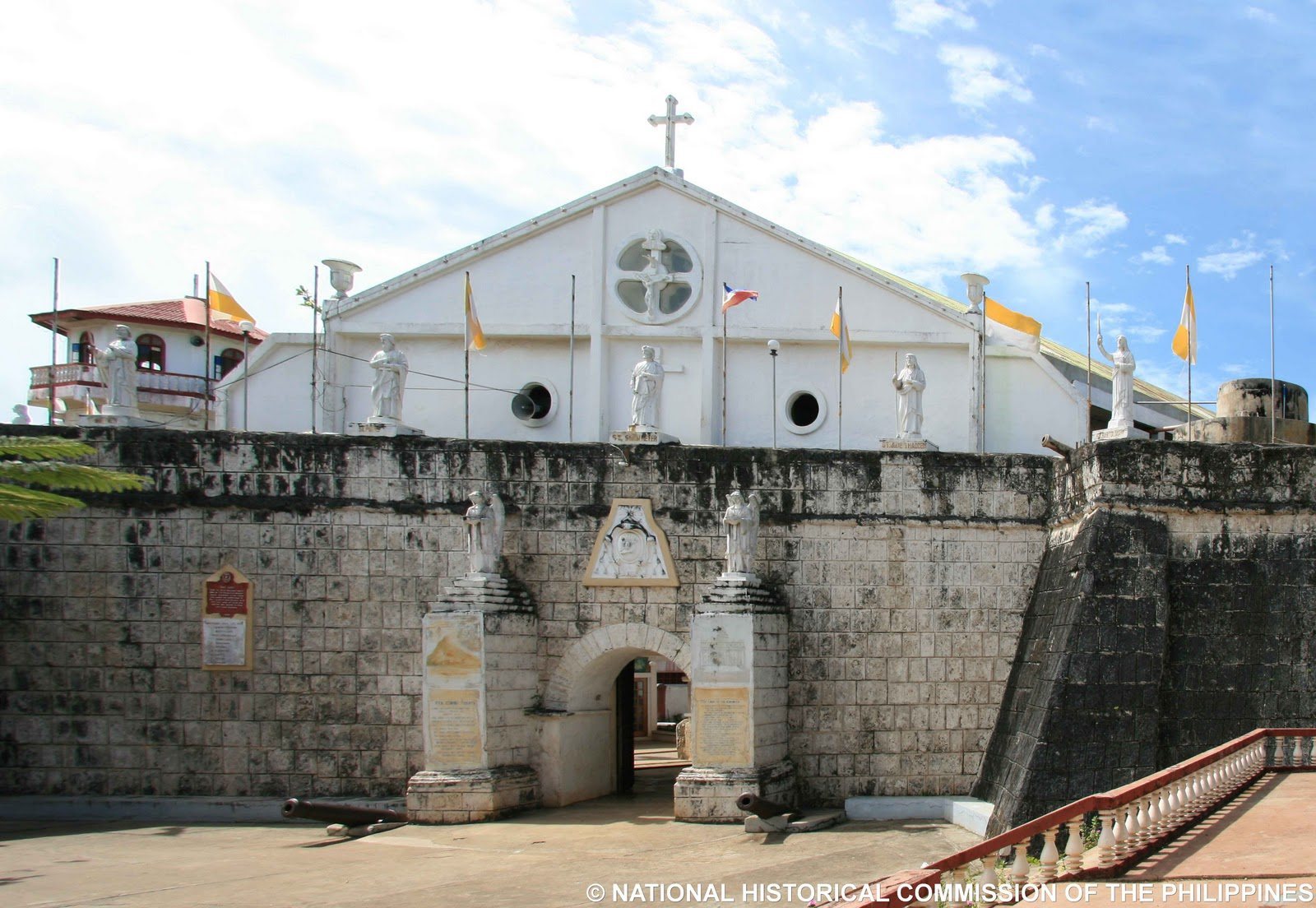
The stone-and-mortar fort has a square plan, four corner defenses, and a group of religious buildings within its walls. Its grounds cover one hectare.
Fortifications and buildings
Walls and defensive structures
The fort’s walls are 10 metres high and 2 metres thick. Four bastions, projecting defensive sections, form part of its square plan. A tall belfry, a tower for bells, and watchtowers also rise within the fortified complex.
Church and religious buildings
Saint Augustine Church, a convent, and a chapel stand inside the fort’s walls. The church dates to 1622 and is regarded as the oldest church in Palawan.