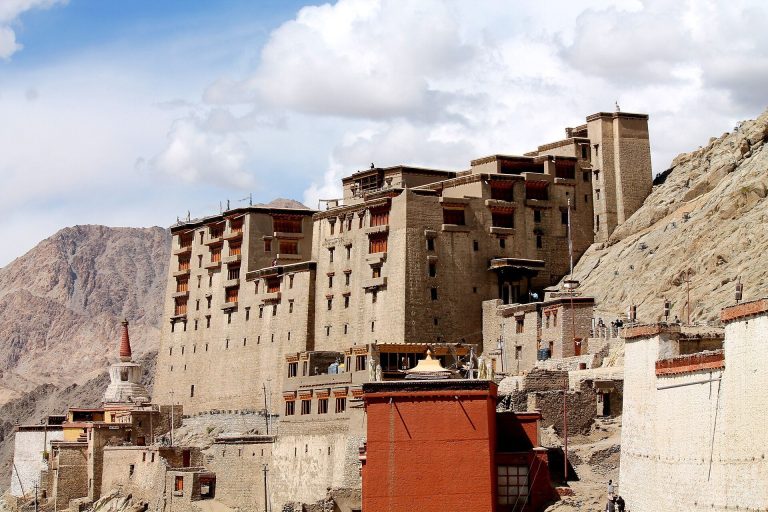
Shey Monastery: A Tibetan Buddhist Monastery and Royal Complex in Ladakh
Site at a Glance
- Popularity
- High
- Country
- India
- Primary era
- Early Modern
- Eras represented
- Medieval, Early Modern
- Civilizations
- Unclassified
- Site type
- Religious
- Remains
- Monastery
On this page14 sections
History
Shey Monastery is a Tibetan Buddhist monastery in Shey, Ladakh, India, commissioned in 1655 by King Deldan Namgyal below an earlier royal palace. Shey had served as Ladakh’s summer capital and the old capital of Upper Ladakh, and the monastery commemorated Deldan’s father, Sengge Namgyal.
Early royal center
An earlier palace at Shey dates to the 10th century and is attributed to Lhachen Palgyigon, a king of Ladakh, then known as Maryul. Even after the political capital moved to Leh, Shey retained a place in royal life: Namgyal kings were expected to father their heir apparent there.
In the 16th century, the Mughal noble Mirza Haidar Dughlat stayed at the palace during his invasion of Ladakh. The building thus remained connected to the region’s political history long after its role as capital had changed.
Deldan Namgyal’s foundation
In 1655, Deldan Namgyal ordered a new palace and monastery below the older palace. The palace served as a summer royal residence, while the monastery stood apart from it and was founded in memory of Sengge Namgyal. The royal complex combined the Namgyal dynasty’s residential presence with a place of Buddhist worship.
The royal court leaves Shey
During the Dogra invasion of Ladakh in 1842, the Namgyals abandoned the palace and fled across the Indus to Stok, which became their permanent residence. The Dogras were a ruling power based in Jammu. Shey’s religious importance continued after the political capital had shifted to Leh, and pilgrims came to venerate the monastery’s Buddha image.
Worshippers make offerings before the deities, including grain, jewels, sacred symbols and inscribed prayers. Women who hope to have children also pray at the site for blessings. Butter lamps are kept alight throughout the year, with oil added to sustain the flame; their continuous light represents the shrine’s divinity and purity.
Two seasonal festivals mark the agricultural year. Shey Doo Lhoo, held at the palace on the 26th and 27th days of the first Tibetan month, in July or August, celebrates the start of sowing. Monks perform special rites, while a mounted oracle, a person believed to deliver prophecies, prays for three days before entering a trance and making predictions. Shey Rupla marks the harvest. Farmers bring the first corn to the monastery, two men perform the Rhupla dance in tiger costumes, and other folk dances accompany predictions by two oracles.
A funeral ground near the palace is used for cremation. After rites at home, the deceased is carried in a sedan chair in a procession with lamas and villagers. Prayers are chanted as the body is placed in an oven, and the ashes are scattered in a river.
Remains
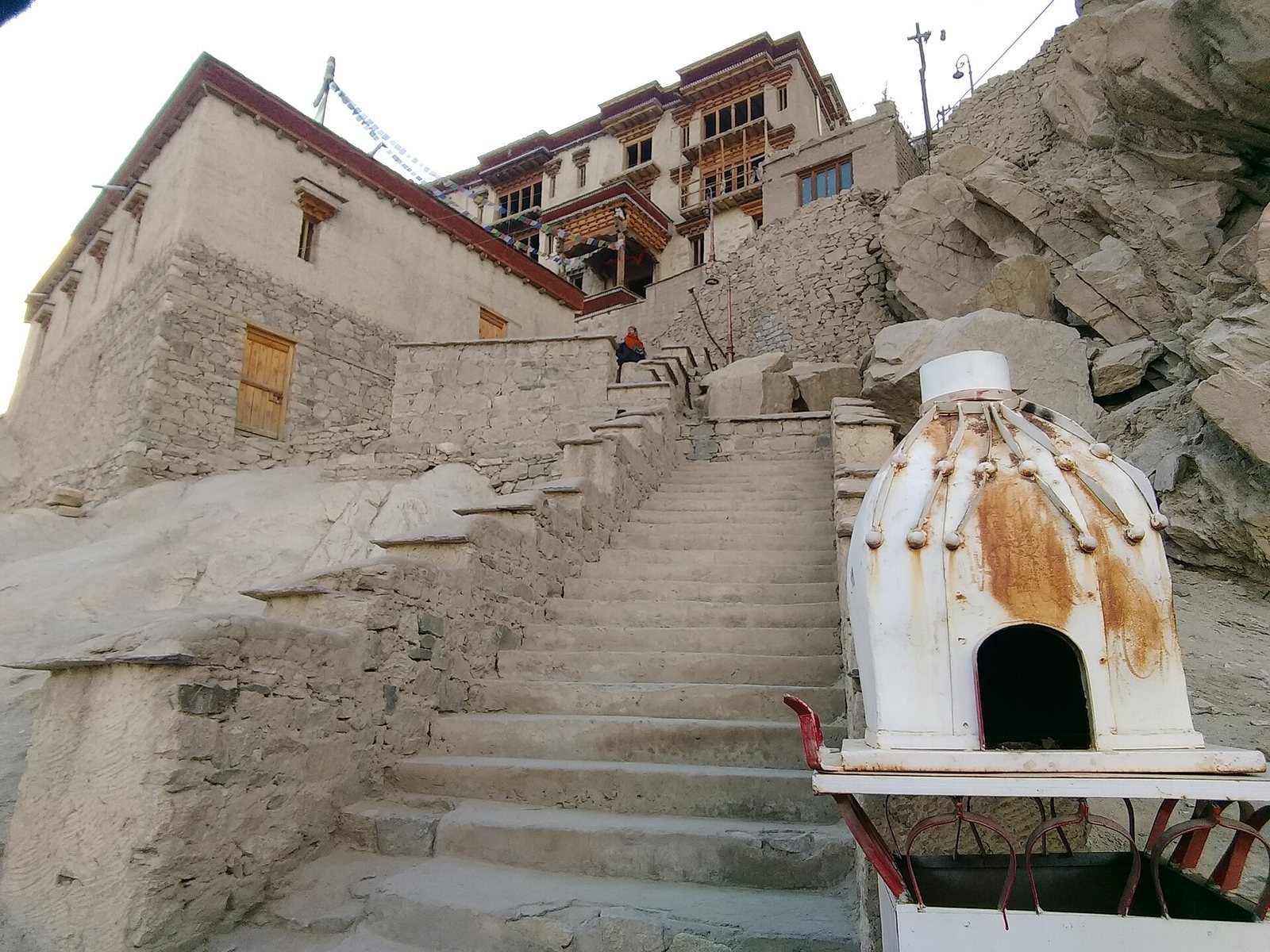
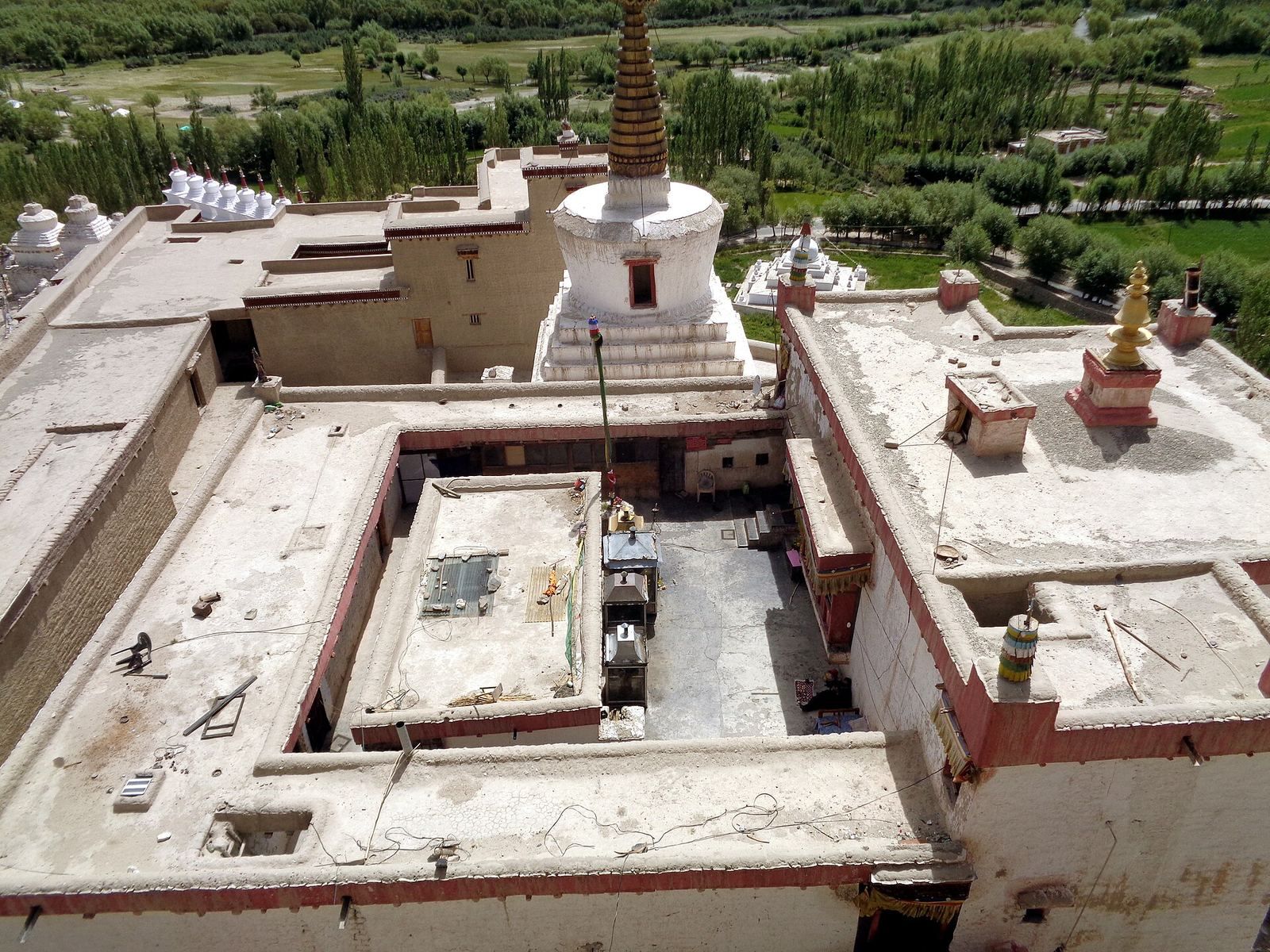
The complex occupies a hillock in Shey, about 15 kilometres from Leh in the upper Indus Valley, at an elevation of roughly 3,415 metres. The Zanskar hills lie to the south. The layout includes the ruins of an older palace, a smaller later palace below an abandoned fort, and a monastery that stands apart from the palace. From the hilltop, views extend to Thikse, Stakna, Matho, Stok and Leh.
Palaces and fort
Earlier palace
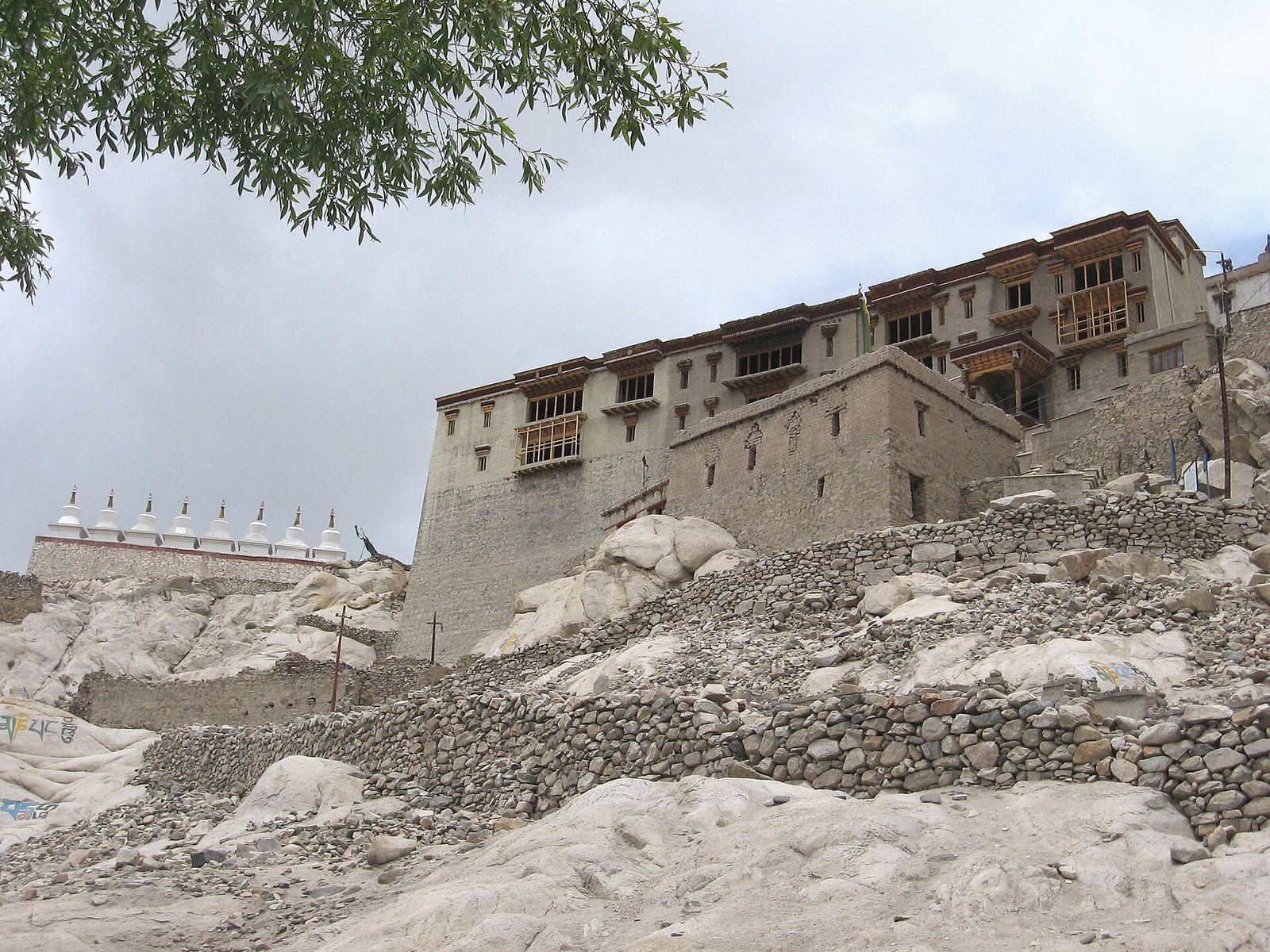
The earlier palace is now in ruins. Its remains occupy the upper part of the complex above the later royal buildings.
Later palace
The later palace is smaller than Leh Palace and is in a dilapidated condition. It stands below the abandoned fort.
Fort
A ruined fort rises above the later palace. Its date is uncertain.
Main monastery shrine
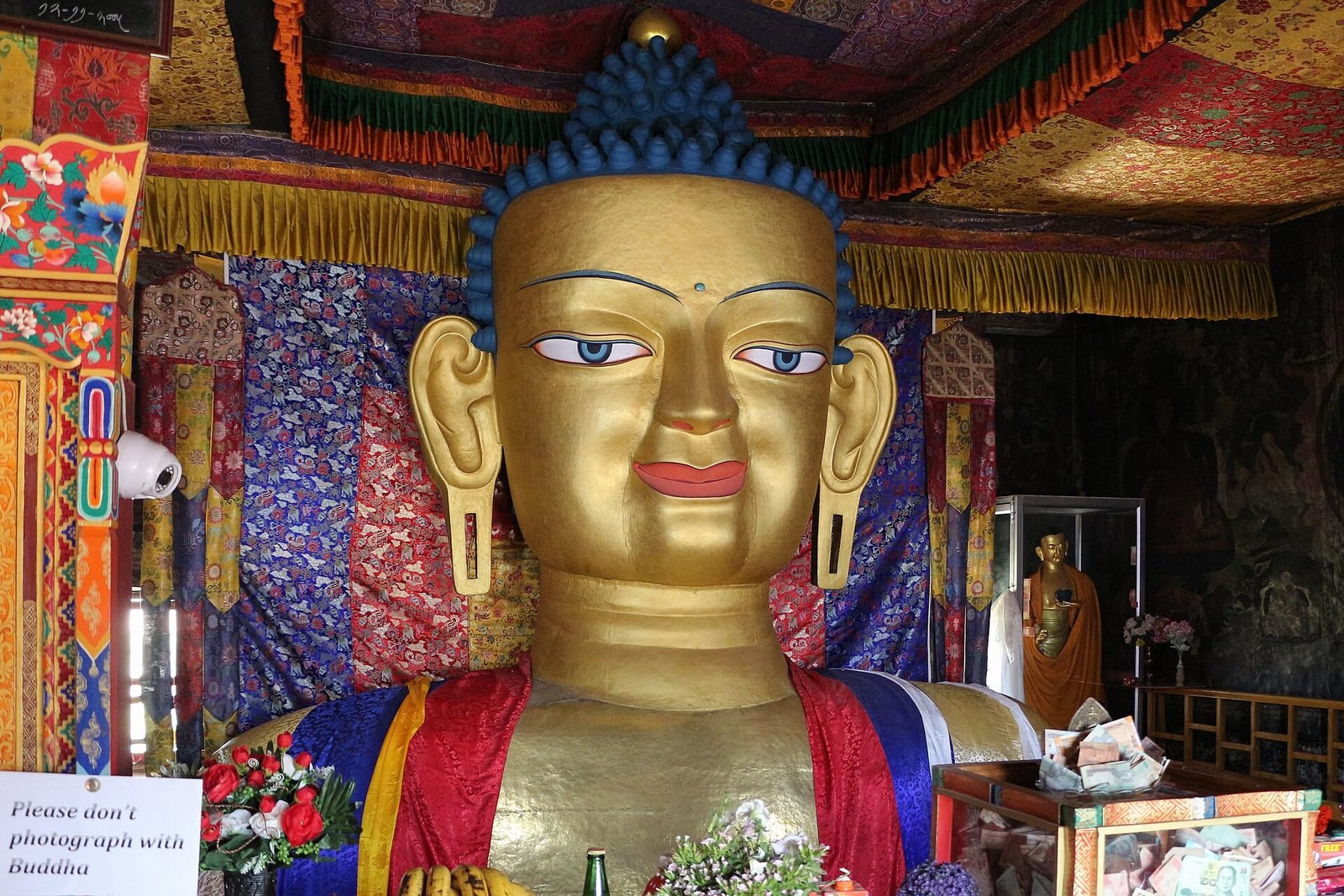
The main shrine contains a seated image of Shakyamuni, the Buddha associated with the Shakya people. About 12 metres high, the copper statue is gilded and spans three floors. It is the second-largest Buddha statue in Ladakh. Its sections were made at Zanstin in Leh using copper from the Lingshet mines and other locations in Zanskar. Workers hammered the metal into plates with rocks used as anvils. Some sections were joined in a workshop, while the rest were taken to Shey for assembly and installation. About five kilograms of gold may have been used for the gilding.
The main image and the large statue in a smaller shrine are attributed to the Nepalese sculptor Sanga Zargar Wanduk. Sengge Namgyal’s mother, Gyal Khatun, is believed to have brought him to Ladakh, and Paldana Shering Gyaso, Gamani Jal Shring and Nakbiri assisted him. Silverworkers in Chilling are believed to descend from builders of the palace and shrines and are known for traditional silverwork.
The lowest level displays the statue’s large feet, with their soles facing upward, beside a mural of Shambunath, an epithet of Shiva, the Hindu deity. The middle level has paintings of Buddhas in different poses. Butter-lamp soot has darkened the upper level, where wall paintings extend across the floor. On either side of the main statue are images of the 16 Arhats, beings who have attained liberation. Behind it are figures of the Buddha’s celebrated disciples Shariputra and Maudgalyayana. A lower-floor library holds preserved manuscripts and is decorated with Buddhas making different symbolic hand gestures. Lamps in the shrine are arranged so that a flame can be kept burning continuously, with oil replenished to maintain it.
Smaller shrine
About 400 metres from the palace, Sengge Namgyal built a small shrine containing another large seated Shakyamuni Buddha. Its murals and other images resemble those in the palace shrine. Paintings include the 16 Arhats and the Buddhist teachers Padmasambhava, Atisa and Tson-Ka-Pa, who are associated with Tibetan Buddhist traditions. Two small shrines for esoteric Buddhist practices stand nearby.
Rock carvings and Buddhist monuments
Carvings of the five Dhyani Buddhas, a group of Buddhas prominent in esoteric Buddhist traditions, appear on rock spurs along the road to the palace. One carving, near the palace, is particularly large; four others are near a Buddhist monument known as a chorten. Many chortens also stand east of the palace.
Lama’s official residence
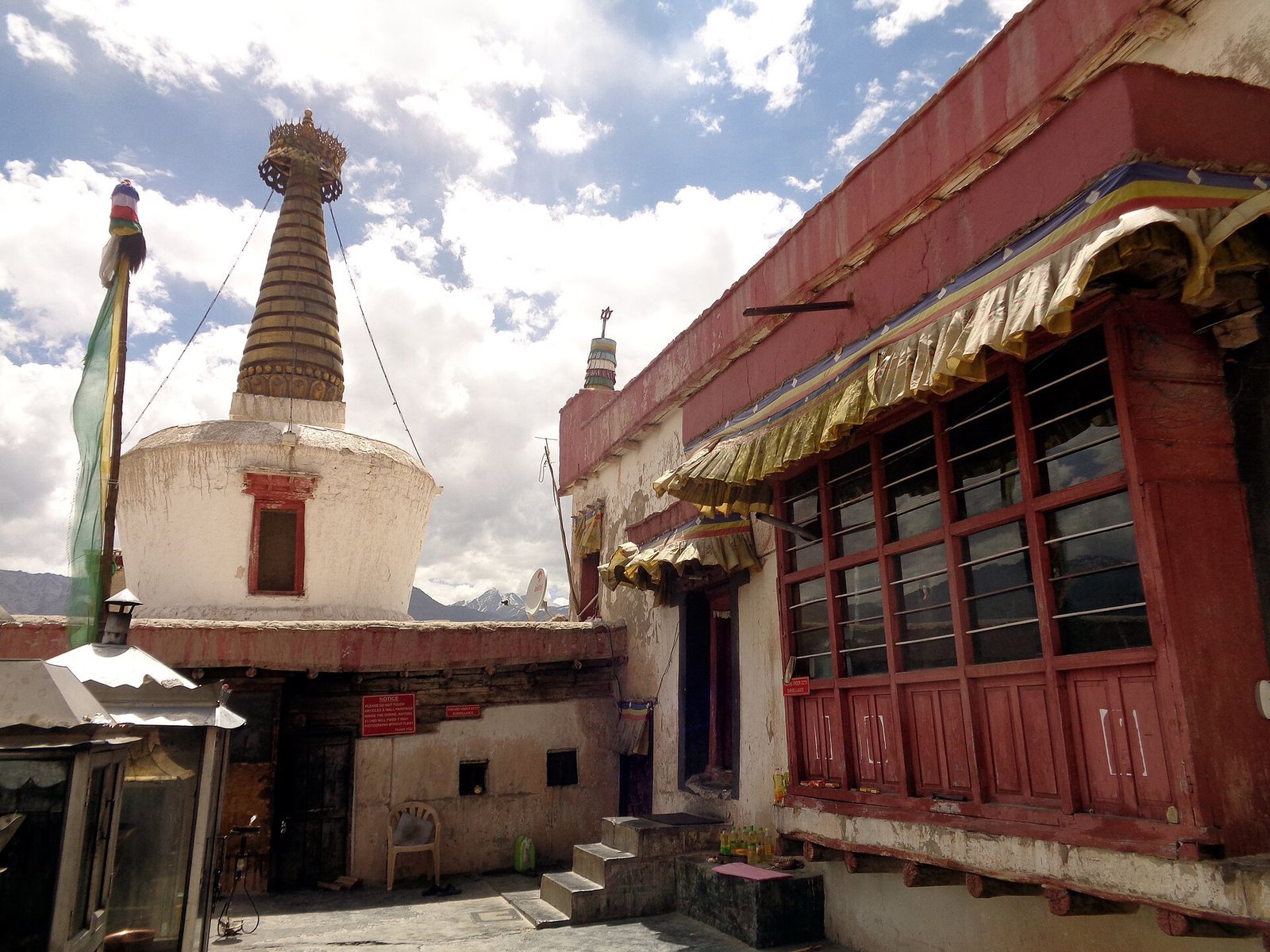
At the edge of the valley stands the monastery lama’s official residence, a small palace with views over the Indus Valley. Its roof has a golden spire shaped like a Buddhist memorial monument.
Funeral ground
The funeral ground near the palace includes a cremation oven with tubular walls.