Trapezitsa: A Citadel of the Second Bulgarian Empire
Site at a Glance
- Popularity
- High
- Country
- Bulgaria
- Primary era
- Medieval
- Eras represented
- Medieval
- Civilizations
- Second Bulgarian Empire
- Site type
- Military
- Remains
- Citadel
On this page14 sections
History
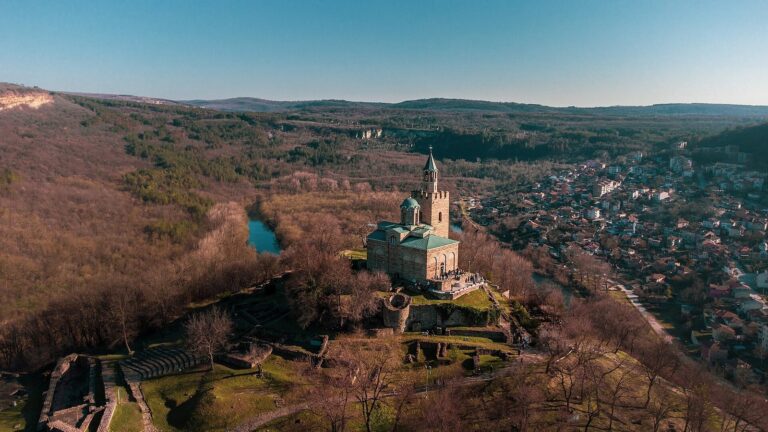
Trapezitsa is a fortified hill in Bulgaria that formed part of medieval Tarnovo, now Veliko Tarnovo. Its principal defenses date to the 13th and 14th centuries, when Tarnovo was the capital of the Second Bulgarian Empire (1185–1393), the medieval Bulgarian state centered there. Among the city’s two hilltop citadels, Trapezitsa ranked below Tsarevets in importance.
Prehistoric and ancient occupation
A fortified settlement occupied the hill during the Late Chalcolithic, or Copper Age, around 4200–4000 BC. Thracian settlements followed during the 13th and 12th centuries BC, in the Bronze Age, and again in the 9th to 7th centuries BC, during the Early Iron Age. Roman fortifications were built in the 4th century AD. Slavs destroyed these defenses in the 7th century.
Medieval citadel
The earliest medieval defensive works date to the 1160s–1180s. The principal fortifications took shape in the 13th and 14th centuries, as Tarnovo served as the imperial capital. Trapezitsa was home to Bulgarian nobles, clergy, and artisans, and was one of the Second Bulgarian Empire’s principal fortresses. It was destroyed in 1363.
Some historians have proposed that the first palace of the Asen rulers stood on Trapezitsa; the hill has also been identified as the site of Peter IV’s first castle. The origin of the name Trapezitsa is uncertain. Suggested explanations link it to a word meaning table, the hill’s trapezoidal shape, or trapezits, meaning soldiers who guarded mountain passes and may have been among the hill’s early medieval settlers. The last explanation is considered the most likely.
Religious center
In 1195, the Bulgarian monarch Ivan Asen I transferred the relics of St. John of Rila, a Bulgarian hermit and saint, from Sredets, now Sofia, to Tarnovo. A church built for the relics stood on Trapezitsa, and a monastery dedicated to John grew around it. The relics remained in Tarnovo until 1469, when they were taken to Rila Monastery. Kaloyan later transferred the relics of St. Gabriel of Lesnovo, an Orthodox saint, to the Church of the Holy Apostles on the hill.
The churches and residences of nobles and senior clergy reflect Trapezitsa’s religious and elite residential roles. Medieval Bulgarian and Byzantine biographies of John, including writings by Patriarch Euthymius, a leading churchman and religious author, called the hill the Glorious City of Trapezitsa. The name also appears in a biography of Gabriel and in later religious book postscripts.
Excavation
Excavations began after Bulgaria’s Liberation, during the interim Russian administration. Marin Drinov, a professor at Kharkiv University and commissioner for education, and Vasil Beron, chairman of the Tarnovo Archaeological Society, took part in this early work. The society excavated from 1879 to 1884, and the French archaeologist Georges Sor worked at the site in 1900. Further excavations took place from 2008 to 2015.
Remains
Hilltop layout and fortifications
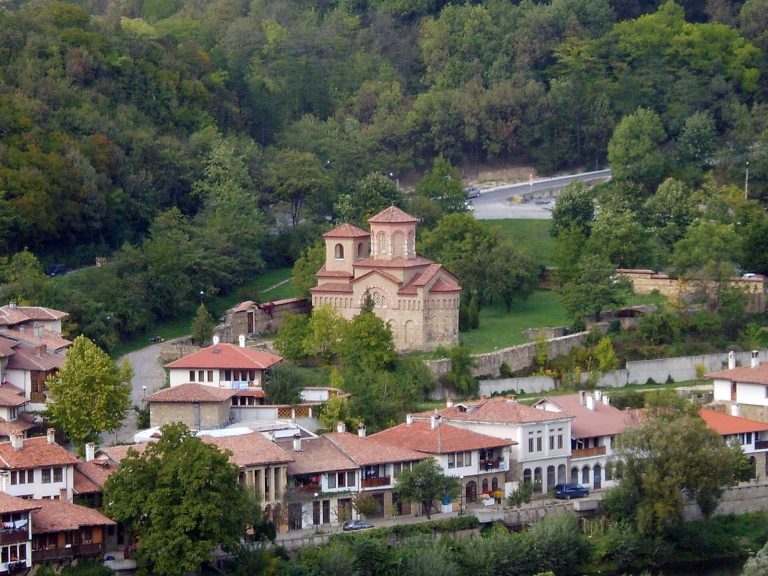
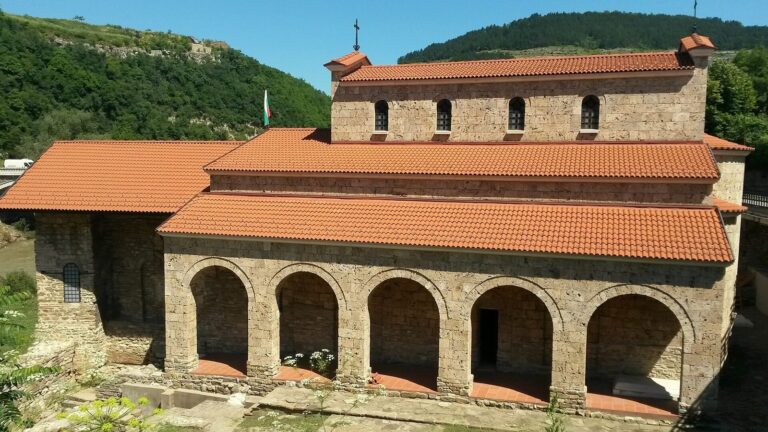
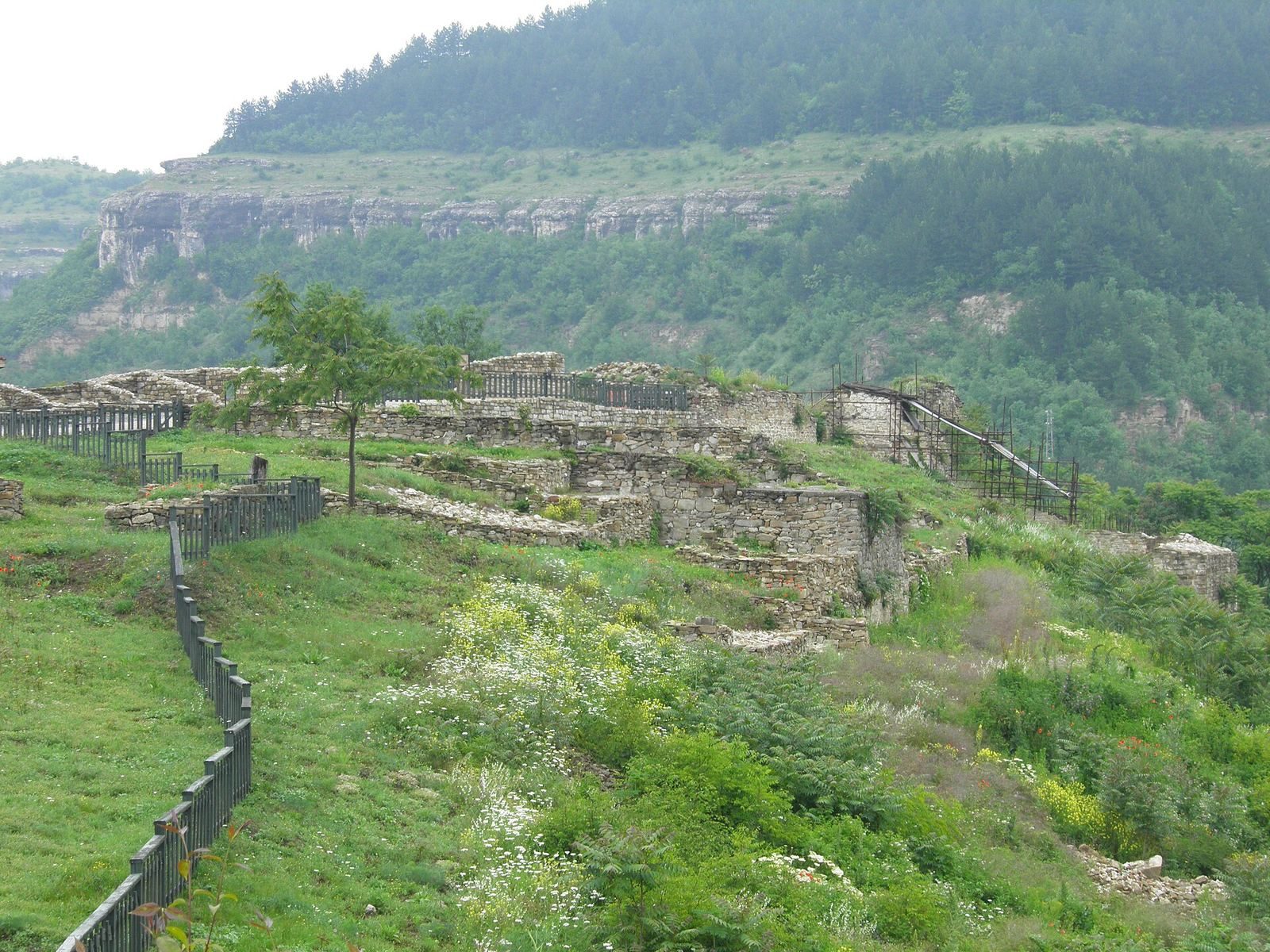
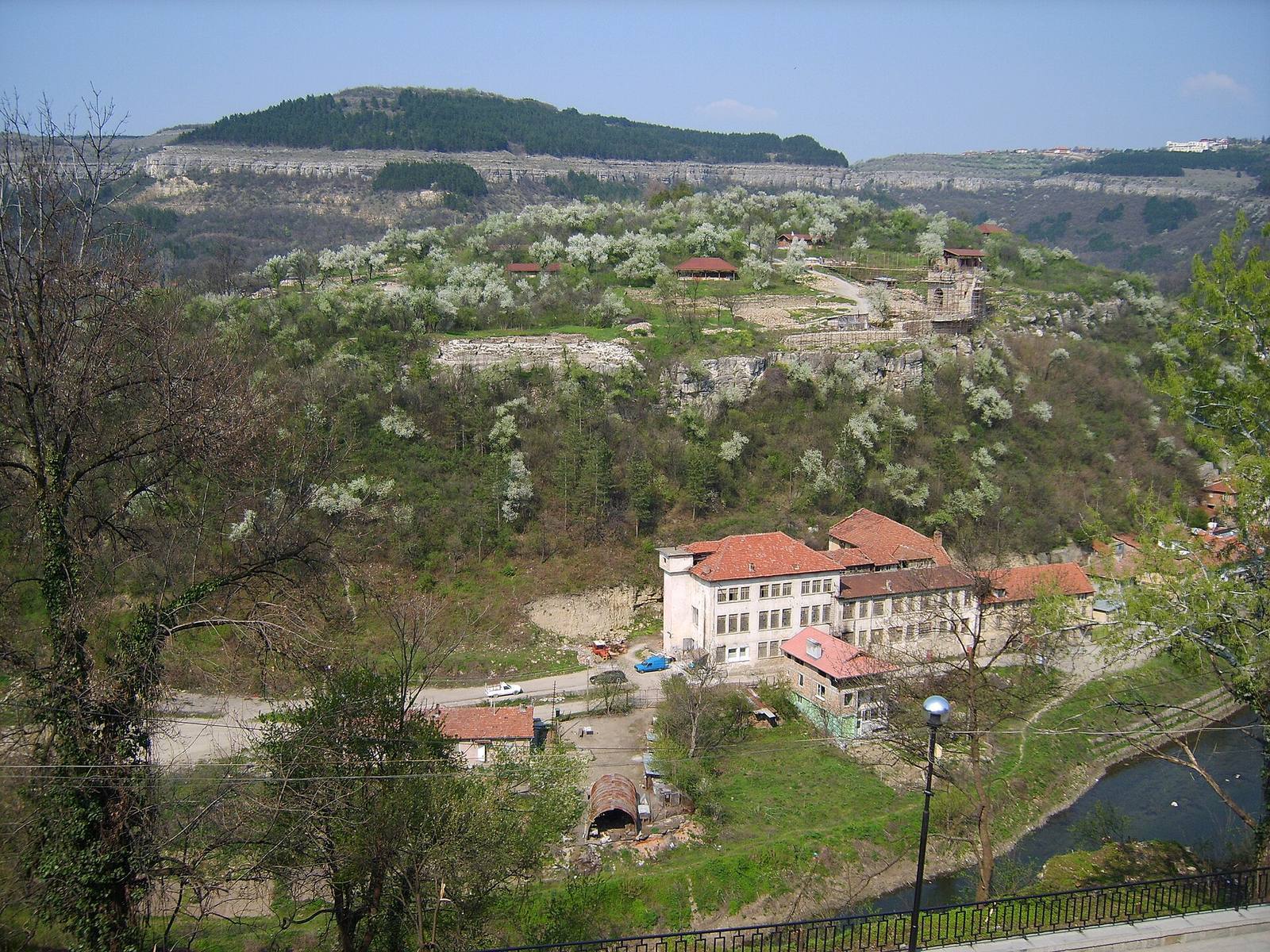
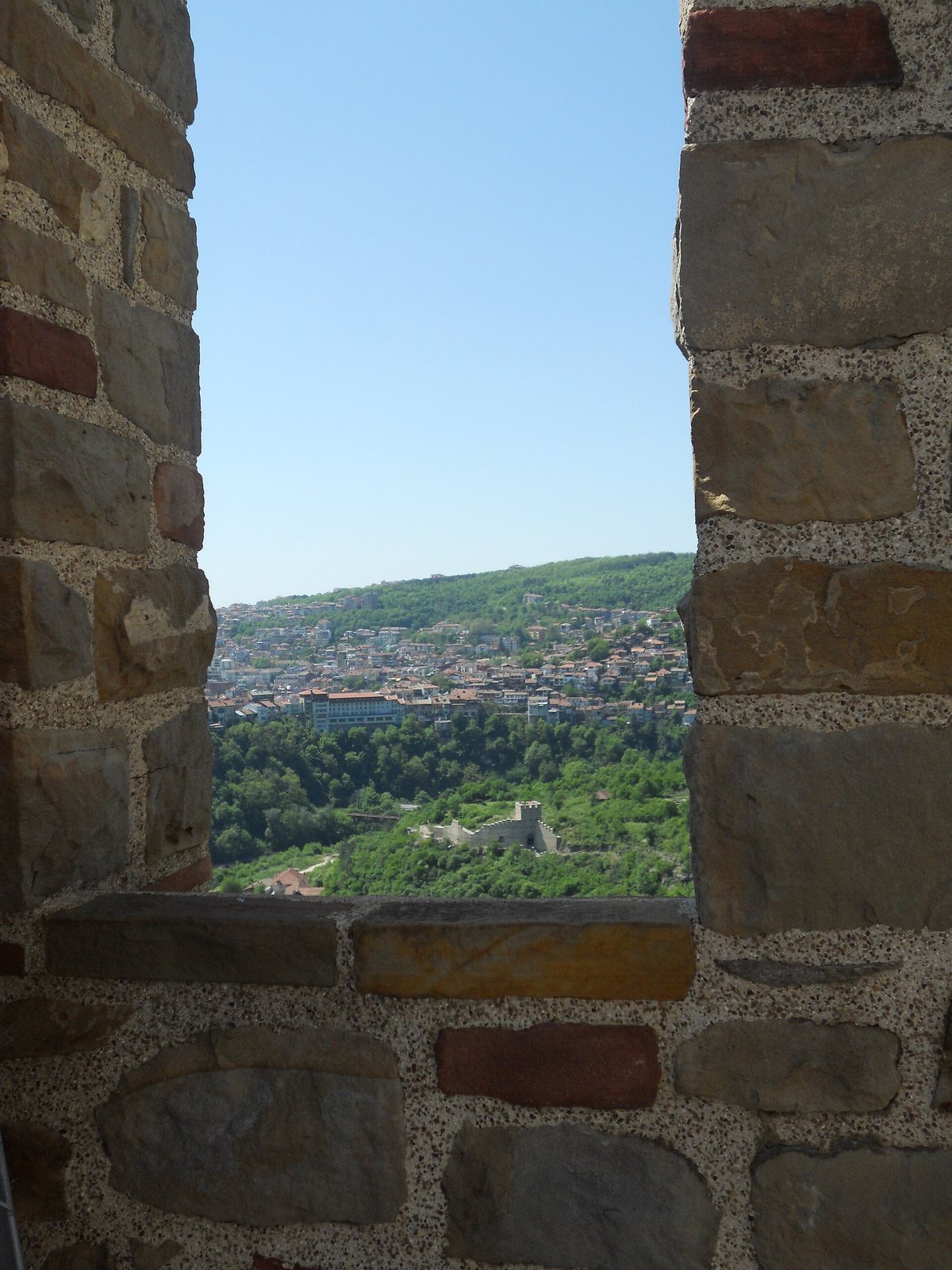
Three rivers surround the steep hill, which rises about 81 metres above the Yantra River as it winds around the site. The fortified area measures roughly 470 by 300 metres, with its long axis running north to south. The defenses covered up to 66.2 decares, about 66,200 square metres. A thick wall of crushed stone encircled the hill and reached as much as six metres high. Two additional walls descended the slopes, one on the east near the Church of St. Dimitar and another on the west, in front of the present railway bridge. Four entrances served the fortress. Its main gate stood on the southeastern side; a stone road cut into the rock led to it, and a bridge across the Yantra connected it to Tsarevets, opposite the Church of the Holy Forty Martyrs.
Churches and monastic remains
Church of St. John of Rila
Eighteen churches are associated with Trapezitsa, and excavations have exposed the foundations of 17. Church 8, the largest, is identified as the Church of St. John of Rila. Fresco fragments survive on its walls, while traces of nearby old buildings are thought to belong to monastic structures. The church’s southern room is believed to have been intended to house the saint’s relics.
Churches 16 and 5
Church 16 is identified as the earliest church on the hill, dating to the late 10th or early 11th century. Church 5 belongs to the period of the Asen dynasty and is the only church specifically identified as having mosaic decoration.
Tomb and royal churches
Churches 2, 7, and 14 are described as tomb churches because they contain burial installations. A stone plaque showing the Archangel Michael was found in Church 2, which is thought to be the Church of the Holy Apostles. Churches 6, 11, 13, and 14 are identified as royal churches because their frescoes include royal figures.
Church 18
Seats and basins were found along the walls of Church 18.
Church decoration
Church decoration included pilasters, shallow upright projections attached to walls, and blind arches, arch-shaped wall panels without openings. Coloured slabs and round or square clay dishes, glazed green or yellow, were arranged in arched rows. The interiors featured murals and mosaics, and the floors were covered with ceramic tiles.
Excavated finds and restoration
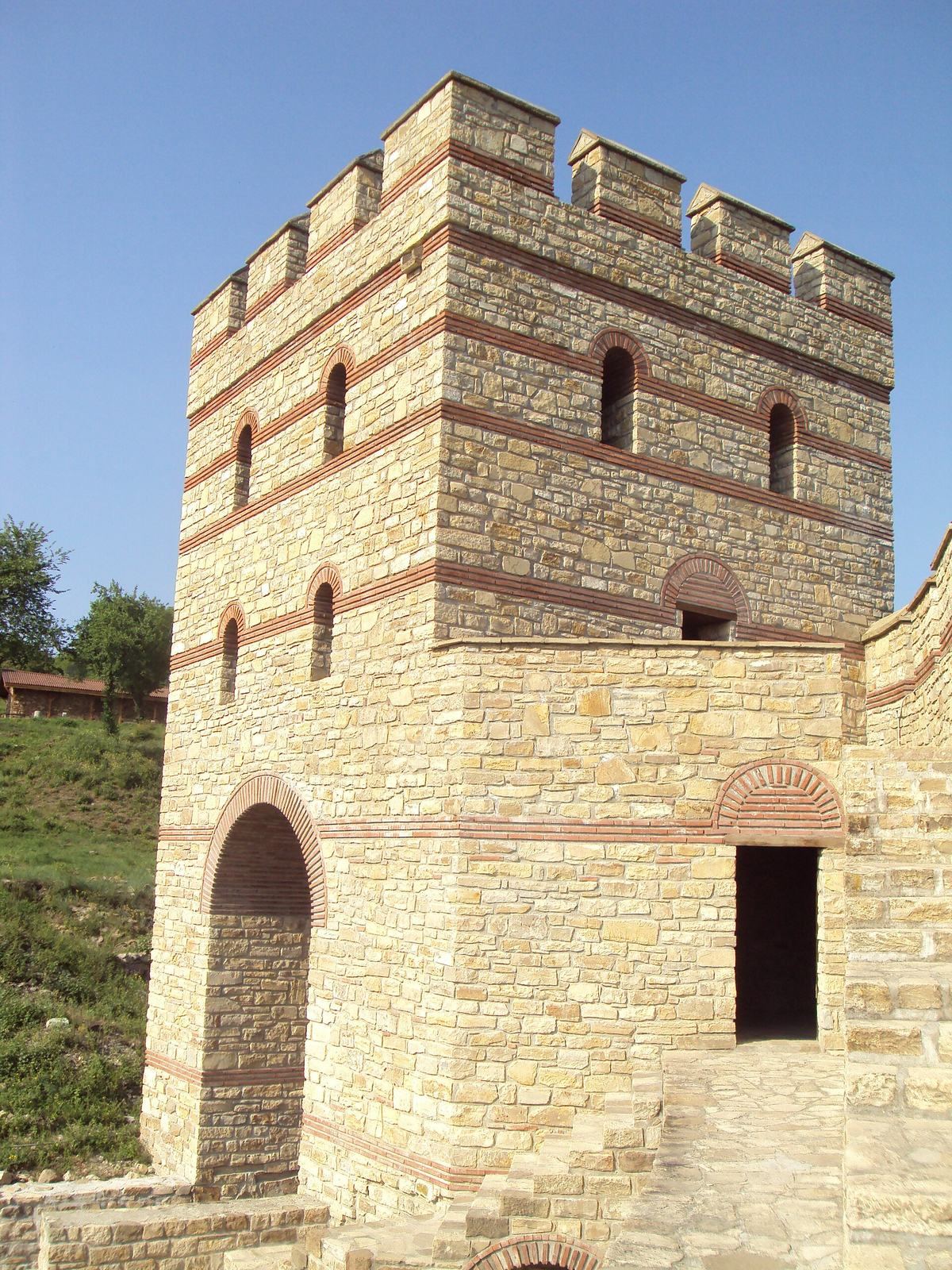
Excavations in 1884 and 1900 recovered crosses, necklaces, coins, rings, earrings, vessels, and other objects thought to date from early Bulgarian times. The finds were never published and therefore did not enter scholarly accounts of the city’s history. During work from 2008 to 2015, the south tower was restored and some churches were reconstructed.