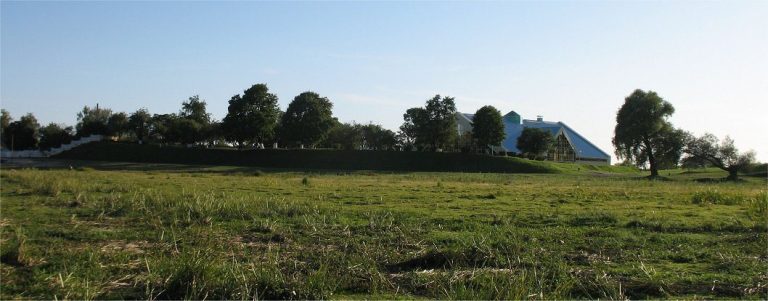
Turaŭ Castle: A Medieval Fortified Settlement in Belarus
Site at a Glance
- Popularity
- Medium
- Country
- Belarus
- Primary era
- Medieval
- Eras represented
- Medieval
- Civilizations
- Kievan Rus
- Site type
- Military
- Remains
- Citadel
On this page13 sections
History
Turaŭ Castle is an archaeological site of a medieval fortified settlement on the northwestern edge of present-day Turaŭ, Belarus. Turaŭ was known by the tenth century as one of the oldest cities of Kyivan Rus, the medieval East Slavic polity centered on Kyiv. Its earliest fortifications, associated with the Drevlyans, an East Slavic tribal people, were strengthened over time. From the tenth through the thirteenth centuries, the castle served as a center of the Turaŭ Principality, a regional medieval polity ruled by a prince.
The principality and early fortifications
The defenses withstood sieges by a coalition of princes in 1158 and 1160. Turaŭ’s political importance later diminished after the principality’s capital moved to Pinsk. A stone church at the site was destroyed by an earthquake in 1230.
Attacks and military upheaval
Tatar raids devastated the castle in 1502 and 1521. During the second half of the seventeenth century, Turaŭ belonged to the Turaŭ-Pinsk regiment of the Hetmanate, a Cossack-led polity governed by a hetman, or Cossack political and military leader. A regiment there served as both a military formation and a territorial-administrative unit. Muscovite forces ravaged the castle during the Russo-Polish War of 1654–1667, fought between the Polish-Lithuanian Commonwealth and the Tsardom of Russia.
Archaeological study and protection
Investigations of the Turaŭ settlement took place in the late nineteenth century under V. Z. Zavitnevich, in the first half of the twentieth century under A. D. Kovalenya and S. S. Shutov, and during the 1960s in expeditions led by V. V. Sedov and P. F. Lysenko. P. A. Rappoport found part of a brick wall in 1961, and M. K. Karger’s expedition examined the remains of a stone church in 1962–1963. The citadel and outer town are included in Belarus’s State List of Historical and Cultural Values.
Remains
The settlement occupied a cape formed by old channels of the Pripyat River and the marshy lowland of a tributary. It rose 5–6 m above the swampy floodplain. The citadel covered about 1 hectare and had a roughly triangular outline, with a rectangular platform also raised 5–6 m above the surrounding ground. The outer town adjoined it on the southeastern side, forming a roughly quarter-circle area about 100 m by 170–180 m and covering approximately 1.5 hectares.
Outer town and ditch
A defensive ditch, 20–25 m wide and about 5 m deep, separated the outer town from the citadel. Water remained in it in the early twentieth century; it was partly filled during the 1970s. The settlement’s natural barriers and constructed defenses were adapted to the terrain and the military tactics of the period.
Citadel defenses
Ramparts and timber defenses
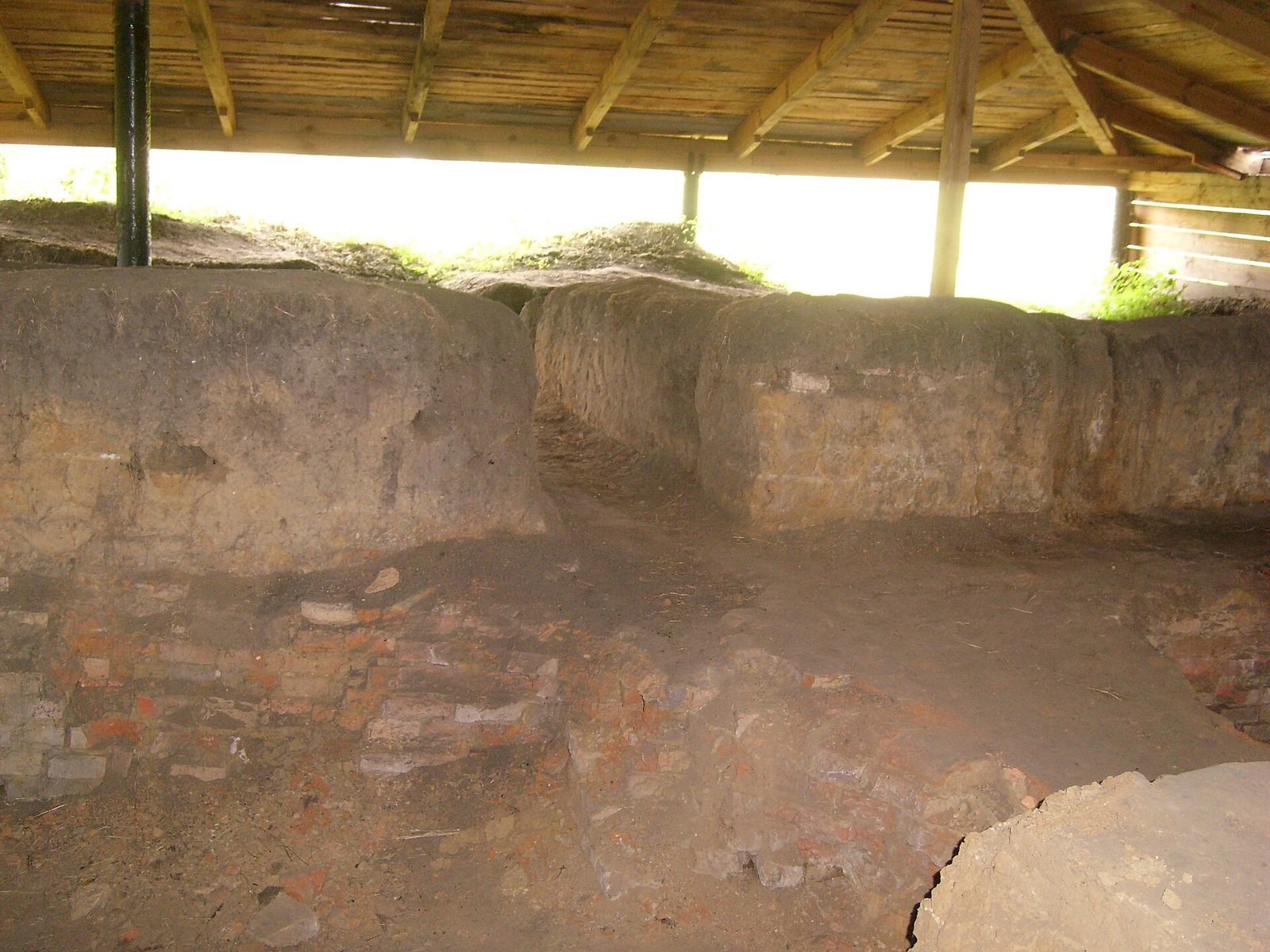
An earthen rampart once enclosed the citadel. It no longer survives as an intact structure, although low rises remain on the western side. Wooden walls and towers also surrounded the stronghold, whose inner courtyard occupied its most heavily fortified area. In 1859, the traveler Pavel Shpilevsky described seven towers, ditches, and ramparts among the castle remains.
Round defensive tower
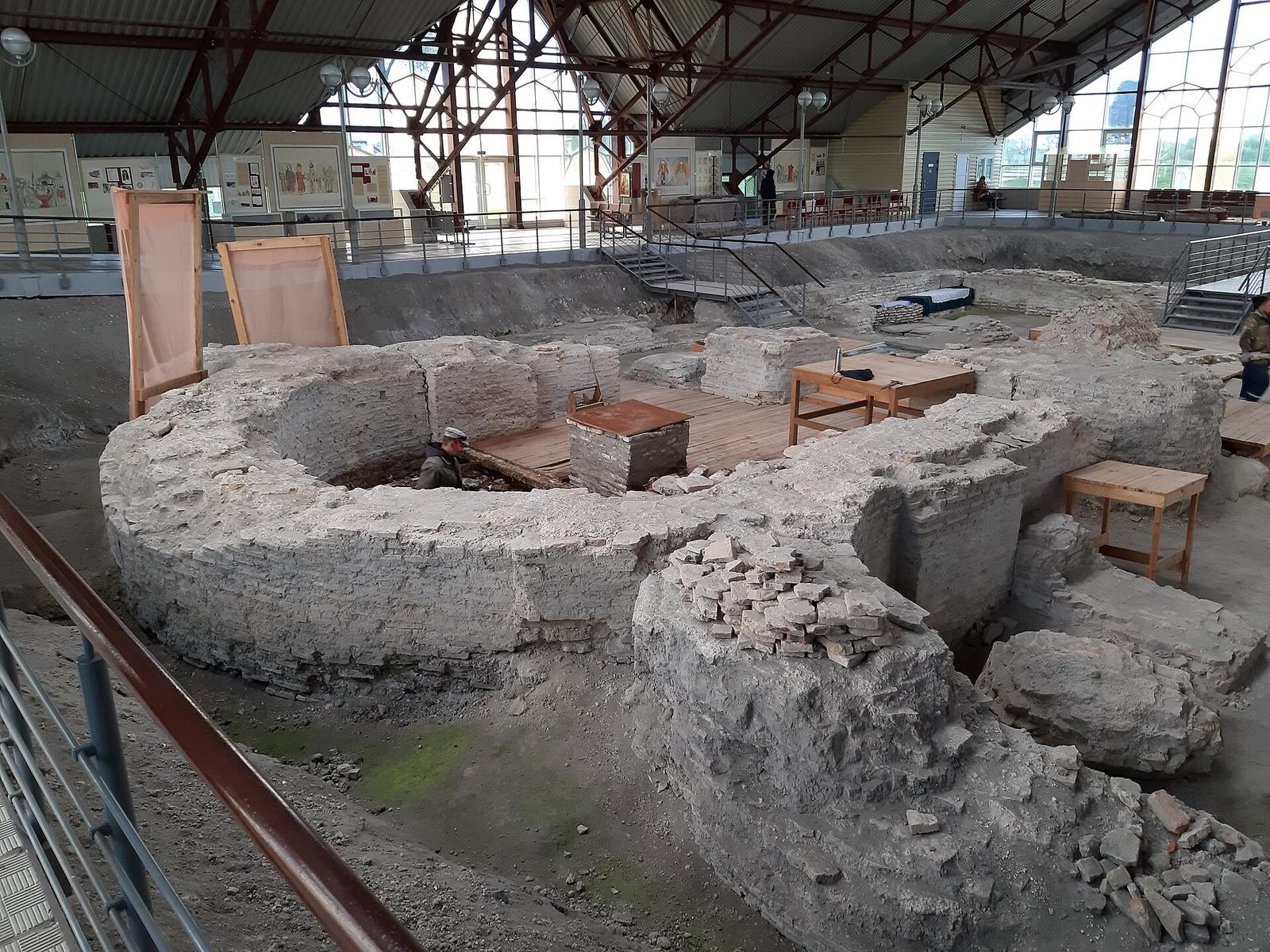
A round brick tower with lime-mortar joints was built in the second half of the thirteenth century. About 11 m in diameter and divided into several internal levels, it probably stood on a steep rise in the citadel’s southwestern part. Dismantled in the 1830s, it served a defensive purpose and was also understood as an expression of princely power.
Buildings and finds
Residential buildings
Excavations revealed 35 above-ground buildings, including 24 dwellings. Built from pine logs with simple corner joints, the houses generally covered 16–18 m², while the largest reached 25 m². Some had plank floors and one had a clay floor. Clay and brick stoves were also found, along with three cellars. Thin logs lined the walls of one cellar, which had a plank floor.
Excavated objects
Finds include pottery fragments, tools and household implements, weapons, bracelets, rings, pendants, head ornaments often attached to headwear, book clasps, and objects used in religious worship. These objects are held in the Turaŭ local history museum’s collection on ancient Turaŭ.
Stone church and preservation
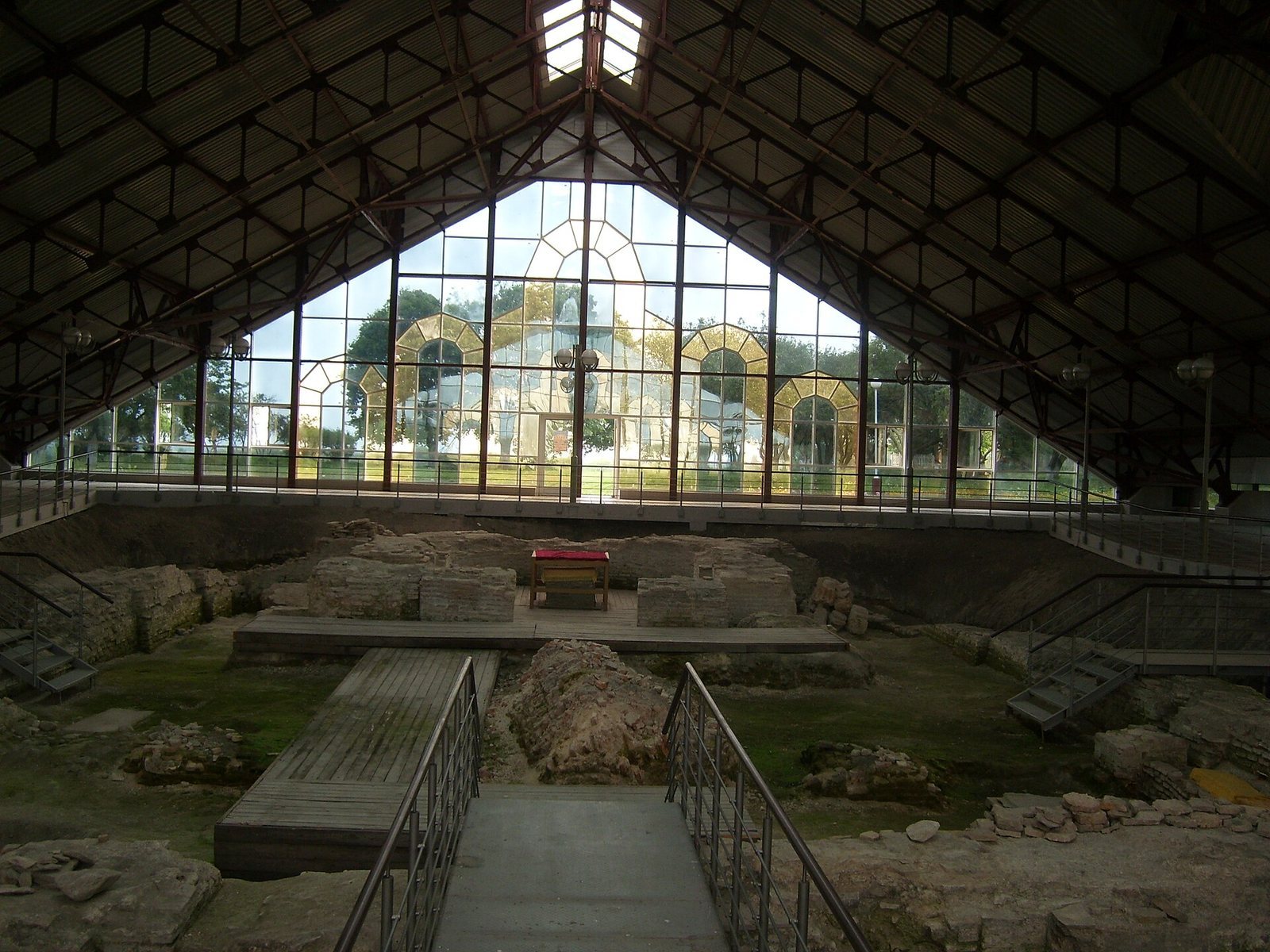
The settlement remains are preserved at an archaeological site beneath a glass canopy. Among the structures investigated there was a stone church whose interior was supported by six pillars.