São João Baptista de Ajudá: Portuguese Trading Fort in Ouidah, Benin
Site at a Glance
- Popularity
- High
- Country
- Benin
- Primary era
- Early Modern
- Eras represented
- Early Modern
- Civilizations
- Portuguese
- Site type
- Military
- Remains
- Fort
On this page12 sections
History
Portuguese plans and the fort’s construction
São João Baptista de Ajudá was a Portuguese trading fort in Ouidah, Benin, where construction began in 1721. It stood on the Slave Coast, the historical name for the West African coastal region associated with the Atlantic slave trade. Portugal used the fort as a base for acquiring enslaved people for expanding sugar and tobacco plantations around Salvador, Bahia. Its history reflects the changing authority of the Hueda and Dahomey kingdoms and the later contest over Portugal’s colonial claim.
Portuguese efforts to establish a new trading base followed the loss of Gold Coast settlements, including Elmina to the Dutch in 1637. Dutch permits and a 10 percent levy on Portuguese cargoes increased the incentive to find another port. Other European traders were already establishing themselves around Ouidah: the English Royal African Company opened a post in 1692, while France founded a trading post in 1671 and built a fort in 1704 with the Hueda king’s permission.
A Portuguese plan in 1680, ordered by Prince Regent Pedro II, called for two ships to build a fort, but it did not come to fruition. The proposal returned in 1698 after the king of Hueda agreed to a Portuguese fort in his territory. Bahia merchants abandoned it when their demands for a twelve-year monopoly on the slave trade and other privileges were not met. In 1721, they renewed the project with Vasco Fernandes César de Menezes, Brazil’s viceroy, the crown’s chief colonial representative. The merchants’ representative, Captain José Torres, offered to transport materials and carry out the work at his own expense. The viceroy authorized him to proceed without waiting for approval from Lisbon.
Hueda and Dahomey rule
Torres selected the site, and enslaved workers belonging to Haffon, king of Hueda, built the fort. In January 1722, Welsh pirate Bartholomew Roberts attacked it and captured all eleven ships in its harbor. Dahomey conquered Ouidah in 1727. The European forts there were damaged or destroyed at different times and later rebuilt.
Hueda rulers, followed by the kings of Dahomey, required the European forts to stand inland rather than on the coast. Their continued operation therefore depended on the goodwill of local rulers. Each year, the forts’ directors travelled to Abomey, about 100 kilometres north of Ouidah, to pay homage during the king’s annual “customs,” ceremonies at which the directors showed respect to the ruler.
In 1743, King Tegbesu imprisoned and expelled the Portuguese director, João Basilio, on suspicion that he was conspiring with the king’s enemies. A subsequent Dahomean assault ended with the fort’s gunpowder store exploding and destroying the compound. Fearing the Portuguese would abandon trade, Tegbesu arranged for the fort to be rebuilt and asked a Portuguese ship captain for a flag to fly above the ruins.
Trade and Portuguese rule in the nineteenth century
In the second half of the eighteenth century, Dahomey’s control of the slave trade and rising prices helped shift commerce eastward from Ouidah, including to Porto-Novo, Badagry, and Lagos. In the early nineteenth century, Britain, France, and Portugal abolished the slave trade, leaving the Portuguese fort largely unused. From the 1830s, British and French trading houses opened palm-oil posts in their former forts at Ouidah, while the Portuguese site remained unoccupied.
Francisco Félix de Sousa, a Brazilian-born former clerk and storekeeper at the fort, later took charge of it and became a major figure in the illicit slave trade, with Portuguese and Brazilian support and the backing of Dahomey’s king. De Sousa helped Ghezo, the younger brother of Adandozan, gain the throne and received the title “Captain of the Whites,” an intermediary for European traders. He served as director from 1805 to 1844 and governor from 1845 to 1849. Along with his sons and other Afro-Brazilian traders, he dominated Brazil’s trading network on the Slave Coast.
After Brazil became independent in 1822, de Sousa reportedly raised the Brazilian flag over the fort. He proposed that Brazil’s first emperor, Pedro I, place Ajudá under Brazilian authority, but the plan was not carried out. De Sousa moved his home and business elsewhere in Ouidah, leaving the fort largely vacant. The town developed as a trading centre, with commerce that included Brazilian tobacco and alcohol. After slavery was abolished in the Portuguese Empire in 1869, smuggling with Brazil flourished at Ajudá.
Enclave, takeover, and conservation
Portugal abandoned the fort between 1858 and 1861, when a French religious mission occupied it. Portugal returned in 1865, and the site served as a base for an attempt to establish Portuguese protection over Dahomey in 1885–1887. After France conquered Dahomey in 1891–1894 and established colonial rule, Portugal insisted on retaining sovereignty over the fort. French authorities accepted the claim, leaving the Portuguese possession as an enclave, a territory surrounded by another political territory. A 1958 Guinness Book of Records entry described it as the world’s smallest colony.
Portuguese troops from São Tomé and Príncipe garrisoned the fort until 1911. The resident governor, his assistant, and their families stayed after the troops left. The enclave counted five inhabitants in the 1921 census and two when Dahomey issued its ultimatum in 1961. After Dahomey became independent in 1960, its authorities seized the fort in August 1961. The remaining Portuguese officials were told to wait until the deadline, burn the buildings, and leave. They tried to burn the fort rather than surrender it. Dahomey formally closed the site in 1965, and Portugal recognized the annexation in 1975. Conservation work took place in 1987.
Remains
The fort is a compact, roughly square enclosure with towers at its four corners. It followed a plan shared by Ouidah’s three European forts, which stood about 300 to 500 metres apart and measured roughly 100 metres square. São João Baptista de Ajudá lay a few hundred metres east of the English fort and about four kilometres inland. Its walls were made from dried mud using local building methods.
Enclosure and defenses
Walls, moat, and entrance
Earthen walls, two to three metres thick, enclosed the compound. A moat about 20 feet wide and equally deep surrounded it, though it rarely held water. At the entrance, a bridge could be raised during an attack.
Corner defenses and courtyard
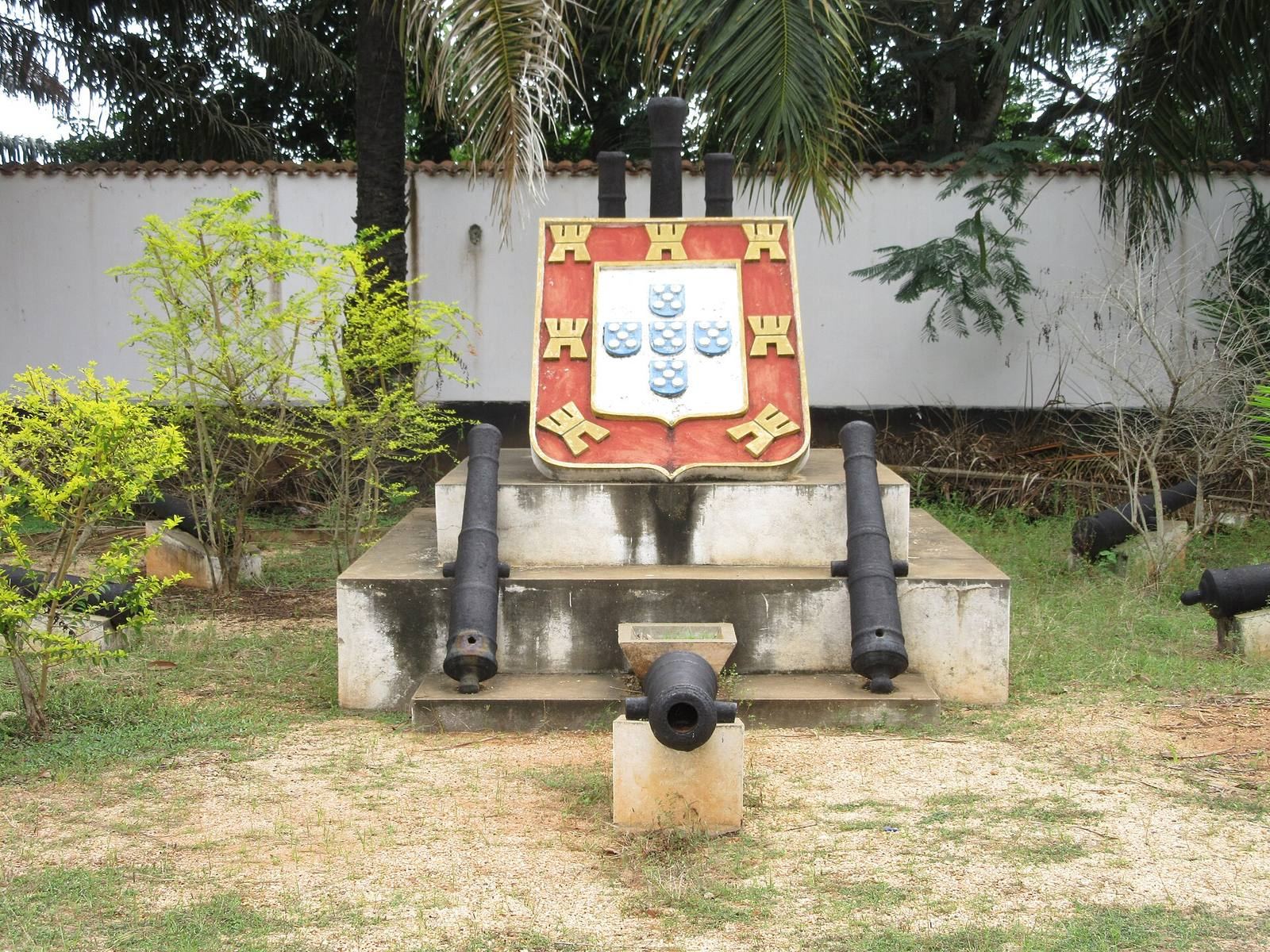
Each earthen bastion, a projecting part of the fortification, carried twelve iron cannons. A thatched-roof gunpowder store stood in the centre of the courtyard. The earthen defenses deteriorated quickly and needed repeated rebuilding. Timber and locally made bricks were later used for doorframes and to strengthen the bastions and gunpowder stores.
Buildings and later use
Church and administrative buildings
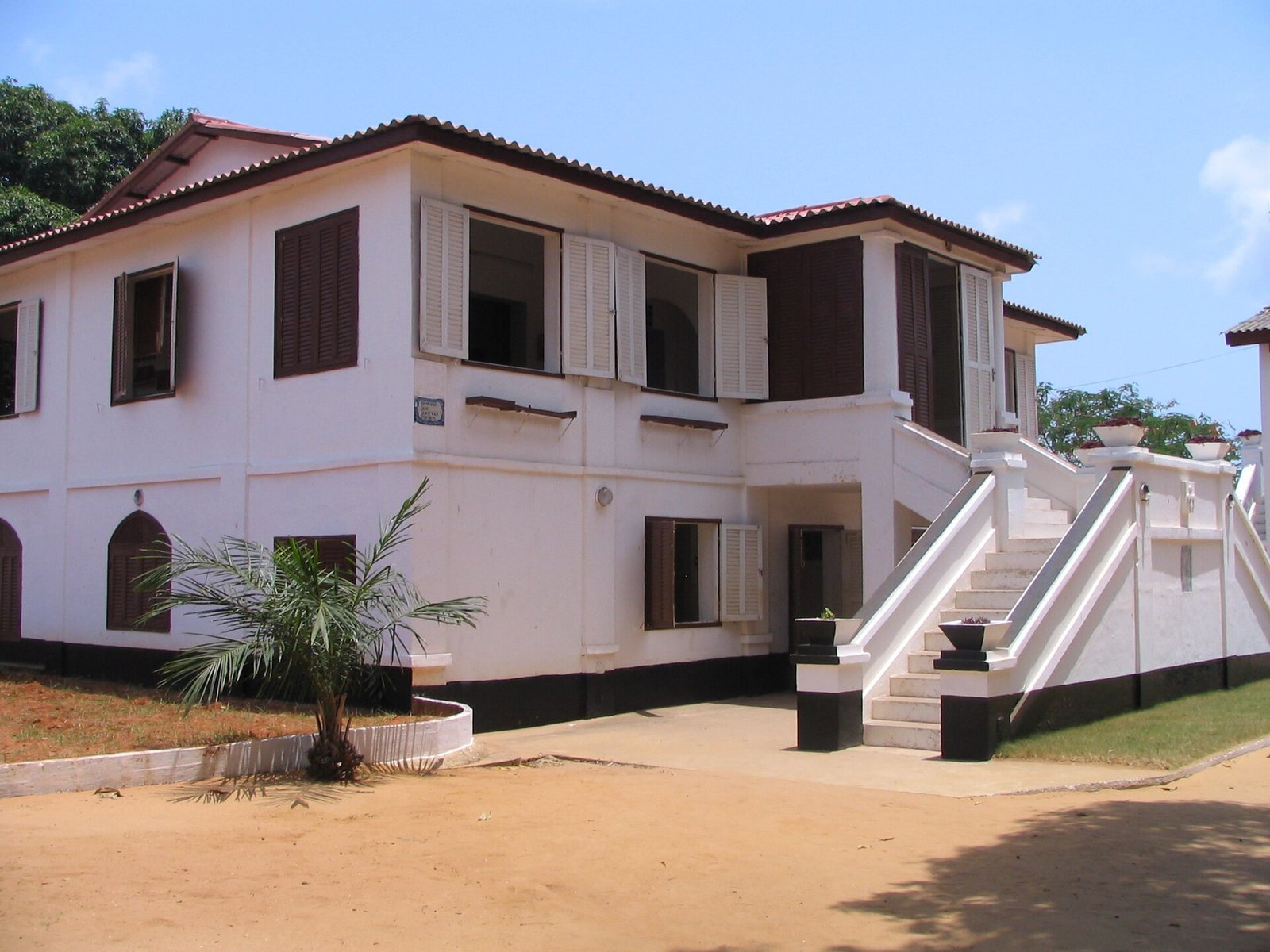
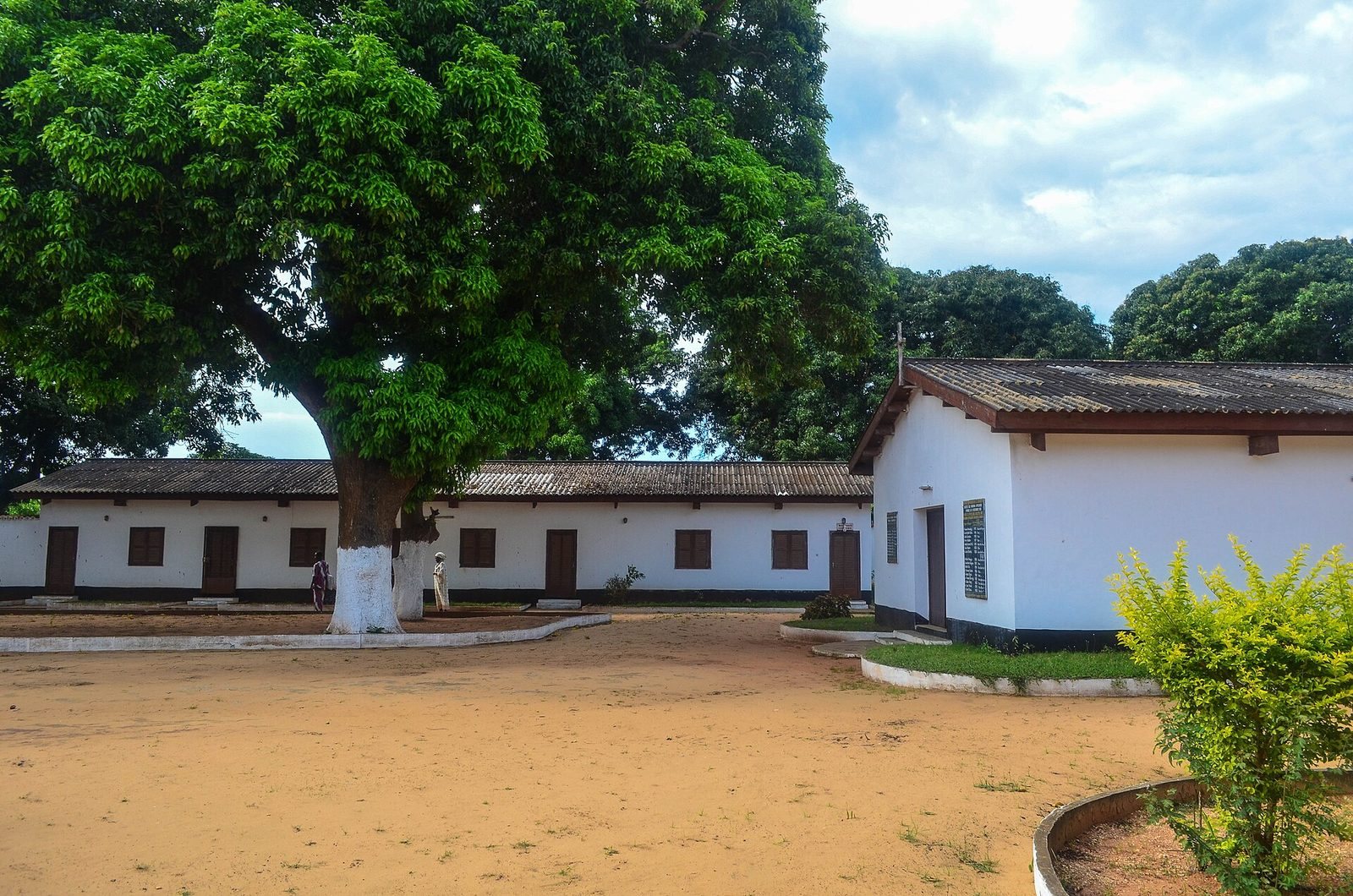
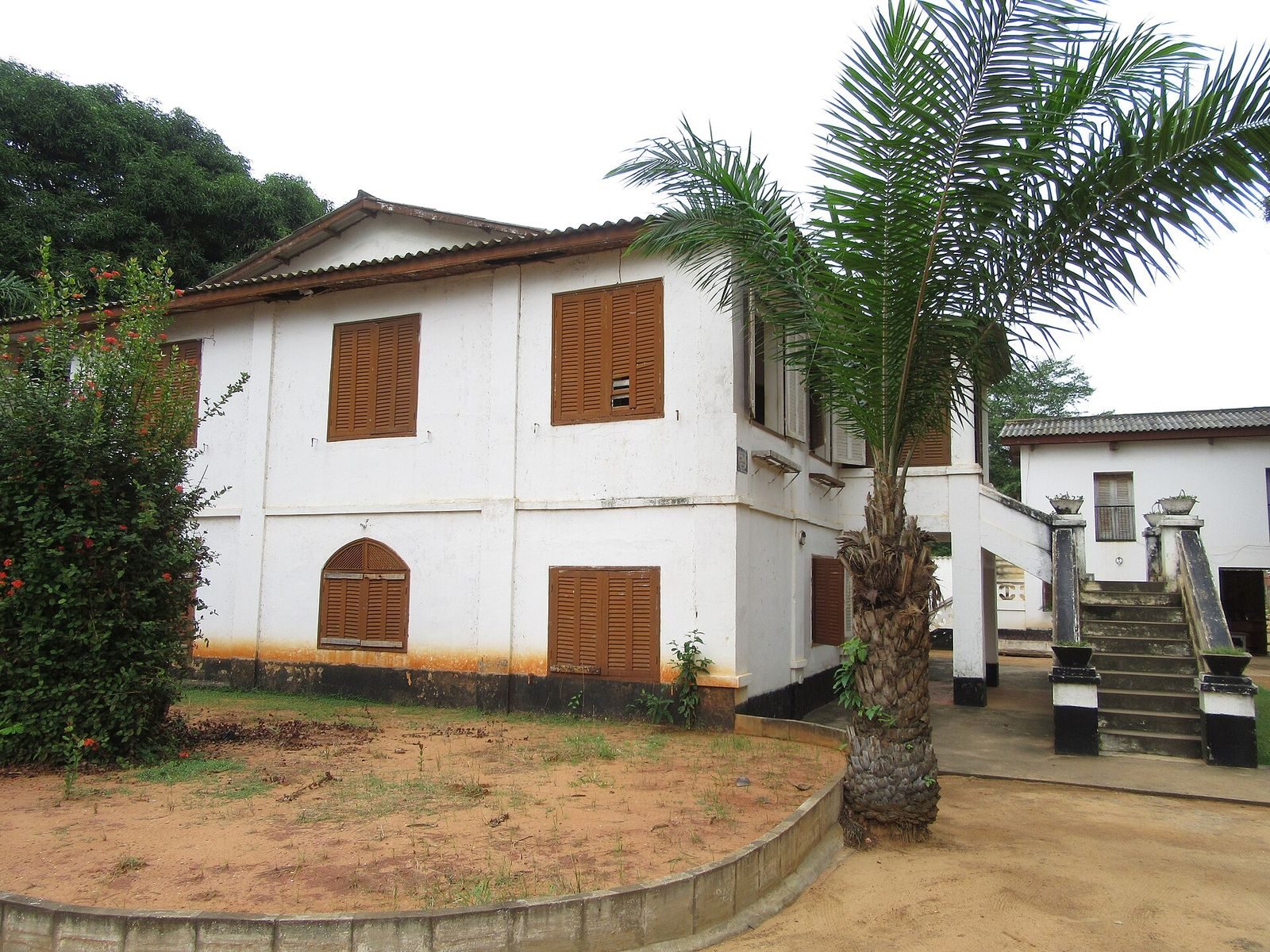
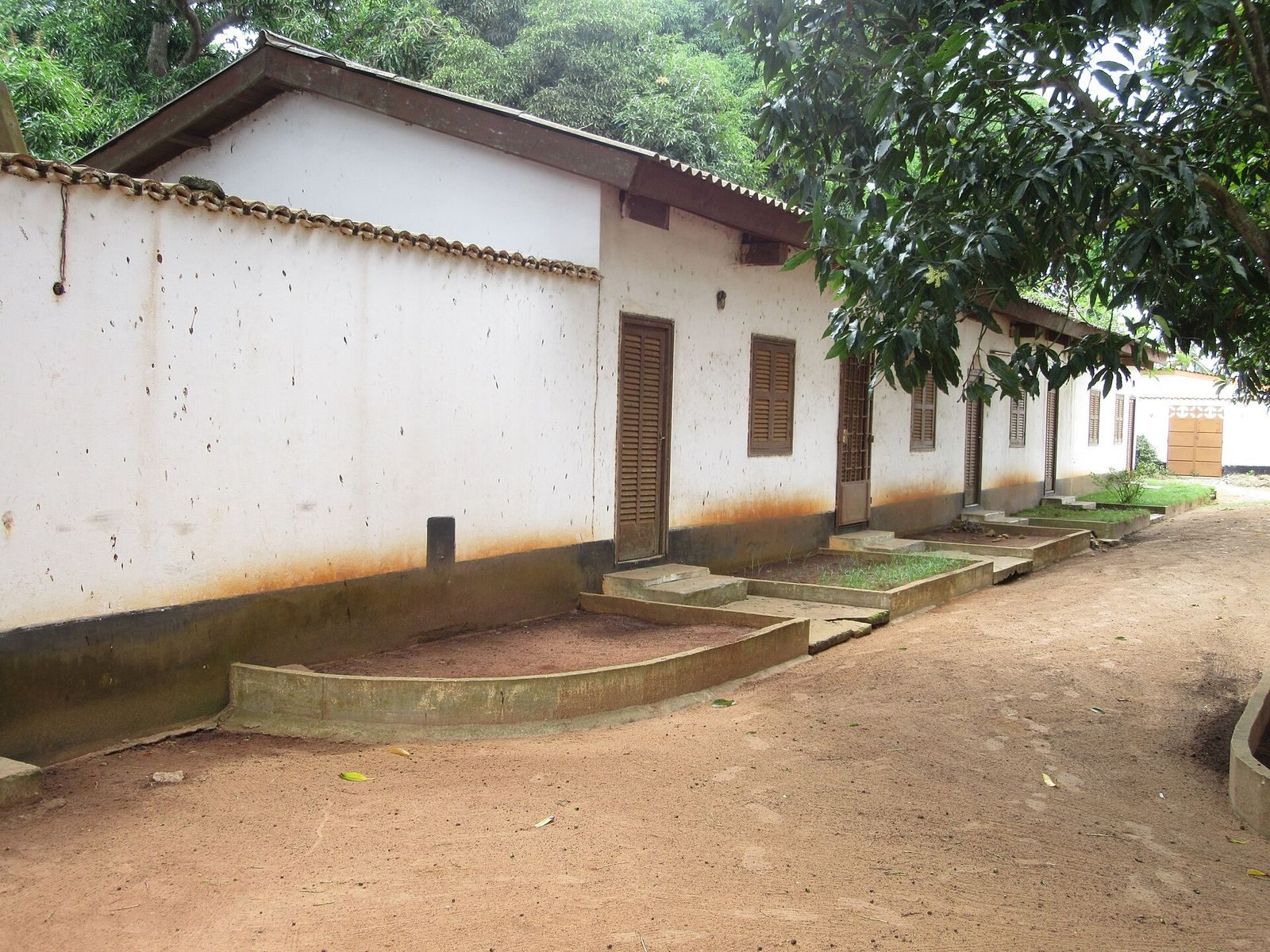
The enclosure contained a church, officers’ quarters, and the governor’s palace. The buildings had thatched roofs, making them vulnerable to fire. The fort’s materials and construction allowed buildings to be added or removed and the bastions to be altered.
Museum use
The restored fort houses the Ouidah Museum of History.