Castle of Good Hope: Dutch East India Company Fortress in Cape Town
Site at a Glance
- Popularity
- Very High
- Country
- South Africa
- Primary era
- Early Modern
- Eras represented
- Early Modern
- Civilizations
- Dutch
- Site type
- Military
- Remains
- Fort
On this page13 sections
History
The Castle of Good Hope is a five-sided stone fortress in Cape Town, South Africa, built by the Dutch East India Company between 1666 and 1679. It replaced an earlier fort and is considered the oldest surviving building in South Africa. It is also regarded as the best-preserved example of a fort built by the Company, a Dutch trading enterprise that operated routes and supply stations between Europe and Asia.
A supply station and stone fortress
Jan van Riebeeck, a Company official, built a clay-and-timber fort after arriving at the Cape of Good Hope in 1652. The settlement supplied ships travelling between the Netherlands and the Dutch East Indies, now Indonesia. Crews could replenish food and fresh water and repair rigging before continuing their journeys.
In 1664, as tensions between Great Britain and the Netherlands grew and war was rumoured, Commissioner Isbrand Goske directed Commander Zacharias Wagenaer, van Riebeeck’s successor, to construct a stone fortress. Its foundation stone was laid on 2 January 1666. Construction continued through 1679 and was repeatedly interrupted as the Company hesitated to provide funds. Enslaved people were among those forced to work on the project. Fearing that enslaving nearby Indigenous communities could provoke revolt, the authorities instead brought as many as 60,000 enslaved people from Madagascar, Mozambique, the Dutch East Indies, and India.
On 26 April 1679, the five bastions were given names associated with titles held by William III of Orange-Nassau, a Dutch prince who later became king of England, Scotland, and Ireland.
Provisioning and later uses
In June 1685, French writer and travel diarist François-Timoléon de Choisy travelled with a party bound for Siam, the historical name for Thailand, which stopped at the Castle for supplies. The Company’s Commissioner-General added suckling pigs and Canary Islands wine to its provisions. De Choisy noted that more than 25 Company ships called at the Cape each year, taking on supplies such as meat, wine, fruit, and vegetables.
The Castle briefly housed British writer and diarist Lady Anne Barnard. During the Second Boer War (1899–1902), a conflict between the British Empire and the Boer republics, part of the fortress was used as a prison. Spy Fritz Joubert Duquesne tried to escape by scraping mortar from around the stones with an iron spoon. A loosened stone trapped him in his tunnel, and a guard found him unconscious but alive the following morning.
Restoration, heritage, and military roles
Extensive restoration work was completed during the 1980s. The Castle was declared a historical monument in 1936 and a national monument in 1969. On 1 April 2000, it became the first site in South Africa to receive provincial heritage-site status; it was also designated a national heritage site in 2016.
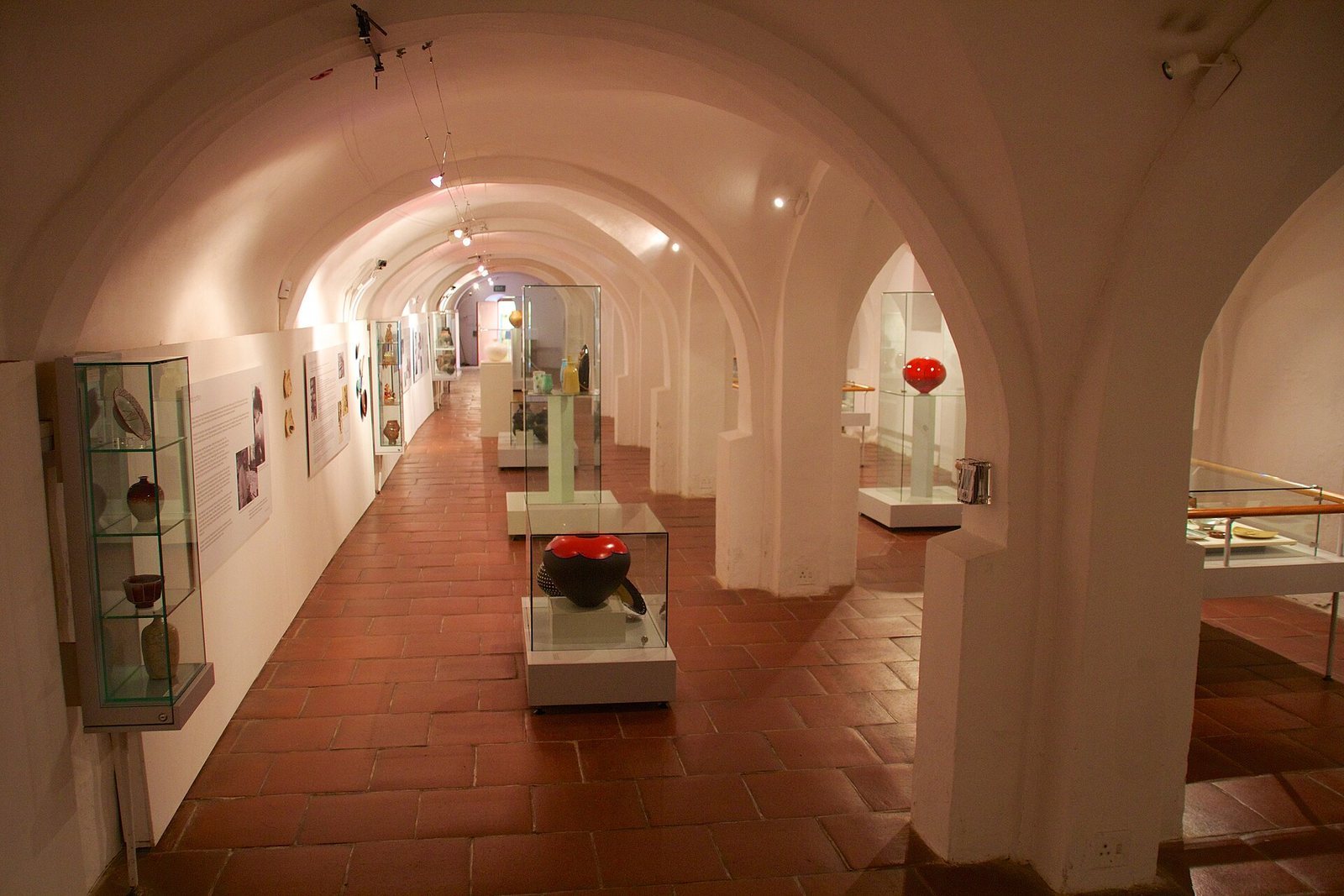
The fortress served as the South African Army’s local headquarters in the Western Cape. Its outline appeared on South African Defence Force flags until 2003, on the South African navy’s flag before 1994, and on Air Force aircraft from 1982 to 2003. It also inspired some military rank symbols for majors and higher ranks. The Castle now houses the Castle Military Museum and ceremonial facilities for traditional Cape regiments, and is home to the Cape Town Highlanders, an infantry regiment equipped with armoured vehicles. The Cape Heritage Museum within the Castle explores relations among the Khoi and San, Indigenous peoples of southern Africa, and Dutch communities, as well as colonialism and apartheid, South Africa’s system of legally enforced racial segregation and discrimination.
Remains
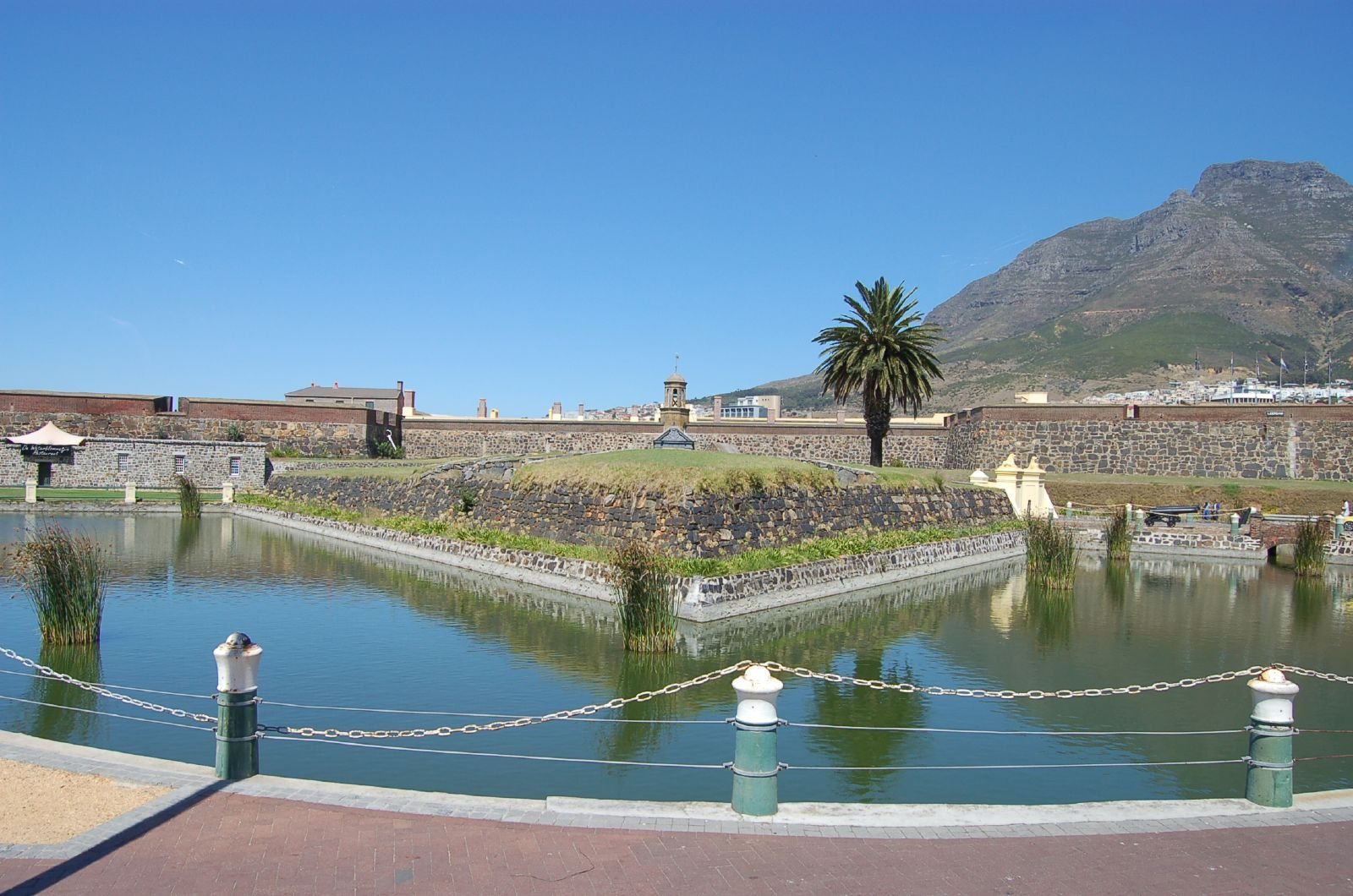
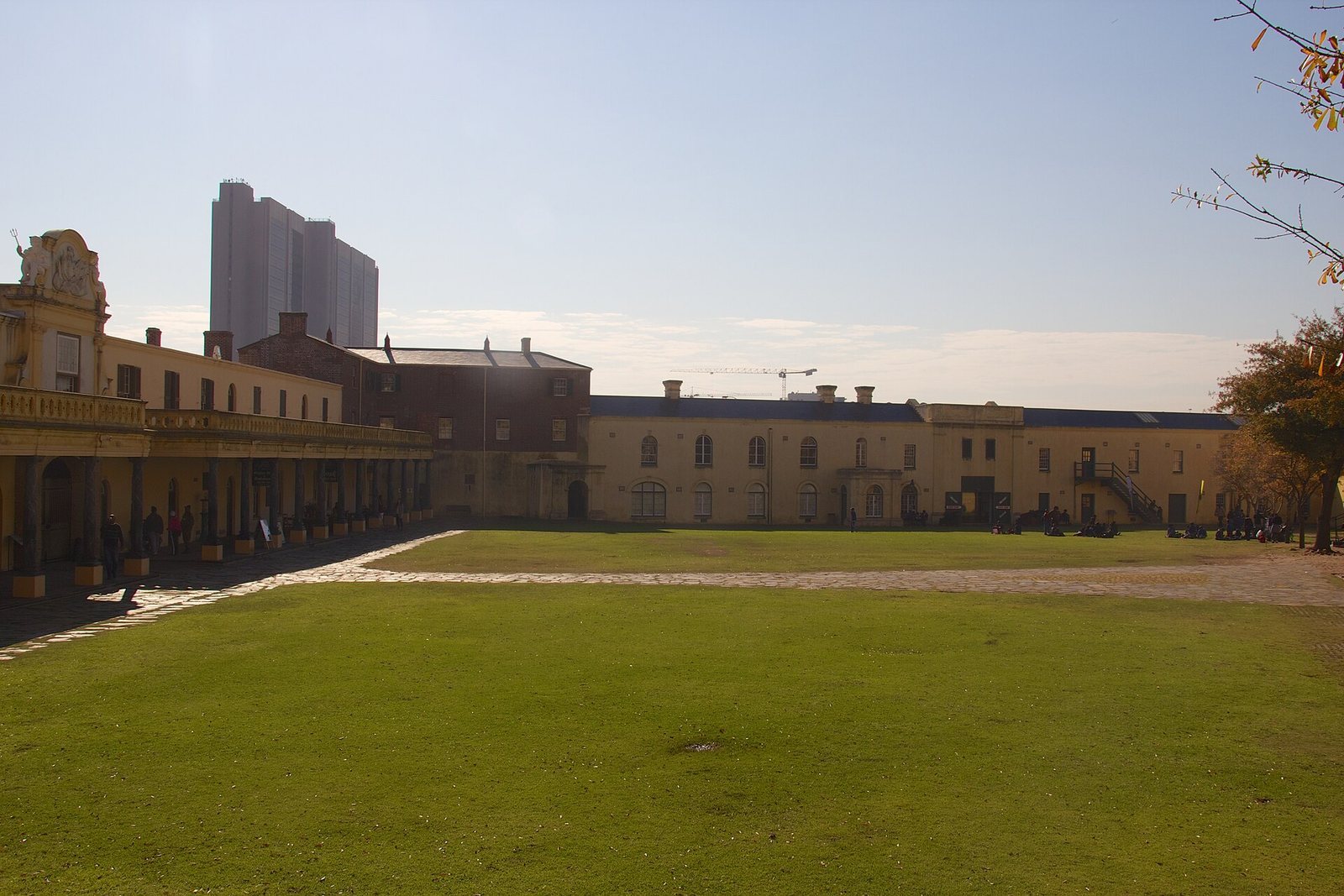
The fortress has a five-pointed outline arranged around a courtyard. Projecting defensive sections, known as bastions, extend from its sides, and a moat or canal surrounds the Castle. The walls were originally painted yellow to lessen the effects of heat and bright sunlight.
Defensive plan and setting
Leerdam lies on the western side; proceeding clockwise, the other bastions are Buuren, Katzenellenbogen, Nassau, and Oranje. The Castle originally stood on the coast of Table Bay, but land reclamation later left it inland. De Choisy’s description of the Cape settlement in 1685 included mostly whitewashed, thatched dwellings and a Company garden with orange and lemon trees, vegetable plots, dwarf trees, trees trained flat against supports, and fresh-water springs.
Entrance and bell tower
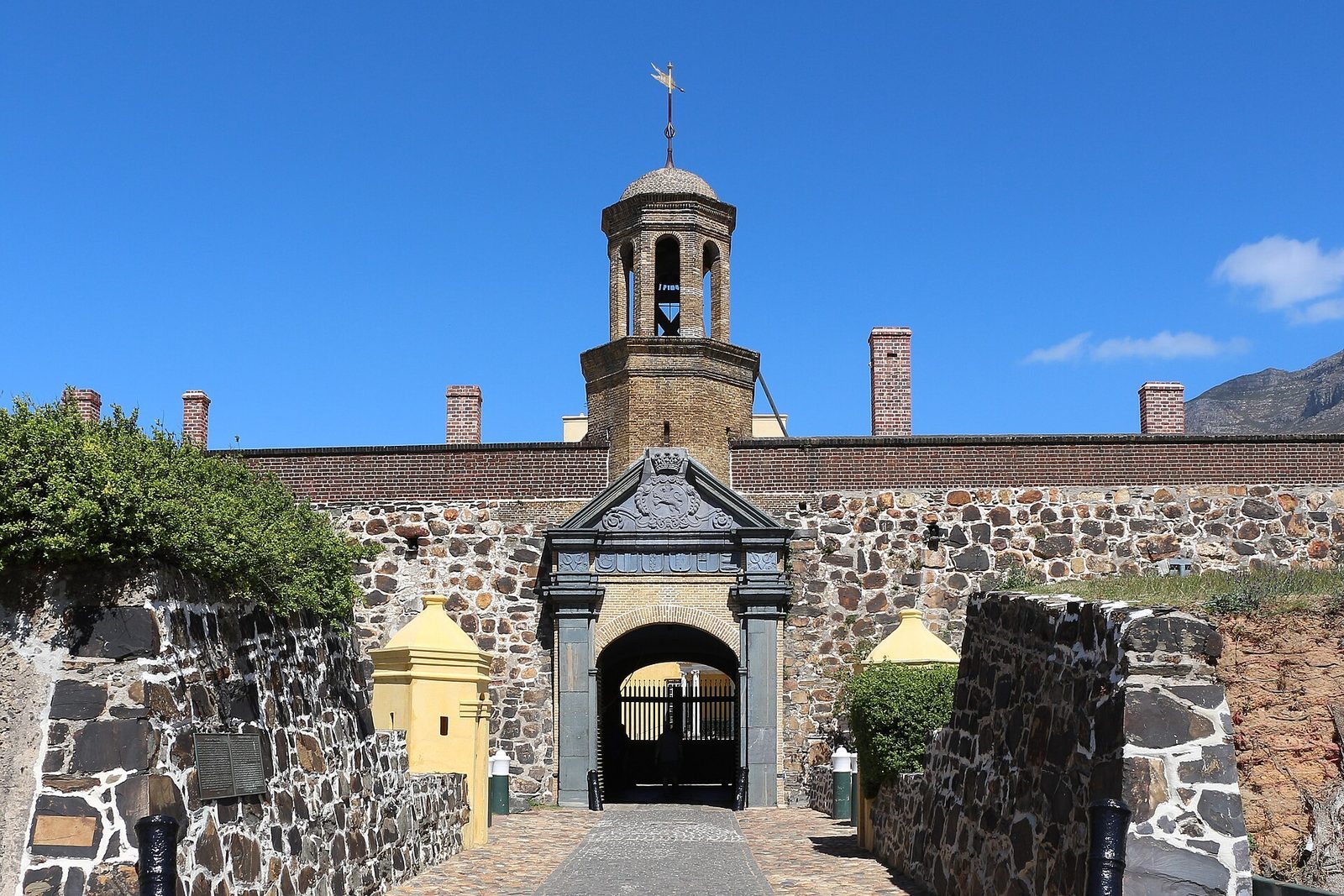
A gateway built in 1682 replaced the earlier entrance facing the sea. A bell tower stands over the main entrance. Its original bell was cast in Amsterdam in 1697 by East Frisian bellmaker Claude Fremy. Weighing just over 300 kilograms, it could be heard up to 10 kilometres away. It marked the time, warned of danger, and summoned residents and soldiers for important announcements.
Courtyard and interior
Courtyard wall and De Kat Balcony
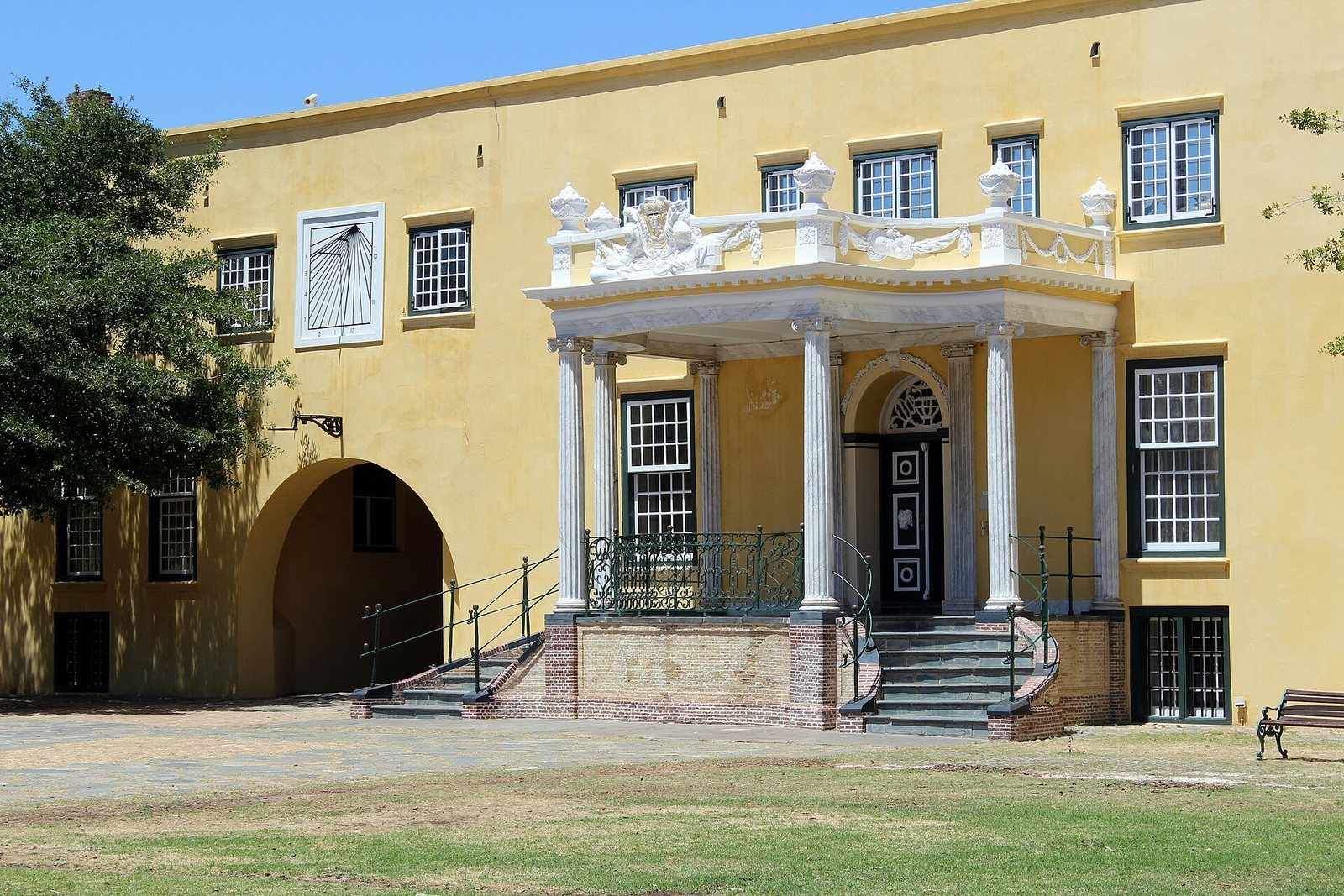
An internal wall crosses the courtyard and was intended to protect the town’s inhabitants in case of attack. The De Kat Balcony was first built in 1695 and reconstructed in its present form between 1786 and 1790. Architect Louis Michel Thibault designed it, and sculptor Anton Anreith created its reliefs and sculptures. The balcony leads to the William Fehr Collection of paintings and antique furniture, administered by Iziko Museums of South Africa.
Rooms and prison cells
The Castle’s spaces included a church, bakery, workshops, living quarters, shops, storage areas, and cells. Former prison cells survive. One function room bears Lady Anne Barnard’s name.
Sculpture and other features
Gate and courtyard sculptures
Sculpture stands above the central gate, with a lion sculpture at the gate itself. The Castle also has a fountain associated with Lady Anne Barnard and a statue titled ‘Lady of the Cape of Good Hope’.
Fittings and model
Other features include a row of columns, an older museum, a vertical sundial, a timepiece mounted on a wall near the main-building entrance, and an old cannon. A model depicts how the Castle may have appeared in the eighteenth century.