Grotte du Visage: A Prehistoric Cave in Charente, France
Site at a Glance
- Popularity
- Low
- Country
- France
- Primary era
- Stone Age
- Eras represented
- Stone Age
- Civilizations
- Unclassified
- Site type
- Civic
- Remains
- Rock Art
On this page9 sections
History
Prehistoric art and remains
The Grotte du Visage is a prehistoric cave in the Bois de Vilhonneur, in Charente, France. Its art is attributed on stylistic grounds to the Gravettian, an Upper Paleolithic culture dated to roughly 28,000–22,000 years ago. This dating places the paintings earlier than those at Lascaux.
Radiocarbon dating, a method for estimating the age of once-living material, places the human remains at about 27,000 years old and the hyena remains at about 28,000. The hyena bones may predate the paintings, although their estimated age is close to the proposed date of the art. The combination of Gravettian art and human remains is considered notable; a comparable association is known at Cussac Cave in Dordogne. The human bones may represent the ritual burial of a particular person, but this interpretation is uncertain.
Discovery and later recognition
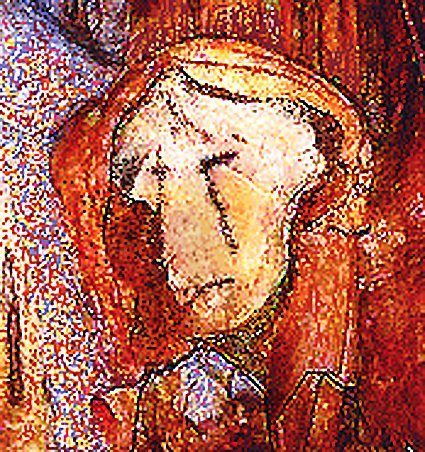
The cave was first known as Grotte de Vilhonneur and was also called Aven du Charnier or, in some publications, Cro du Charnier. The nearby Aven du Charnier was remembered locally as a pit where dead animals had once been discarded. The name Grotte du Visage distinguishes the cave from the Grotte du Placard, about 500 metres away, and refers to a face image made with the help of a natural rock feature.
With the landowner’s permission, a group of cavers from Charente spent about two years clearing the blocked entrance. They entered on 1 December 2005 and found bones. The following day, Gérard Jourdy returned alone and discovered the face painting. The Ministry of Culture announced the discovery in February 2006, after it had been disclosed prematurely. The cave was registered as a historic monument in 2019 and classified in 2020.
Remains
Cave structure
The cave is a limestone system formed by water dissolving rock. It extends for up to 255 metres, has a complex layout and reaches more than 30 metres below the surface. Its flat-lying Jurassic limestone dates to the Lower and Middle Bajocian stages. Three sinkholes, natural openings or depressions in limestone terrain, connect its levels. The entrance is 125 metres above sea level and leads through a sinkhole to a chamber about 40 metres long, with a small underground lake. A descent through the Puits du Vent sinkhole leads to lower, more distant parts of the cave. The surrounding limestone forms a steep slope above deposits laid down by the Tardoire River during the Holocene, the current geological epoch.
Decorated chamber and archaeological finds
Paintings Chamber
The main chamber is also called the Paintings Chamber. Near its entrance, a right-hand shape appears against a background of black pigment. This negative hand image was made by applying pigment around a hand, leaving its outline visible; its thumb may have been depicted twice. The face image uses a natural rock concretion whose shape suggests a head with long hair. Four black lines form the facial features, while the rock itself contributes to the impression of hair. The chamber also contains about ten small red dots, six partly covered by calcite, and eight black bar-shaped signs. The artists positioned images in relation to irregularities in the rock. Its relief may suggest animals such as a horse, feline, bear or reindeer.
Human remains
In a chamber near the face, human bones lay among fallen rock. Identified remains include a vertebra, a shinbone and a shoulder blade. A human skull, called Vilhonneur I, was found at the end of a narrow passage in a small side cave reached from the main chamber. In excellent condition but lacking its lower jaw, it was identified as belonging to a juvenile Homo sapiens. Its position suggests deliberate deposition.
Animal remains and tools
Five articulated hyena skeletons were found in the Hyena Chamber, an area of about nine square metres. Bones of hoofed animals, including a horse, were also found near the human remains. Stone tools are among the cave’s other finds.