Villa dei Mosaici: A Late Roman Villa in Italy
Site at a Glance
- Popularity
- Medium
- Country
- Italy
- Primary era
- Classical
- Eras represented
- Classical
- Civilizations
- Roman
- Site type
- Domestic
- Remains
- Villa
On this page9 sections
History
Late Roman and Early Medieval Use
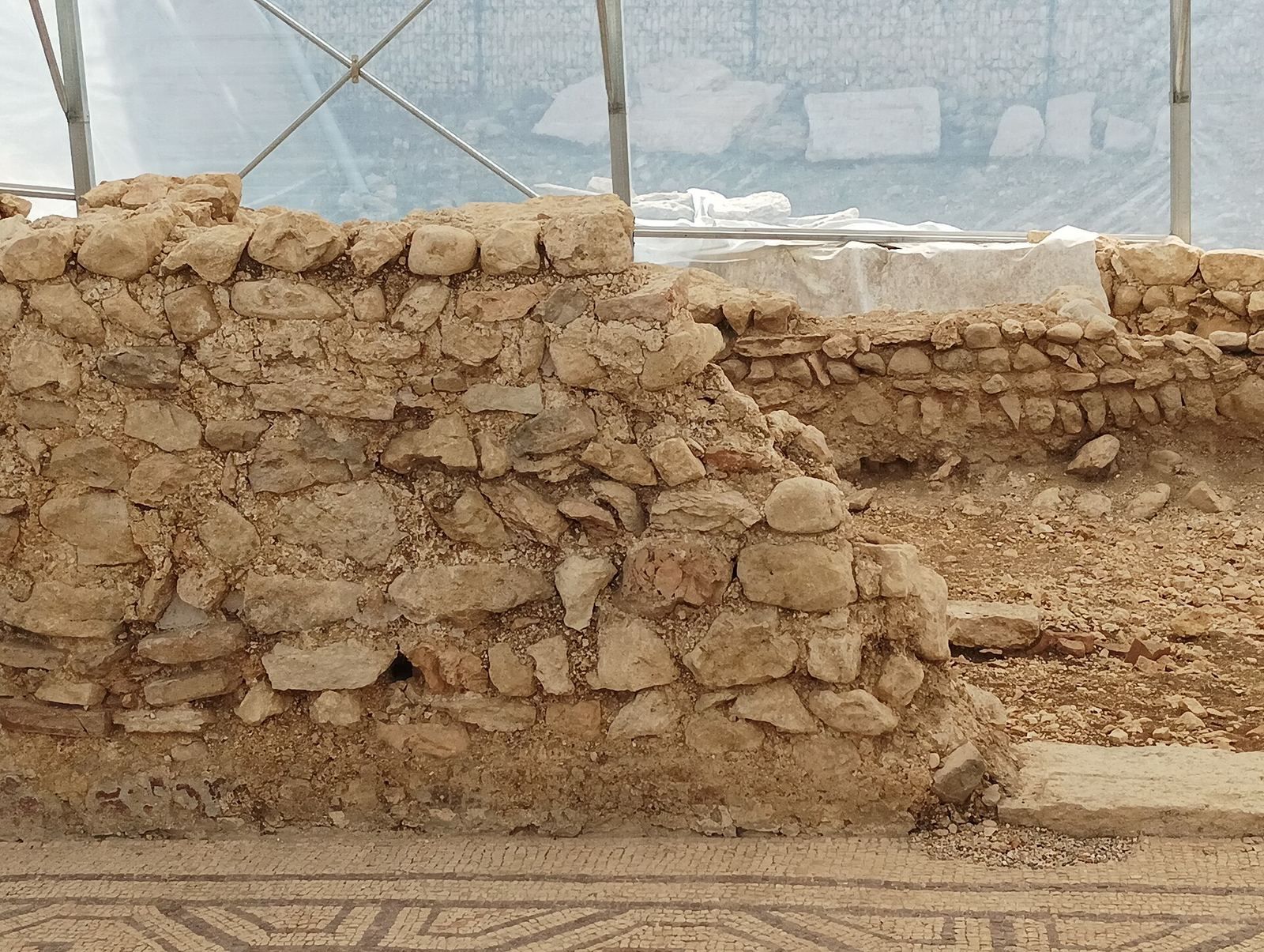
Villa dei Mosaici is a Roman villa in Italy, probably built in the second half of the fourth century during the late imperial period, the later phase of the Roman Empire. Older finds were also recovered at the site. The villa probably formed part of a wealthy landowner’s country estate. Such estates combined a residence with agricultural production and expressed elite wealth and prestige. Some wealthy people moved from cities to country estates amid insecurity.
The villa underwent several changes and suffered fires, after which parts fell into ruin. It nevertheless remained inhabited and was reused into the Early Middle Ages, the early medieval period in Europe. It was finally abandoned toward the end of that period. The terraced land was then cultivated until modern times, when soil and rock moved downslope buried the site.
Agriculture and Archaeological Investigation
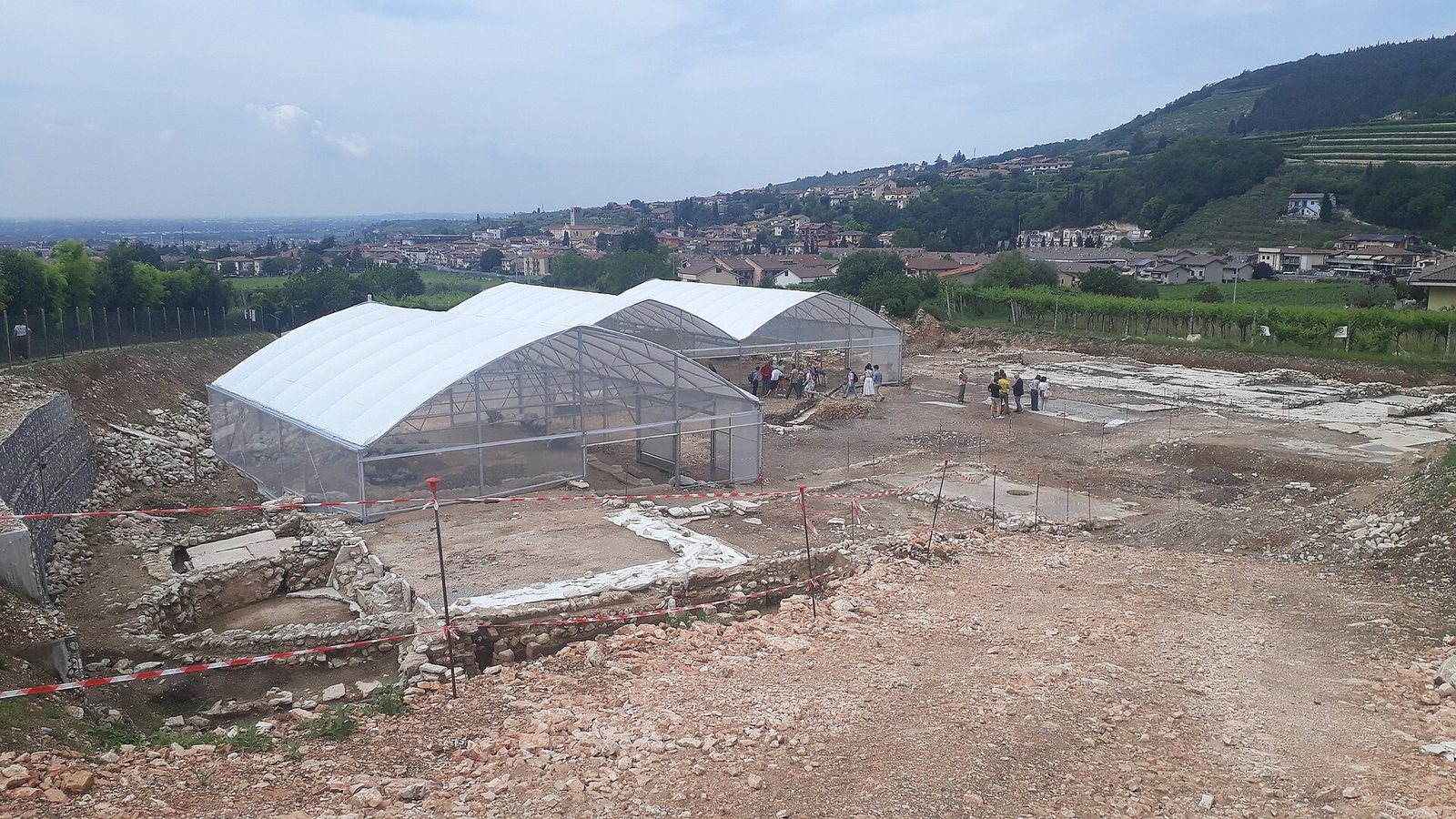
Agricultural work brought the first finds to light in 1887, including three sections of mosaic. The municipality of Verona acquired the panels and exhibited them at its Civic Museum, now the Archaeological Museum at the Roman Theatre. Further mosaics found during farming in 1922 led to systematic excavation by the archaeological superintendency. Archaeologist Tina Campanile directed work across about 270 square metres of what was thought to be the villa’s residential area.
Excavations resumed in 1974 and continued into 1975. Research began again in 2018, and the site was identified the following year. Excavations started in 2020, slowed during the COVID-19 pandemic and continued through 2022.
Remains
Estate Layout
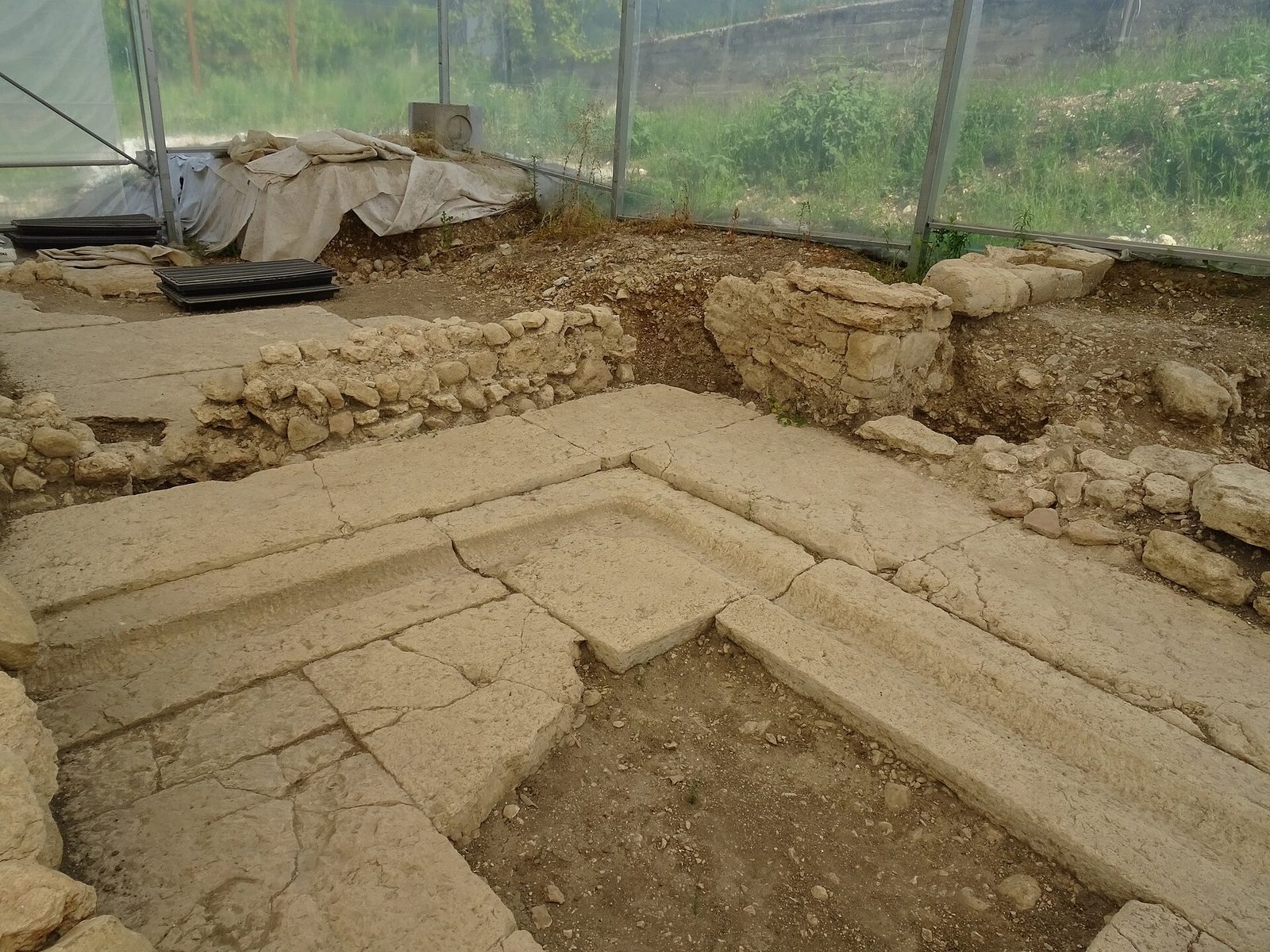
The villa covered about 3,500 square metres. Its layout included an agricultural-production area and a residential area arranged around a central garden, as well as a further zone for bathing and washing. This arrangement brought the estate’s domestic and productive functions together within one complex.
Mosaic-Decorated Spaces
Residential Hall and Entrance Vestibule
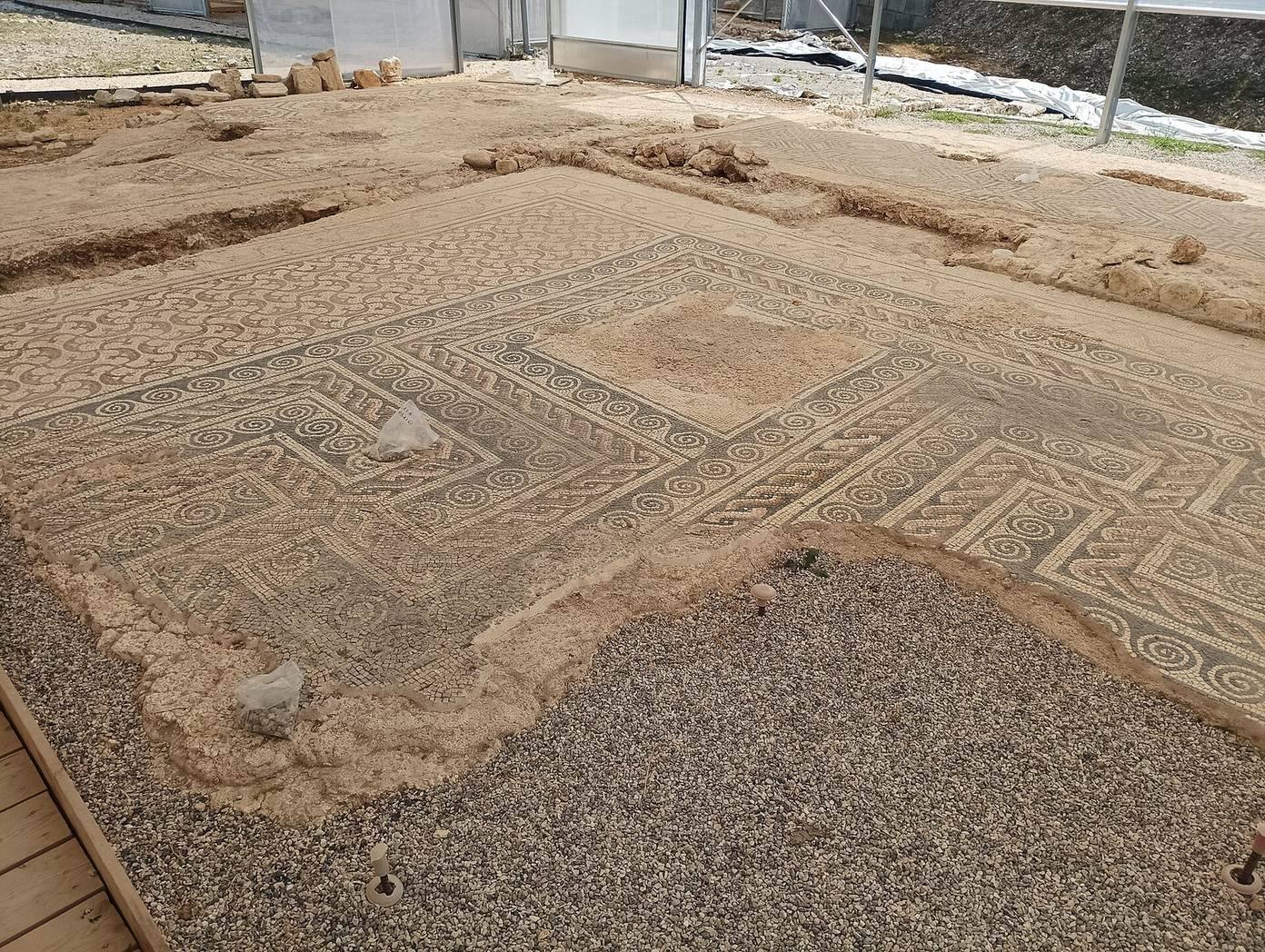
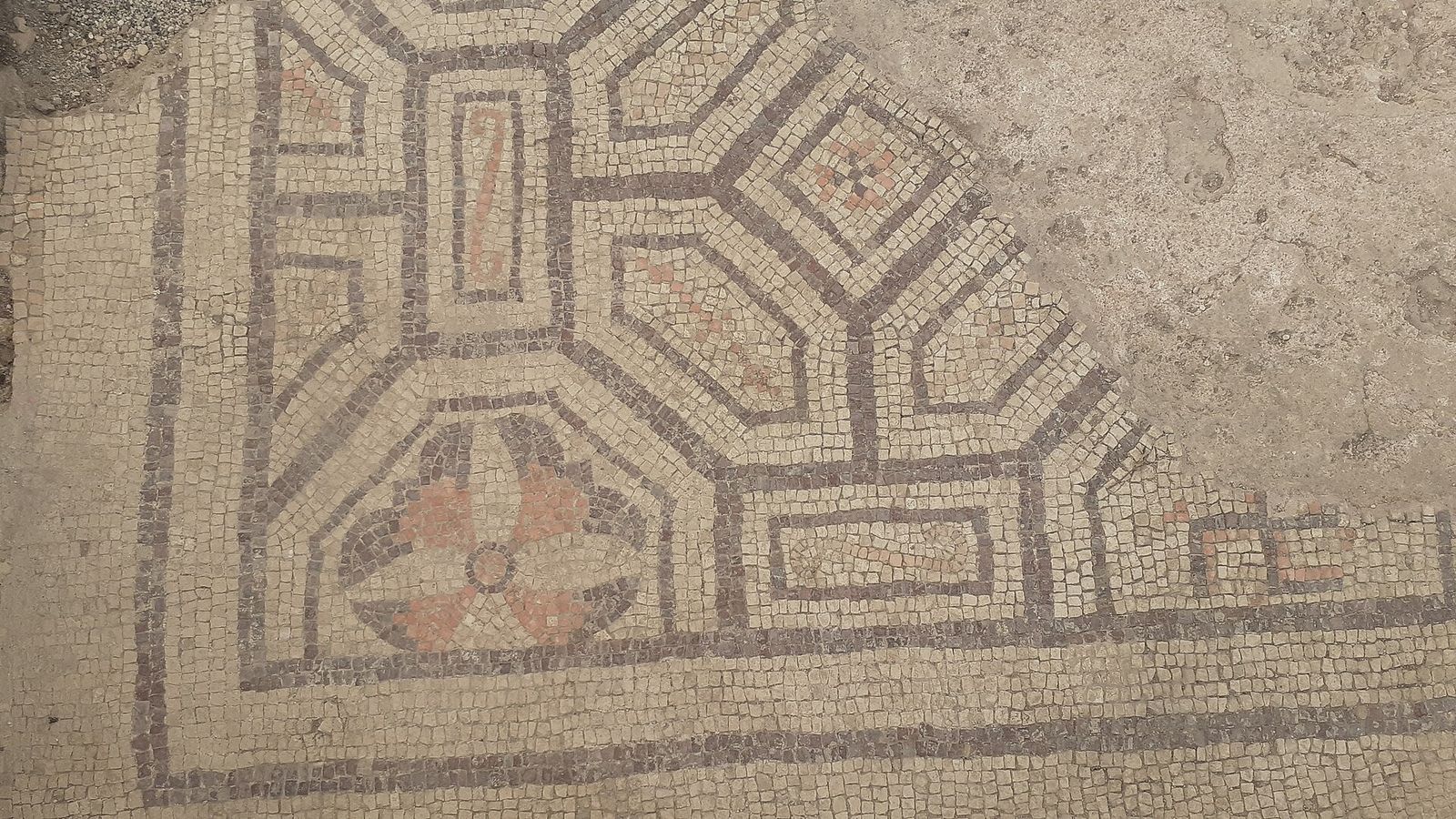
Excavations uncovered a large rectangular hall believed to belong to the residential part of the villa. Its floor mosaics are among the best-preserved at the site. A mosaic pavement found at some distance from the earlier excavation area revealed the position of the entrance vestibule, or entry hall. Mosaics exposed during the 1974–75 work were deliberately left covered underground.
Mosaic Panels Acquired by Verona
The panels found in 1887 include a framed scene of a childlike figure driving a two-horse chariot, a figurative section with three figures and a geometric design. The chariot scene has also been interpreted as Penelope, the wife of Odysseus in Greek epic, driving alongside the future bride Hippodamia and a supplicant woman, possibly the bride’s mother. Other mosaic imagery includes circus scenes and mythological theatrical subjects. Abstract ornament uses repeated waves of crescent-shaped shield forms.
Small Finds
Other finds from the site include coins, a bracelet, a ring, a bronze pin, a small bell and the feet of a statue.