Nettgau Megalithic Tomb: A Neolithic Burial Monument in Germany
Site at a Glance
- Popularity
- Very Low
- Country
- Germany
- Primary era
- Stone Age
- Eras represented
- Stone Age
- Civilizations
- Unclassified
- Site type
- Burial
- Remains
- Tomb
On this page7 sections
History
The Nettgau Megalithic Tomb is a Neolithic burial monument about 2 km north of Nettgau, on the boundary with Gladdenstedt in Saxony-Anhalt, Germany. Communities of the Deep-Stroke Pottery culture built it around 3700–3350 BCE. The Neolithic was the later Stone Age, when farming and settled communities became widespread. The Deep-Stroke Pottery culture was an archaeological culture whose pottery was decorated with deep impressions or incisions.
Johann Friedrich Danneil first described the tomb in 1843. In the 1890s, archaeologists Eduard Krause and Otto Schoetensack renewed the survey of megalithic tombs across the Altmark, a historic region in northern Saxony-Anhalt. From 2003 to 2004, the State Office for Heritage Management and Archaeology of Saxony-Anhalt, the Johann Friedrich Danneil Museum in Salzwedel, and the Young Archaeologists of the Altmark jointly measured and documented the region’s surviving megalithic tombs.
Remains
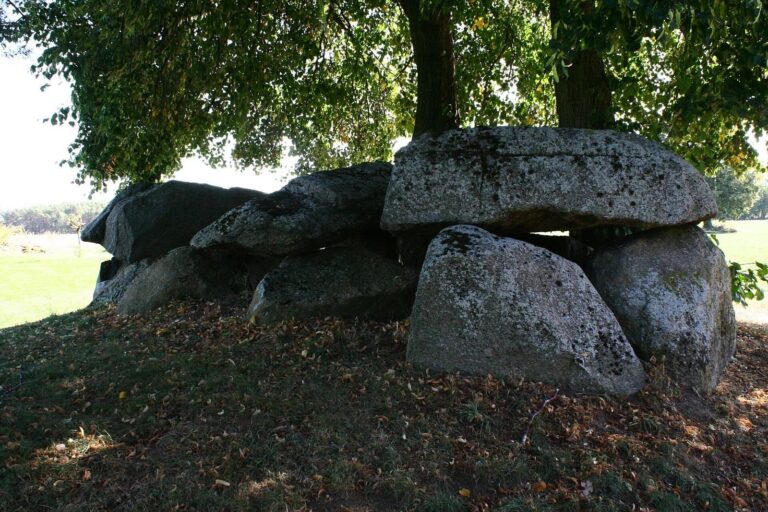
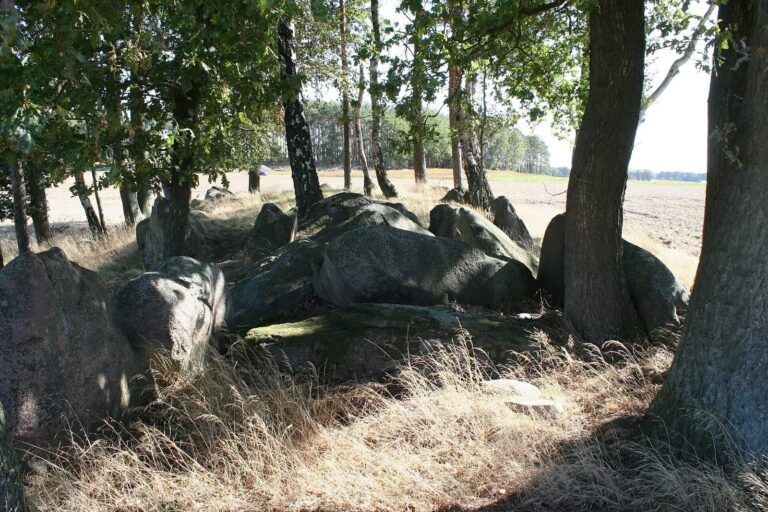
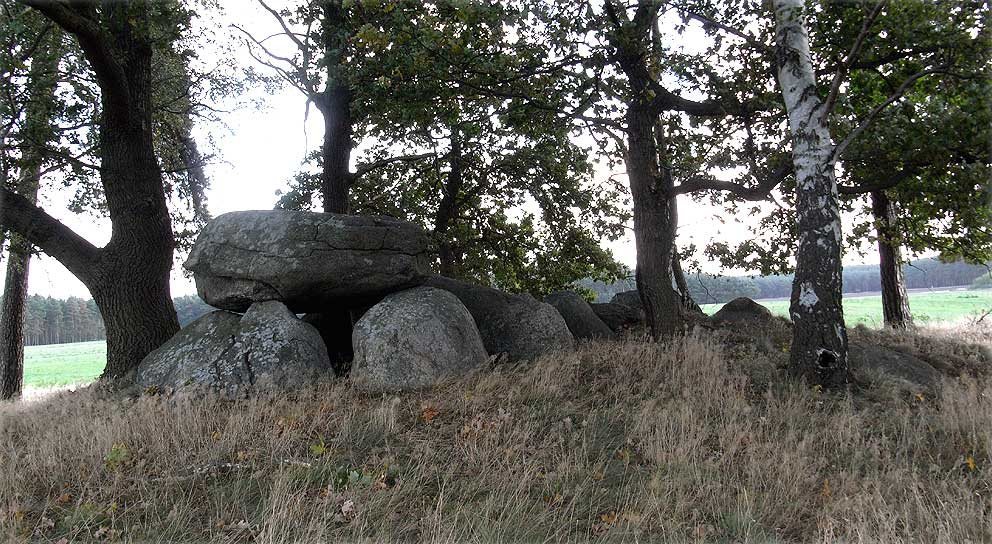
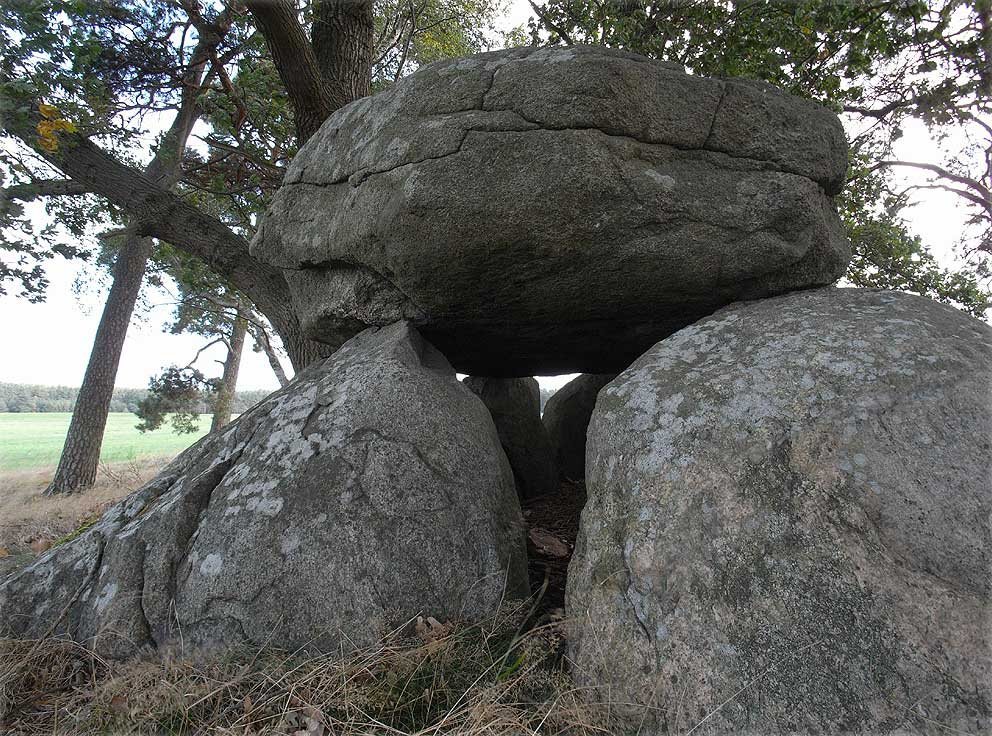
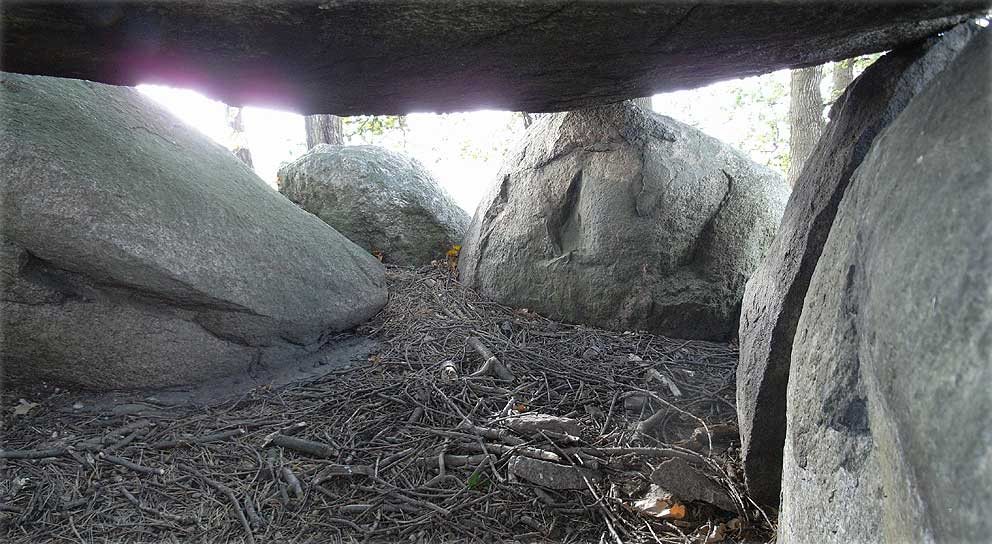
The tomb is a great dolmen, a megalithic burial type with a chamber of large upright stones covered by capstones.
Surviving features
Mound and possible enclosure
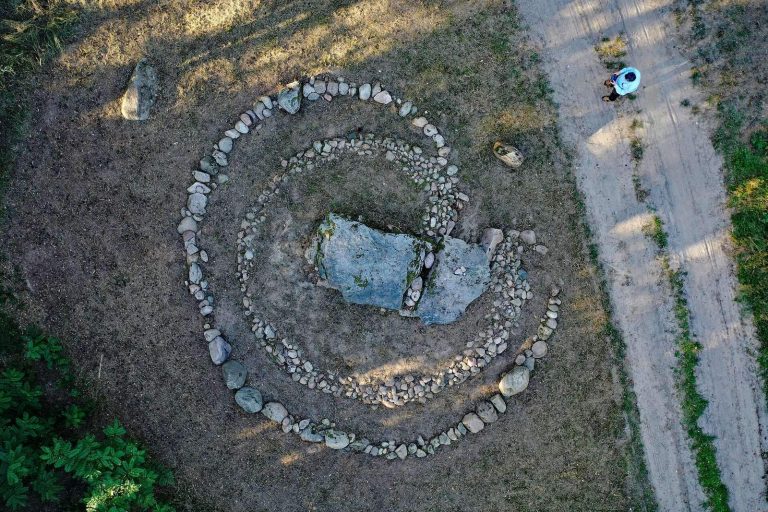
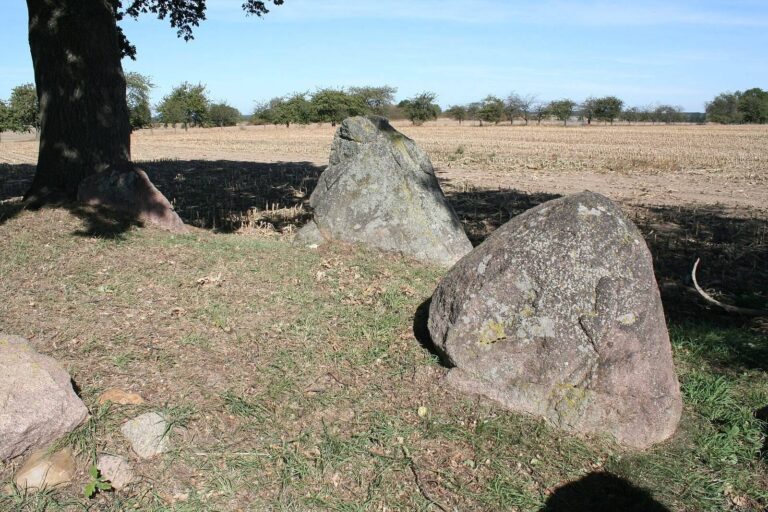
The burial mound has an irregular oval outline. Two stones south of the chamber may have belonged to an enclosure around it.
Burial chamber
The rectangular chamber is aligned east-northeast to west-southwest. Its interior measures 5.3 m by 1.5 m, and it is 0.8 m high. All eleven stones that supported the chamber remain.
Capstones
The chamber probably had four capstones, three of which survive in some form. One has fallen inside the chamber, another is represented there by fragments, and a further fragment lies outside. The largest capstone measures 2.5 by 1.9 by 0.8 m.
Witch Stone
A separate stone beside the tomb was known as the Witch Stone. An Altmark legend tells of a beekeeper and his son passing it when their horse stopped and gave birth to a foal. The horse then kicked and killed the boy. In his memory, the beekeeper was said to have had a horse’s hoof, a foal’s hoof, and a cross carved on the stone.