Greenwood Furnace State Park: Pennsylvania’s Ironworks Village and Forest Landscape
Site at a Glance
- Popularity
- Medium
- Country
- United States
- Primary era
- Modern
- Eras represented
- Modern
- Civilizations
- Unclassified
- Site type
- Economic
- Remains
- Production Complex
On this page11 sections
History
Greenwood Furnace State Park in Jackson Township, Huntingdon County, Pennsylvania, United States, preserves the remains of a nineteenth-century ironworks that began operating on June 5, 1834. The works and the village that grew around them developed during a period of expanding iron production and railroad construction.
Indigenous homelands and European settlement
The northern part of what is now Huntingdon County was once home to the Ona Jutta Hage, also known as the Juniata. Their name meant “People of the Standing Stone,” referring to an obelisk that once stood in their village near present-day Huntingdon. The Juniata had moved away by the time Pennsylvania was colonized.
William Penn, the proprietor of Pennsylvania, acquired the land from the Iroquois Confederacy, an alliance of Indigenous nations. The Tuscarora and Shawnee, Indigenous peoples who had resettled in central Pennsylvania, were later forced to move on. European settlers arrived by the late eighteenth century. They included Scots-Irish farmers and Amish and Mennonite Germans who had fled religious persecution in Germany, Austria, and Switzerland. Settlers later established a tavern and sawmill at the present park site.
Iron production and village growth
Norris, Rawle and Co., the furnace’s parent company, chose the location for its iron ore, limestone, timber for charcoal, and dependable water supply. At its peak, Greenwood Furnace produced as much as five tons of pig-iron ingots a day. Pig iron is crude iron smelted from ore for further processing.
A village developed around the works. Its early buildings included 20 houses, a company store and offices, stables, and a blacksmith shop. A rich deposit of high-quality ore encouraged further growth. A gristmill was built in 1842, and ownership of the ironworks passed to John A. Wright in 1847. Wright was among the founders of the Pennsylvania Railroad. Andrew Carnegie helped oversee operations at Greenwood and the nearby Freedom Iron Works.
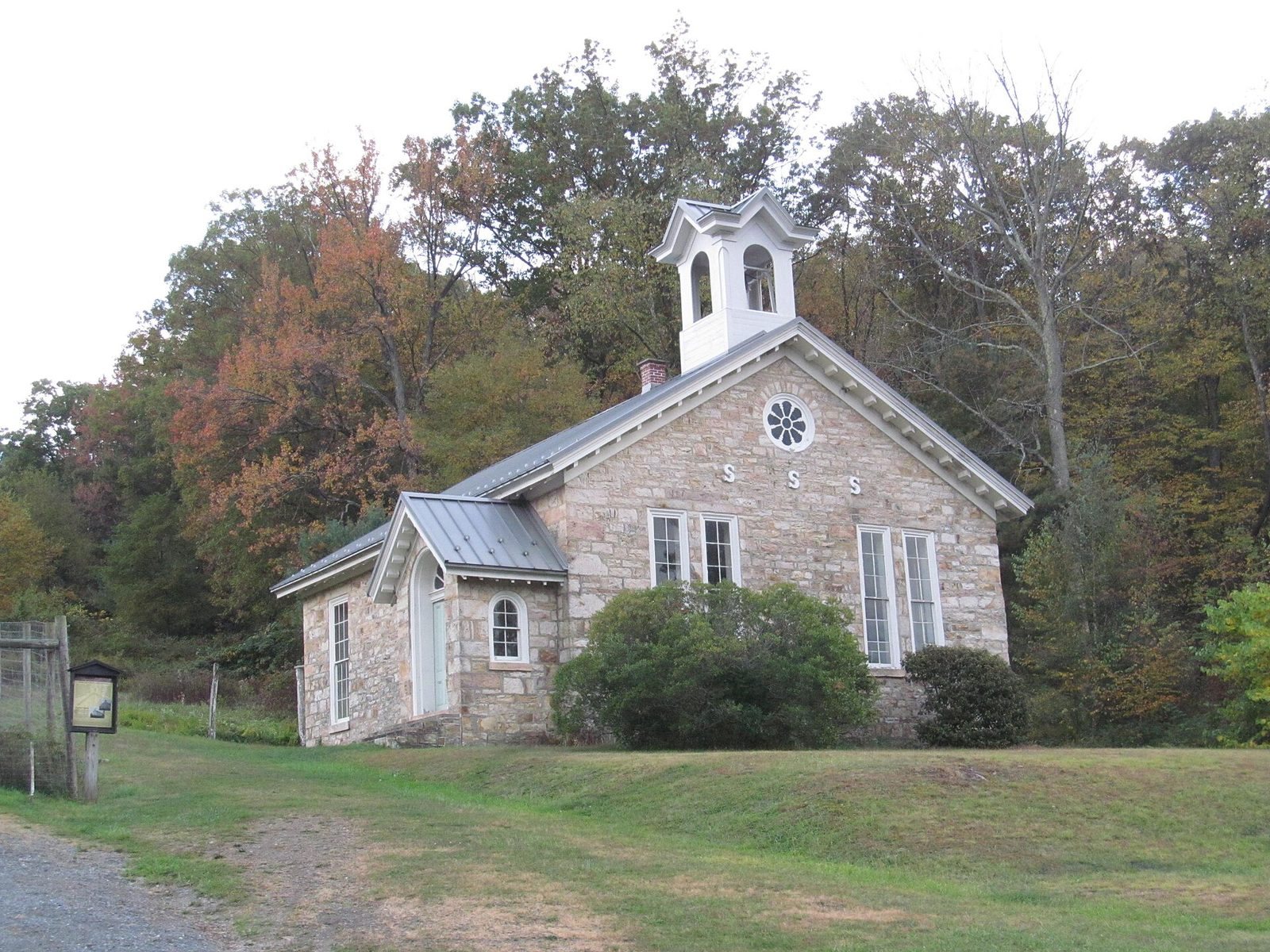
As the railroad industry expanded, the company increased production by adding a second furnace stack at Greenwood and a Bessemer furnace at Freedom. A Bessemer furnace made steel by forcing air through molten pig iron. The surrounding community reached its peak in the 1870s, with two furnaces, an ironmaster’s mansion, a church, a school, a company store, workshops, 17 stables, 90 tenant houses, and the gristmill. About 300 families lived there. Community life also included a baseball team called the Energetics and a 15-piece brass band.
Closure, conservation, and the state park
Changes in the iron industry made Greenwood’s furnaces obsolete in the early twentieth century. After the works closed, employees lost their jobs and left to find work elsewhere. Pennsylvania bought the former ironworks and village lands from the Logan Iron and Steel Company on February 1, 1906. The State Forest Reserve Commission established a tree nursery on part of the property, while the remaining land became the Greenwood Reserves and later part of Rothrock State Forest. Furnace ash and charcoal dust had enriched the soil with minerals useful for growing trees.
The Greenwood Forest Tree Nursery operated from 1906 to 1993. During the 1970s and 1980s, it produced an average of three million seedlings each year for replanting Pennsylvania forests. The nursery was later restarted on a limited basis to provide seedlings to other state nurseries and private nurseries. Former residents began returning to their old homes before 1921, and their gatherings became an annual reunion known as Old Home Day.
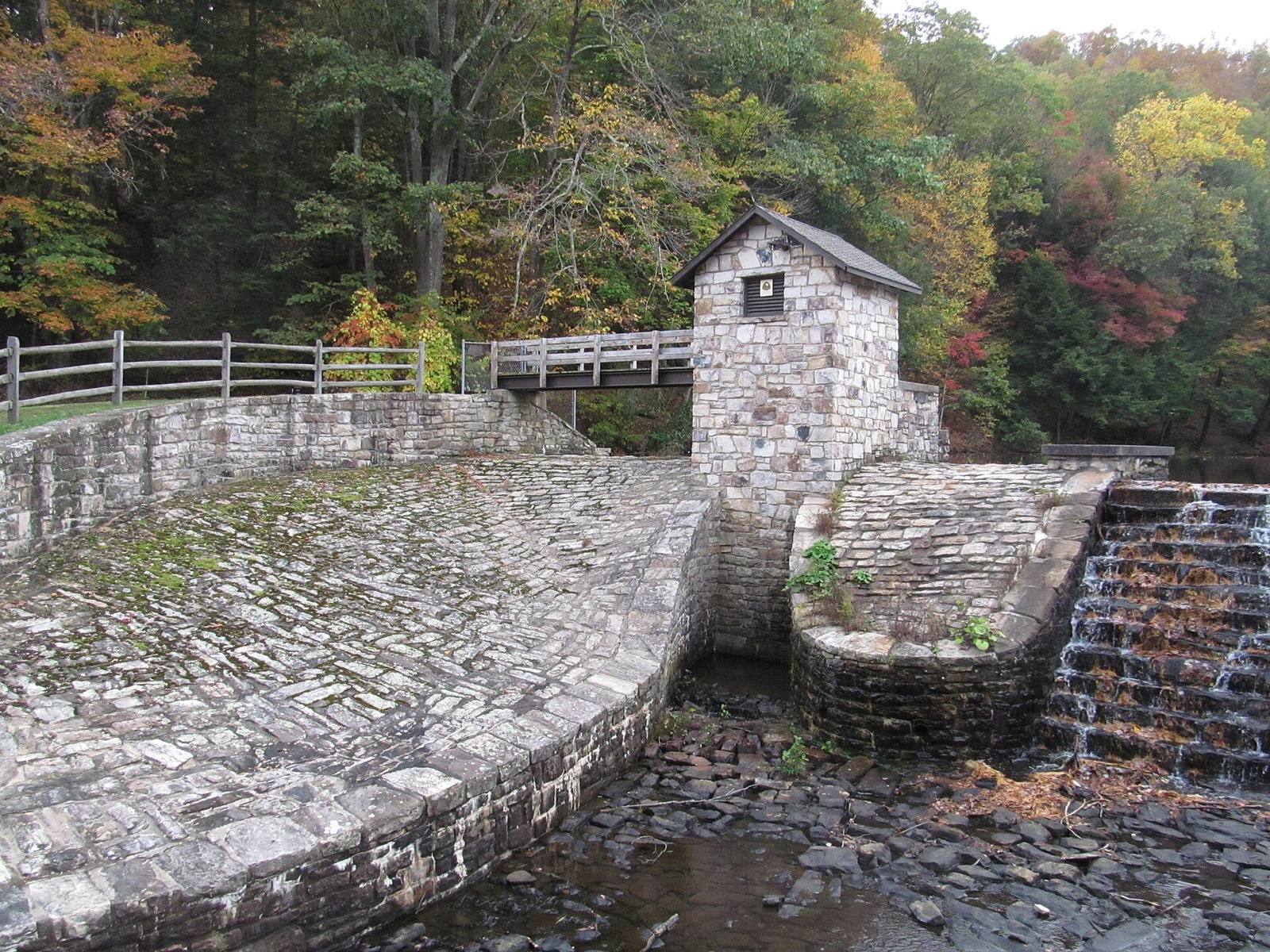
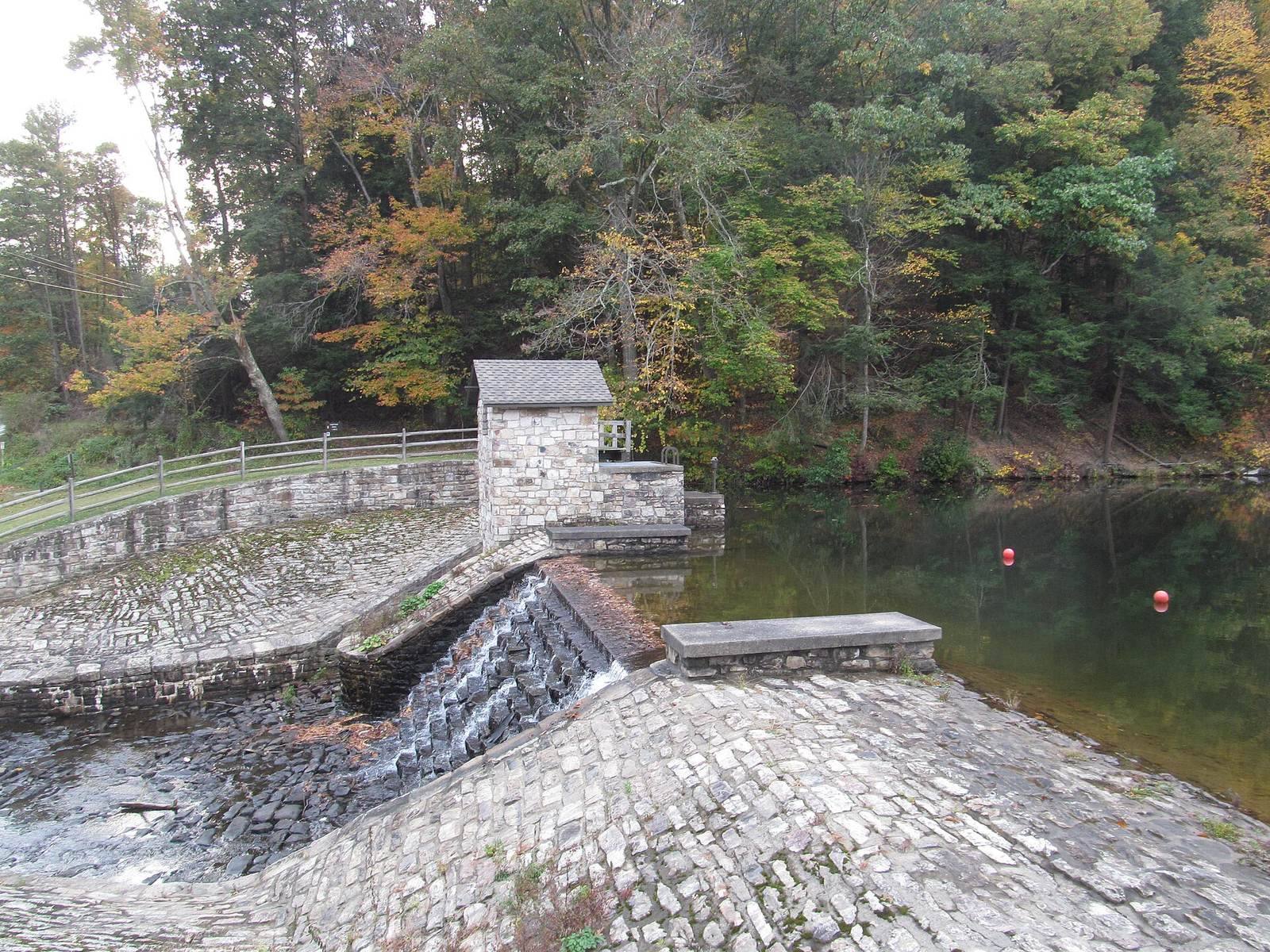
By 1924, the site had been established as Greenwood Public Camp. During the Great Depression, a severe economic crisis of the 1930s, the Civilian Conservation Corps, a federal employment and conservation program, built most of the park’s facilities and repaired surviving village buildings. The name Greenwood Furnace State Forest Park came into use during that decade, and the park joined Pennsylvania’s state park system in 1966. Archaeological work to uncover village remains began in 1976. In 1995, ASM International recognized Greenwood Furnace as a Historical Landmark for the quality of its iron and its role in the westward expansion of railroads. The dam that forms Greenwood Lake is listed on the National Register of Historic Places, the United States’ federal list of historically recognized sites.
Remains
The 423-acre park lies at an elevation of 1,020 feet, adjoining Rothrock State Forest at the western edge of the Seven Mountains, a mountainous region of central Pennsylvania. Its historic landscape contains village remains, old roads, charcoal hearths, and a pine plantation left from the ironworks period. Greenwood Fire Tower stands on Broad Mountain and remains in use by forest rangers to watch for fires.
Ironworks and village
Furnace and village buildings
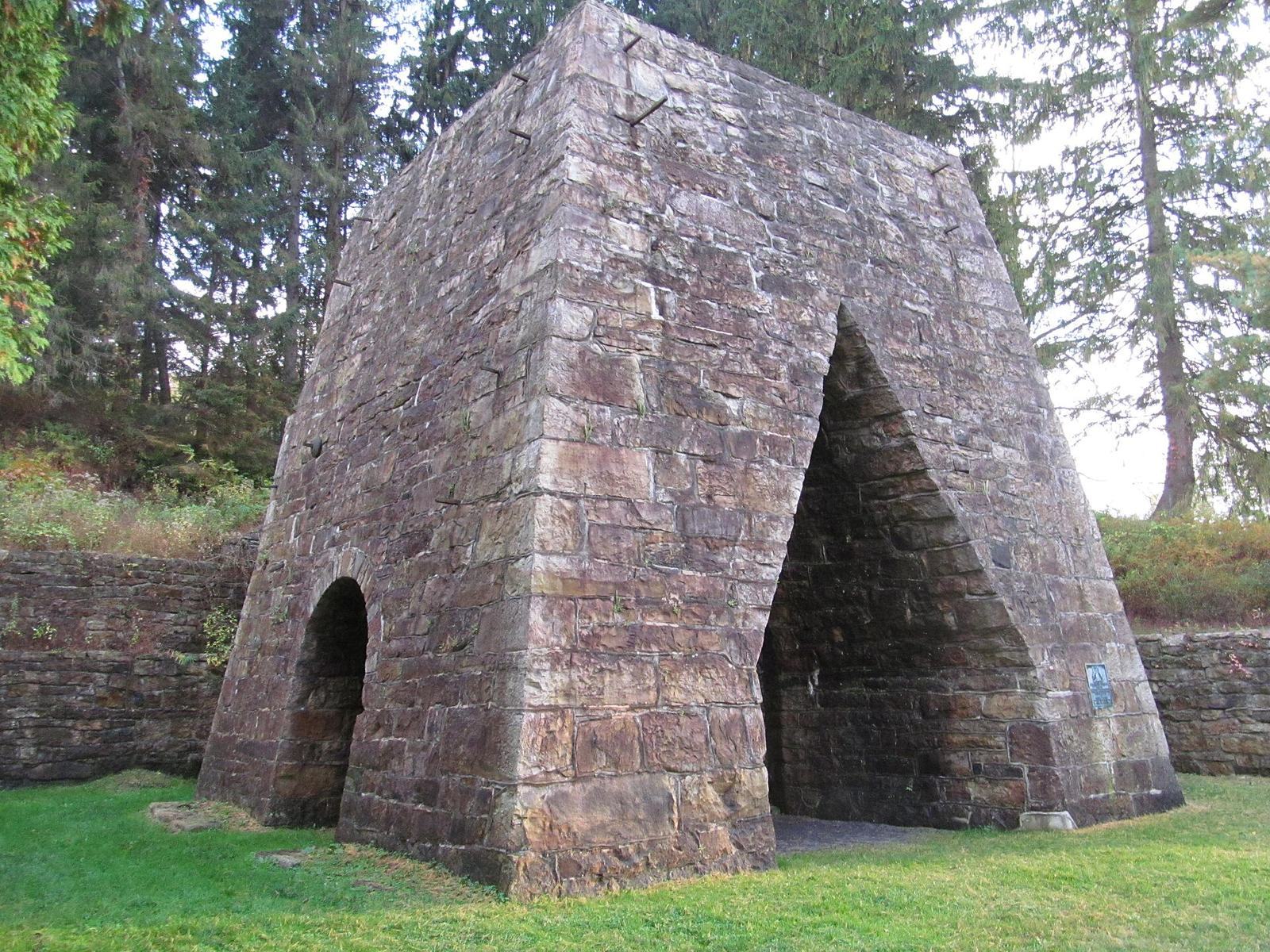
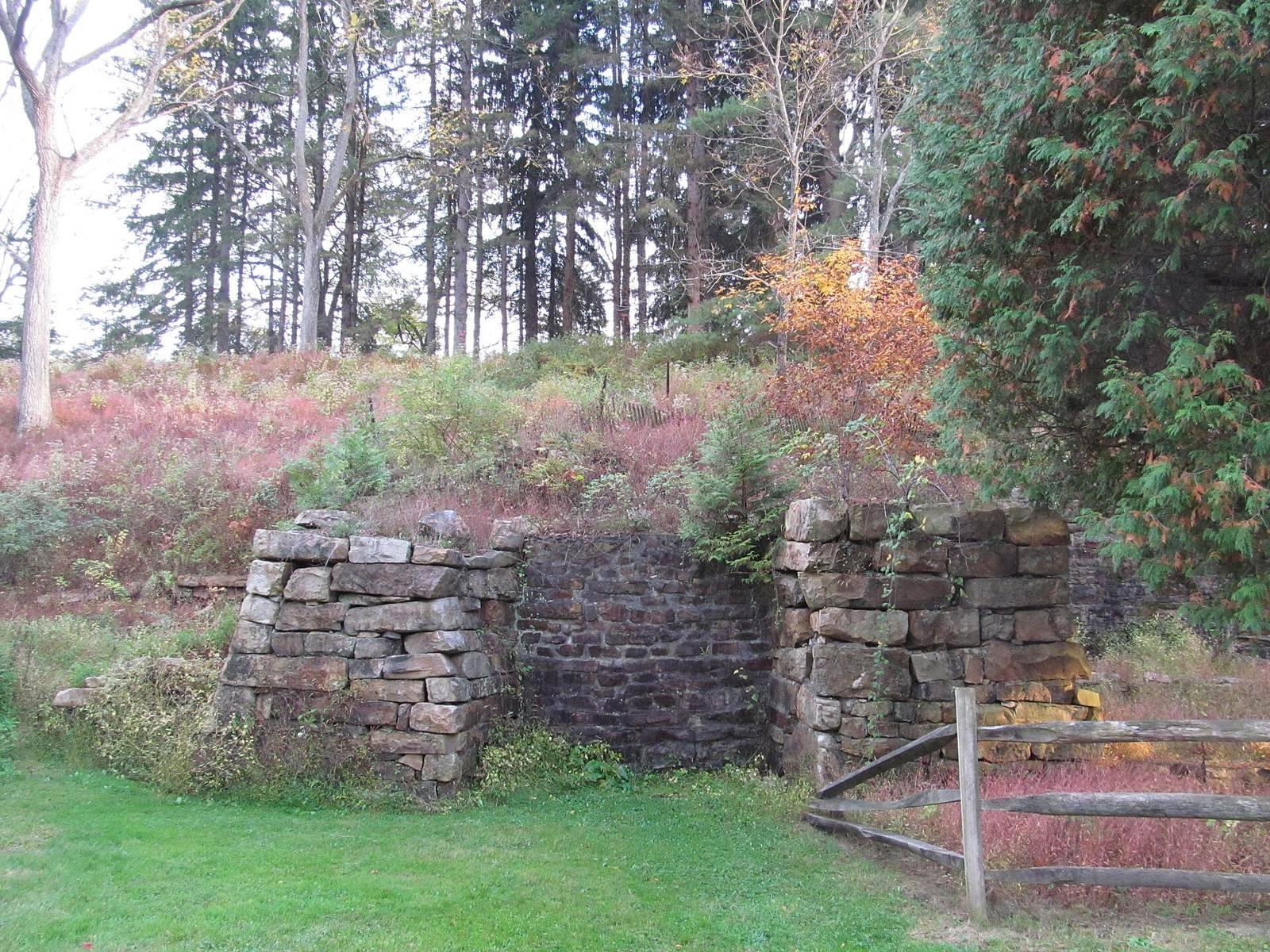
A stone furnace stack identified as no. 2 is associated with Greenwood Iron Furnace. The Civilian Conservation Corps restored a furnace stack. Other remains include furnace structures and house foundations. Six original village buildings had survived the abandonment of the settlement and were repaired by the corps.
Greenwood Lake and dam
Greenwood Lake covers six acres and is formed by a dam. Constructed in 1842, the lake supplied water to power the village gristmill.
Industrial traces in the landscape
Charcoal production
Charcoal hearths survive among the park’s historic landscape. These were prepared areas where wood was converted into charcoal for iron production. Near several springs, a collier’s hut also remains. A collier was a charcoal burner, and the hut served as a shelter associated with that work.
Ore banks and transport routes
The remains of Brush Ridge Ore Banks mark a place where iron ore was extracted. A route used by a mule-drawn railroad that carried ore to the furnace follows the ridge landscape. Other surviving traces include the old wagon road between Greenwood Furnace and Viantown, which crosses Brush Ridge, and part of a logging slide used during the iron-furnace period. A logging slide was a track or chute for moving logs down a slope.