Chimney Rock National Monument: Ancestral Puebloan Settlement and Ceremonial Site
Site at a Glance
- Popularity
- High
- Country
- United States
- Primary era
- Medieval
- Eras represented
- Medieval
- Civilizations
- Ancestral Puebloan
- Site type
- City
On this page13 sections
History
Chimney Rock National Monument preserves an ancestral Puebloan settlement in San Juan National Forest, United States. Occupied from about AD 925 to 1125, the settlement belonged to the Chaco culture, a regional ancestral Puebloan tradition associated with Chaco Canyon. Roughly 2,000 people lived in a community of about 200 rooms.
The Chacoan community
Chacoan society had a hierarchy that included a priestly class overseeing community life. Buildings served residential, working, and ceremonial purposes. The Great House Pueblo was begun in AD 1076 during a lunar standstill and expanded and completed in AD 1093 during another. A lunar standstill is a point in the moon’s approximately 18.6-year cycle when it reaches its northernmost or southernmost positions in the sky.
In the later years of the settlement, the Great House had an important ceremonial role. Archaeologists believe that only one or two families lived there, while ceremonies also brought visiting notables, including people who traveled about 90 miles from Chaco Canyon in what is now northern New Mexico.
Abandonment and modern protection
As they left, the inhabitants burned the buildings. Their present-day descendants regard the place as sacred to their ancestors and have asked the U.S. Forest Service not to carry out further excavation. Archaeological study began in the 1960s with Frank Eddy of the University of Colorado and others, and continues. Of the eight identified villages or settlements, most had not been excavated since Eddy’s work in the early 1970s.
The Chimney Rock Archaeological Site entered the National Register of Historic Places in 1970. The archaeological area is also listed in Colorado’s state register of historic properties and identified as a National Treasure. On September 21, 2012, President Barack Obama proclaimed the area a national monument under the Antiquities Act, the federal law that allows presidents to protect historic and prehistoric landmarks. The U.S. Forest Service manages the monument.
Remains
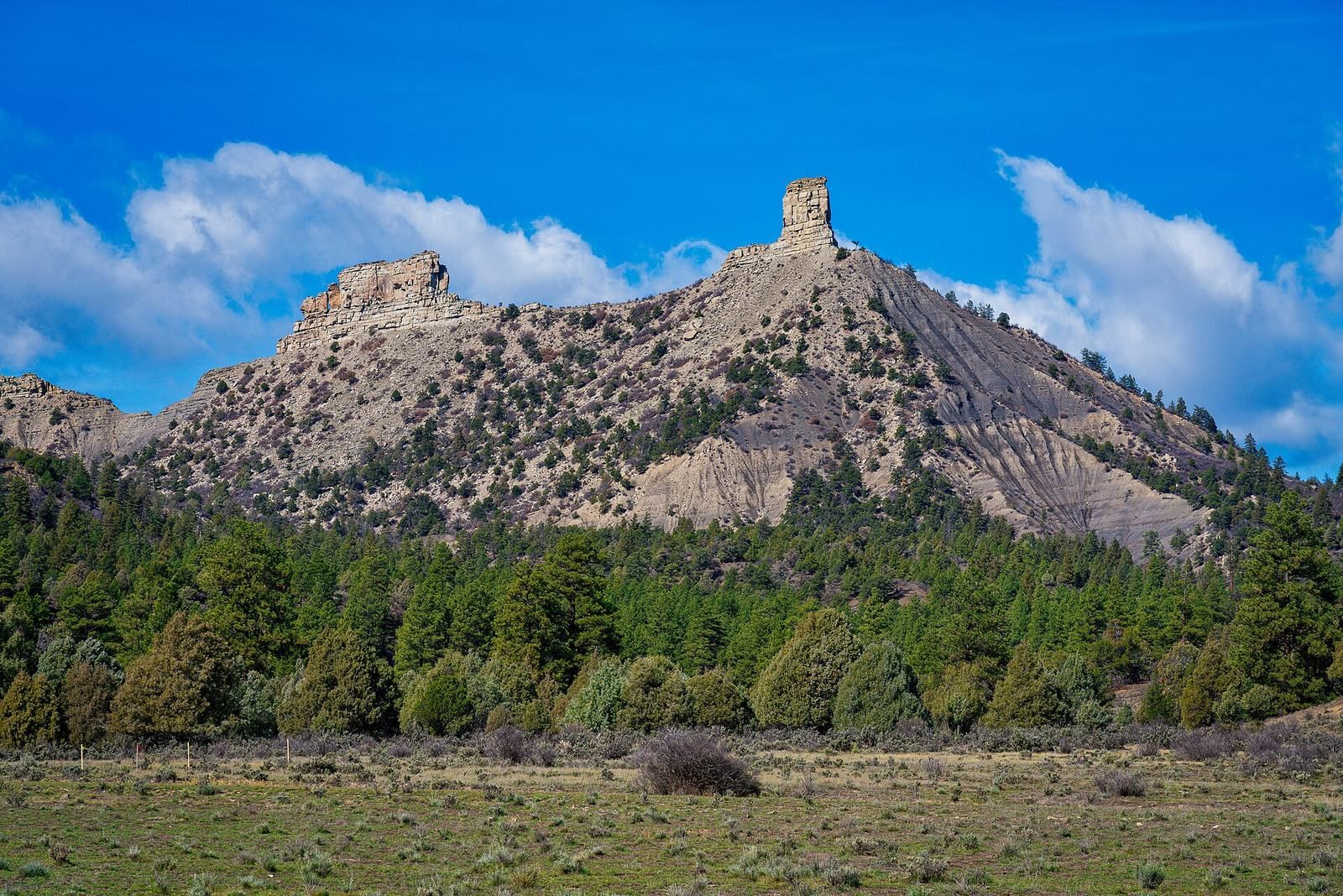
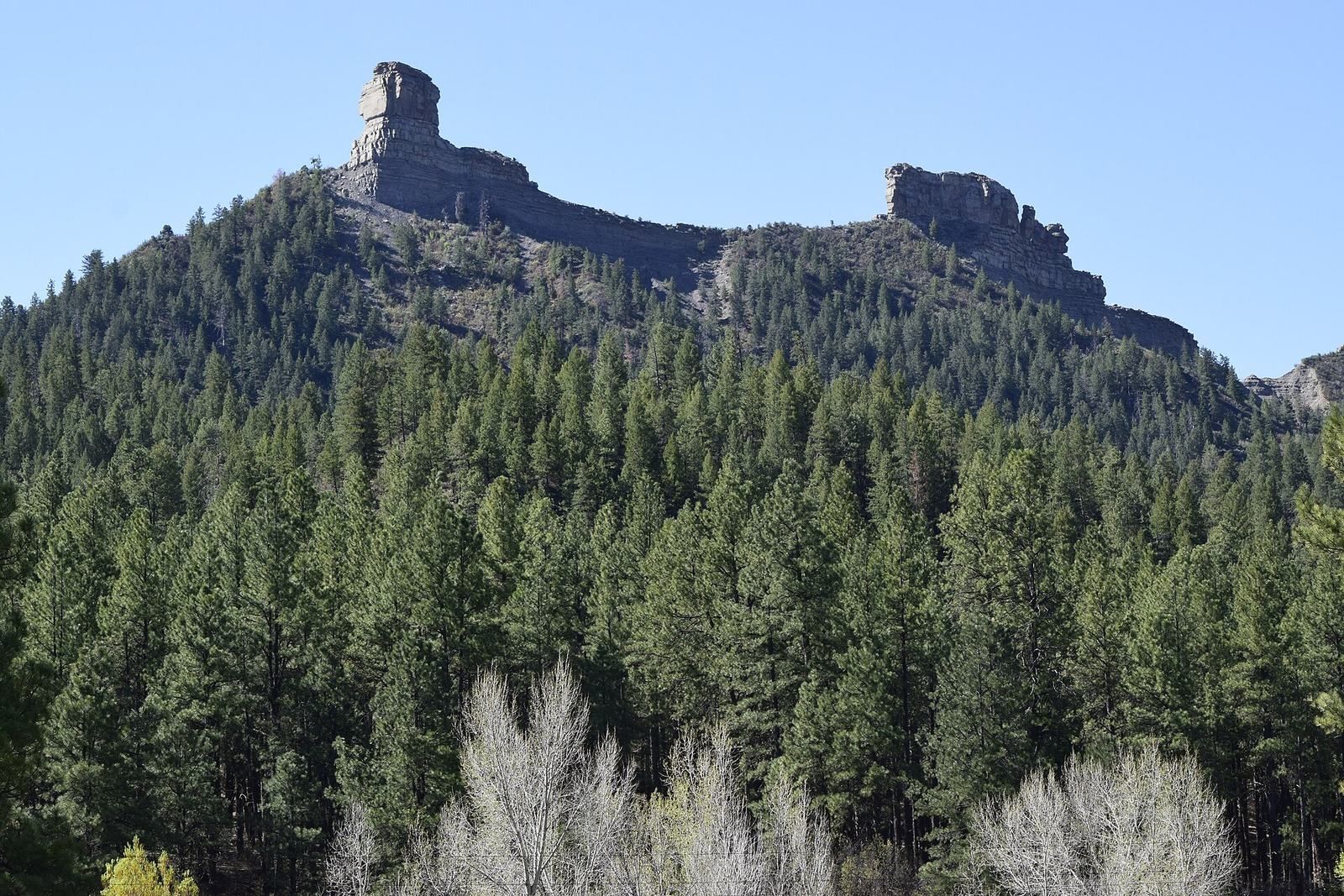
The monument covers 4,726 acres within San Juan National Forest and is surrounded by the Southern Ute Indian Reservation. Its central archaeological area covers 960 acres. More than 150 archaeological sites are known within the protected area, including eight identified villages or settlements. Excavated settlements occupy a ridge of mainly sandstone bedrock that ends at Chimney Rock.
The ridge and its buildings
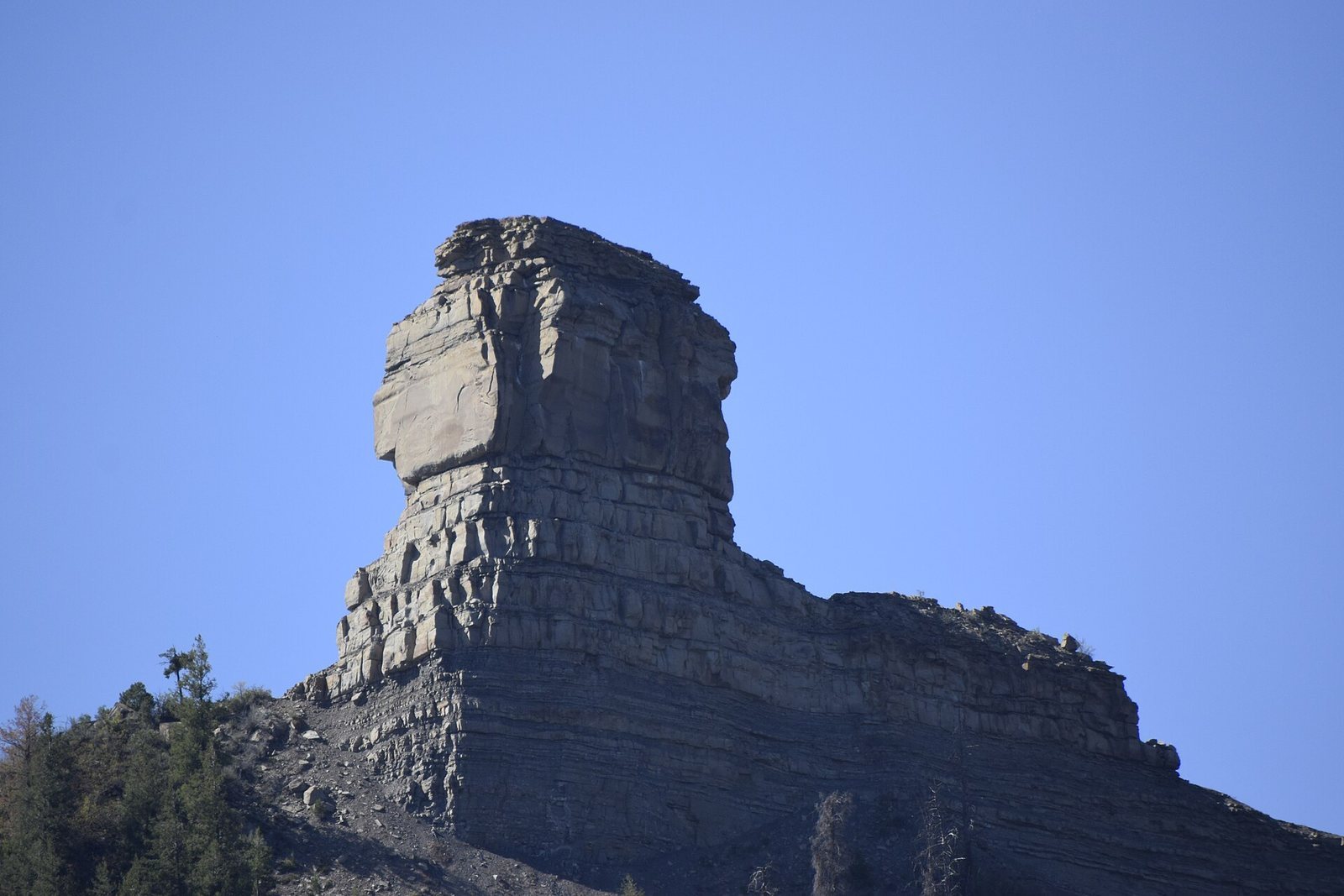
Chimney Rock rises about 315 feet, with Companion Rock beside it. During part of the moon’s 18.6-year cycle, the moon appears between the two rocks for about 16 months. The settlement’s buildings extend along the ridge, with the Great House Pueblo near the rocks at the summit.
Great House Pueblo
The Great House has 36 ground-floor rooms and two kivas, ceremonial rooms used in Pueblo communities. Builders carried its construction material uphill by hand from below.
Workers’ pithouses
Five pithouses, labeled Rooms A through E, probably housed workers who built the Great House. Rooms A and B were excavated in 1921–1922. Pottery recovered from them is stored in boxes in the basement of the Anasazi Center in Durango.
Guardhouse
The Guardhouse stretched across the ridge about halfway between the workers’ homes and the Great House and housed one family. It was more likely intended to control access to the Great House than to defend against attackers. Excavation left the structure unstable, so the Forest Service later removed it for safety.
Pit-house family complex
A complex beside the base of the trail leading to the Great House consists of three pit houses and workrooms. Separate work areas contained corn-grinding stones and space where men made arrowheads and tools. The complex is thought to have housed an extended, multigenerational family.
Great Kiva
A separate Great Kiva has a central fire pit, a stone deflector, a ventilation shaft, and several pits in the floor believed to have been used for storage. Its roof arrangement is uncertain: it may have been intended as an open-air structure or left unfinished. One interpretation proposes that construction began in 1084 and stopped before completion; another connects the interruption to beliefs that the place had bad spirits.
Finds and wildlife
Archaeological finds and oral tradition
A grizzly bear jaw found in a room may reflect reverence for the animal. Modern Chaco oral history links the origin of the Bear clan to the Chimney Rock area.
Companion Rock and wildlife
Companion Rock remains a nesting site for peregrine falcons. In 1975, after DDT-related population declines left only seven breeding pairs across Colorado, Montana, and Wyoming, a pair nested there. Biologist Marcy Cottrell Houle studied the birds for the Forest Service from 1975 to 1978; her work helped prevent a million-dollar municipal construction project at the rock. The monument also serves as a wildlife migration corridor. Recorded species include mule deer, elk, cougars, North American river otters, bald eagles, and golden eagles.