Songo Mnara: A Swahili Stone Town in Tanzania
Site at a Glance
- Rating
- 4.7
- Popularity
- Very Low
- Country
- Tanzania
- Primary era
- Medieval
- Eras represented
- Medieval, Early Modern
- Civilizations
- Swahili
- Site type
- City
On this page17 sections
History
Songo Mnara is a Swahili stone-town settlement on Songo Mnara Island, Tanzania. Swahili refers to the coastal culture and communities of eastern Africa, shaped in part by links across the Indian Ocean. A construction date in the ninth century is given for the settlement, while occupation of the stone town is placed in the 14th to 16th centuries.
Settlement and Indian Ocean exchange
Songo Mnara was one of the trading towns connected to Indian Ocean exchange. Chinese and Southeast Asian ceramics reflect those connections, although imported goods were found in small quantities. Agriculture also took place at the settlement, and ceramics served as exchange goods.
Archaeological study and interpretation
Excavations in 2009 and 2011 investigated houses and open spaces. A 2011 field school also examined mosques, including the central mosque. Findings from houses and open spaces suggest that residents shared these areas. Coins in refuse deposits and burials in a back room led researchers to interpret at least one house as a place for public business as well as domestic activity.
In 2011, geoarchaeology, the use of geological methods to study archaeological deposits, helped distinguish natural layers from deposits shaped by human activity. Sampling covered open spaces, house rooms, and floors. The island’s bedrock, sandy subsoil, proximity to Kilwa Kisiwani, and limited period of occupation made Songo Mnara useful for this work. From 2005 to 2009, the Zamani Project also used ground-based laser scanning to record some ruins and create detailed digital models and drawings.
A 2023 ancient-DNA study examined remains from seven people associated with Songo Mnara. At least one individual fit a model combining African-, Persian-, and Indian-related genetic affinities, and the available evidence indicated Persian ancestry; results for many individuals were inconclusive. These labels describe genetic similarities to reference populations, not a person’s birthplace or identity. The study estimated that foreign ancestry entered the population between AD 708 and 1219, probably over several generations, with Eurasian and African populations continuing to mix afterward. The findings were considered consistent with the Kilwa Chronicle, a historical record preserving traditions about Kilwa’s past.
Songo Mnara and Kilwa Kisiwani were inscribed together in 1981 as the UNESCO World Heritage property Ruins of Kilwa Kisiwani and Ruins of Songo Mnara, under criterion iii, for exceptional testimony to a cultural tradition or civilization. The property was on the World Heritage List in Danger from 2004 to 2014. Songo Mnara is also registered as a National Historic Site of Tanzania.
Remains
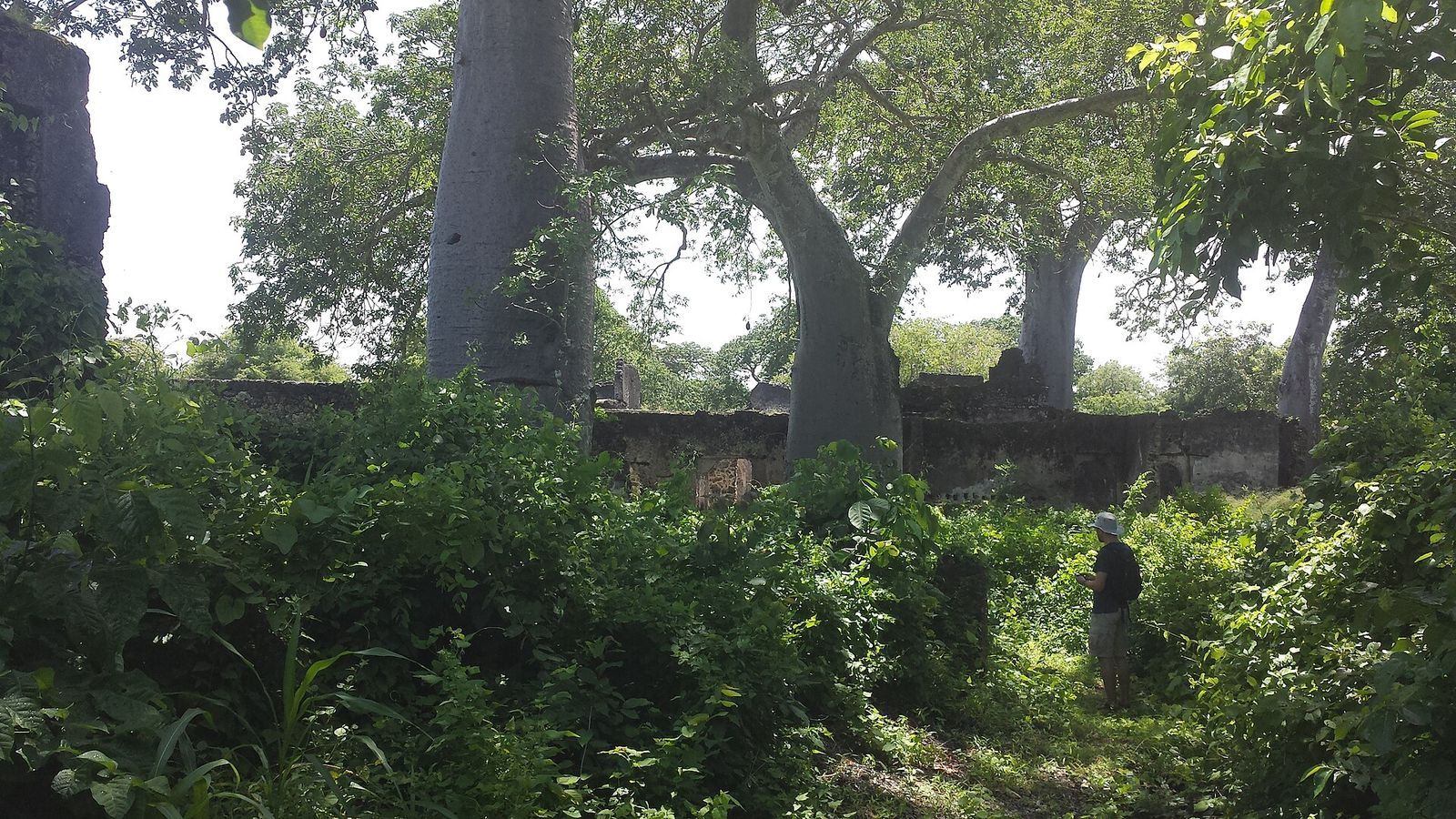
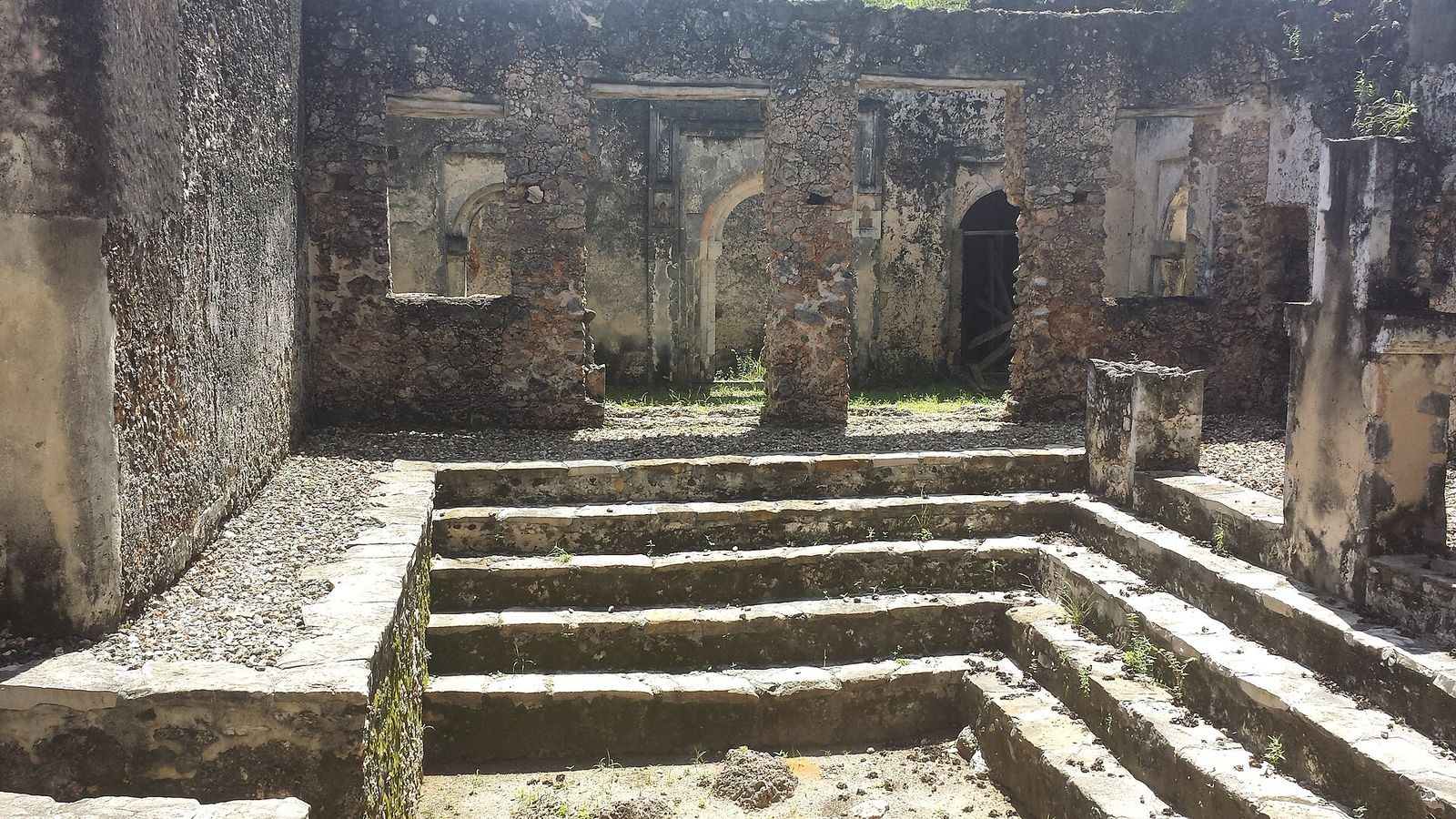
The stone town stands on bedrock above sandy subsoil, and its buildings were made from rough coral and mortar. Its plan follows patterns characteristic of Swahili stone towns, while its enclosing wall is distinctive. The remains include a palace, mosques, and residential buildings. Archaeologists identified six mosques, four cemeteries, about two dozen house blocks, and three enclosed open spaces. More than 40 houses surround the stone town, and cemeteries lie both within and beyond its walls.
Houses and domestic spaces
House 44
House 44 has a complex arrangement of rooms, including southwest, central, entrance, southeast, and back rooms investigated through excavation. A one-by-one-metre test area in the southwest room passed through ceramic layers to plaster beneath the floor; another excavation area on the house’s southwest side measured about four by 2.25 metres. In the central room, plaster and coral appeared among rubble layers, and excavation ended at the plaster floor. Ceramics from the house date to the 15th century. Artifacts came from the back rooms, and samples from the house contained unusually large numbers of palm phytoliths, microscopic silica structures formed in plants.
House 23
House 23 stands in the settlement’s southwestern corner and is described as grander than House 44. A four-by-one-metre excavation unit in its courtyard exposed steps and a floor formed from coral bedrock. A separate two-by-two-metre unit was placed in the central room. Soil and artifacts from rooms in Houses 23 and 44 indicate differing patterns of activity.
Houses 31, 40, and 34
Excavations in Houses 31, 40, and 34 uncovered plaster floors and artifacts. A Kilwa-type coin was found beneath a floor. Ceramic finds from a tested front entrance indicated substantial activity, while finds from the tested back room indicated less. The entrance room in House 31 and central room in House 23 also showed activity patterns that differed from corresponding rooms in House 44.
Mosques, cemeteries, and burial practices
Mosques
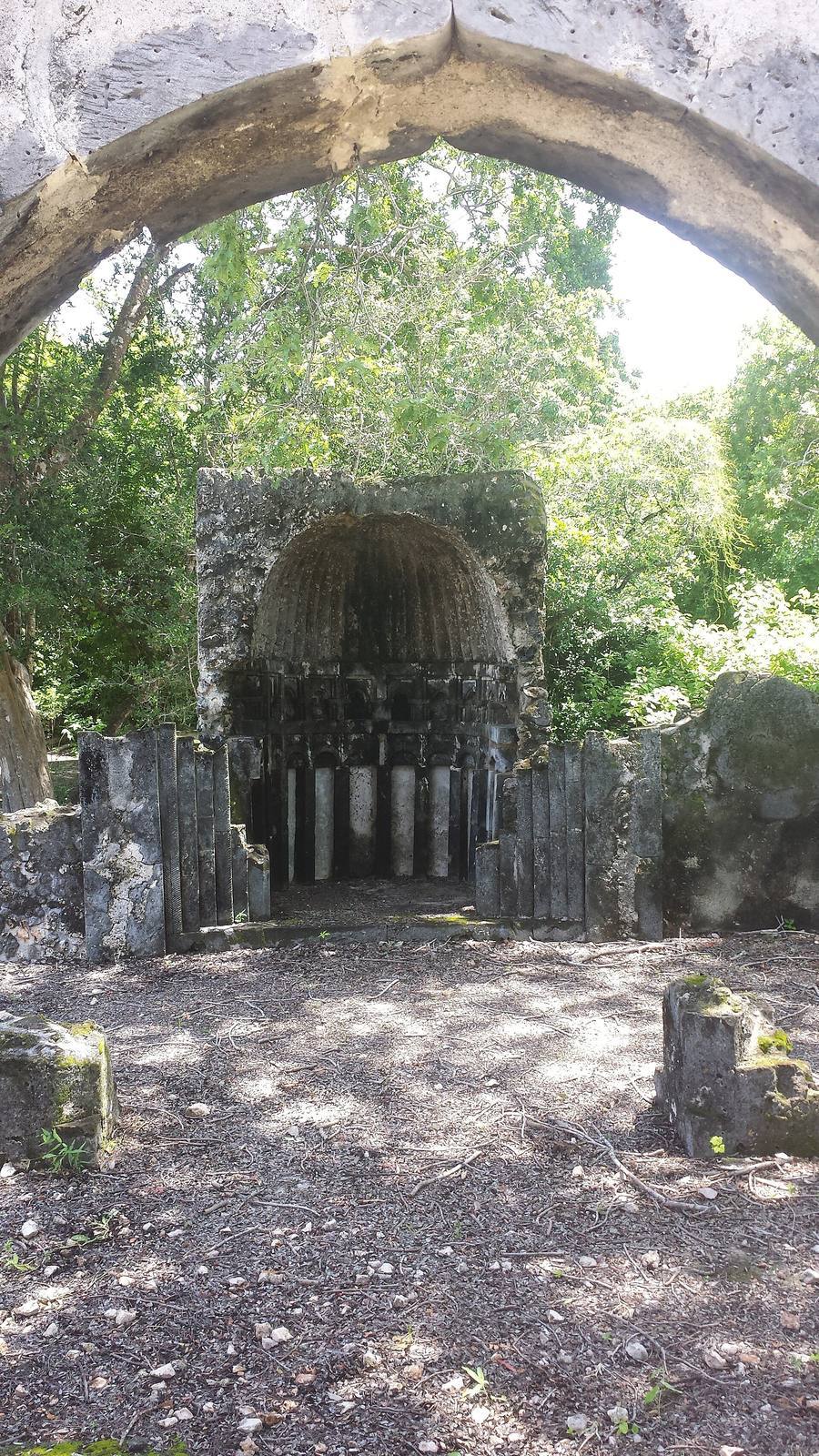
Six mosques form part of the town’s identified built remains. The central mosque was examined during the 2011 fieldwork. Mosques were among the settlement’s public and religious buildings, reflecting the place of Islam in the region’s cultural history.
Cemeteries and tombs
Four cemeteries are identified, with burial grounds both inside and outside the town walls. In the central area, graves and tombs were associated with commemorative practices. Kilwa coins and ceramic fragments found there were interpreted as offerings left in remembrance of the dead. Investigations around the mosque-and-cemetery area also examined the placement of markers and the locations of mosques.
Open spaces and work areas
Public spaces and vegetation
Three enclosed open spaces and substantial open areas within the town walls formed part of the settlement’s layout. Around the public well, excavators found a refuse heap containing assorted artifacts; the area was interpreted as the most private of those investigated. In a northern public area, plant evidence suggests possible gardens or orchards, alongside domestic and household objects. Researchers distinguished spaces serving as organized centers, green areas, and places used by non-elite residents.
Shoreline and craft activity
Artifacts were found along the western shoreline and in areas associated with wattle-and-daub houses, built from a woven framework coated with mud or clay. Soil chemistry indicated substantial human activity in these areas. Iron tools found in their original archaeological context point to ironworking at the settlement.
Coins and imported ceramics
Kilwa-type coins
Kilwa-type coins, the coinage associated with medieval Kilwa, date from the 11th to 16th centuries. Coins came from excavation trenches across Songo Mnara, mostly in floor layers. Identified types include Nāsir al-Dunya, ‘Ali b. al-Hasan, and al-Hasan b. Sulaimān, names read from their inscriptions. Poor preservation makes Nāsir al-Dunya coins difficult to read, while markings associated with ‘Ali b. al-Hasan make up most of the identified coins. Some coins predate occupation of the stone town and may have been left on the surface by earlier visitors.
Imported ceramics
Imported finds include 14th-century Chinese blue-and-white porcelain and green-glazed stoneware. Unglazed and green-glazed stoneware attributed to Thailand also came from the site.