Church of All Saints: A 12th-Century Parish Church in Lathbury
Site at a Glance
- Popularity
- Very Low
- Country
- United Kingdom
- Primary era
- Medieval
- Eras represented
- Medieval
- Civilizations
- English
- Site type
- Religious
- Remains
- Church
On this page10 sections
History
The Church of All Saints is a 12th-century Anglican parish church in Lathbury, England, founded in 1101 and incorporating Norman, Early English, and Decorated work. Anglicanism is the Christian tradition associated with the Church of England and the wider Anglican Communion. The church belongs to the Province of Canterbury and the Diocese of Oxford, within the Newport deanery and Newport Pagnell benefice.
The parish register dates from 1690. In 1966, the church was designated a Grade I listed building, the highest category of listed-building protection in England, reserved for buildings of exceptional interest.
Remains
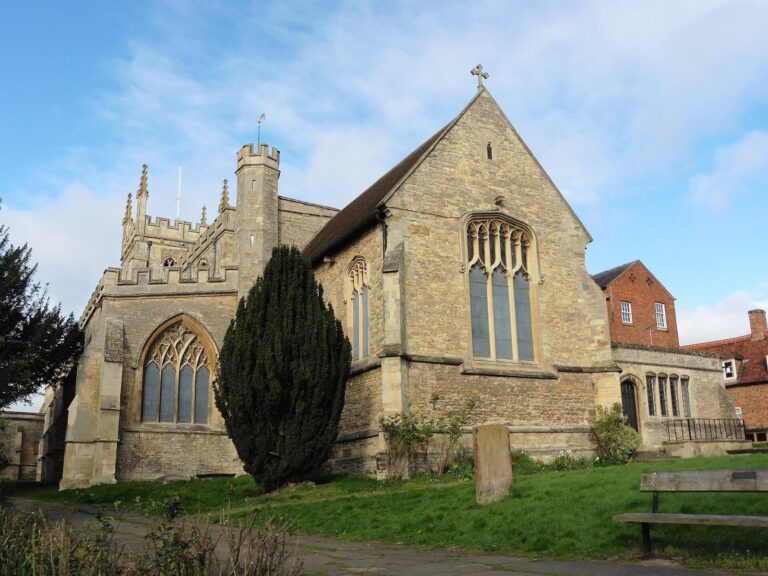
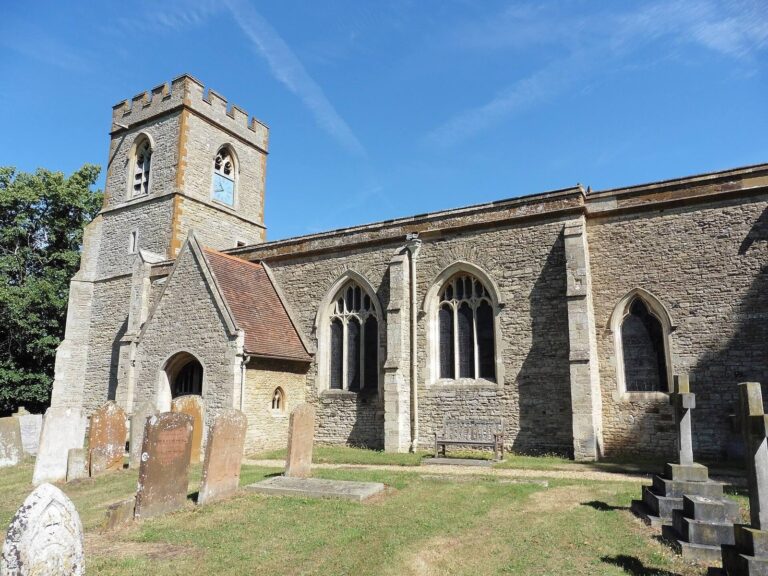
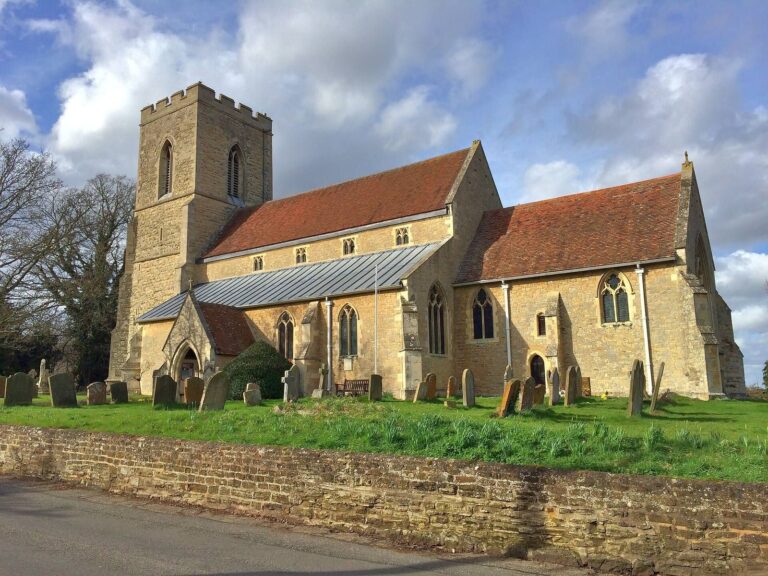
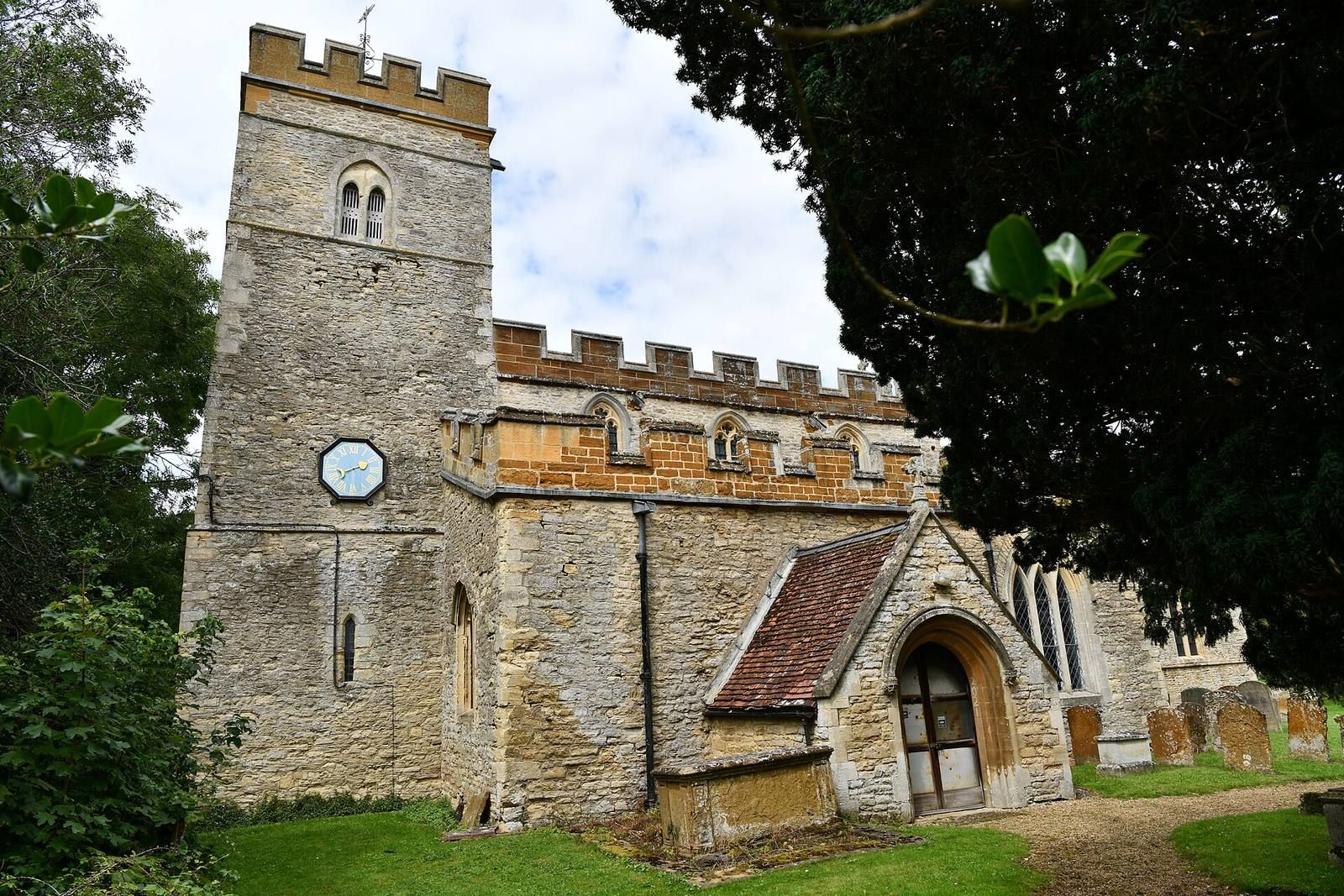
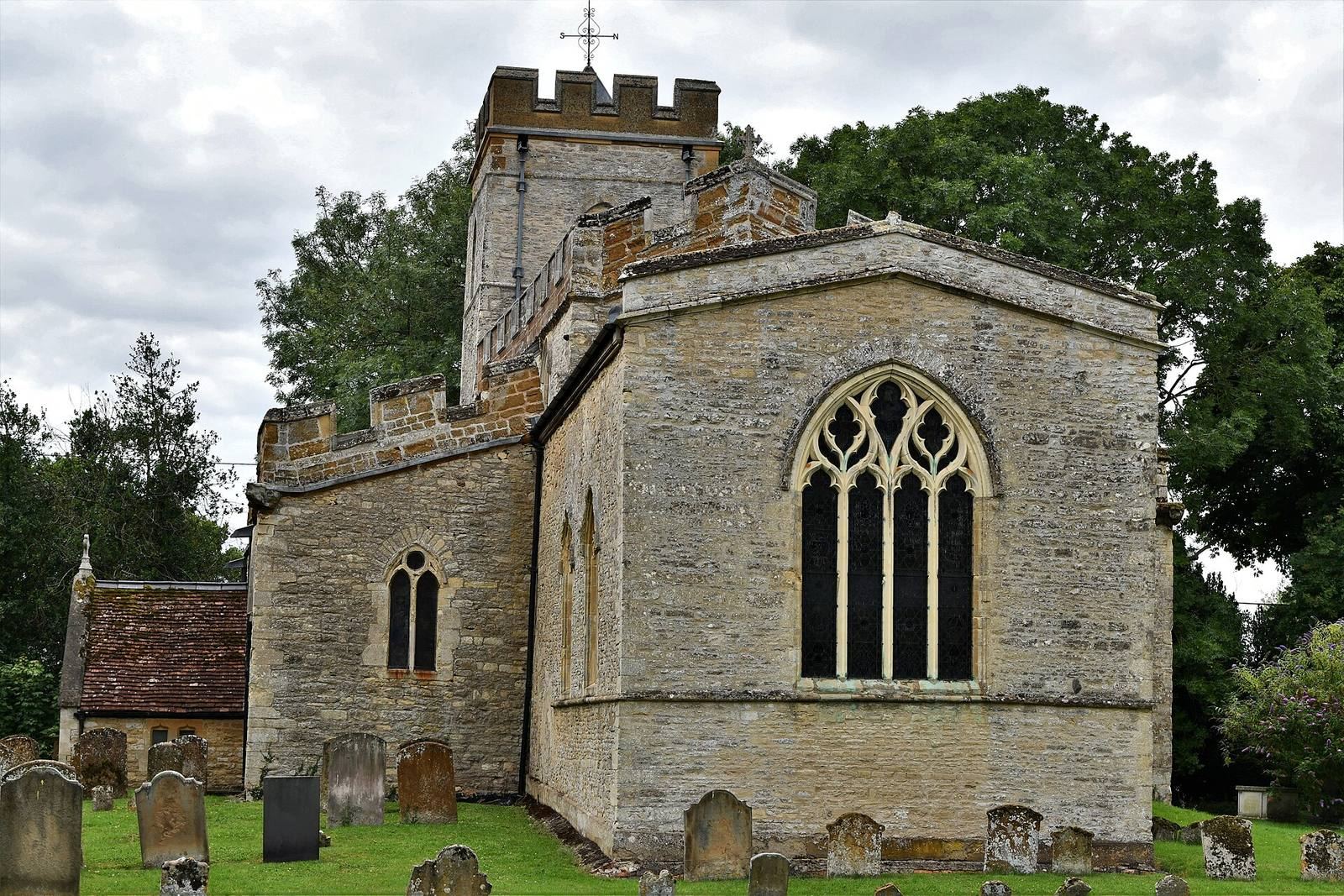
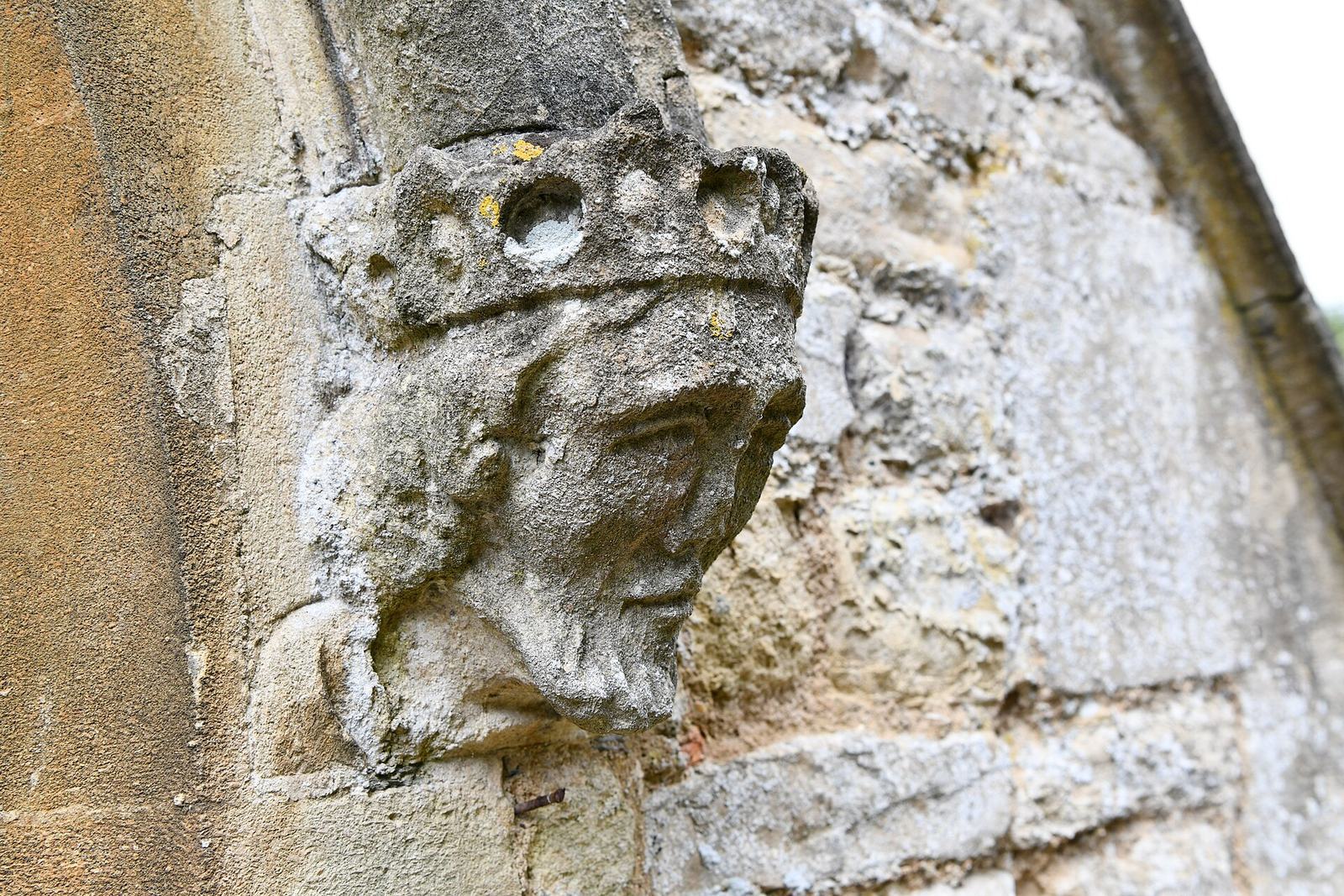
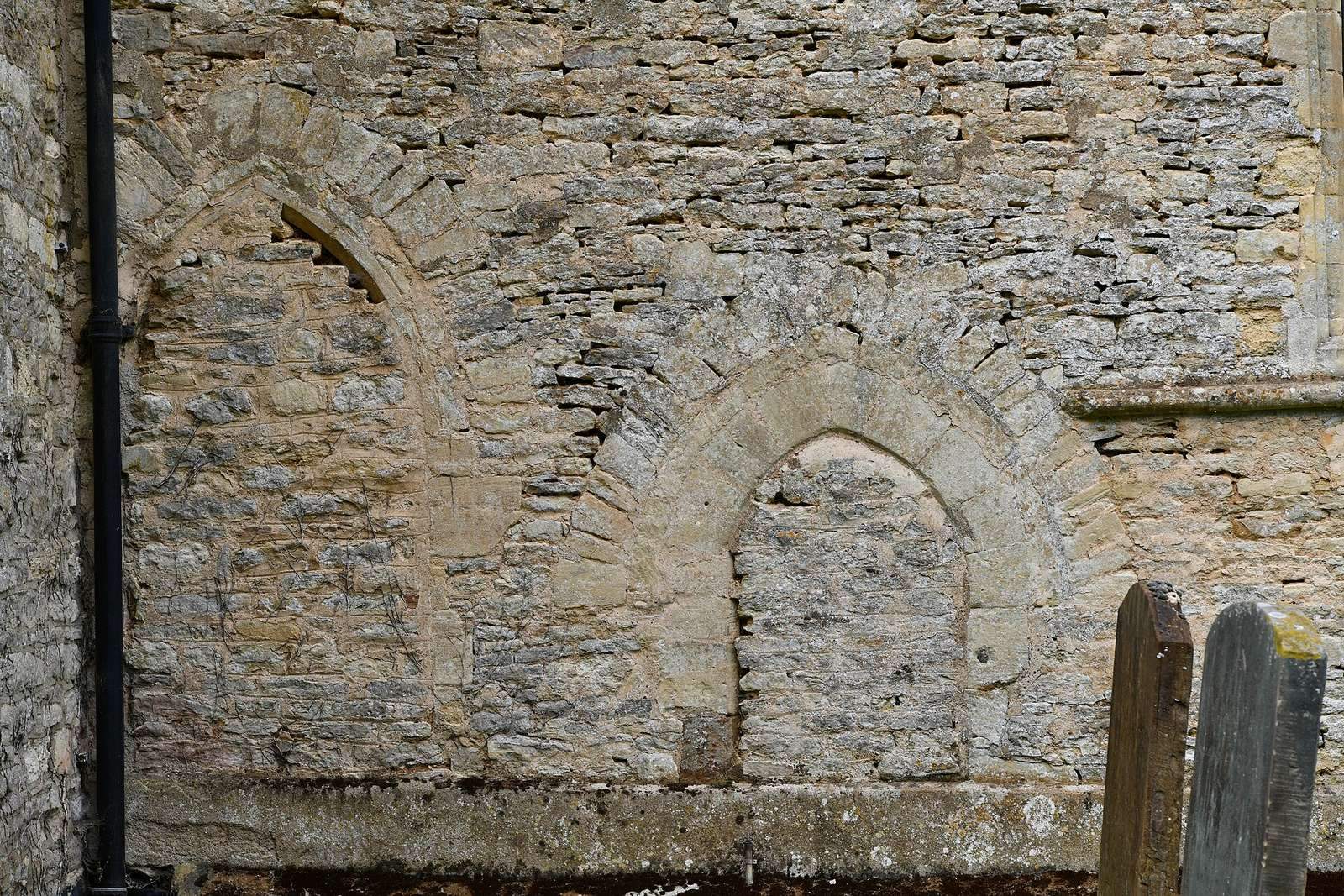
The church’s plan brings together a west tower, a clerestoried nave, north and south aisles, a south porch, and a chancel. Norman work survives in the south doorway and some piers and arches on that side; the tower is Early English, with a later battlement, while the remaining work is Decorated. The tower, nave, and aisles have battlements, in contrast to the chancel’s plain east parapet and the porch’s simple gabled roof. The roofs are lead-covered, and the oak roof structures are exposed inside.
Interior and fittings
Nave
Six pointed windows, each divided into two openings, form the clerestory, the upper row of windows above the main arcade. The exposed nave roof rests on sculpted stone supports called corbels. An octagonal oak pulpit stands near a brass plate bearing arms, a crest, and an inscription. A circular arch at the west end is now blocked, and much of the church’s wall painting in distemper, a water-based paint, survives.
South aisle
Two pointed arches separate the south aisle from the nave, resting on a massive circular pillar. The pillar has foliage and carvings of grotesque, two-headed dragons, which may have been inspired by designs brought back by a crusader. Zigzag moulding runs along the north side. A square pier in the aisle contains a bold relief carving of a serpent-like creature and two unusual animals. At the aisle’s east end, a piscina, a basin for washing sacred vessels, marks the former position of an altar. Steps here once led to the rood loft, a gallery associated with the church’s cross or crucifix.
North aisle
The north aisle’s two pointed arches rise higher than those on the south side. A marble wall monument carries a long inscription to Henry Uthwatt. His wife Frances, daughter of Sir J. Chester, was buried in the same vault and died in 1800.
Chancel fittings
The east window has four openings, with quatrefoils, four-lobed shapes, in its upper section. Its stained glass shows Christ seated and blessing, angels, the sacred monogram, symbols of the Evangelists, and floral designs. Three sedilia, seats for clergy, are set into the south wall beneath trefoil-shaped heads and a plain upper band. A second piscina in this wall has a pillar supporting its arch.
Chancel memorials
The floor is paved in black and white marble. At Margaret’s request, her father, Sir H. Andrewes, a baronet, paid for the paving. A long verse epitaph to Margaret is set into the floor, and many of the white marble squares commemorate Andrewes family members buried there. Near the communion table, an inscription remembers Elizabeth, Lady Leigh, Baroness of Stonly, who died in 1678. A marble tablet on the north wall depicts a woman in Elizabethan dress kneeling at an altar, with a kneeling youth behind her and two babies in a cradle; the Chandflower family arms and crest appear above the children. A nearby brass plate bears arms and an inscription. The church also has memorials to the Dobinson and Forster families.
South porch
The plain south porch retains stone seats beneath its gabled roof.
Exterior features
A cross stands at the nave roof’s apex, and large gargoyles occupy the corners of the aisles. The tower contains a clock and four bells.