Schöne Höhe: A Neo-Gothic Pleasure Palace Dedicated to Goethe
Site at a Glance
- Popularity
- Low
- Country
- Germany
- Primary era
- Modern
- Eras represented
- Modern
- Civilizations
- Kingdom of Saxony
- Site type
- Domestic
- Remains
- Elite Residence
On this page6 sections
History
Construction and Goethe dedication
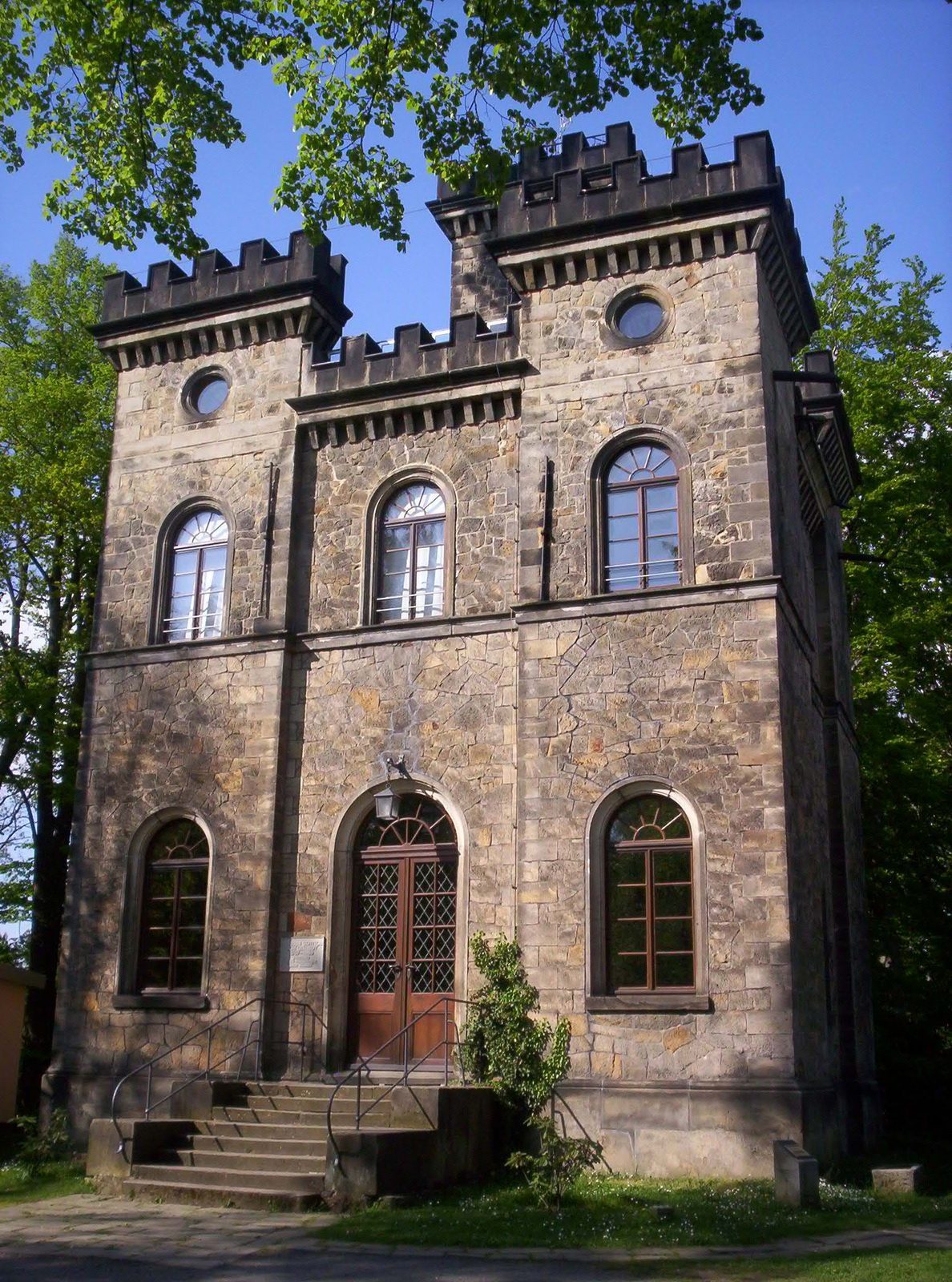
Schöne Höhe is a Neo-Gothic pleasure palace, a nineteenth-century revival of medieval Gothic forms, on a ridge in Dürrröhrsdorf-Dittersbach, Saxony, Germany. Johann Gottlob von Quandt commissioned the building, designed by Joseph Thürmer and constructed from 1831 to 1833. Quandt dedicated it to the German poet Johann Wolfgang von Goethe.
During the laying of the cornerstone, a letter from Goethe was enclosed in the building. Goethe asked about the condition of Quandt’s properties, which he feared might have suffered damage during unrest around 1830.
Ownership and restoration
Quandt’s pleasure palace was sold to the city of Dresden in 1925. It passed back to the city in 1994, then was sold to the municipality of Dürrröhrsdorf-Dittersbach in 1997. The municipality undertook a comprehensive restoration.
Remains
Palace and painted interior
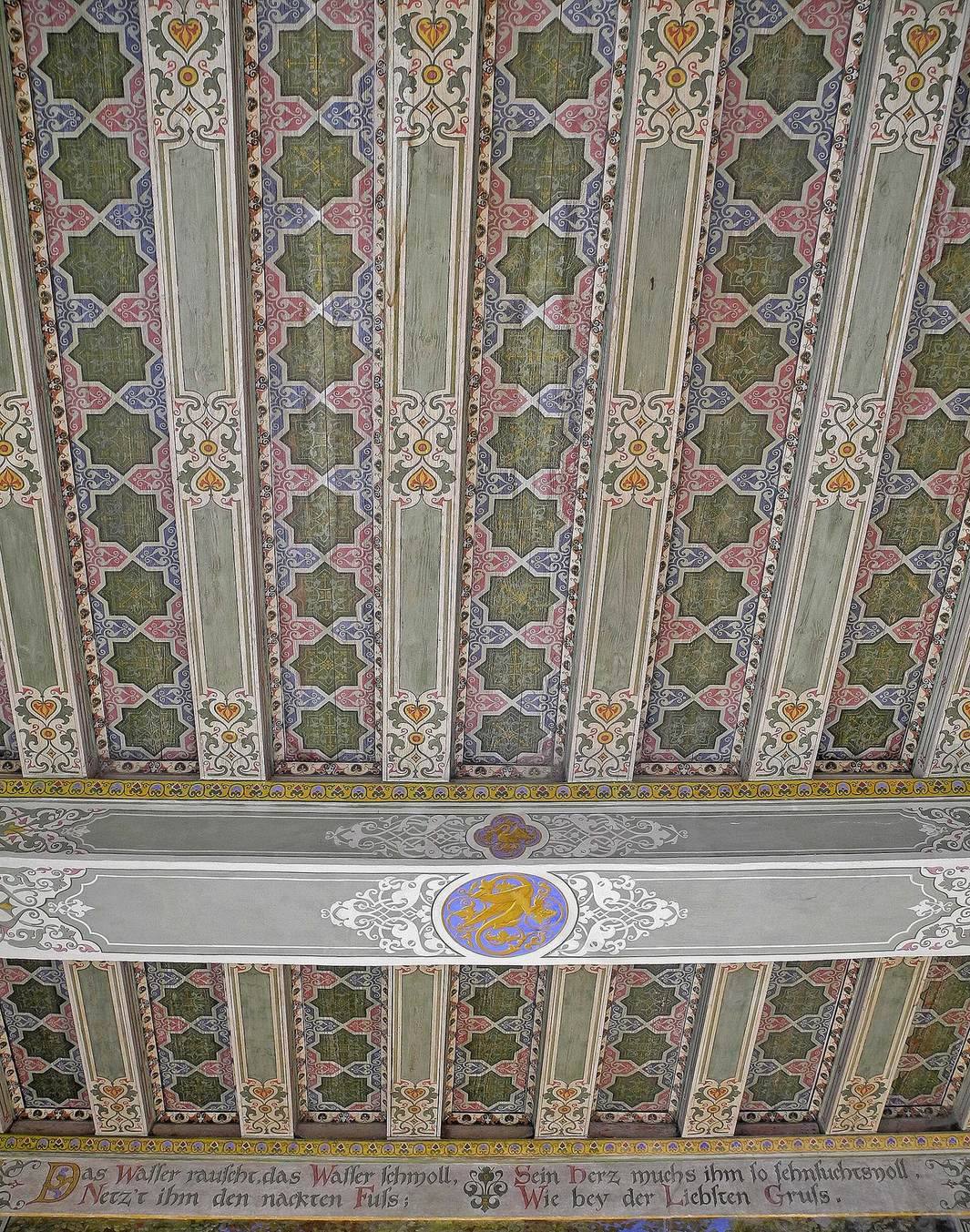
The palace stands at the summit of Schöne Höhe ridge. Its tower-like Neo-Gothic form includes an observation tower with a viewing platform, which affords broad views toward the Eastern Ore Mountains, Saxon Switzerland, Stolpen and Upper Lusatia. The interior decoration dates to 1836. Carl Gottlieb Peschel painted frescoes depicting Goethe’s ballads The Singer, The Fisherman, The Erlking, Spirit Greeting and The King of Thule, as well as Goethe’s fairy tale about the green snake. Gottfried Semper designed the wall decoration and ceiling paintings.
Ridge and park
The ridge reaches 327.9 metres above HN, Germany’s elevation reference datum. It lies between Dittersbach and Elbersdorf, on the western edge of the Elbe Sandstone Mountains beside the Schönfeld Highlands. Its underlying rock is Lusatian granodiorite, a coarse-grained intrusive igneous rock. A park was laid out in 1836, and part of it survives.