Megalithic Tombs near Schadewohl: Neolithic Burial Monuments in Germany
Site at a Glance
- Popularity
- Very Low
- Country
- Germany
- Primary era
- Stone Age
- Eras represented
- Stone Age
- Civilizations
- Unclassified
- Site type
- Burial
- Remains
- Necropolis
On this page11 sections
History
Neolithic origins
The Megalithic Tombs near Schadewohl are a group of Neolithic burial monuments in Germany, associated with the Deeply Incised Pottery culture and dated to about 3700–3350 BCE. This archaeological culture takes its name from the deeply marked designs on its pottery. The original group comprised five or six tombs.
Destruction and later study
Johann Friedrich Danneil inspected Tomb 4 in the 1830s, when it was still well preserved, and described the tombs in 1843. Two tombs were destroyed during the nineteenth century, and Tomb 4 was dismantled in the 1850s. The field-name Steinberge, meaning “Stone Hills,” suggests that at least one more tomb may also have been destroyed. In the early 1890s, Eduard Krause and Otto Schoetensack recorded that only three remained.
In 2003–04, the Saxony-Anhalt State Office for Heritage Management and Archaeology, the Johann Friedrich Danneil Museum in Salzwedel, and the Young Archaeologists of the Altmark surveyed and measured the surviving megalithic tombs across the Altmark, a historical region in what is now northern Saxony-Anhalt.
Remains
Surviving tombs
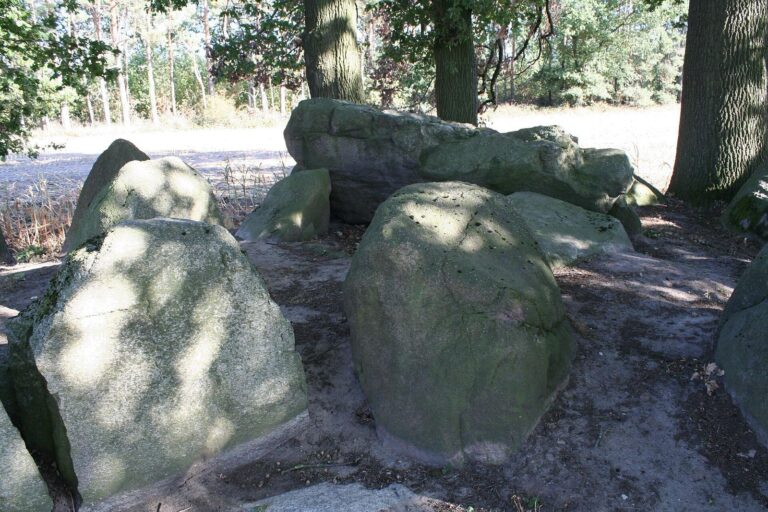
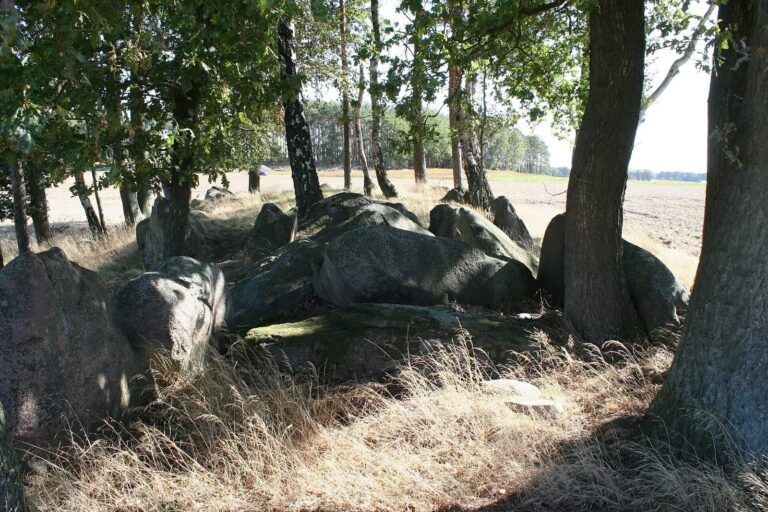
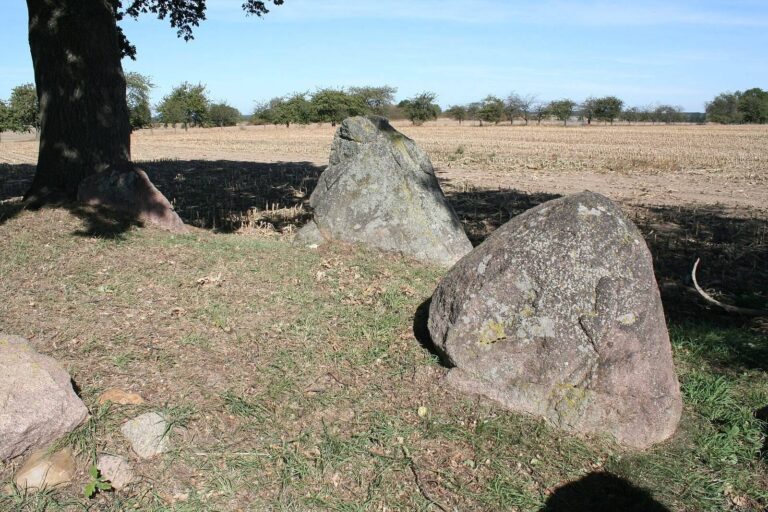
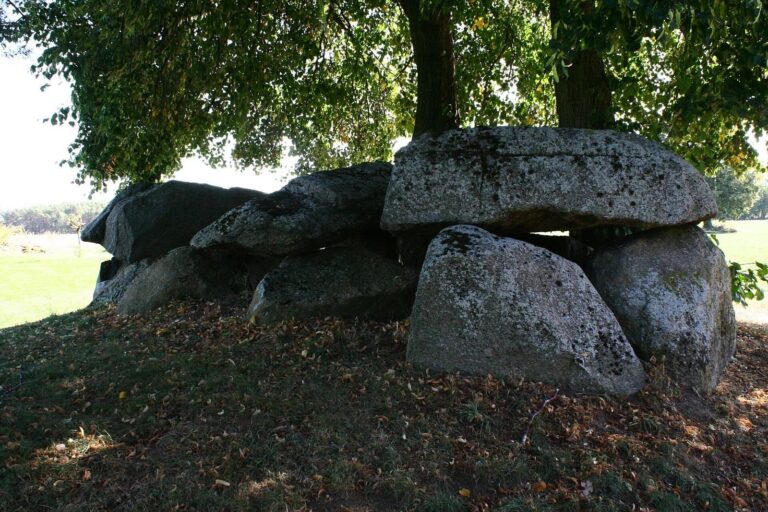
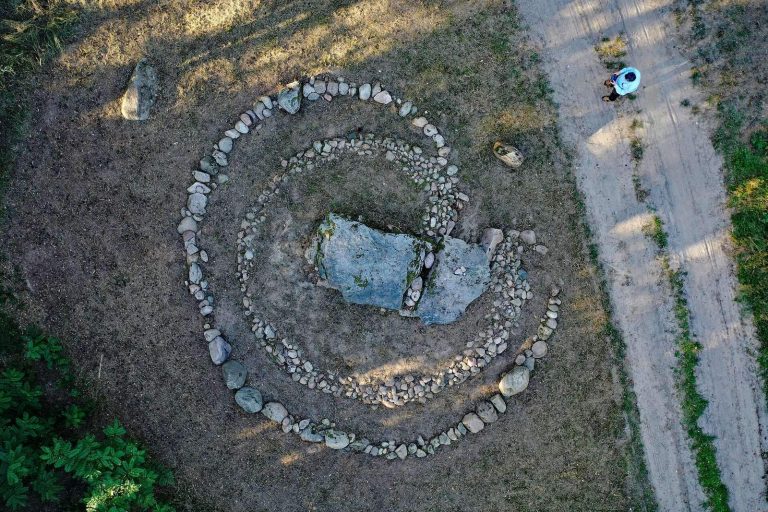
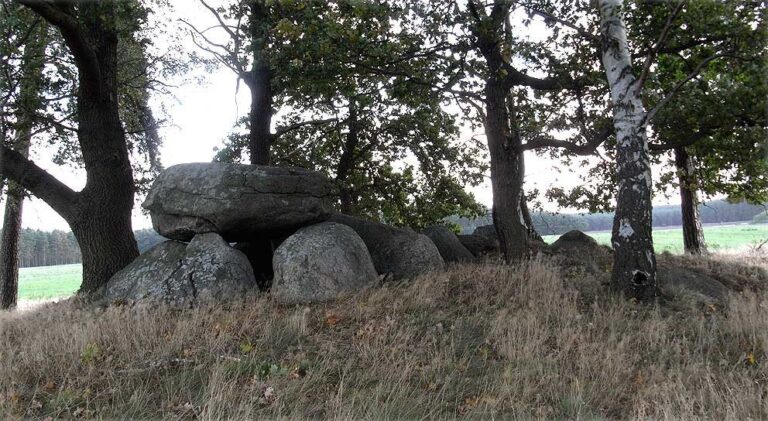
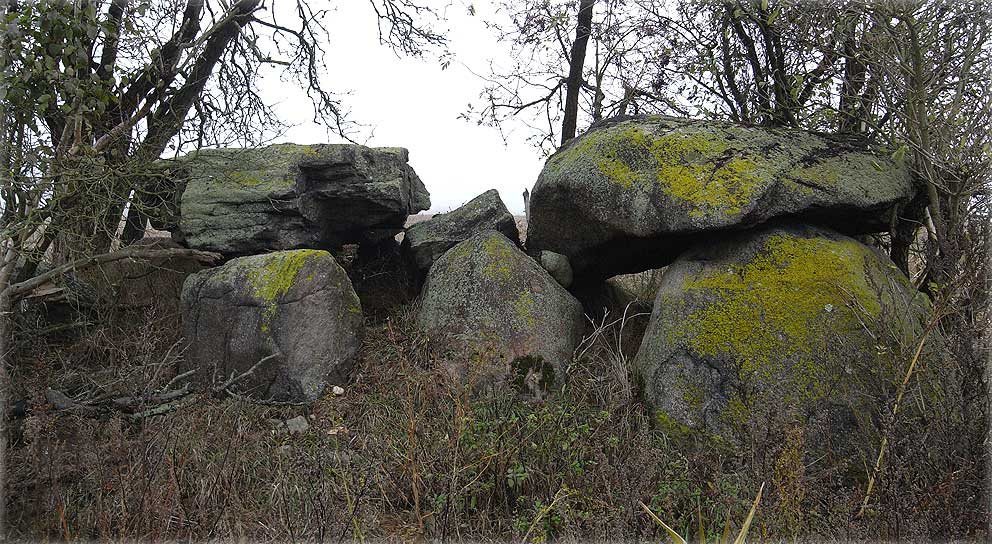
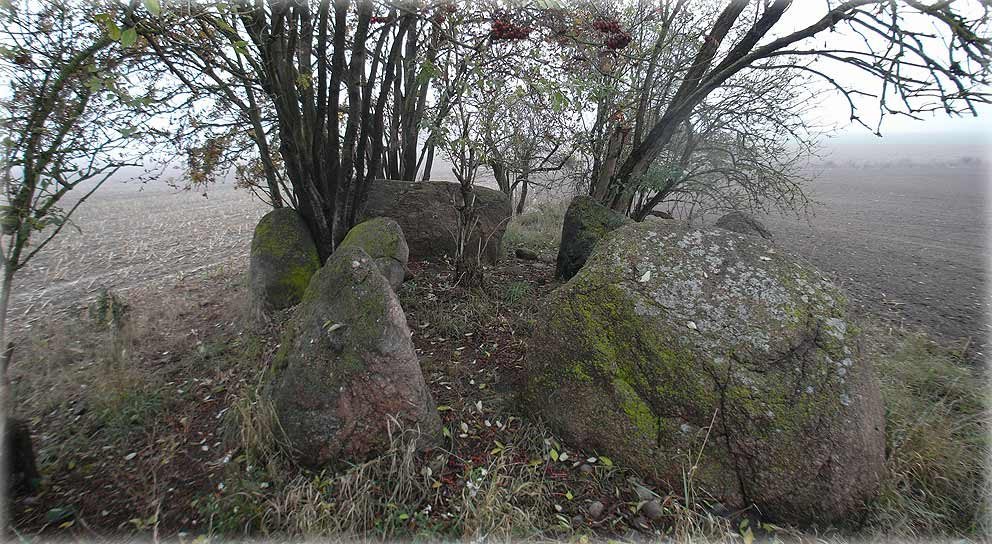
The surviving tombs stand in a field about 1.5 km southwest of Schadewohl’s center. Tomb 1 is at the western end; Tomb 2 lies 400 m east-southeast of it, and Tomb 3 is a further 320 m southeast. All three have northwest-to-southeast chambers and are large dolmens, a type of megalithic tomb with a relatively spacious chamber. Other nearby groups include the tombs near Diesdorf, about 1.1 km southeast, and the Molmke tomb, about 2.7 km southeast.
Tomb 1
Tomb 1 has a trapezoidal chamber 8.0 m long and 1.4–2.0 m wide. Ten wall stones and four capstones survive, and some wall stones are broken. The largest capstone measures 2.7 × 0.8 × 0.7 m. A deep groove marks the westernmost capstone, while the next stone has three cup marks, small cup-shaped depressions.
Tomb 2
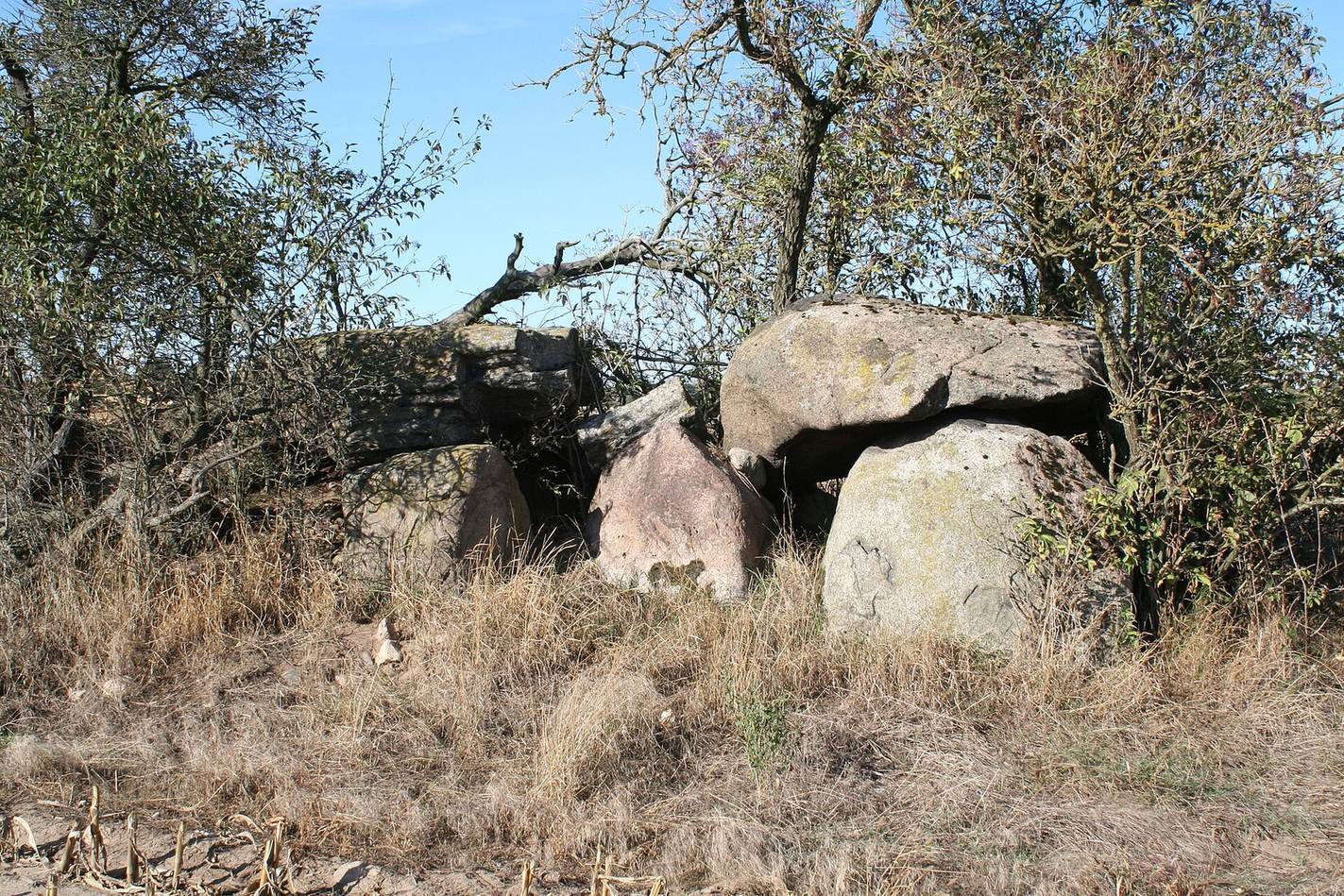
Tomb 2 has a rectangular chamber with internal dimensions of 5.7 × 1.5 m and a height of 1.2 m. Nine supporting stones and two capstones remain. The capstones’ original dimensions were 3.2 × 1.6 m and 2.5 × 1.4 m. The western one is broken into three pieces, while the eastern one has a deep fissure. Both bear cup marks.
Tomb 3
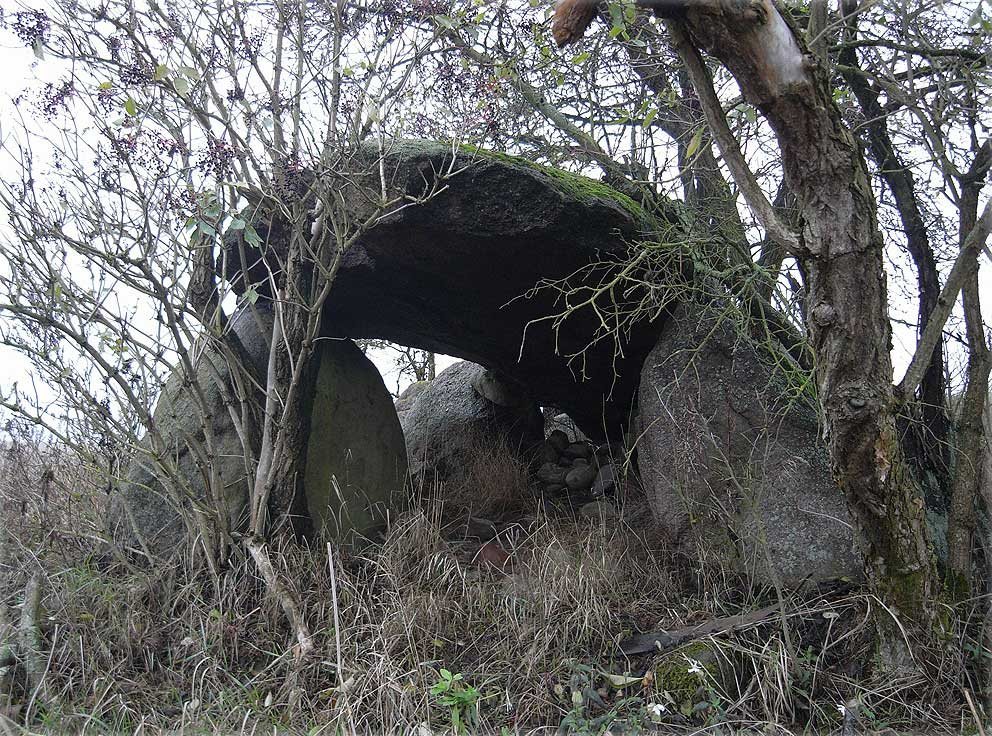
An oval mound surrounds Tomb 3’s rectangular chamber, which measures 4.7 × 2.0 m internally. The walling probably consisted of eight stones, seven of which survive. Two capstones remain from an original three or four. One is propped inside the chamber; the other lies outside. They measure 2.4 × at least 1.0 × 0.8 m and 2.5 × 1.2 m.
A regional legend explains the cup marks on the tomb stones as footprints left by giants with seven toes.
Former tombs
Tomb 4 stood near the boundary with Diesdorf, while Tomb 5 was about 200 m east of it. Their recorded measurements and stone arrangements preserve information about the group’s former extent and variety.
Tomb 4
Tomb 4 measured 8.8 × 4.7 m and ran from west to east. Its chamber had three capstones, suggesting it was either a large dolmen or a passage grave, a tomb with a chamber reached through a passage.
Tomb 5
Tomb 5 had a chamber about 4 m long and nearly as wide, covered by one large capstone. It was probably a polygonal dolmen, whose chamber has a polygon-shaped plan. This tomb type is rare in the Altmark; two other destroyed examples were near Wallstawe, and Lüdelsen 1 survives.