Kammer von Warringholz: A Prehistoric Tomb in Schleswig-Holstein
Site at a Glance
- Popularity
- Very Low
- Country
- Germany
- Primary era
- Stone Age
- Eras represented
- Stone Age, Bronze Age
- Civilizations
- Unclassified
- Site type
- Religious
- Remains
- Tomb
On this page12 sections
History
Kammer von Warringholz is a megalithic tomb originally at Warringholz in Schleswig-Holstein, Germany, built around 3600–3200 BC by communities of the Funnelbeaker culture. This Neolithic culture takes its name from its characteristic funnel-shaped pottery. The tomb later served successive communities as a burial place and remained a landmark for people living and travelling nearby.
Neolithic tomb and later burials
The tomb was reused for burials during the Single Grave culture, dated here to 2800–2300 BC. This prehistoric culture is associated with individual burials. Finds also indicate later use by people of the broader Corded Ware horizon, named for pottery decorated with cord impressions. Their burial at the older monument continued despite differences in ideas about family, property, and burial customs.
Bronze Age use
During Period II of the Nordic Bronze Age, a prehistoric era in northern Europe, a person was buried in a coffin made from a hollowed tree trunk around 1500–1300 BC. The burial was covered as the tomb became part of an enlarged mound. In Period V, around 950–720 BC, two more urn burials were placed in the mound’s eastern part.
The tomb and the mound served surrounding communities for more than 2,000 years as a cemetery and a place for ritual remembrance of ancestors. Standing on a rise and visible from the adjoining lowland, the monument also functioned as a landmark for local inhabitants and passersby.
Investigation and relocation
By the time of its scientific investigation, the complex had been heavily disturbed during its more than 5,000-year history. In 1938, German archaeologist Günther Haseloff led the excavation. A farmer’s wish to clear the field prompted Haseloff to arrange the complex’s relocation.
Remains
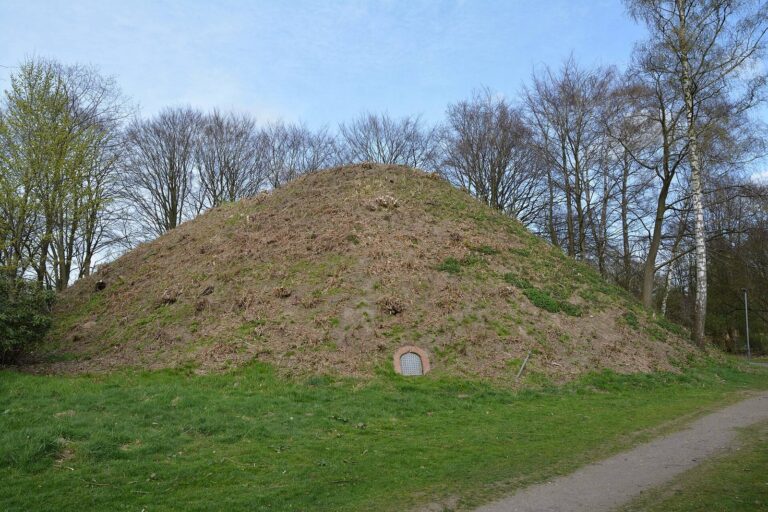
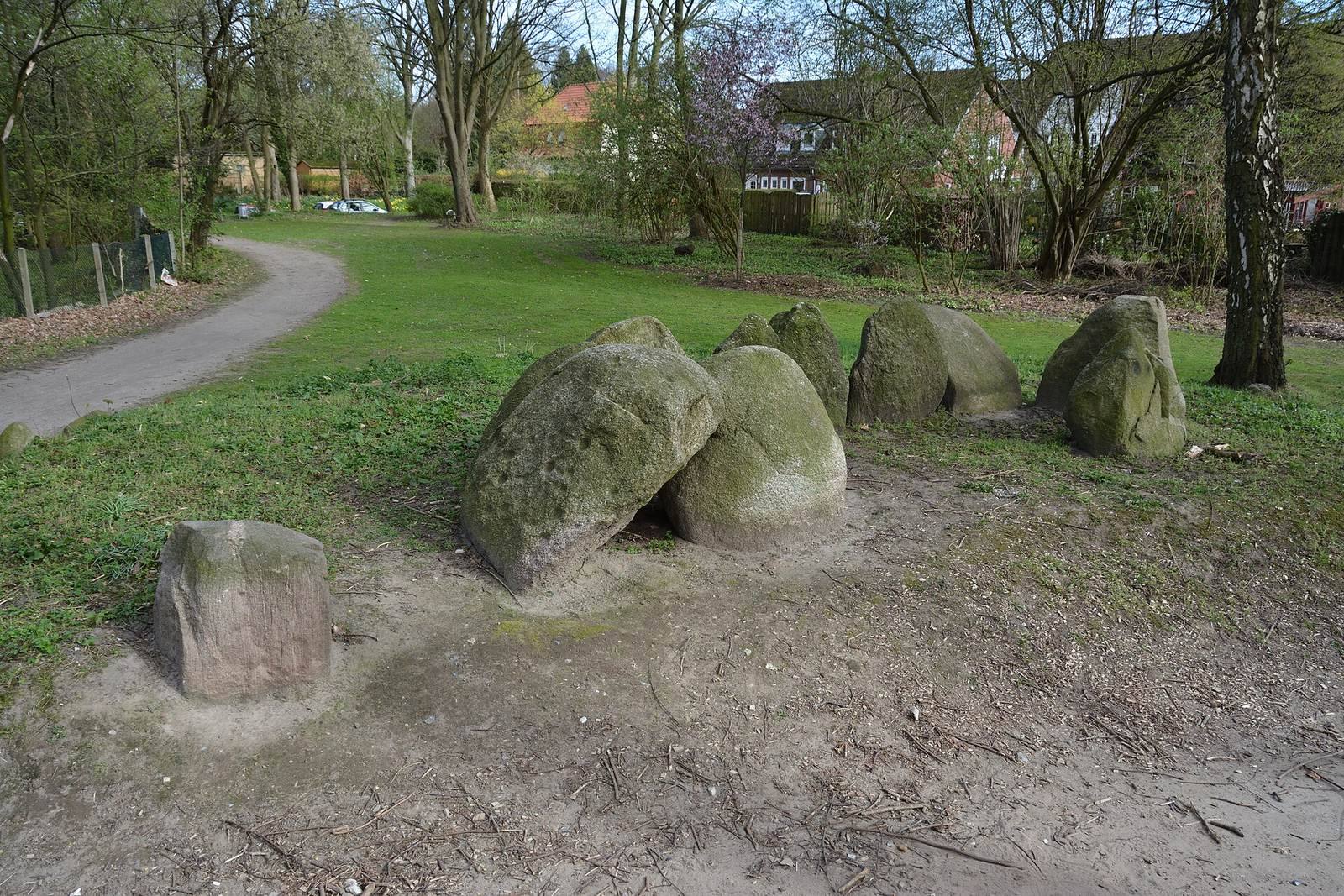
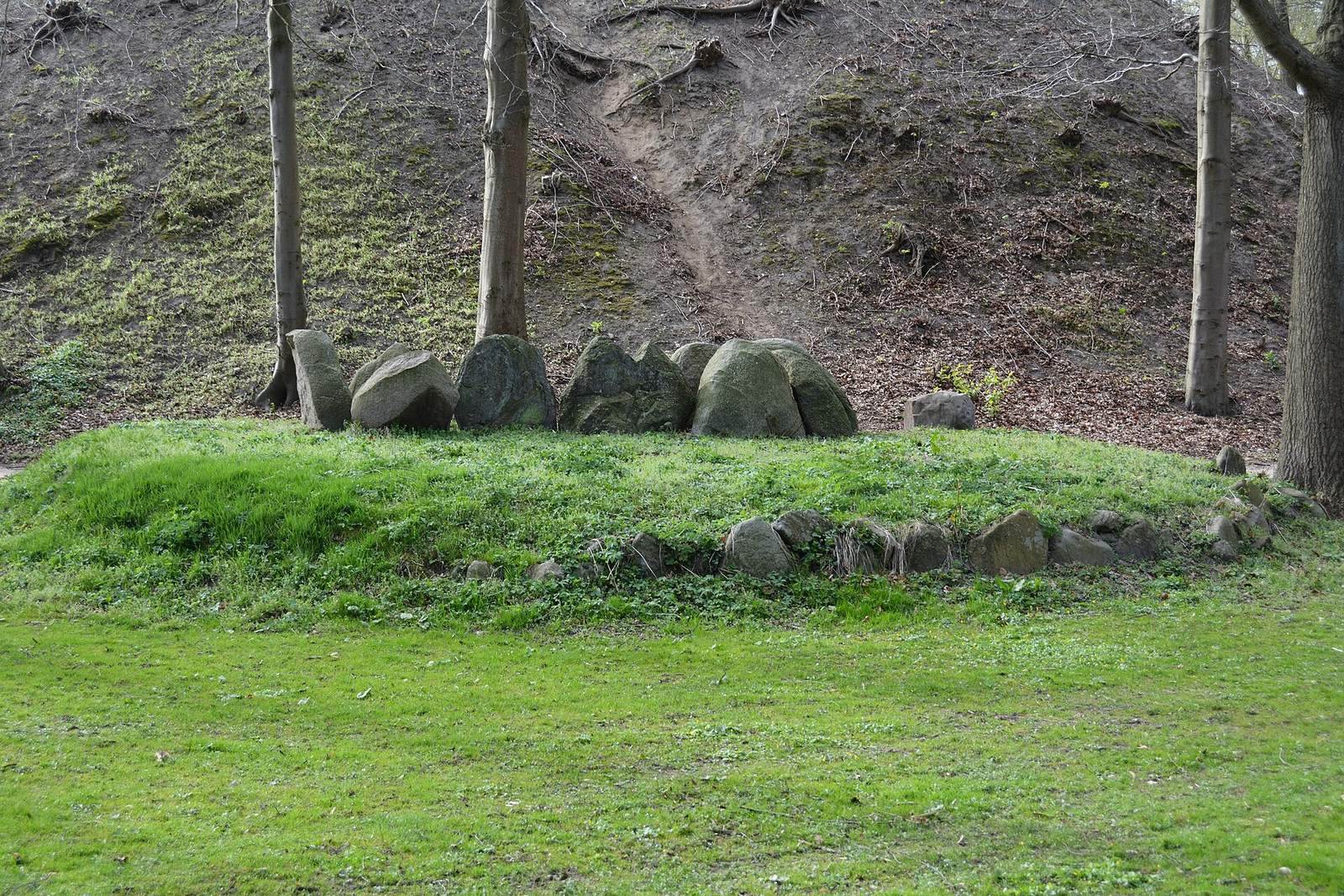
The original complex stood on a sand rise about 0.5 m high, beside lowland. It comprised a rectangular stone chamber and, in the Bronze Age, a circular mound that covered the tomb and later burials. The stones are now arranged in a reconstruction at Galgenberg in Itzehoe, based on their original positions.
The dolmen chamber
The chamber’s interior measured 3.5 m long and 1.2 m wide. It is described as an extended dolmen and interpreted from the excavated remains as a large dolmen. A dolmen is a burial chamber formed from upright stones supporting large capstones. Four substantial glacial boulders originally supported four capstones, with the support stones set close together and their smooth faces turned inward.
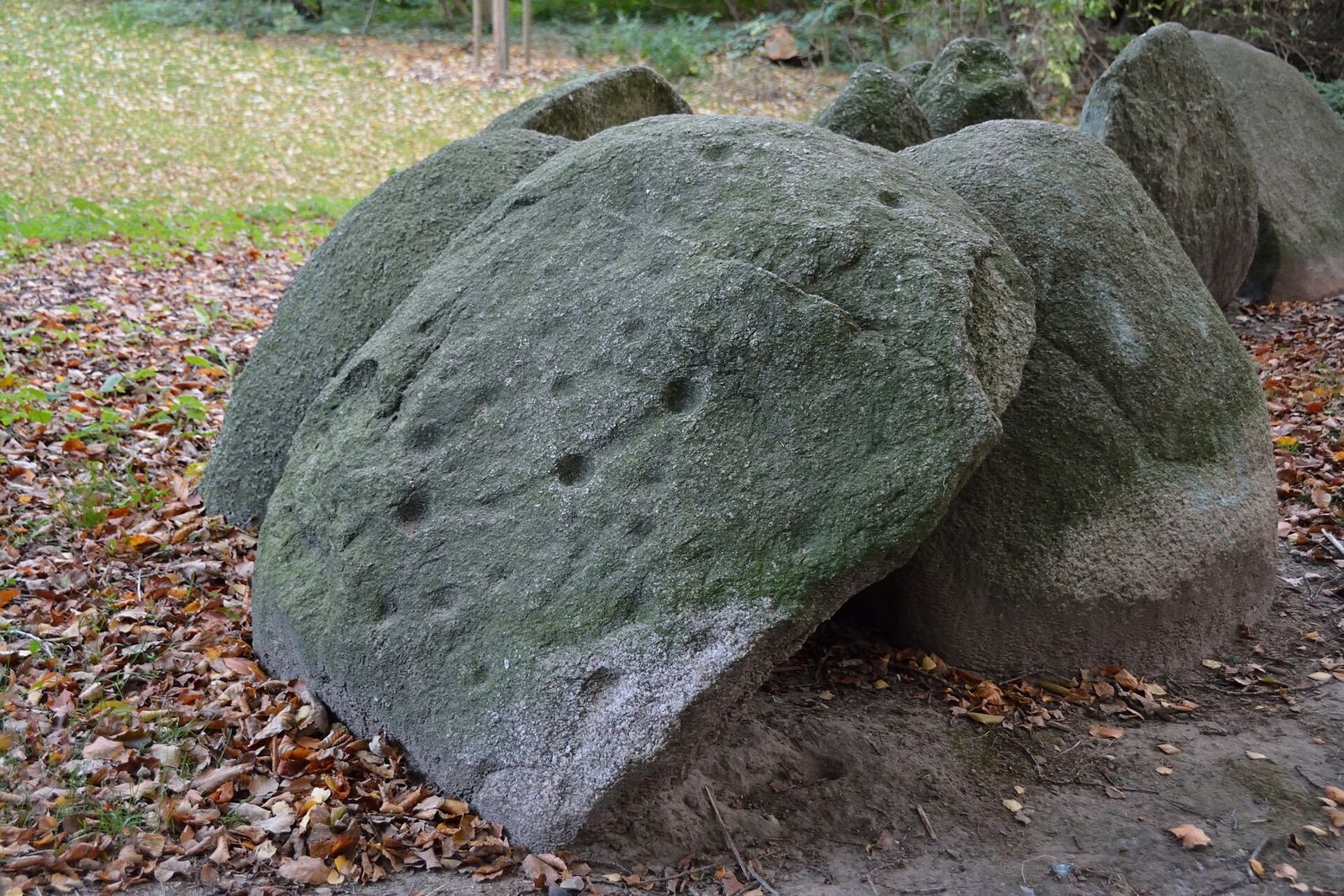
The northern supports remained complete, and supports at the narrow ends were still in position. Only one capstone survived excavation; it now leans at an angle against a narrow end. Small stones sealed gaps between the supports, and some of this infill was recovered. A further layer of stones surrounded the chamber. Its height cannot be determined, though it apparently did not rise above the supports; some of its stones may have been reused in the later mound’s stone ring. Later burials probably removed the chamber’s customary floor of white-burnt flint.
The Bronze Age mound and burials
Mound and stone ring
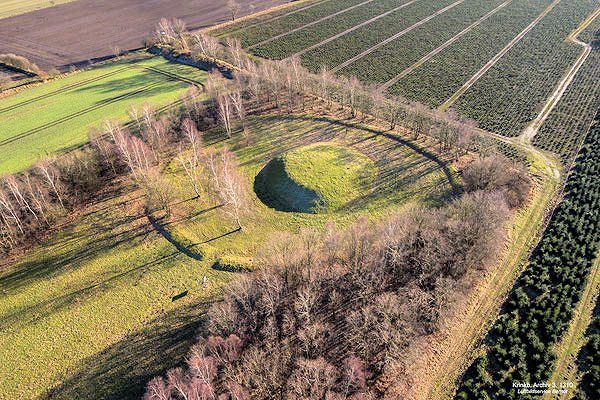
The repeatedly enlarged circular mound covered both the chamber and the tree-coffin burial. It measured about 25 m across and survives to a height of 1.2 m. A ring of stones surrounded it. Two chamber-like additions stood near the ring at the mound’s eastern edge; their purpose is uncertain.
Burials in the mound
The tree-coffin burial lay northwest of the chamber beneath the mound. In its eastern part, two urns were found in stone settings. One vessel belongs to Period V of the Nordic Bronze Age, around 950–720 BC.
Marked stones and burial finds
Cup-marked stones
A stone about 0.6 m high lay on the former ground surface roughly 1 m southwest of the chamber. It was separate from the tomb and regarded as a sacred stone. Its round or oval depressions are called cup marks, a feature whose purpose remains uncertain. The surviving capstone also bears cup marks and connected lines.
Axes and pottery
A thin-bladed flint axe with polished broad faces was found in front of the chamber and supports the tomb’s dating. A second thin-bladed axe came from south of the chamber; it may have been lost during grave robbing or when the space was cleared for later burials, and was probably an offering from the original interments. Beneath a capstone, excavators found fragments of a beaker with a curved base and inward-turning rim, as well as a thick-butted flint axe.