Boundary Marker in Biskupice Radłowskie: A Gothic Boundary Monument in Poland
Site at a Glance
- Popularity
- Medium
- Country
- Poland
- Primary era
- Medieval
- Eras represented
- Medieval, Early Modern, Modern
- Civilizations
- Austria-Hungary, Habsburg, Kingdom of Poland
- Site type
- Civic
- Remains
- Monument
On this page4 sections
History
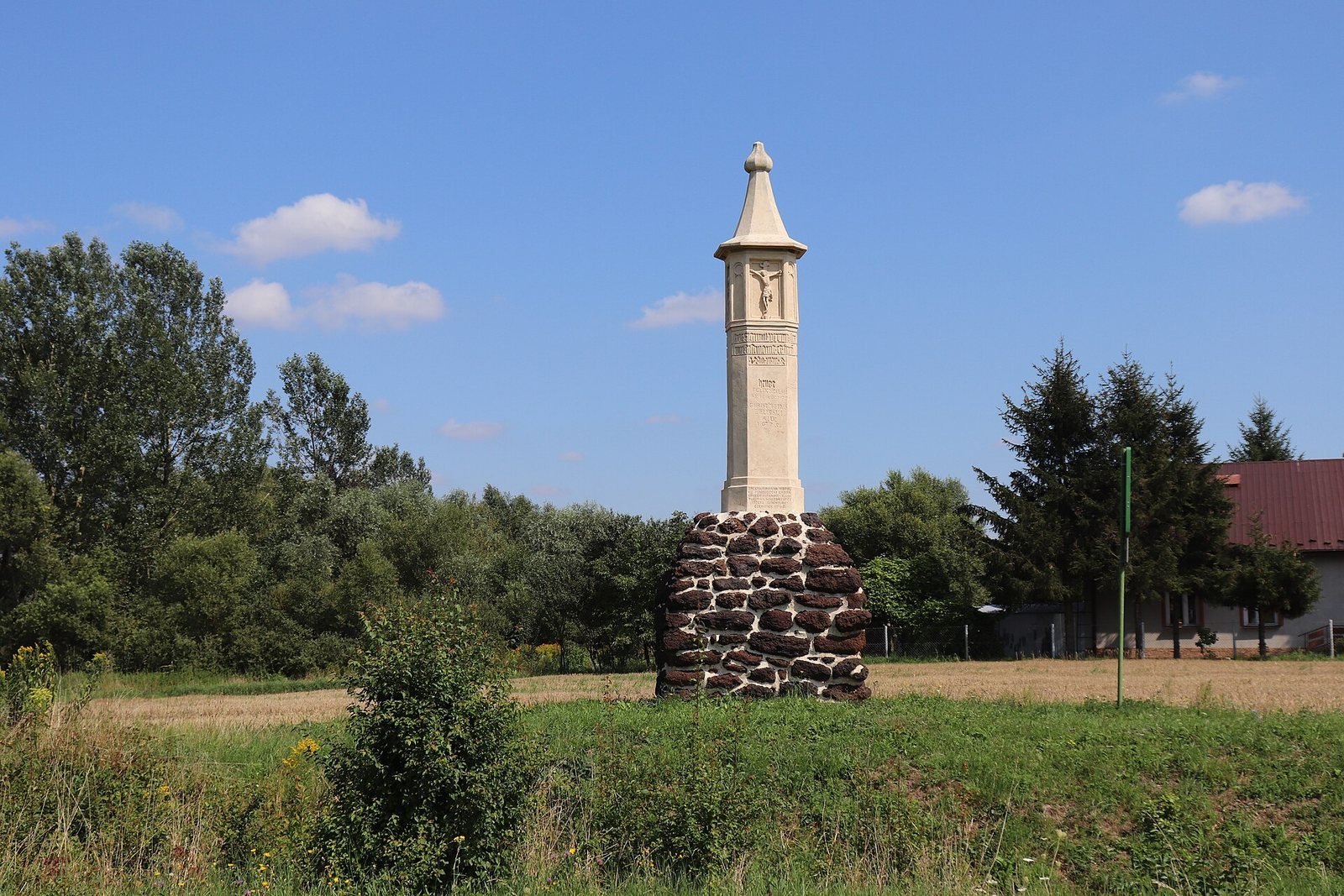
The Boundary Marker in Biskupice Radłowskie is a Gothic stone monument in Poland, erected in 1450 to mark a legal boundary between the estates of the bishops of Kraków and neighboring lands. Biskupice Radłowskie then belonged to the bishops, while nearby Zabawa was a knightly village held by a member of the lesser nobility. The legal act fixed the boundary between the bishops’ estates and the lands of Zabawa and Zdrohca. Cardinal Zbigniew Oleśnicki, bishop of Kraków and a senior official in the Roman Catholic Church, commissioned the marker to settle disputes between neighboring landholders. It is described as both Poland’s oldest preserved example of this type and the country’s only surviving structure of its kind.
The marker was restored in June 1898. An inscription at its base records the work and names the Crona fund, the conservators, and Małgorzata and Józef Schinzl in connection with its financing.
Remains
Stone form and reliefs
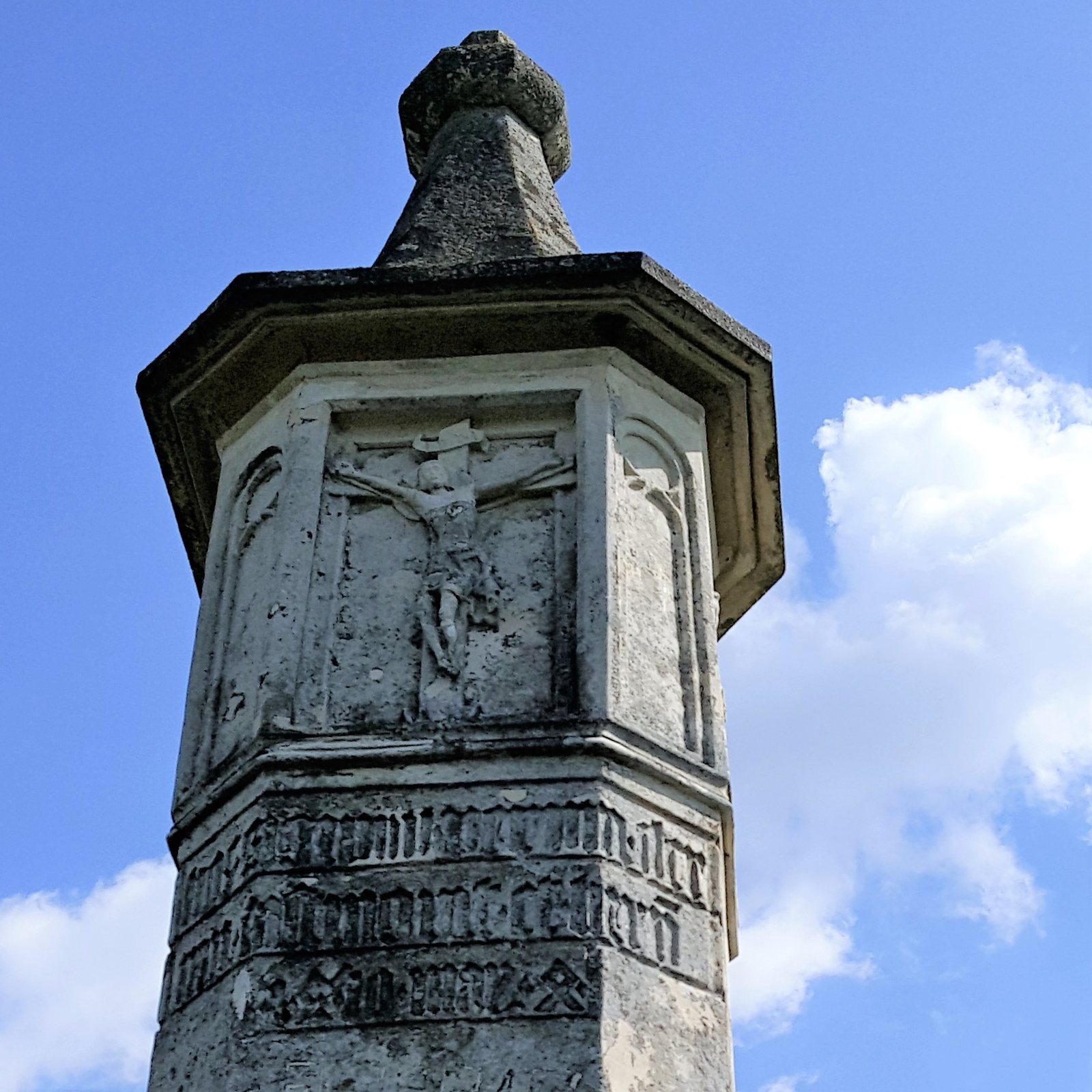
The marker stands on Bohaterów Września Street beside the medieval road from Radłów to Opatów. Its post is a four-sided prism made of Pińczów limestone, a stone associated with the Pińczów area of southern Poland. The corners are cut back at an angle, and a stone cap topped with a sphere covers the post. Niches in the upper portions of its broader faces hold carved reliefs: Christ on the cross at the front, the Virgin Mary and Saint John the Evangelist on the two sides, and the founder’s Dębno coat of arms beneath a cardinal’s hat at the rear. Dębno is a heraldic design used as an identifying emblem.
Inscribed faces
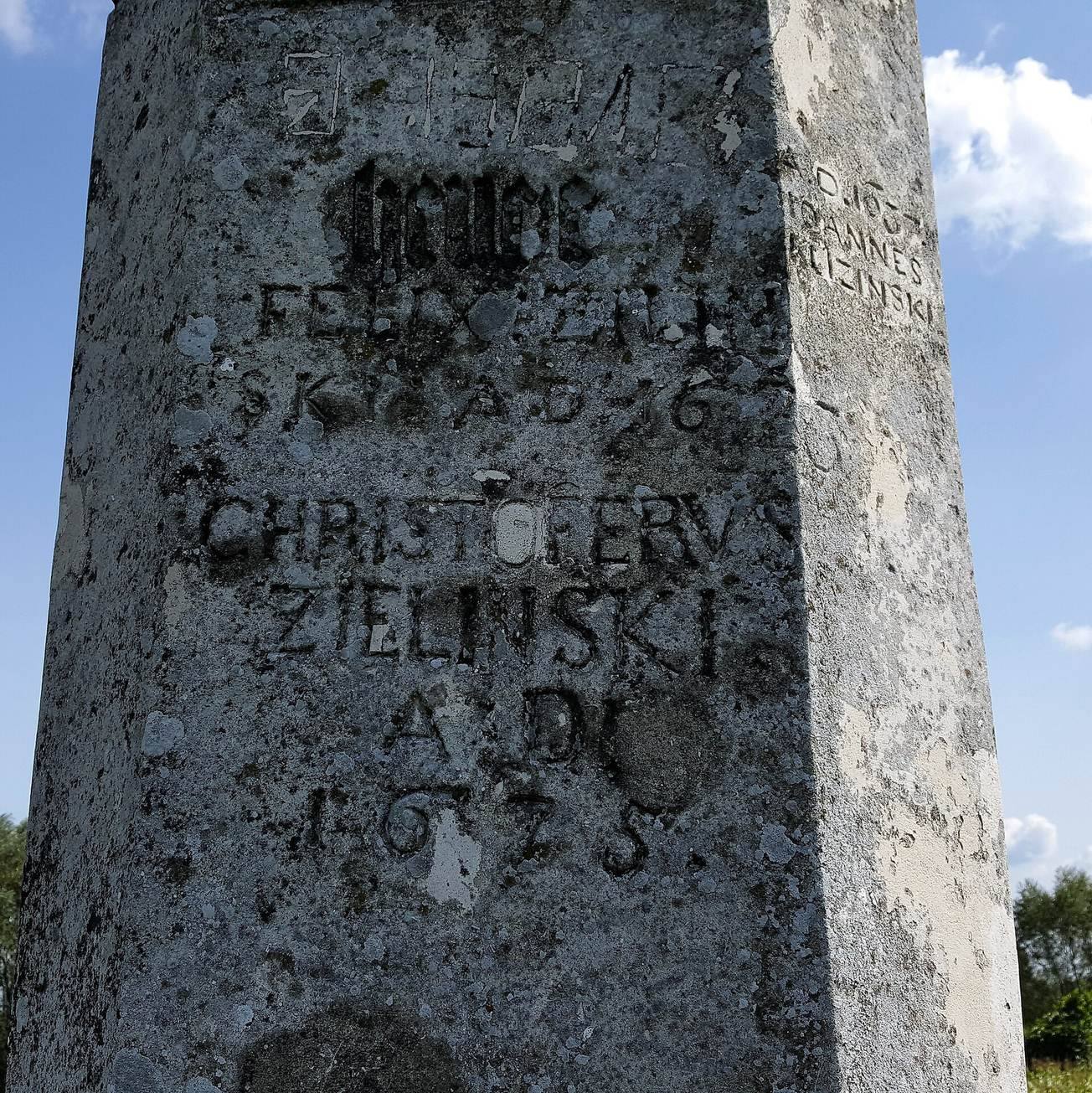
The front carries an inscription in Gothic minuscule, a medieval handwriting used for Latin inscriptions. Its words, Hoc signum verum clerum distinguit et hern, mean “This true sign separates the clergy from the lords.” Lower down, the name Hencze may be carved above inscriptions naming Felix Zilinski in 1623 and Christoferus Zielinski in 1675. A separate text on the narrower face to the right names Ioannes Klizinski and gives the year 1637. On the rear, beneath the coat of arms, the words Dextrum do clero sinistrum largior hern mean “To the right I give to the clergy, and to the left I grant to the lords.” A Polish inscription at the base records the 1898 restoration and its financial supporters.