Saruq Al Hadid Archaeological Site: An Ancient Settlement and Metalworking Centre
Site at a Glance
- Popularity
- High
- Country
- United Arab Emirates
- Primary era
- Iron Age
- Eras represented
- Bronze Age, Iron Age
- Civilizations
- Umm an-Nar
- Site type
- Economic
- Remains
- Production Complex
On this page13 sections
History
The Saruq Al Hadid Archaeological Site is an ancient settlement and metalworking centre at Jebel Ali in Dubai, United Arab Emirates. Its history reaches back to the Umm al-Nar period (2600–2000 BCE), a regional archaeological period, and continues through the Wadi Suq period and into the Iron Age, with the broader sequence extending to around 1000 BCE. Metalworking was especially prominent in Iron Age II (1100–600 BCE); Iron Age I and II were successive phases of the Iron Age. Over more than three millennia, the site served distinct purposes.
Early occupation and Iron Age use
Some metalworking activity is associated with Wadi Suq objects, while most evidence for production belongs to the early Iron Age through the pre-Islamic period. The site was therefore not used solely as an Iron Age settlement, and its long sequence reflects changing activities over time.
Exchange and ritual interpretations
Metal production took place at a location without nearby supplies of the water, fuel, and ore needed for smelting. Religious beliefs have been proposed as one reason for the choice. Metalworking also accompanied ritual practices, and the recurring snake imagery has prompted suggestions that the site was a centre for making snake representations or held importance for a possible snake cult. These interpretations remain uncertain.
Objects from Saruq Al Hadid point to far-reaching connections. Seals indicate links with Mesopotamia, the Indo-Iranian region, and Egypt, while other finds have been connected with the Levant and the Indus Valley. Imported tin, which does not occur naturally in Arabia, also indicates overseas exchange. Snake-related rituals had a long tradition in the Levant, raising the possibility of contact with that region during the Late Bronze and Early Iron Ages.
Discovery and archaeological investigation
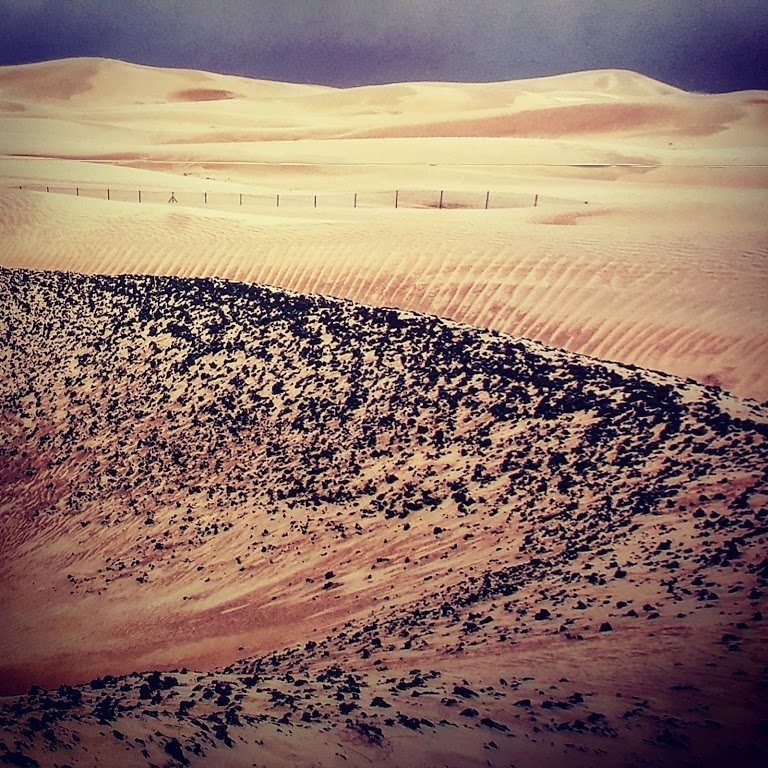
Sheikh Mohammed bin Rashid Al Maktoum discovered the site by chance in 2002 while flying over the desert. Unusual dune formations and a large dark deposit caught his attention, and he reported the location to Dubai Municipality. Five excavation seasons by Jordan’s Department of Antiquities followed. The Dubai Desert Survey, a joint project involving American researchers and Dubai’s Department of Tourism and Commerce Marketing, excavated in 2008–2009 and established that the site had multiple periods of use.
Further work included a three-year fieldwork and analysis project by the University of New England, completed in 2017, and investigations by the Sanisera Archaeological Institute from 2015 to 2019 and Thomas Urban and Partner in 2016–2017. From 2016 to 2018, a team from the Polish Centre of Mediterranean Archaeology at the University of Warsaw excavated a sector selected for its accumulation of copper-smelting waste.
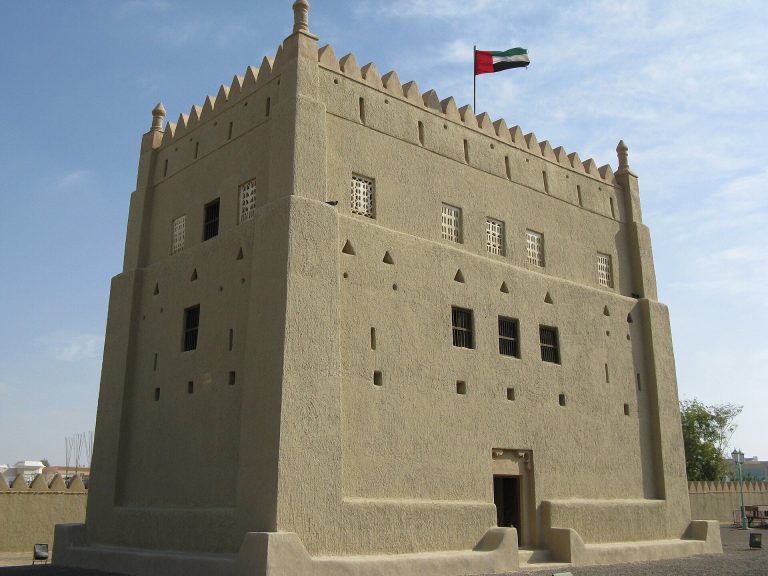
The Saruq Al Hadid Archaeology Museum opened in Dubai’s Shindagha heritage district in 2016 to present finds and archaeological information from the site. It occupies a historic house built in 1928 by Sheikh Juma bin Maktoum bin Hasher Al Maktoum.
Remains
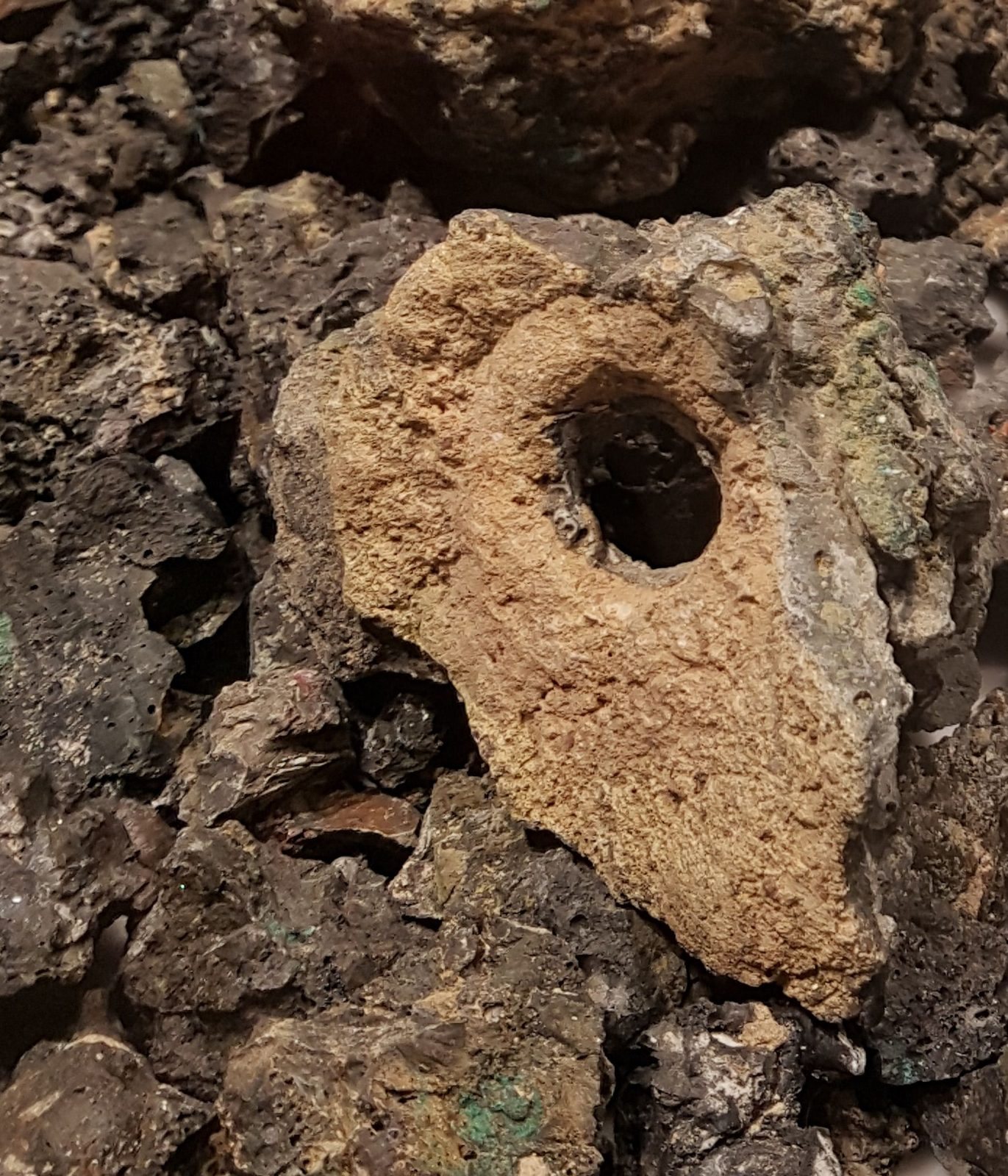
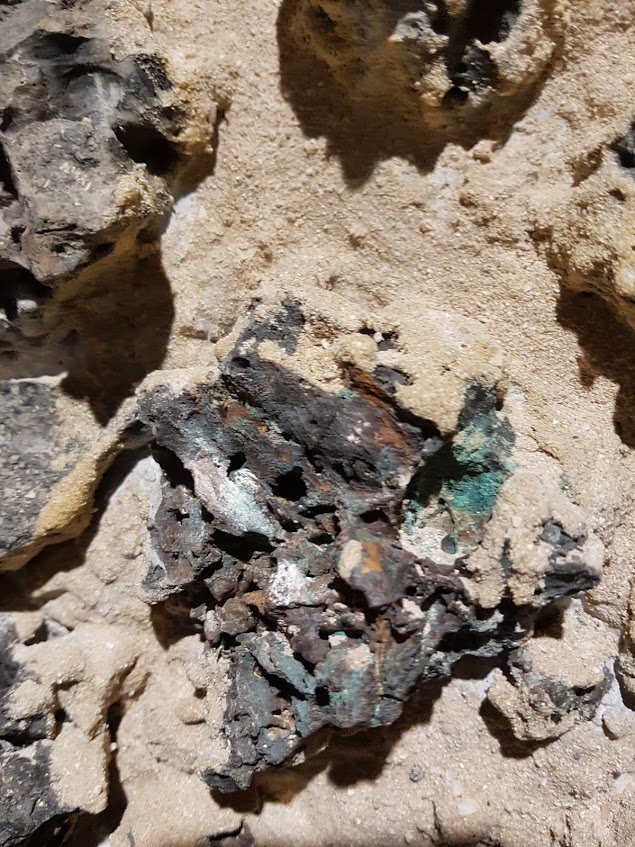
The site lies about 40 km inland from the coast. Its archaeological deposits include a field of copper- and iron-smelting slag, the waste left by heating ore to extract metal, covering about 1.5 hectares. The slag may have slowed the movement of sand and helped preserve deposits below it.
Deposits and early features
The earliest remains include stone-lined hearths, ash pits, and postholes. Refuse deposits rich in animal bones have radiocarbon dates from the Umm al-Nar and Wadi Suq periods. Large artifact deposits are thought to have been deliberate caches and date to Iron Age I and II. Finds recovered from depths of 1.3–3 m belong to Iron Age II, while deposits at the surface date to Iron Age II and later.
Metalworking remains
Copper production
Evidence for copperworking includes slag, metal bars, finished objects, and scrap. The objects include swords, daggers, knives, axes, arrowheads, ornaments, decorative pieces, and snake figurines. Many are made from very pure copper; others contain tin or are zinc-rich brass. The assemblage connects the stages of production, from smelting waste and raw metal to completed objects.
Iron and gold
More than 200 kg of iron-containing material has been recovered. Some objects combine iron with copper alloys. Gold finds include raw material, wire, strips, beads, and rings made from pure gold, as well as gold sheet applied over silver alloy and lead. A decorated gold ring from the site later inspired the logo of Dubai’s Expo 2020.
Objects and environmental evidence
Ceramics, seals, and ornaments
More than 12,000 unique objects have been recovered. Ceramics include Iron Age I material and snake designs, a recurring motif at the site. The 53 seals form the largest known collection of Iron Age seals in the Arabian Peninsula. Their designs include patterns associated with Dilmun burial mounds; Dilmun was an ancient Gulf polity and trading centre, particularly associated with Bahrain. Other seal designs feature animals, human figures, crescents, pyramids, and stars. Finds also include metal and stone jewellery, carved shell objects, early wooden pieces made from acacia, ghaf, sidr, olive, and pine, and carnelian beads. Carnelian is a reddish gemstone variety of chalcedony.
Animal and fish remains
A total of 223,889 bone fragments have been recovered, including remains of camels, oryx, and rodents. The animal evidence has been interpreted as showing hunting, animal husbandry, and hide processing, and as suggesting that the area once had richer vegetation. Fish remains include saltwater species such as bream, needlefish, emperor fish, and grunt, as well as whole fish bodies. These finds have been interpreted as evidence that fish were salted and preserved on the coast before transport inland, a practice also observed at Mleiha. Bird remains include quail and Socotra cormorant.
Museum displays
Selected finds are presented at the Saruq Al Hadid Archaeology Museum, including gold jewellery, a bronze-and-iron dagger examined by X-ray, and a necklace made from carnelian, bone, and stone. The displays also include seals and a section of an Iron Age furnace wall with an opening.