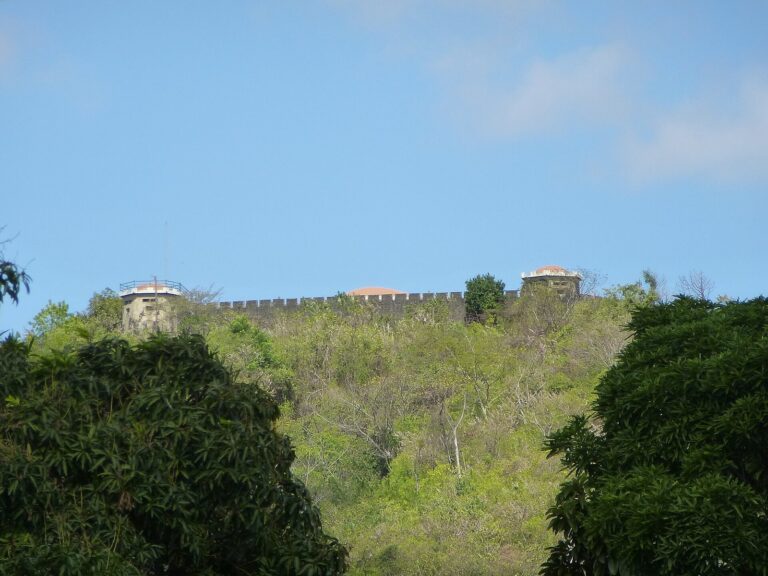
Plazoleta Isla El Muerto: A Rock-Carving Site in Nicaragua
Site at a Glance
- Popularity
- Low
- Country
- Nicaragua
- Primary era
- Medieval
- Eras represented
- Medieval
- Civilizations
- Unclassified
- Site type
- Civic
- Remains
- Rock Art
On this page5 sections
History
Plazoleta Isla El Muerto is a rock-carving site on the summit of a privately owned island in Lake Nicaragua, Nicaragua, within Zapatera Archipelago National Park. Researchers generally date the carvings to the Middle Polychrome period, approximately AD 800–1350. Archaeological evidence indicates occupation of the island from about AD 800 to 1600.
Indigenous carving and occupation
Many researchers place the engravings in the Middle Polychrome period, named for the use of multicoloured pottery. Their proposed date is consistent with carvings associated with pottery of the same period elsewhere in the Zapatera Archipelago. Felipe Pardiñas attributed the engravings to the Chorotega, an Indigenous people of the region. Colonial glass beads found by Juan Meyer, Earl Flint, and Andrés Rongier provide evidence of occupation extending into the colonial period.
Early records and later interpretations
Colonial chroniclers Gonzalo Fernández de Oviedo and Juan de Torquemada made the earliest written records of the area. Wider attention to its archaeology followed Ephraim George Squier’s 1852 account of Nicaragua. Swedish zoologist Carl Bovallius later visited the site and published descriptions, maps, and drawings of its carvings in Nicaraguan Antiquities in 1886. During the nineteenth and early twentieth centuries, Meyer, Flint, Walter Lehmann, Andrés Rongier, and Pardiñas also studied the island, which was then known as La Ceiba or Isla de Piedra Grande.
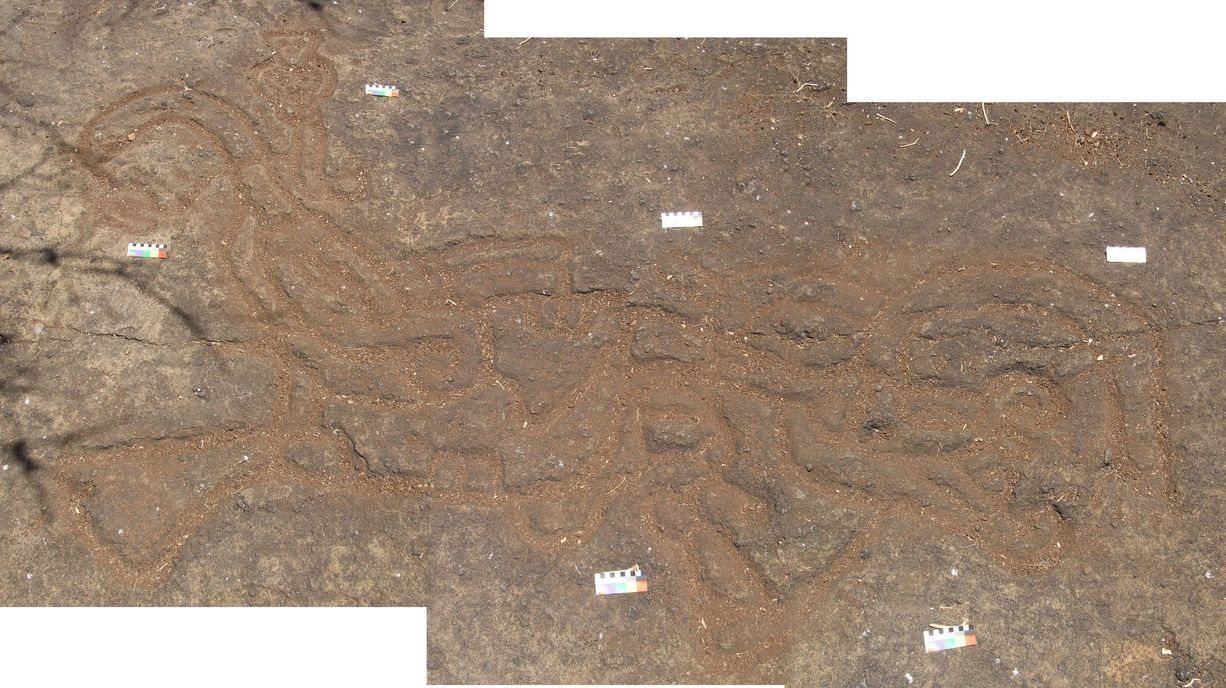
Twentieth-century researchers, including Peter Thronquist, Joaquín Matillo Vila, Karen Olsen-Bruhns, Víctor Holguín, and Rigoberto Navarro, developed further interpretations of the carvings and their dates. Bovallius read the concentric crosses as images of Tlaloc, a Mesoamerican deity associated with rain and fertility. He also reported that Indigenous informants identified a figure he labeled “F” as a chief or high priest. Navarro interpreted another carving as a sacrificial scene, with a masked figure holding a knife beside a person whose chest bears two lines. Newton Baldonado Pallais suggested that the eastward orientation of some carvings toward sunrise at equinoxes and solstices might indicate an astronomical purpose.
Conservation efforts
The site was included in a 2001 endangered-monuments report by the International Council on Monuments and Sites (ICOMOS), an organization concerned with heritage conservation, and was also discussed in national reports about conservation risks. Studies by Migeon and Molina, undertaken with the Nicaraguan Institute of Culture, did not lead to concrete conservation measures because of inadequate funding. In 2009, the Institute, the Zapatera Foundation, and the French Center for Mexican and Central American Studies carried out a multidisciplinary conservation study.
Remains
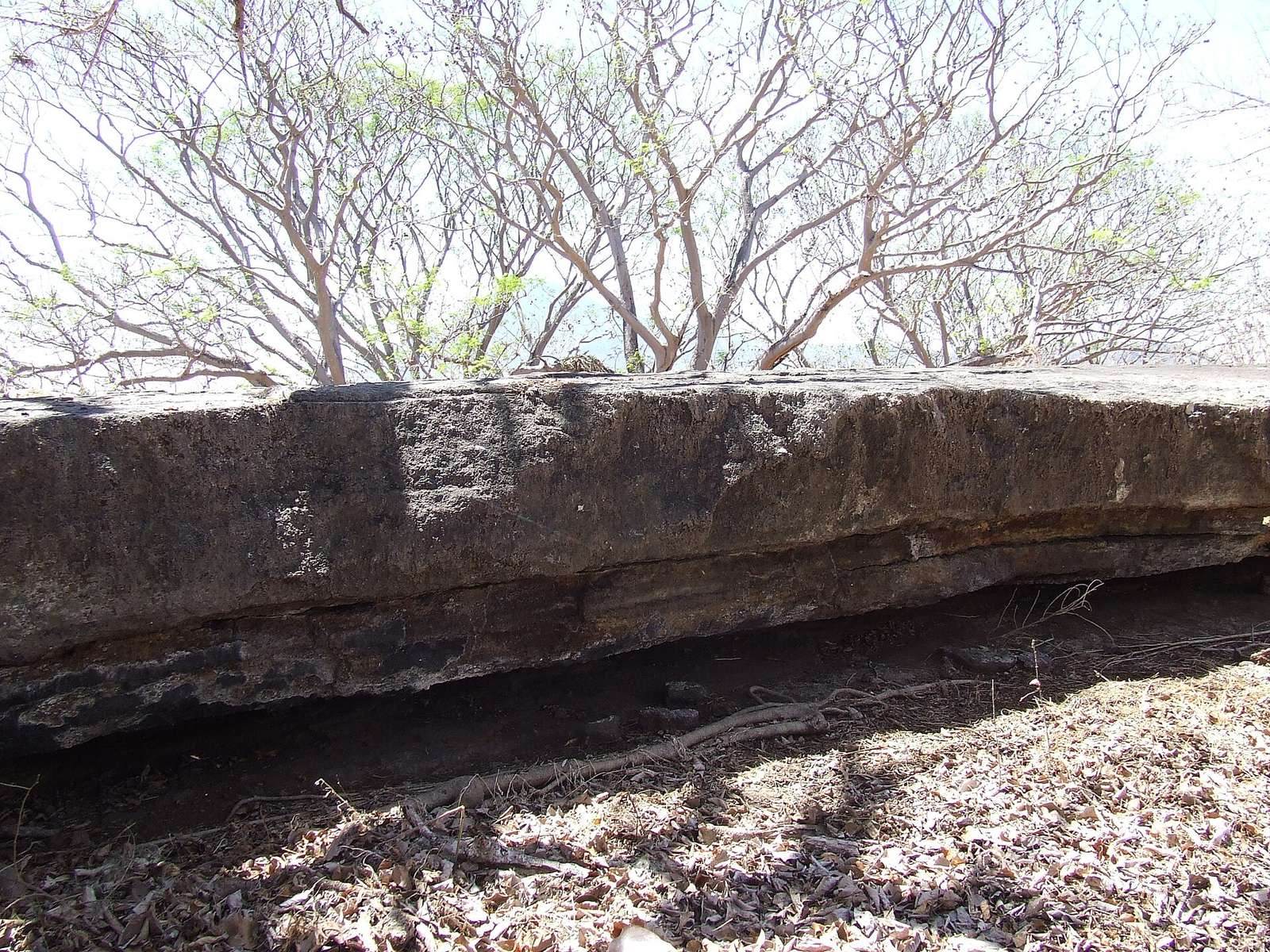
The remains are concentrated on the island’s summit, about 73 metres above the lake. El Muerto is the largest island in the archipelago and covers approximately 17.5 hectares. It lies opposite Santa María Bay and about 500 metres northwest of Zapatera Island. The site’s principal feature is a sandstone-tuff outcrop formed from layers of volcanic ash consolidated by successive eruptions. Its engraved surface extends approximately 50 metres by 15 metres, with 90 carvings counted across the rock.
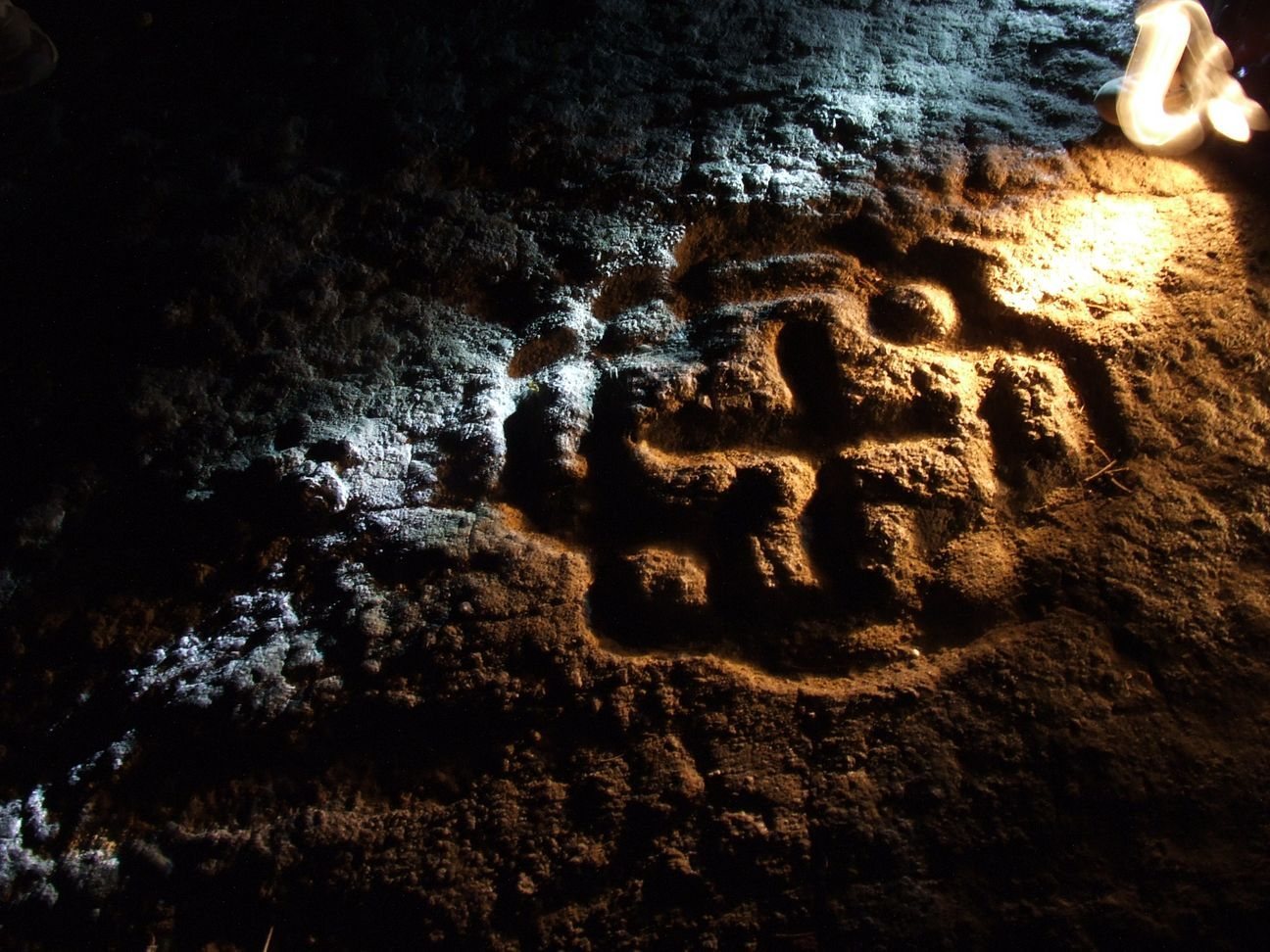
The carvings are grooves up to 3 centimetres wide and deep. Most show stylized human figures, with simple faces formed from three circles for the eyes and mouth, sometimes accompanied by a vertical line for the nose. Hands and feet appear as circles, profile shapes, or radiating lines. One figure has been interpreted as a swimmer, while others may represent twins. Most figures face east; the largest, more than 2 metres high at the southern end of the outcrop, faces west. Animal images include birds, among them a possible turkey, as well as fish, possible turtles, and monkeys. Spirals, crosses, and grid patterns are also carved into the rock.
More than ten cupules, or cup-shaped hollows, are scattered across the outcrop. Each is about 20 centimetres across and 20 centimetres deep. They may have held liquid during rituals, and some grooves may have directed liquid between points on the rock.
The outcrop’s volcanic layers are uneven, leaving blocks more vulnerable to detachment when erosion removes the ground beneath them. Rainwater has worn away the eastern side and left it overhanging. The rock’s weight adds structural stress, which seismic vibrations could intensify. The overhang is associated with deformation, cracks, and fractures that threaten the detachment of large engraved blocks.