Sedeinga: A Kushite Necropolis and Egyptian Temple in Sudan
Site at a Glance
- Popularity
- Medium
- Country
- Sudan
- Primary era
- Classical
- Eras represented
- Bronze Age, Iron Age, Classical, Medieval
- Civilizations
- Christian Nubian Kingdoms, Egyptian, Kushite
- Site type
- Burial
- Remains
- Necropolis
On this page13 sections
History
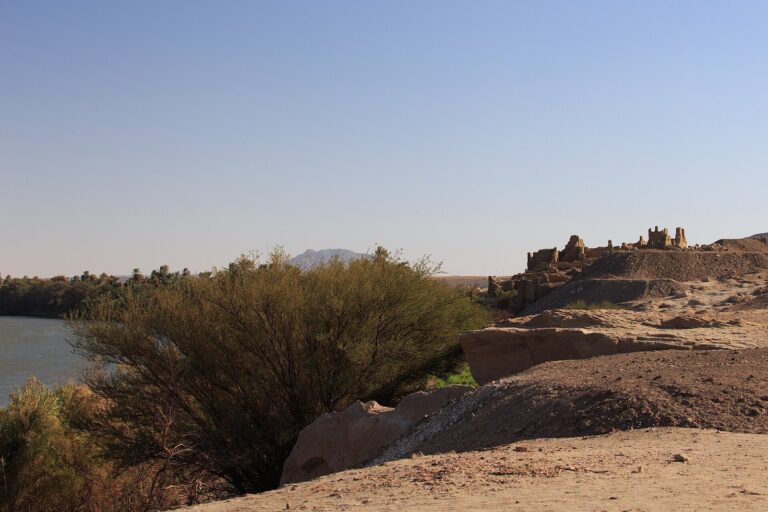
Sedeinga is an archaeological site near Wadi Halfa on the west bank of the Nile in northern Sudan. Its burials reach back to the Neolithic period, and the site later became a necropolis of the Kingdom of Kush, an ancient Nubian kingdom, as well as the location of an Egyptian temple built for Queen Tiy.
Early burials and Egyptian rule
The earliest known burials at Sedeinga date to the Neolithic period. Occupation continued at intervals until Egypt’s Eighteenth Dynasty. In the fifth year of Amenhotep III’s reign, the pharaoh campaigned against the Kushites as far as Dangeil. Around this time, Egyptian administration was established at nearby Soleb. Amenhotep III built a temple there for himself and another at Sedeinga for his wife, Queen Tiy.
Later, Akhenaten’s officials defaced the temple inscriptions to erase the name Amun from Amenhotep III’s name. Tutankhamun subsequently had the inscriptions restored.
Napatan and Meroitic use
The temple appears to have remained active during the Napatan period, an earlier phase of Kushite history. King Taharqa added a colonnade bearing his name. Although the building later collapsed, probably after earthquakes, worship continued. Over time, Tiy seems to have become associated with the Egyptian goddess Isis.
Sedeinga’s cemetery was also used during the Meroitic period, the later Kushite phase when Meroë was the kingdom’s capital. Wealthy people outside the royal family came to use pyramid burials, a practice regarded as sacrilegious for non-royal burials in the early Meroitic period. Sedeinga’s distance from Meroë may have helped this custom spread. Its position in the desert near a branch of the Forty Days Road, an ancient route linking Kush and Egypt, also connected it to the movement of goods. Near the Egyptian frontier, the settlement could monitor the border and receive goods passing between Egypt and other parts of Africa. It may have served as a trading centre, and access to those goods may help explain the wealth displayed in its funerary monuments.
Many burials were for women, and finds were dedicated to high-ranking women. These patterns may reflect Nubia’s matrilineal social order, in which descent or family membership is traced through the maternal line.
Christian use and modern archaeology
Christian worship also formed part of Sedeinga’s later history. In the nineteenth century, travelers described the temple. Archaeological work began with a Franco-Italian survey in the 1960s, led at Sedeinga by Michela Schiff Giorgini while the team excavated at Soleb. Later excavation leaders included Jean Leclant, Catherine Berger-El Naggar, Claude Rilly, and Vincent Francigny.
The pyramids came to light between 2009 and 2012, and excavations took place from 2009 to 2013. A temple-restoration project followed in the 2010s. Magnetic surveys covering 20 hectares in 2018 and 2019 did not locate the settlement that probably accompanied the necropolis. It may have been submerged by an earlier branch of the Nile or may have stood farther away, perhaps across the river. Work in the pyramid cemetery remains incomplete, and Sedeinga may contain more Kushite pyramids than any other site yet discovered.
Remains
The archaeological site covers about 30 hectares, roughly 15 kilometres from Soleb. Its necropolis occupies more than 25 hectares and contains thousands of burial chambers, alongside the remains of temples and a small church. The cemetery’s surviving structures include pyramid bases, circular burial chambers, and simpler graves covered by mounds.
The necropolis
Pyramids and graves
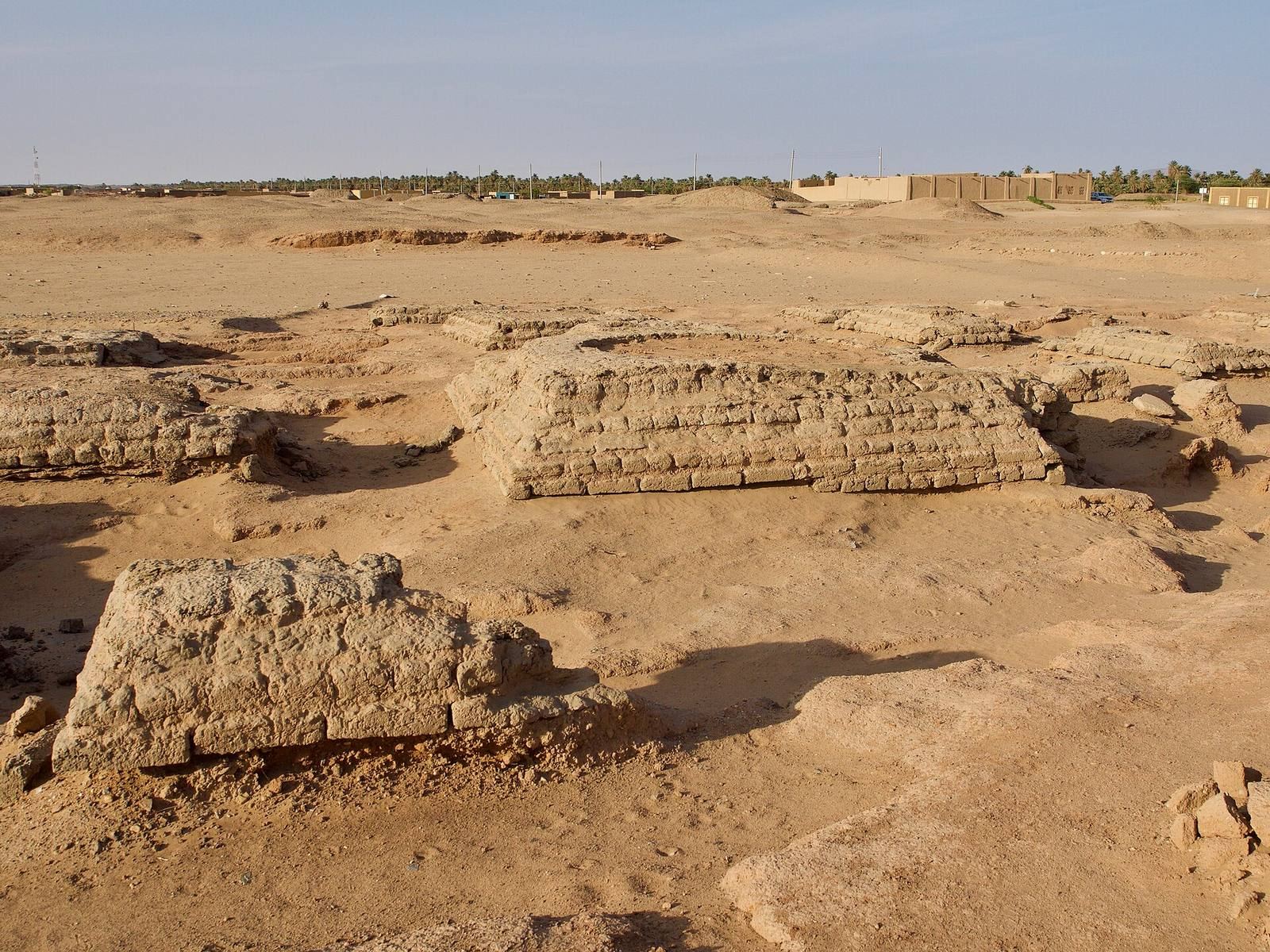
The cemetery contains the bases of at least 80 small pyramids, each about 5 to 10 metres across and dating to the late Meroitic period. They were raised above circular masonry burial chambers, usually made of unfired brick and sometimes incorporating stone. Rounded masonry beneath some pyramids suggests concealed dome-like forms and recalls the older Kushite practice of covering burials with earthen mounds. Other, more modest graves consist of pits under mounds, and some pyramids reuse earlier tombs.
Birds or lotus flowers appear on some pyramid capstones, rising from solar disks. This imagery reflects stronger Egyptian influence than the pyramid decoration at Meroë.
Funerary inscriptions and objects
Stone markers bearing funerary inscriptions preserve texts in Meroitic, the language and writing system associated with the Meroitic period. The collection is the largest of Meroitic texts yet discovered. Some of the stones retain blue pigment, and many finds are in notably good condition.
A painted funerary shroud nicknamed the “Sarcophagus of Sedeinga” has richly coloured decoration, including Osiris and the weighing of the deceased person’s heart. Its form draws on the Greco-Roman tradition of decorated sarcophagus shrouds. Following a digitization project, the shroud was deposited in the National Museum of Sudan.
Tomb west of the temple
A very large tomb west of the temple was discovered in 2012. Radiocarbon dating places it in the second century BCE. Its size has been compared with the tomb of King Taneyidamani, and it may have belonged to a member of the Kushite royal family.
Religious buildings
Temple of Queen Tiy
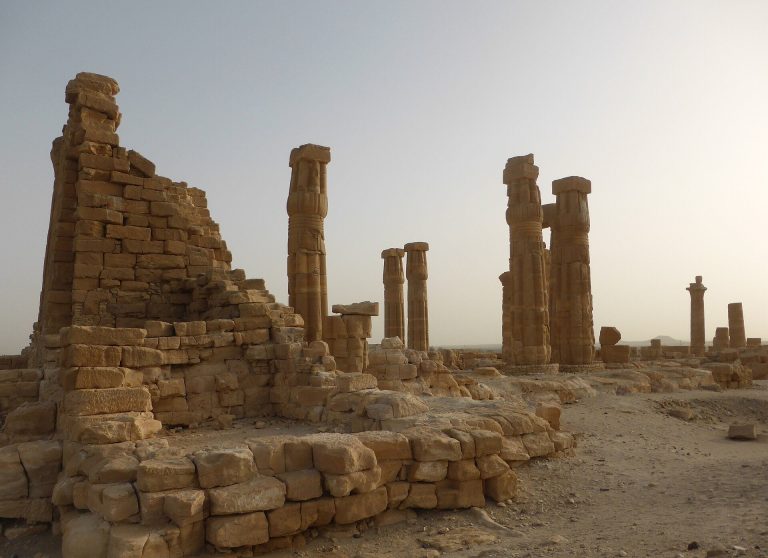
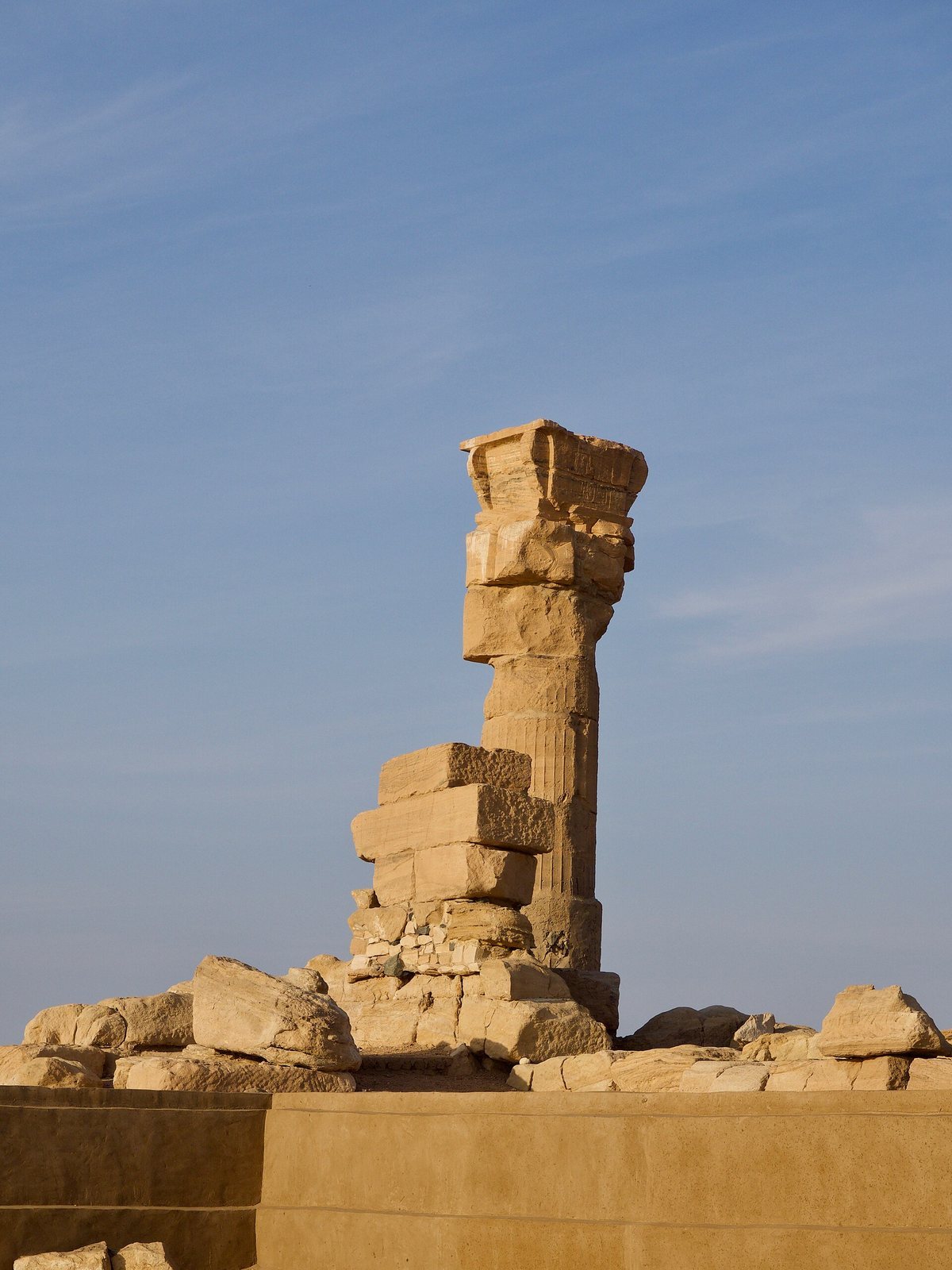
The temple’s main space was a rectangular hypostyle hall, a hall with a roof supported by columns. Hathor appears on the column capitals. Images of Tiy show her with a headdress associated with Hathor, an elaborate wig, the upright cobra emblem used in Egyptian royal imagery, horns, and a solar disk. Fragments of a monumental statue of the queen and inscriptions bearing her name and Amenhotep III’s have been found at the temple. It was the counterpart to the larger temple built for Amenhotep III at Soleb.
Chapel lintel
A chapel lintel bears an image of the Egyptian goddess Maat. Her depiction has features distinct from the traditional Egyptian type.
Christian church
A small church dating to the tenth century is among Sedeinga’s surviving remains.