Drebenstedt 1: A Neolithic Megalithic Tomb in Germany
Site at a Glance
- Popularity
- Very Low
- Country
- Germany
- Primary era
- Stone Age
- Eras represented
- Stone Age
- Civilizations
- Unclassified
- Site type
- Burial
- Remains
- Burial Mound
On this page10 sections
History
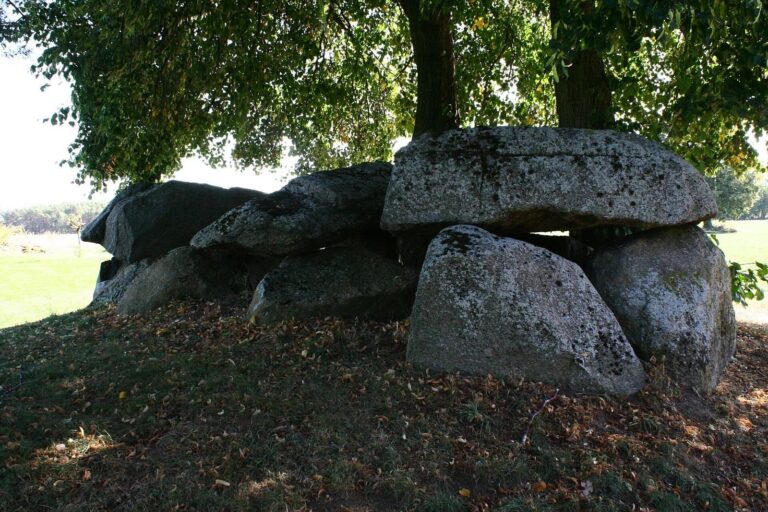
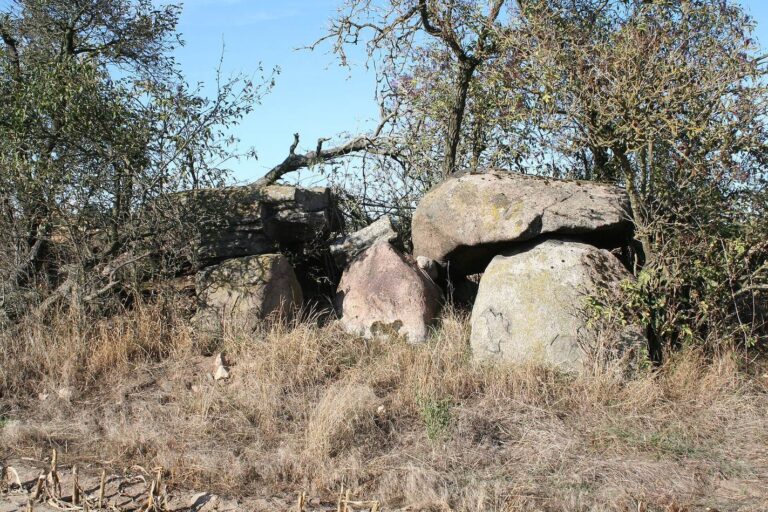
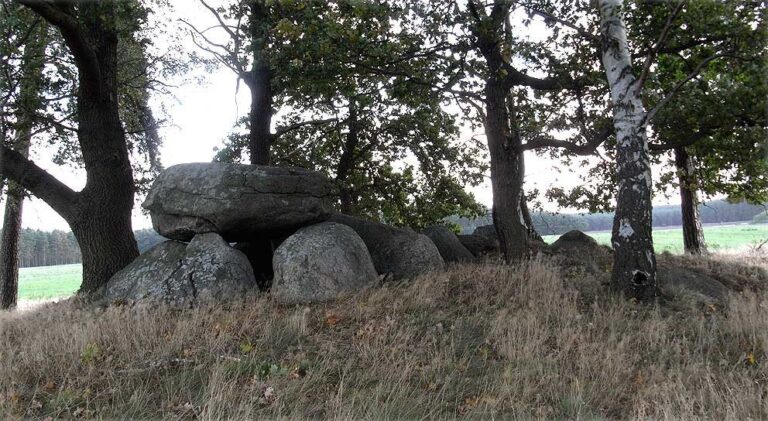
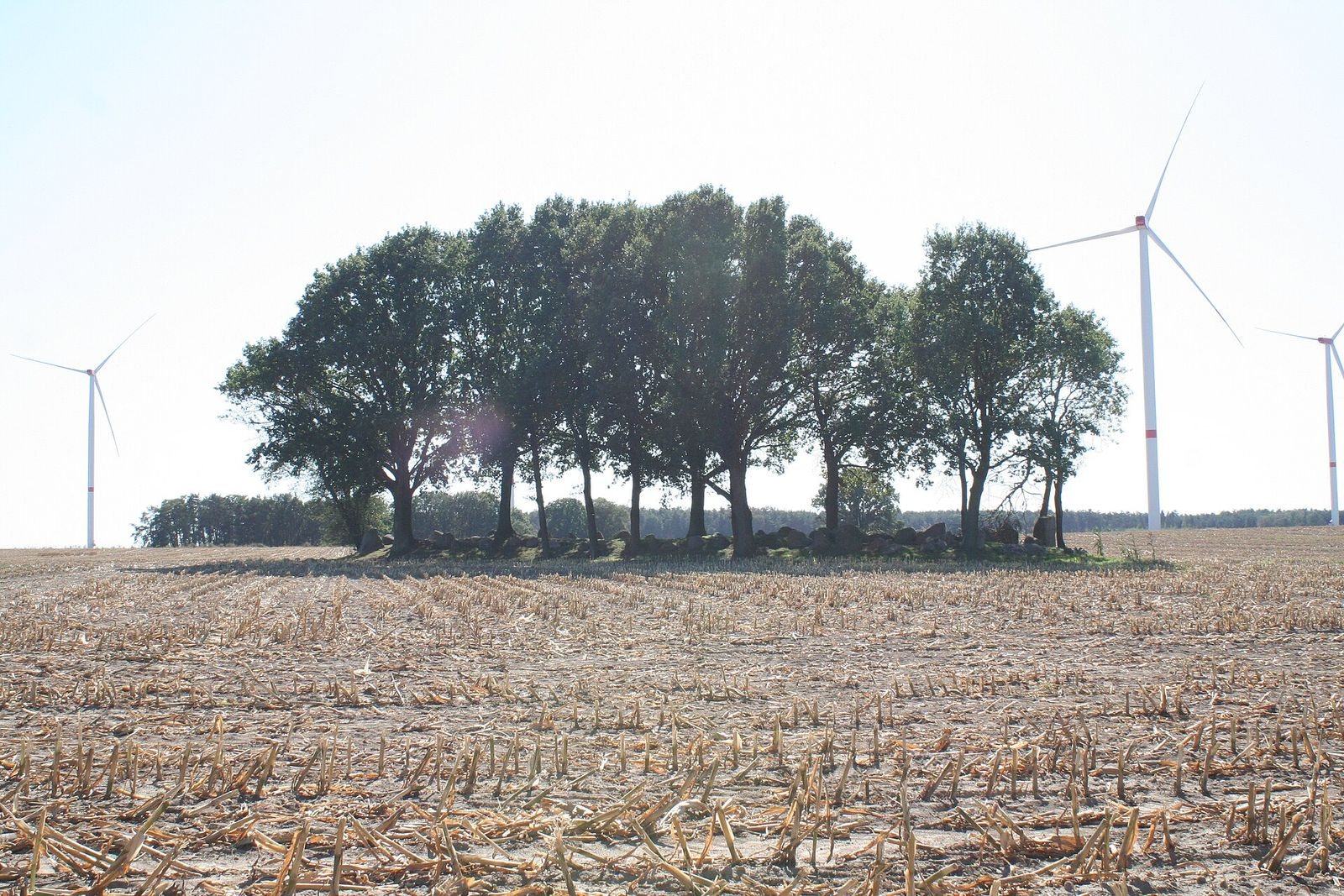
Drebenstedt 1 is a Neolithic megalithic tomb near Drebenstedt in Germany, dating to 3700–3350 BC and associated with the deep-stamped pottery culture, a Neolithic culture identified partly by pottery decorated with deep impressions. It belonged to a group of five megalithic tombs at Drebenstedt; the other four were destroyed during the nineteenth century, leaving Drebenstedt 1 as the group’s sole survivor. It is among the largest and best-preserved megalithic tombs in the Altmark, a historic region in present-day Saxony-Anhalt.
Nineteenth-century research and later surveys
The tomb’s size and preservation attracted nineteenth-century researchers. Johann Friedrich Danneil described it in 1843 as the Altmark’s most impressive long barrow. Hermann Dietrichs and Ludolf Parisius wrote about it in 1883, followed by Eduard Krause and Otto Schoetensack in 1893. Danneil, and later Krause and Schoetensack, were the first to calculate the volume and mass of its stones. Later studies combining ethnography with practical experiments used those measurements to estimate a construction effort of 37,535 person-hours, equivalent to 100 workers putting in ten-hour days for 35–40 days.
In 2003–04, Drebenstedt 1 was surveyed and measured as part of a project covering the surviving megalithic tombs of the Altmark. The work was carried out jointly by the Saxony-Anhalt State Office for Heritage Management and Archaeology, the Johann-Friedrich-Danneil Museum in Salzwedel, and the Young Archaeologists of the Altmark association.
Remains
The tomb stands in a field 950 m west of Drebenstedt’s centre and south of the road to Lindhof. Its elongated mound extends slightly beyond a trapezoidal stone enclosure oriented northwest–southeast. A rectangular burial chamber occupies the enclosure’s northwest end.
Mound and enclosure
Earthen mound
The elongated mound measures 47.0 × 10.0 m and rises 1.7 m. It projects only slightly beyond the stone enclosure around it.
Stone enclosure
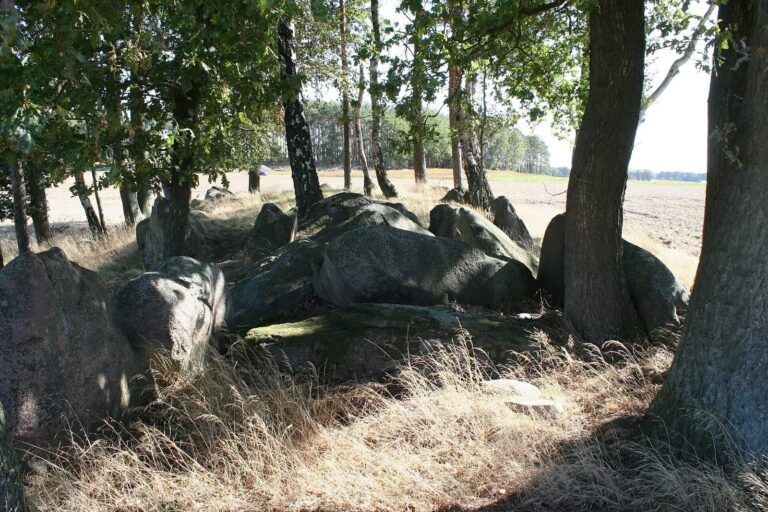
The trapezoidal enclosure is 43.8 m long and 6.0–7.5 m wide. Of its original 58 stones, 53 remain. The stones at the northwest end, beside the chamber, are noticeably larger than those at the southeast end.
Corner stones and surface markings
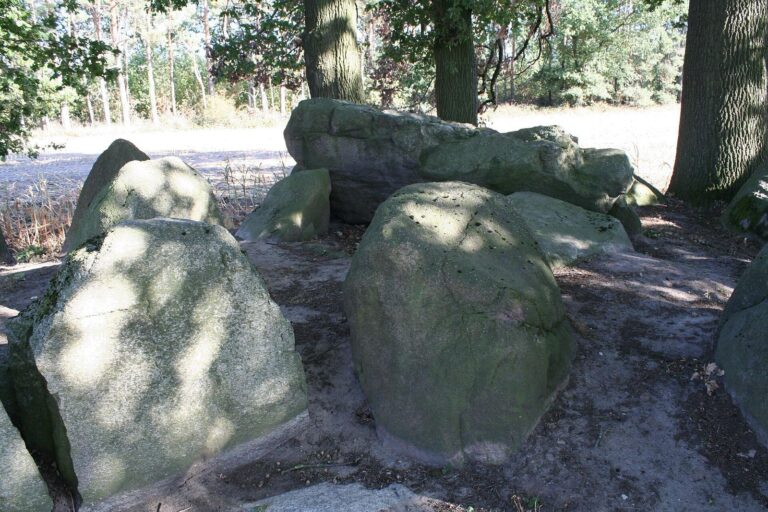
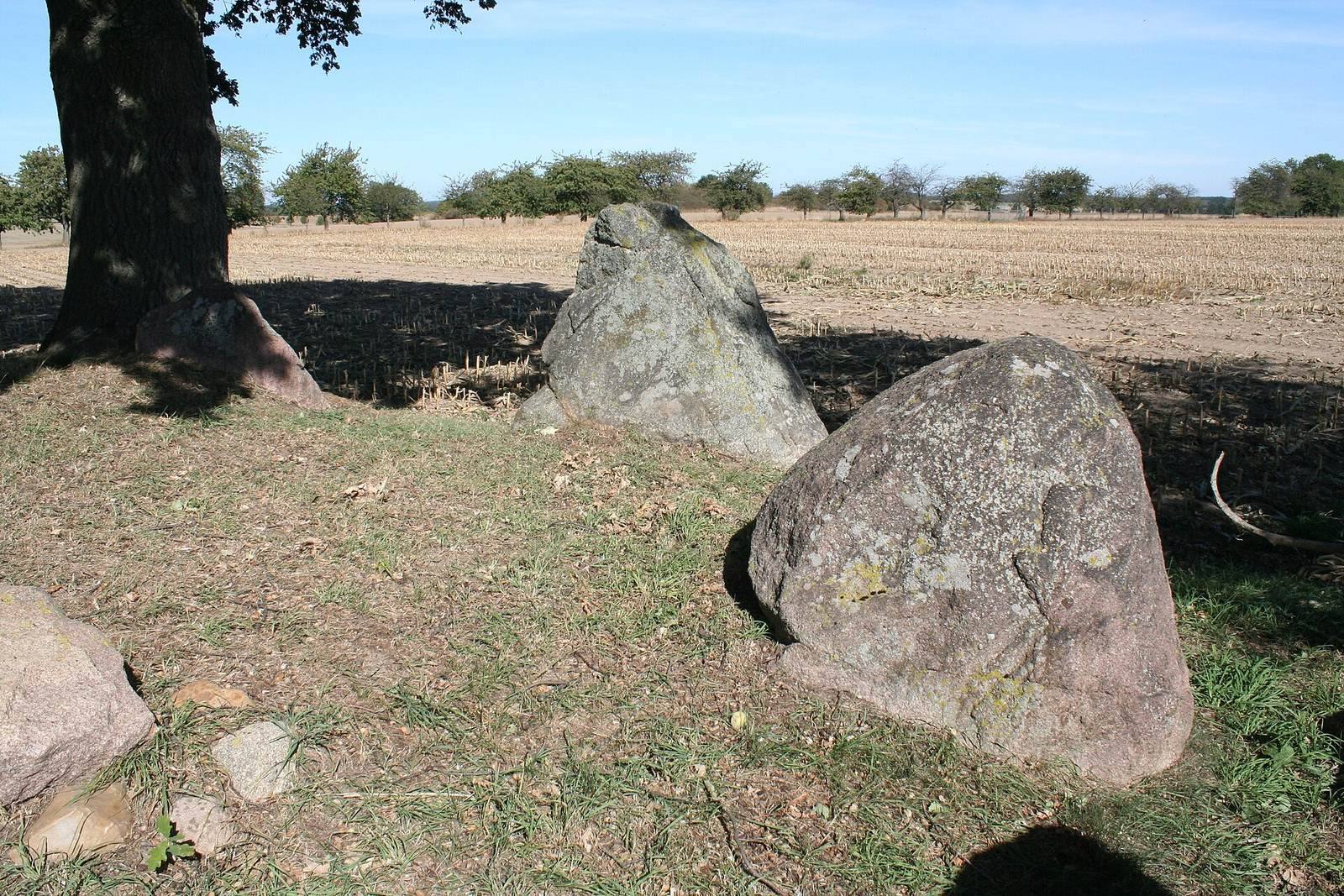
Four guardian stones originally marked the enclosure’s corners, and all four survive, although three have toppled. The upright stone at the western corner measures 2.4 × 2.1 × 0.7 m. The two stones at the southeast end stood outside the enclosure, while those at the northwest end also form its corners. Several round and oval hollows mark the upper surface of the southwestern guardian stone. An enclosure stone on the northeast side has a semicircular groove 6 cm wide and up to 5 cm deep. The stone opposite it on the southwest side bears a horseshoe-shaped groove, 3 cm wide and 3 cm deep, as well as a possible second groove that is now barely discernible.
Burial chamber and associated finds
Chamber
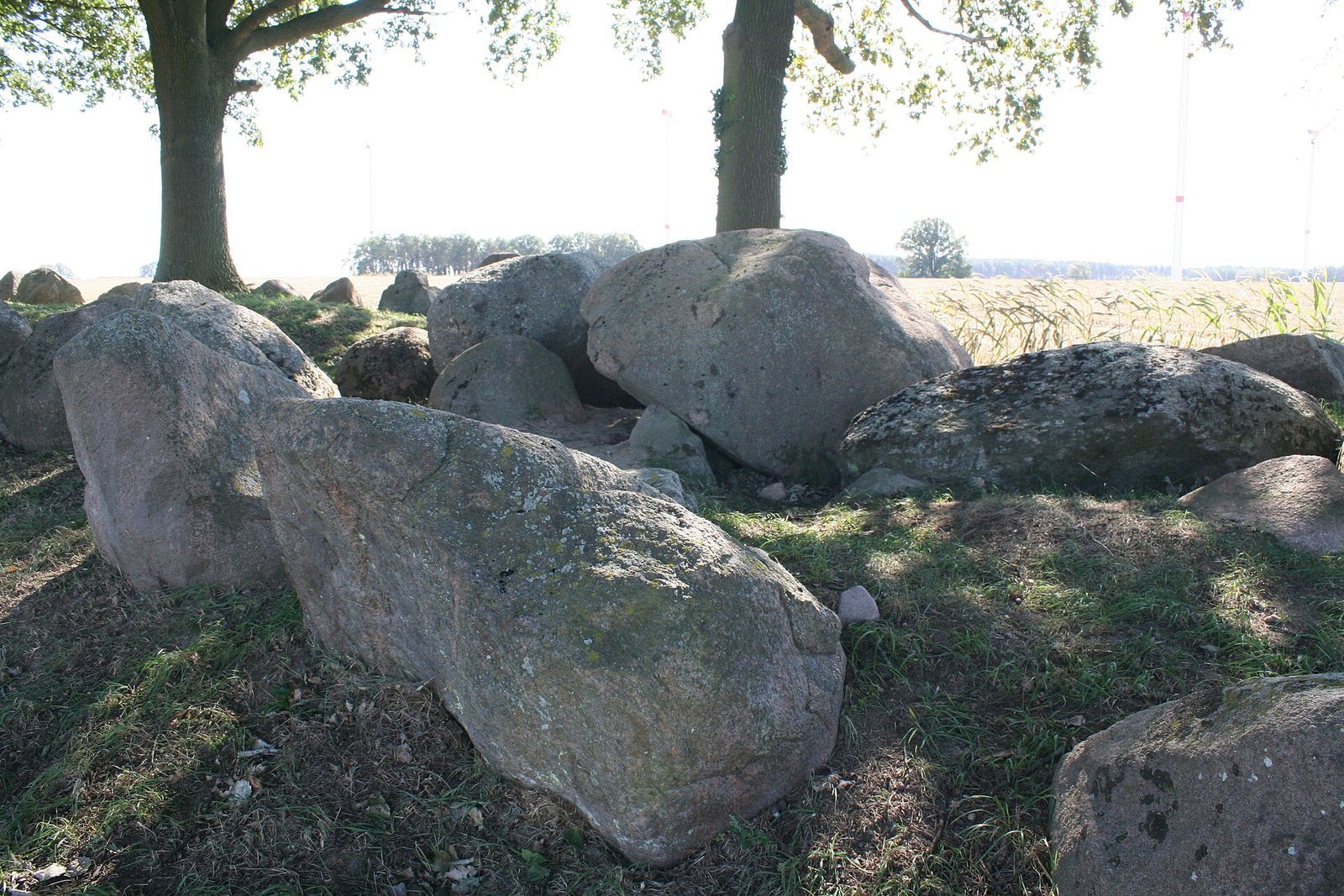
The rectangular chamber is aligned northwest–southeast, with an interior measuring 8.8 × 1.9 m. It originally had 16 wall stones, of which 13 survive, and five capstones, the stones spanning its top. One capstone is broken. The two largest measure 2.5 × 2.0 × 1.0 m and 2.7 × at least 1.2 × 0.5 m.
Finds from the Drebenstedt tomb group
Four flint axes and a narrow chisel from the Drebenstedt tomb group are held at the Johann-Friedrich-Danneil Museum in Salzwedel. Two axes came from graves 4 and 5; the other three implements came from graves 1 and 3.