Genesmon: An Iron Age Chieftain’s Settlement in Sweden
Site at a Glance
- Popularity
- Low
- Country
- Sweden
- Primary era
- Classical
- Eras represented
- Classical, Medieval
- Civilizations
- Swedish
- Site type
- Domestic
- Remains
- Elite Residence
On this page13 sections
History
Genesmon is an archaeological settlement near Örnsköldsvik, Sweden, inhabited during the first six centuries AD as a chieftain’s residence. Its occupation spanned the Roman Iron Age, a Scandinavian period contemporary with the Roman Empire but not a period of Roman rule, and the Migration Period that followed.
Bronze Age and Iron Age occupation
The earliest evidence of human activity in the area dates to the Nordic Bronze Age. Graves at Genesmon dating to about AD 100 to 600 are thought to have belonged to chieftains. During its later occupation, the farm was rebuilt in a second phase and continued as a settled household.
About 15 to 25 people lived at the farm. They kept roughly 20 sheep or goats, two to three pigs, eight to ten cattle, a horse, and a dog. Barley and oats were grown in a field east of the farm, and flax may also have been cultivated. Residents gathered berries and plants, hunted, and fished. Seals provided valuable skins, meat, and oil, while farming supplied food including meat and milk used to make butter and cheese.
Luxury goods made elsewhere, Roman-period bronze coins found nearby, and evidence of metalworking point to contact with traders. The inhabitants may also have exchanged surplus goods. The evidence suggests that some craft production was specialized rather than limited to household needs.
The farm was abandoned after about five centuries. Evidence suggests that its inhabitants packed their belongings and moved away. Many recovered objects are lost items, grave goods, or debris from craft production.
Investigation and reconstruction
The burial mounds were known before archaeologist Evert Baudou began investigating them in the 1960s. Roadwork exposed the settlement in 1976, leading to excavations from 1977 to 1988 under Per H. Ramqvist and Anna-Karin Lindqvist of Umeå University. Their work revealed a notably well-preserved site.
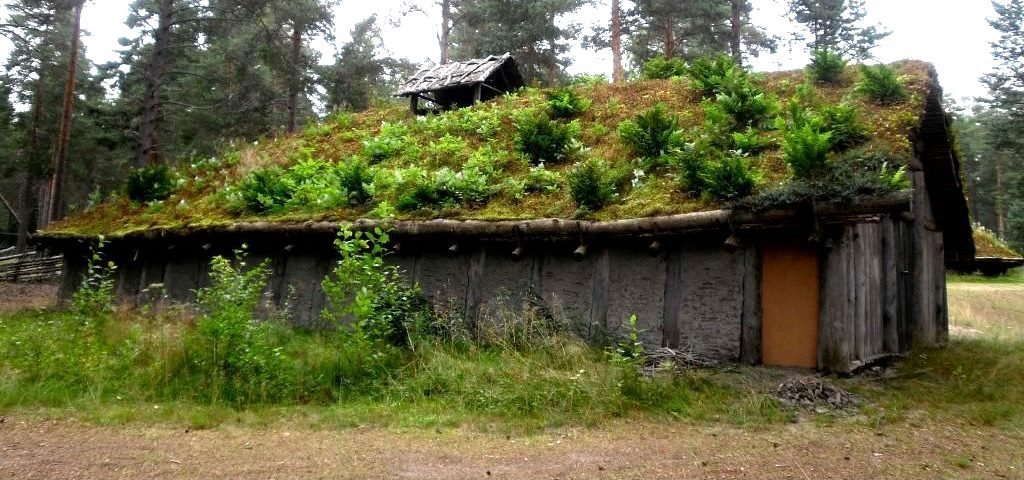
Work on Gene fornby, a reconstruction about 500 m from the archaeological site, began in 1991. It was built to investigate and illustrate what the principal farm might have looked like in the sixth century, and served that purpose through 2005.
Remains
Setting and excavated layout
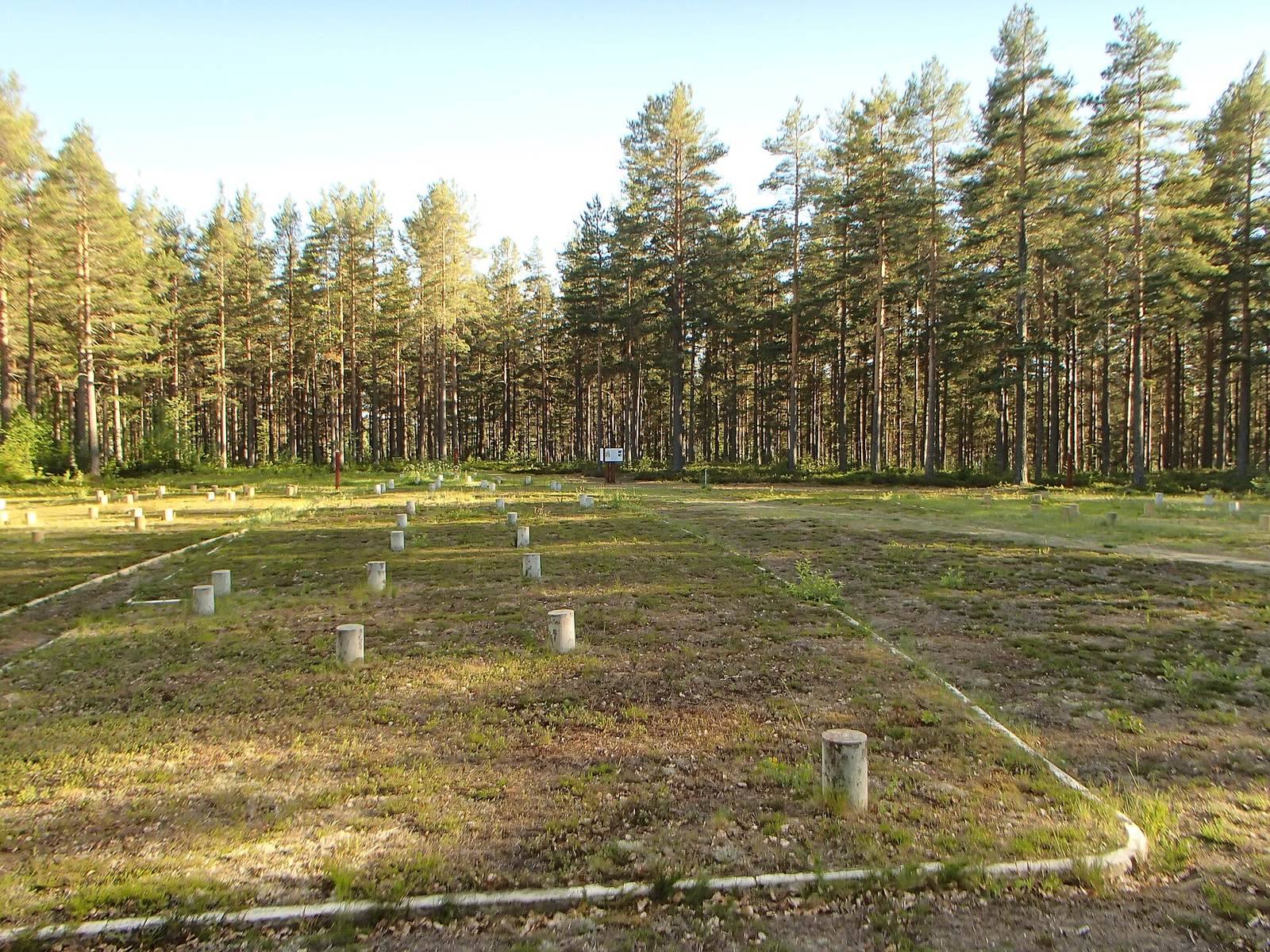
The archaeological site lies on a pine-covered heath about 20 m above sea level. During the settlement’s occupation, it stood on a peninsula at the shoreline near the mouth of the Moälven. Post-glacial land uplift gradually raised the land, silting up the bay and changing the river’s course; the present shoreline is several hundred metres away. Excavations identified at least 14 buildings: 13 belonged to the Iron Age farm, and one dates to the thirteenth century. The farm’s layout has been marked out to show the houses’ positions in relation to one another and the burial mounds between the settlement and the former shore.
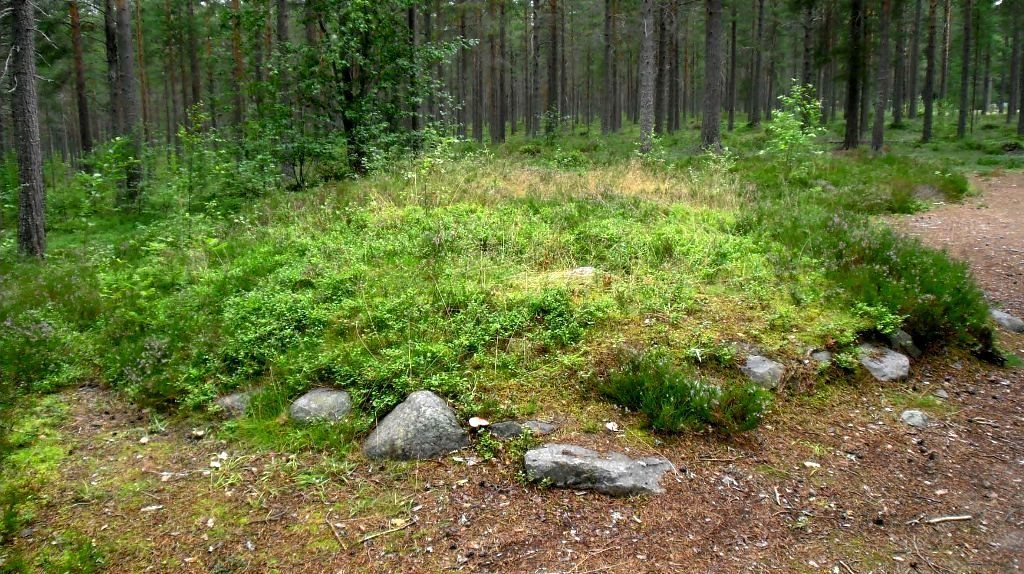
Thirteen visible burial mounds lie around the farm. Nine low mounds form a cemetery beside the settlement, while four more stand about 50 m away. Each mound contains one burial.
Farm structures and craft evidence
Building phases
The farm’s first building group comprised a longhouse, a grain barn, and a workshop. After those structures were demolished, a replacement longhouse and barn were built, along with a smithy, a bronze-casting workshop, a weaving pit, and other buildings. These remains show the changing arrangement of the farm across its two building phases.
Metalworking and finds
Ash and slag indicate that about 290 kg of iron were worked, probably in the fifth century, and forged into roughly 171 kg of finished objects such as household items and weapons. Burned bone in some hearths suggests that smiths sought iron with a high phosphorus content, which produced a patterned appearance in the finished metal. Traces of gold in casting molds suggest that some objects may have been gilded. Bronze objects made at the settlement included needles, rings, and buckles.
Bronze-casting molds include one for a key and another for an unusual relief brooch. This brooch type is known from about a dozen places in Scandinavia, but Genesmon is the only known place where it was made. Other finds include beads of glass, bronze, clay, and bone; bone combs; clothing and belt buttons and clasps; knives; arrowheads; pottery; fire-making tools; and an iron key.
Textile production
The weaving pit and finds of warp weights for a standing loom provide evidence of textile work. The weights kept the loom’s warp threads under tension. Linen threads were kept damp using moisture in the ground.
Reconstructed buildings at Gene fornby
The reconstruction presents buildings intended to help explore the principal farm’s possible sixth-century form. Its structures use materials and construction methods such as woven branch walls, clay, birch bark, and substantial wooden posts.
Longhouse
The longhouse, built first as the reconstruction’s principal building, measures 40 by 9 m. It provides space for people and animals and for storing much of the food and fodder. Its roof is covered with birch bark, while its walls are woven from branches and sealed with clay.
Smithy
The reconstructed smithy measures 16 by 9 m and contains four hearths designed for different tasks. Its walls are woven from branches, and substantial posts support the roof. It is believed to have been among the largest prehistoric smithies in Scandinavia.
Partly sunken house
A further reconstructed house is partly dug into the ground and measures 1.5 by 1.5 m. Its walls are made of earth. Warp weights for a standing loom were found in this house, and the ground’s moisture helped keep linen-weaving threads damp.