Bornsen Megalithic Tombs in Jübar: Neolithic Burial Monuments
Site at a Glance
- Popularity
- Very Low
- Country
- Germany
- Primary era
- Stone Age
- Eras represented
- Stone Age
- Civilizations
- Unclassified
- Site type
- Burial
- Remains
- Necropolis
On this page11 sections
History
The Bornsen Megalithic Tombs are a group of Neolithic burial monuments near Bornsen in Jübar, Germany, associated with the Deep-Stroke Pottery culture and dating to about 3700–3350 BC. The Neolithic was the later part of the Stone Age, and the culture is identified partly through its distinctive pottery. The group originally contained five tombs.
Nineteenth-century records and loss
Johann Friedrich Danneil first described the monuments in 1843. A topographic map produced in 1859 marked four tombs. By the early 1890s, Eduard Krause and Otto Schoetensack recorded that only two remained. The other three were destroyed during the nineteenth century.
Care and survey
Since 1972, the Young Archaeologists of the Altmark association has regularly cleaned the two surviving tombs and cleared vegetation around them. In 2003–04, a joint project by the association, Saxony-Anhalt’s State Office for Heritage Management and Archaeology, and the Johann Friedrich Danneil Museum in Salzwedel surveyed and measured the surviving megalithic tombs of the Altmark.
Remains
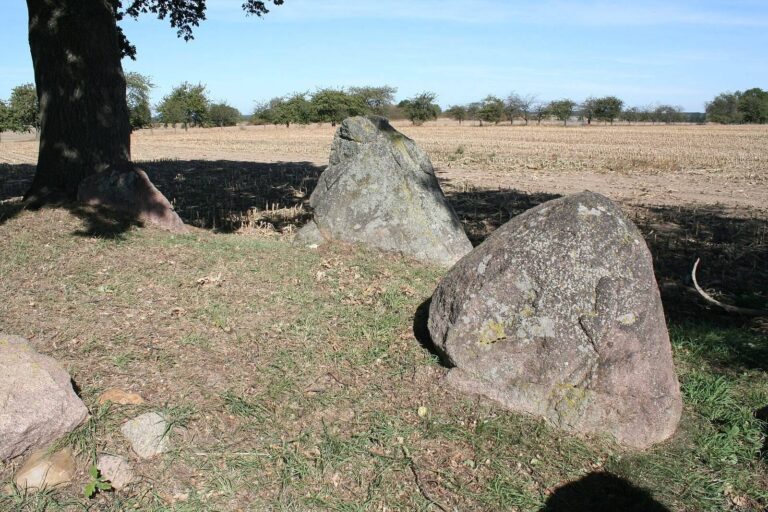
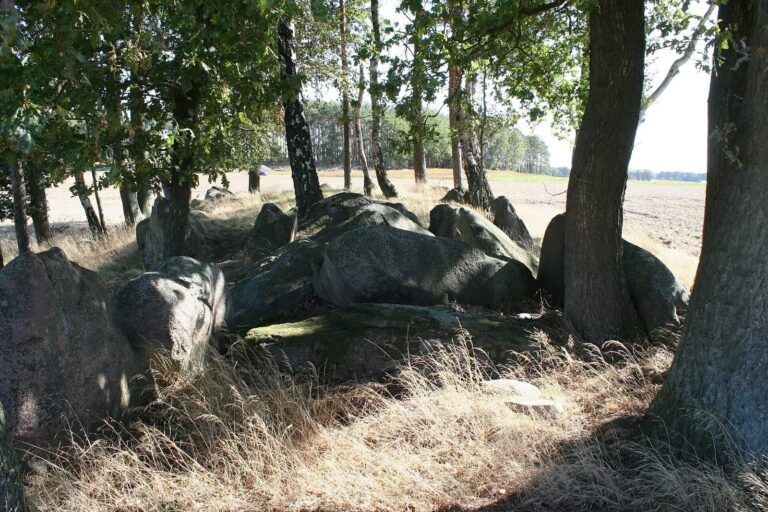
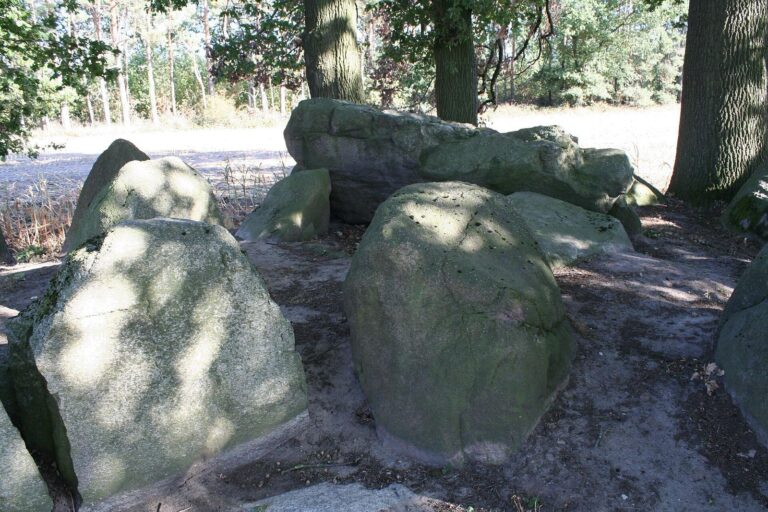
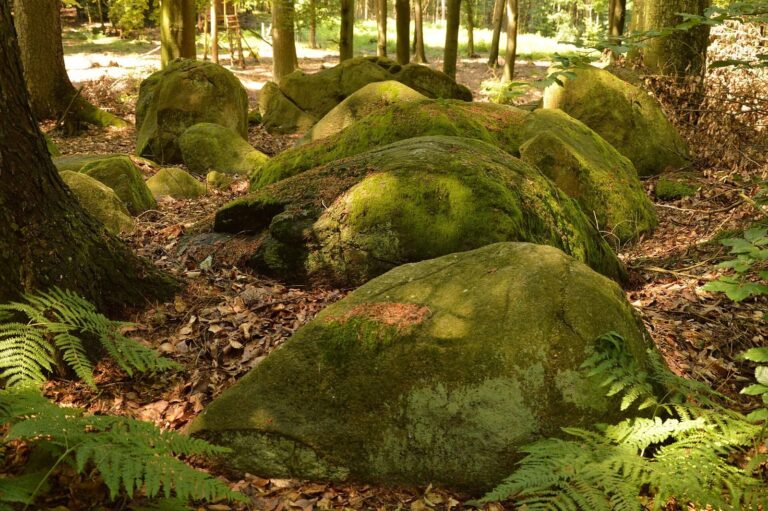
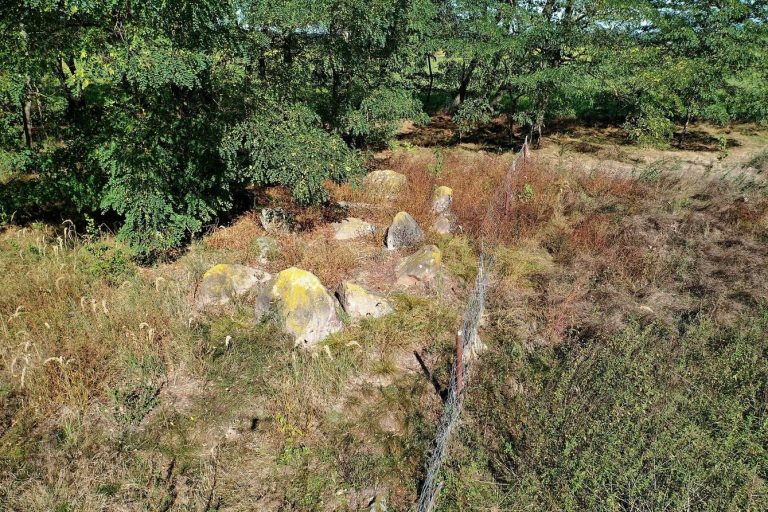
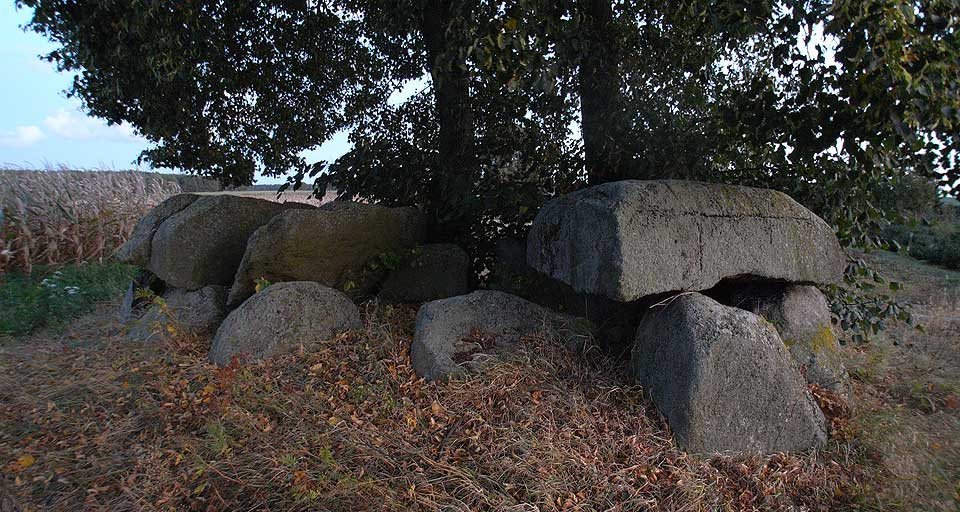
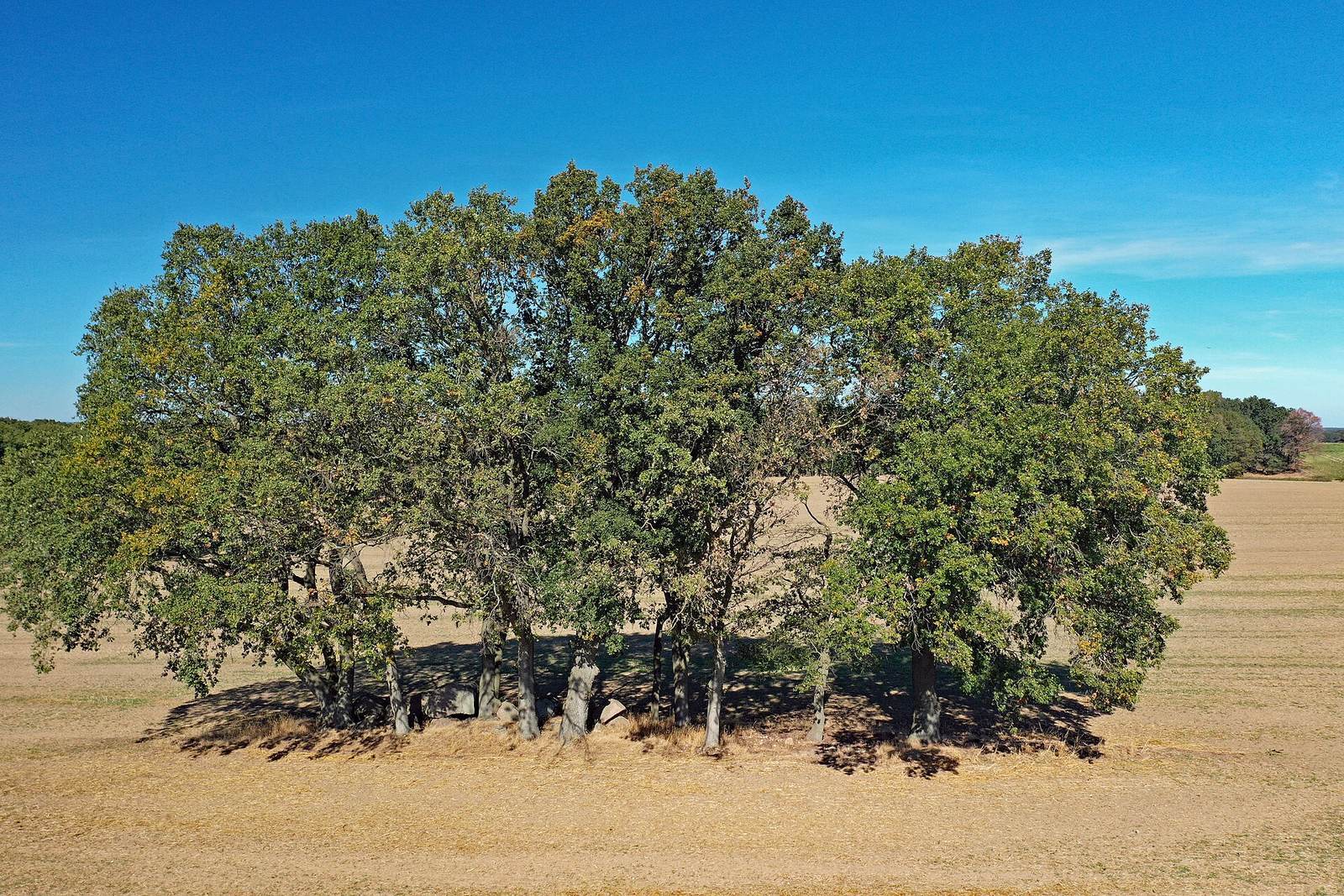
The two surviving monuments stand in separate locations. Each has a mound surrounding a stone chamber formed from upright wall stones and large roof slabs, or capstones. Grave 1 lies in a field about 900 m south of Bornsen’s centre; Grave 2 is about 550 m northeast of the centre and 1.2 km northeast of Grave 1. The surviving monuments are identified as Grave 1 and Grave 2, while the KS numbers for destroyed examples follow the numbering used by Krause and Schoetensack. KS 95 lay about 225 m east-northeast of Grave 1. Other named megalithic tombs lie at Drebenstedt, 1.8 km northwest of Grave 1, and near Lüdelsen, 3.2 km southeast of it.
Surviving tombs
Grave 1
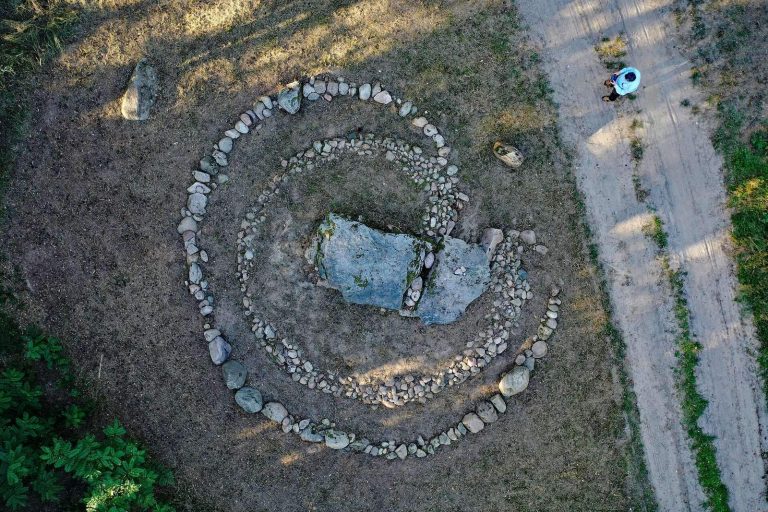
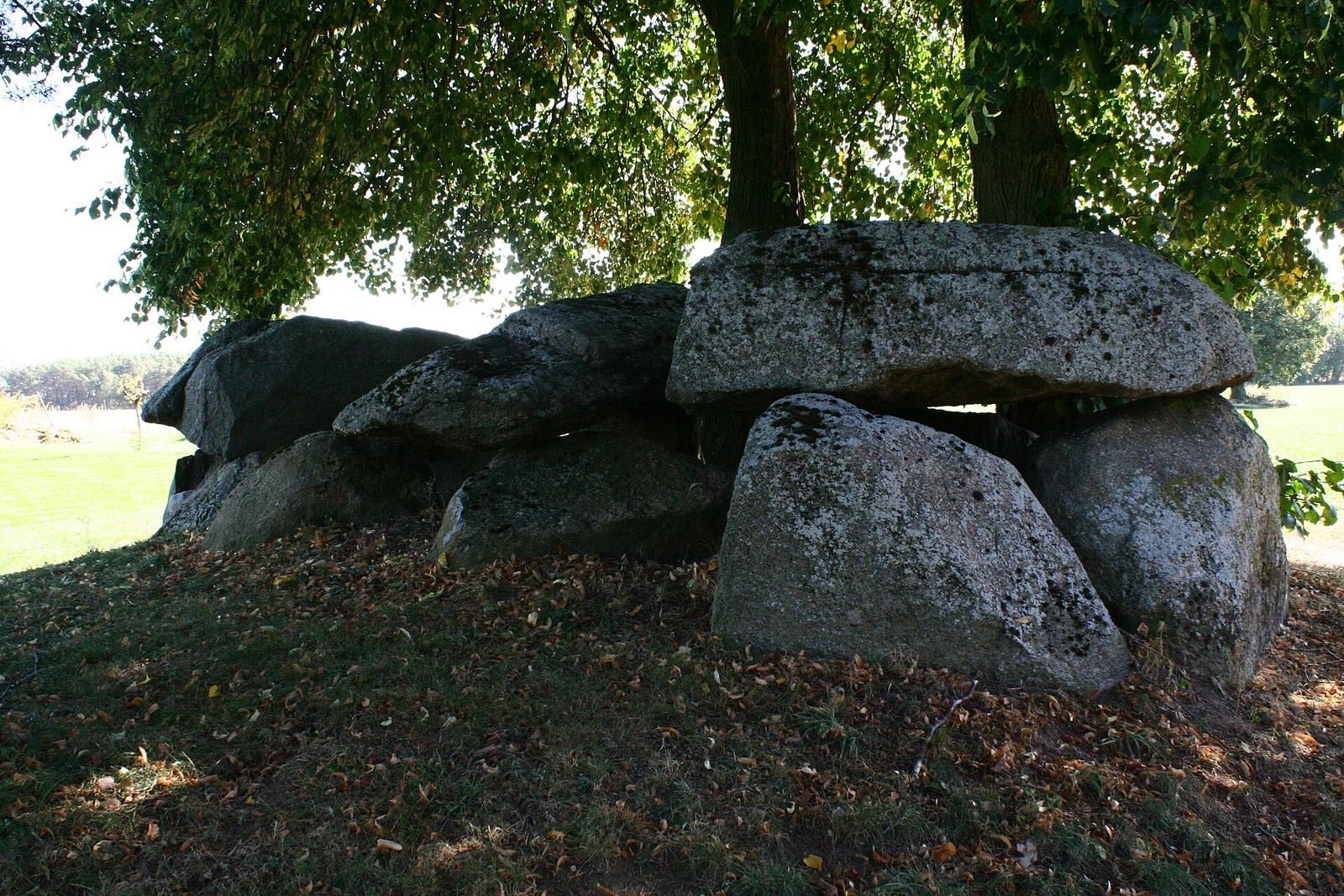
Grave 1 stands just over 200 m east of the road to Jübar. Its elongated mound rises between 0.6 and 1.5 m. A single stone may be the last surface remnant of the perimeter, and geophysical investigation in 2004 detected traces of the former boundary stones. The trapezoidal chamber runs west-southwest to east-northeast and measures 10.4 m long by 1.5–1.8 m wide. Its 17 wall stones and seven capstones survive. The three capstones at the western end are larger than the four to the east; the largest measures 3.0 × 1.8 × 1.2 m, while the shortest is 1.6 m long.
The westernmost capstone bears numerous cup marks, small rounded depressions made in stone. At least one such depression and a 10 cm gouged mark appear on the third capstone from the west. The tomb’s classification is disputed. Hartmut Bock, Barbara Fritsch, and Lothar Mittag identify it as a large dolmen, a megalithic tomb built from large stones; Hans-Jürgen Beier instead classifies it as a passage grave, a chamber reached through a passage.
Grave 2
Grave 2 has an oval mound and a rectangular chamber aligned east to west, measuring 4.4 m long and 1.1–1.2 m wide. Geophysical work confirmed that perimeter stones once surrounded the mound. Ten upright wall stones and three capstones remain; two of the capstones have sunk into the chamber. The largest measures 2.1 × 1.6 × 0.4 m. More than 30 cup marks cover the western capstone. Bock, Fritsch, and Mittag classify the tomb as a large dolmen. Beier considers either that classification or an extended dolmen, another category of megalithic tomb.
Destroyed tombs
KS 92
KS 92 lay about 2 km southeast of Bornsen. Its chamber measured 11.3 × 3.1 m, and seven capstones remained when Danneil examined it. Beier considered it probably a passage grave.
Woodland tomb KS 93
This tomb stood in woodland southeast of Bornsen and south of Wüllmersen, near the boundary between the two places. Danneil gave its length as 17.6 m and its width as 5 m, measurements that probably describe the mound. Five capstones remained when he examined it. Beier also regarded this tomb as probably a passage grave.
Another description numbered KS 93
A separate description bearing the same KS 93 number gives a chamber 10.7 × 2.5 m in size, with seven capstones present at Danneil’s examination. Two of those stones measured 3.3 × 2 × 1.2 m and 2.8 × 1.8 × 0.95 m. Beier considered the tomb described in this record probably a passage grave, but its identification remains uncertain because the number also refers to the woodland tomb.