Naqa: A Kushite City and Temple Centre in Sudan
Site at a Glance
- Popularity
- High
- Country
- Sudan
- Primary era
- Classical
- External website
- Open
- Eras represented
- Classical
- Civilizations
- Kushite
- Site type
- City
On this page12 sections
History
Kushite city and temple building
Naqa is an archaeological city near Shendi in Sudan, on the Butana plateau about 170 km northeast of Khartoum and 50 km east of the Nile. It was an important city of the Kushite Kingdom of Meroë, with activity at the site extending from the fourth century BCE to the fourth century CE. Its position on a route east from the Nile supported its role as a trading station and a link between Africa and the Mediterranean world.
Temple 500 is commonly dated to about 135 BCE and attributed to Queen Shanakdakhete, which would make it the site’s oldest building. Both the dating and attribution are disputed. A reassessment of ancient writing places Shanakdakhete in the late first century BCE, while the chronology of Kushite rulers remains unsettled. King Natakamani founded the Temple of Amun, dedicated to a major Egyptian deity. A second Amun temple, Naqa 200, was built by the Kushite ruler Amanikhareqerem and is dated to the second or third century CE. This dating complicates the earlier placement of his reign in the early first century CE.
Apedemak, a Kushite lion-headed warrior god, had a funerary role as guardian of deceased chiefs, princes, and kings. It was believed that anyone who touched their graves would be cursed by the god.
European visits and damage
European travelers began visiting Naqa in 1822, among them the French explorer Frédéric Cailliaud. In 1834, the Italian adventurer Giuseppe Ferlini searched for treasure, using explosives that damaged surviving temple remains. He also found treasure in Temple 500; the objects were badly damaged and later underwent restoration and study. Hermann von Pückler-Muskau visited in 1837.
In 1843, Richard Lepsius and the Prussian Egypt-Sudan expedition copied inscriptions and temple images at Naqa and recorded the ruins of two large temples.
Archaeology and stewardship
A team from Humboldt University in Berlin documented the site in 1958 and restored parts of its temples. A German-Polish archaeological expedition began work at Naqa in 1995. Its excavations reached the inner sanctuary of the Temple of Amun in 1999 and began work at Naqa 200 in 2004. On 1 December 2006, Sudanese authorities assumed management of the site and its finds, assigning responsibility to the Ministry of Culture.
In 2011, Naqa became part of the UNESCO World Heritage property Archaeological Sites of the Island of Meroe, alongside Meroë and Musawwarat es-Sufra.
Remains
Setting and layout
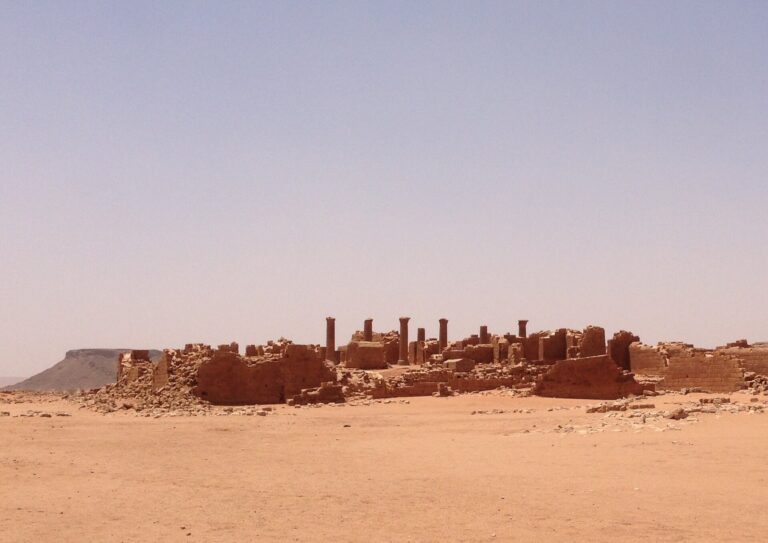
The archaeological area occupies the Butana plateau, where smaller seasonal channels flowing toward the Nile meet the Wadi Awateib, a drainage valley that comes from the plateau’s centre. The ruins include an urban settlement, burial areas, and several temples. The Temple of Amun and the Temple of Apedemak form part of a landscape that also includes smaller buildings and temples on the slopes and at the foot of the sandstone cliffs of Gebel Naqa.
Temples and carved monuments
Temple of Amun
Built of sandstone, the Temple of Amun extends about 100 m along an east-west axis. Wind erosion has worn its stone. Its plan includes an outer court, a row of ram sculptures, and a column-supported hall leading to the inner sanctuary. Relief carvings decorate the principal entrances and walls, and several statues of Natakamani are associated with the temple.
The sanctuary contained a well-preserved painted altar bearing sacred images and inscriptions naming Natakamani and Amanitore. Inscriptions also give the names of sculptors and statue makers. The sanctuary yielded another statue of Natakamani and a commemorative upright stone monument for Queen Amanishakheto. Its front has a worn carving of the queen with Apedemak, while Meroitic hieroglyphs, the writing system of the Kingdom of Meroë, cover its sides and back. The writing remains undeciphered, and the monument is regarded as a notable example of Meroitic art.
Temple of Apedemak
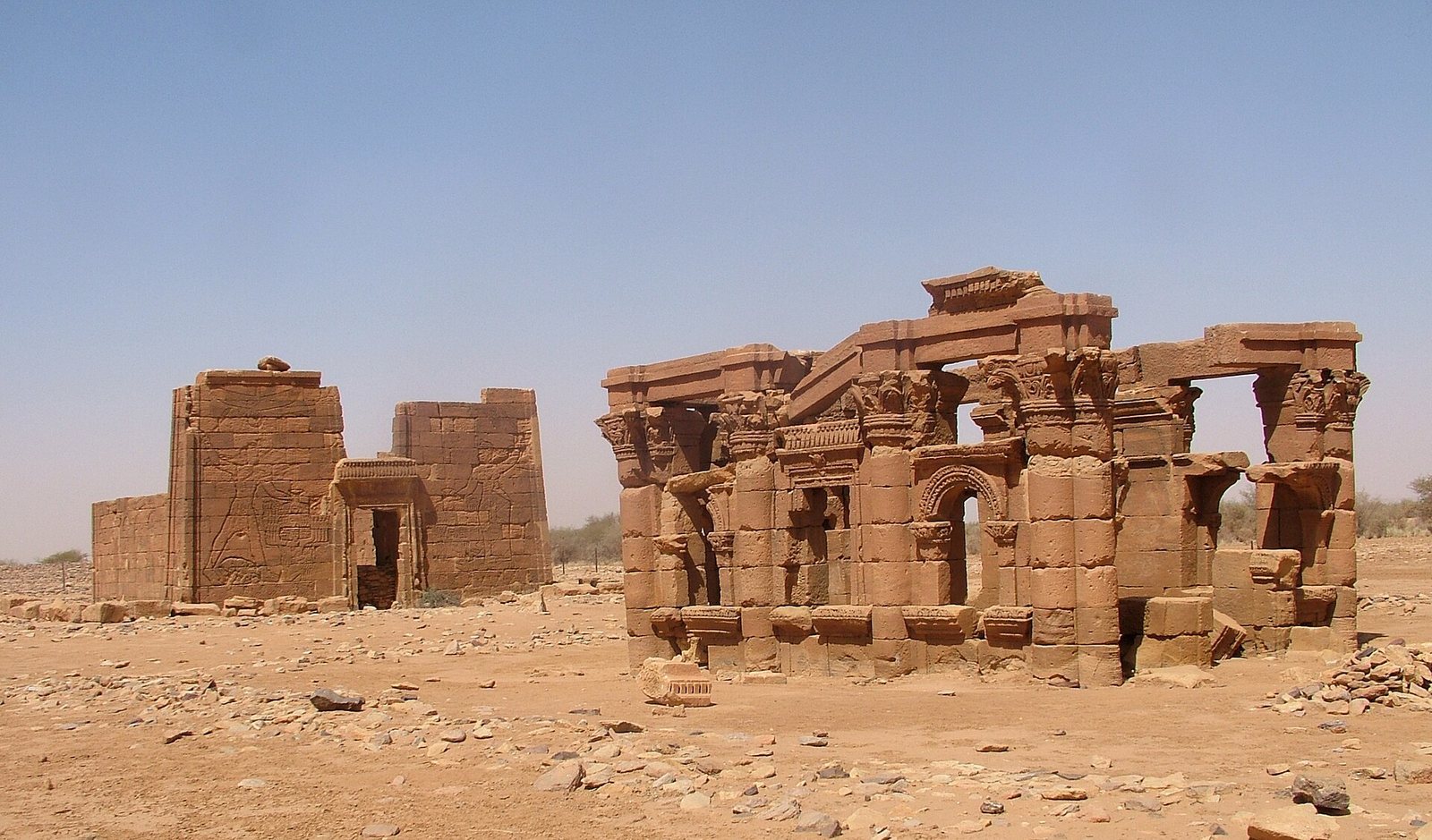
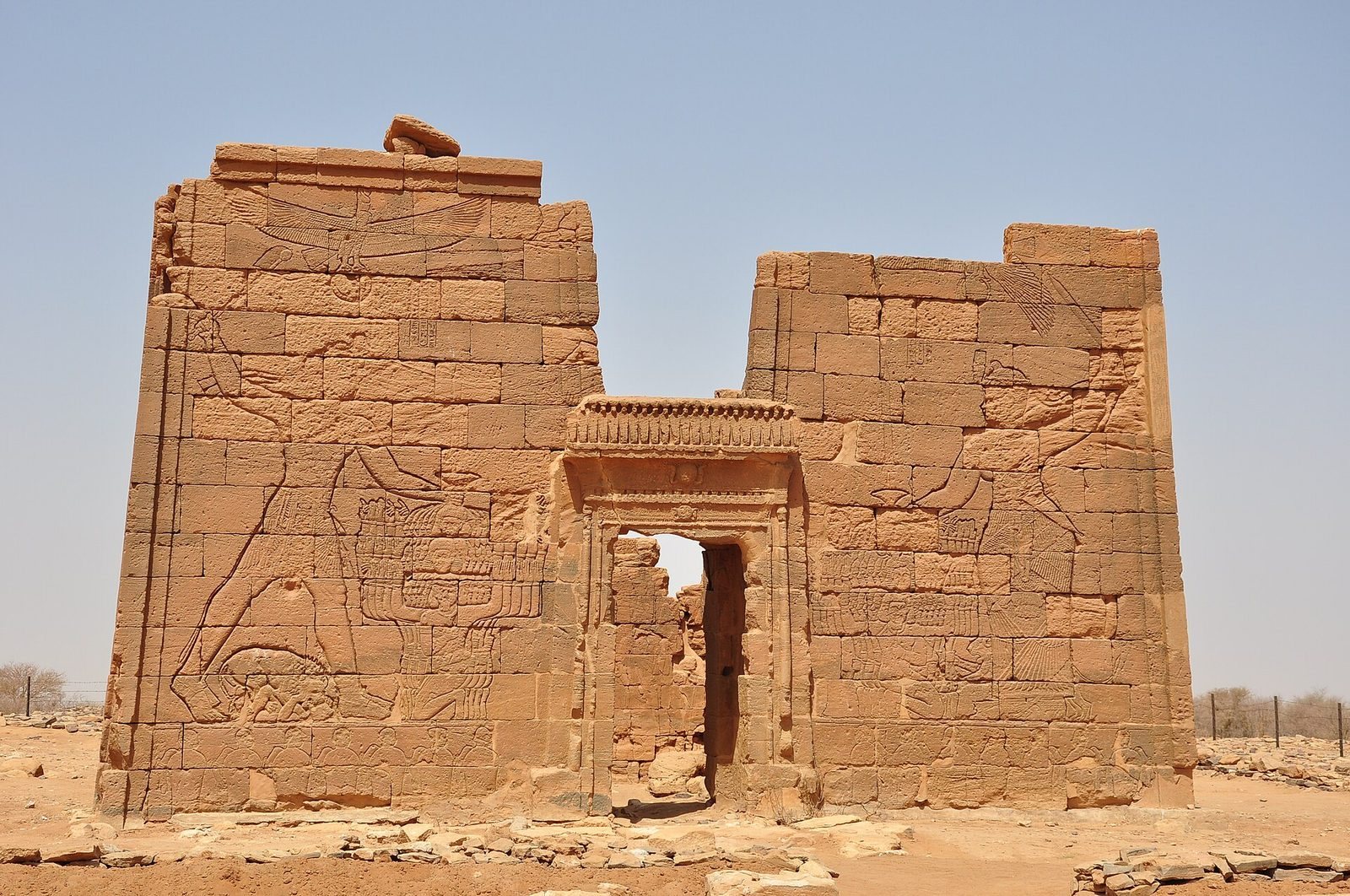
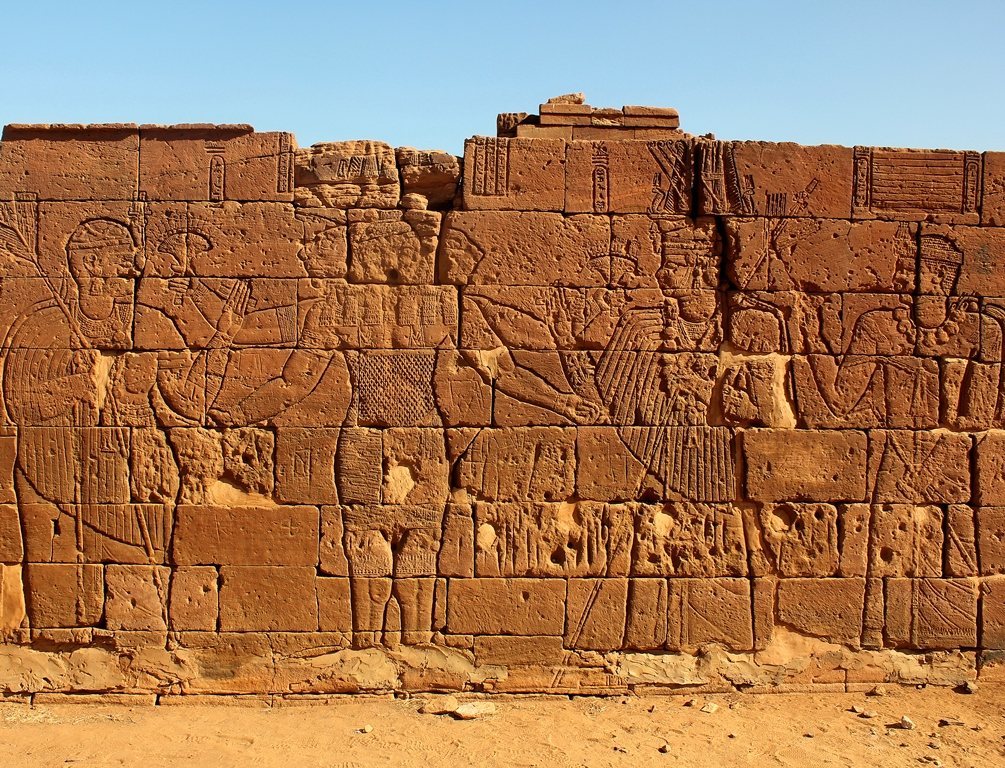
West of the Temple of Amun stands the Temple of Apedemak, also known as the Lion Temple and regarded as a classic example of Kushite architecture. Its broad gateway shows Natakamani and Amanitore with captives and lions at their feet. Other carvings portray the queen with a sword and the king with an axe; the captives’ identities are uncertain. At the edges of the façade, Apedemak appears as a serpent rising from a lotus flower.
Carved scenes on the side walls show Amun, Horus, and Apedemak before the king. On the rear wall, Apedemak is shown with three heads and four arms, receiving offerings from the king and queen. The north front depicts the Egyptian goddesses Isis, Mut, and Hathor, the Kushite goddess Amesemi, and Satet, an Egyptian goddess associated with the Nile. Inside are a bearded sculpture of Serapis, a deity worshipped in the Greek and Roman worlds, and a crowned divine figure whose identity is unknown and whose origin may be Persian.
The building combines Egyptian architectural features with Kushite artistic conventions. Natakamani and Amanitore are represented with rounded heads and broad shoulders, while Amanitore is also shown with notably wide hips. Early visitors proposed that the serpent and lotus imagery reflected Indian influence and trade through Adulis, an ancient Red Sea port in present-day Eritrea; later analyses rejected that interpretation.
Roman kiosk
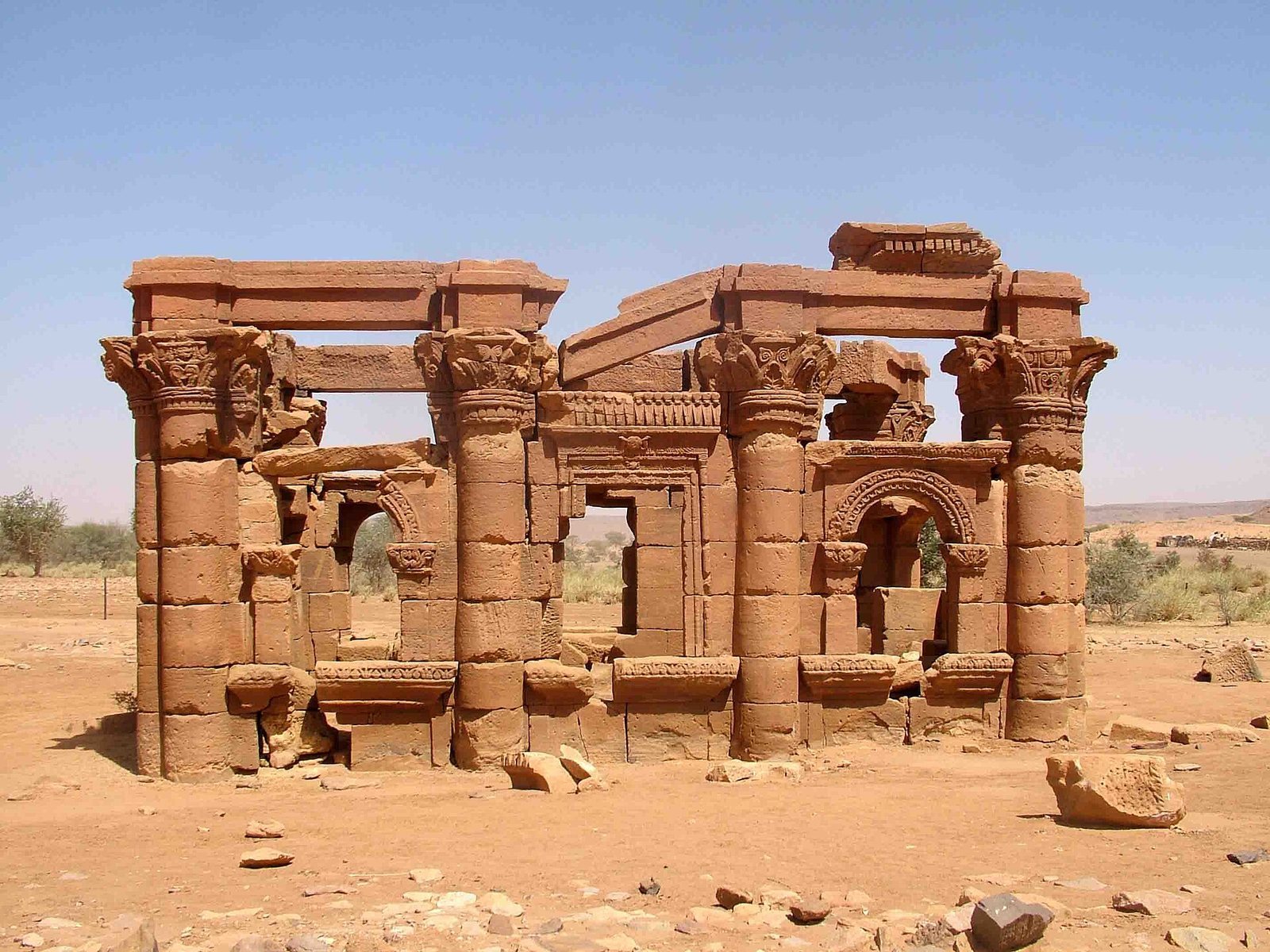
A small temple known as the Roman kiosk stands near the larger temples. Its architecture combines Hellenistic, or Greek-influenced, and Roman features with an Egyptian-style entrance. The entrance lintel bears sacred cobra emblems; Corinthian columns, with ornate leaf-decorated capitals, flank the sides, alongside arched Roman-style windows. An Isis statue found during excavation supports the suggestion that the building was probably dedicated to Hathor.
Temple 500
Temple 500 stands at the foot of the sandstone cliffs of Gebel Naqa and is poorly preserved. Its carved reliefs indicate dedication to Amun, Mut, Khonsu, and Apedemak. The temple walls bear Meroitic hieroglyphic inscriptions, considered the oldest known examples of that writing.
Naqa 200
Naqa 200 is a smaller temple dedicated to Amun, lying immediately south of the main Temple of Amun on the slope of nearby Gebel Naqa. Its complex comprises a resting place for a sacred ritual boat, an open kiosk, and a rectangular temple with a monumental gateway formed by two towers. The low-relief carvings have been heavily eroded, in places leaving only figures’ feet visible, but images of Amun and Apedemak can still be identified.