St Lawrence’s Church, Broughton: A 14th- and 15th-Century Gothic Church
Site at a Glance
- Popularity
- Low
- Country
- United Kingdom
- Primary era
- Medieval
- Eras represented
- Medieval, Early Modern, Modern
- Civilizations
- British, English
- Site type
- Religious
- Remains
- Church
On this page12 sections
History
Medieval foundation and construction
St Lawrence’s Church, Broughton, is an Anglican church in Broughton, Milton Keynes, England, United Kingdom. Its foundation is dated to 1350, and it was built during the 14th and 15th centuries in the Gothic style, a medieval architectural tradition characterized by pointed arches and elaborate tracery. Anglicanism is the Christian tradition historically associated with the Church of England. The church is dedicated to Saint Lawrence, a third-century Christian deacon and martyr.
Restoration and later care
A restoration in the 19th century included rebuilding the chancel. In 1849, medieval wall paintings were uncovered beneath plaster, where they had been concealed for about 300 years. Ernest William Tristram, an English artist and scholar of medieval art, restored the paintings in the 1930s.
The church was listed at Grade I, the highest category of listed-building status in England, on 17 November 1966, with its medieval wall paintings among the reasons for its recognition. On 1 August 1987, it was placed in the care of the Churches Conservation Trust, a charity that cares for historic churches no longer used for regular worship. The church is now redundant.
Remains
Plan and exterior
Layout and materials
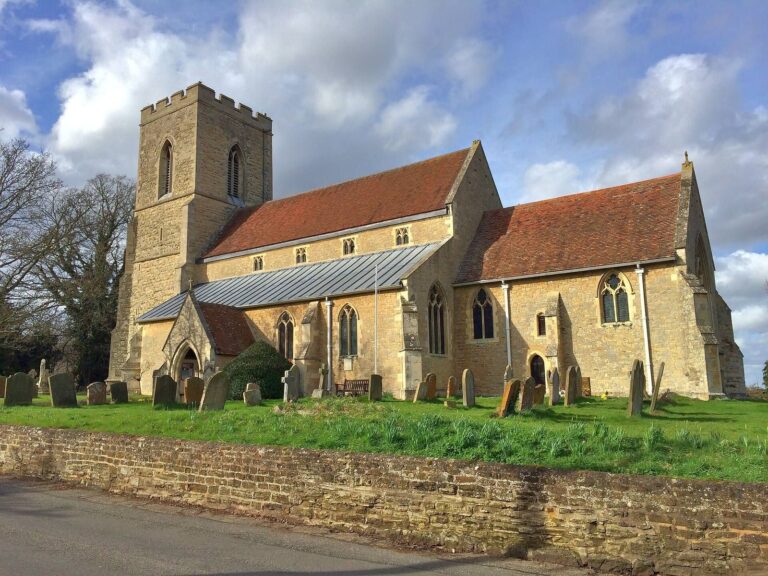
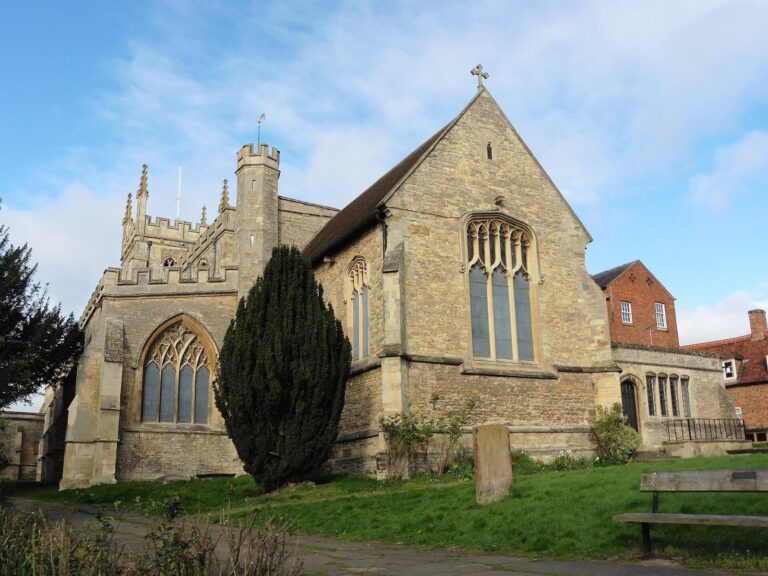
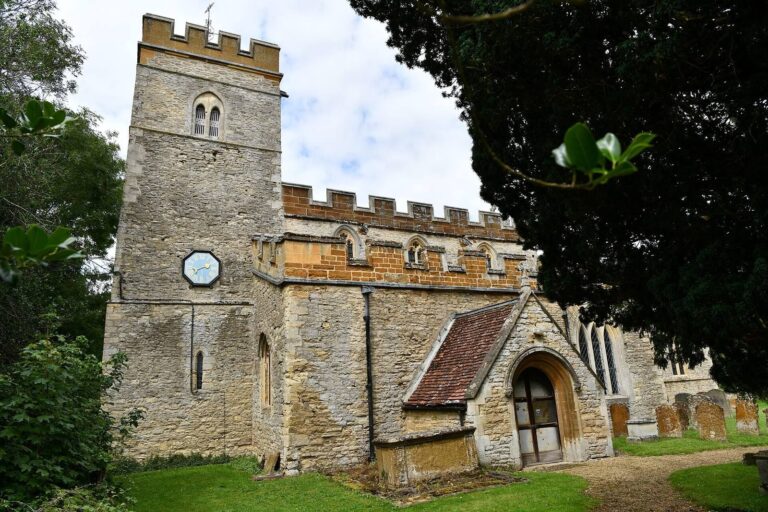
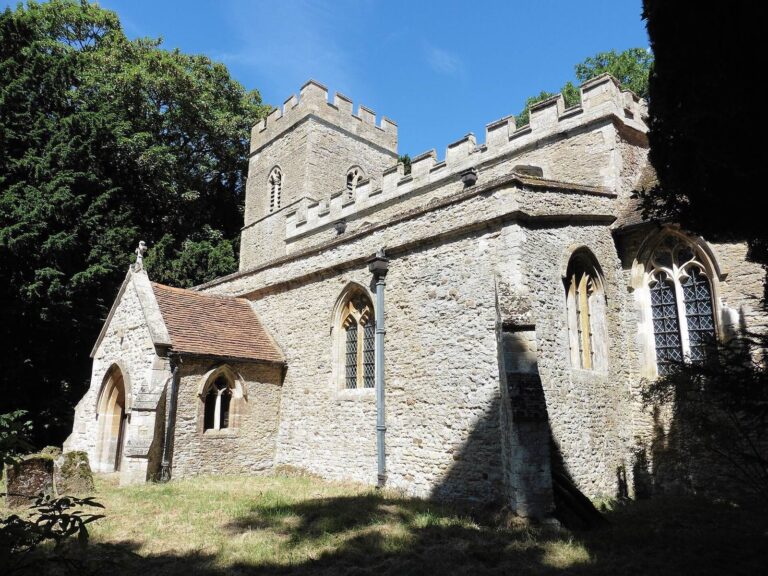
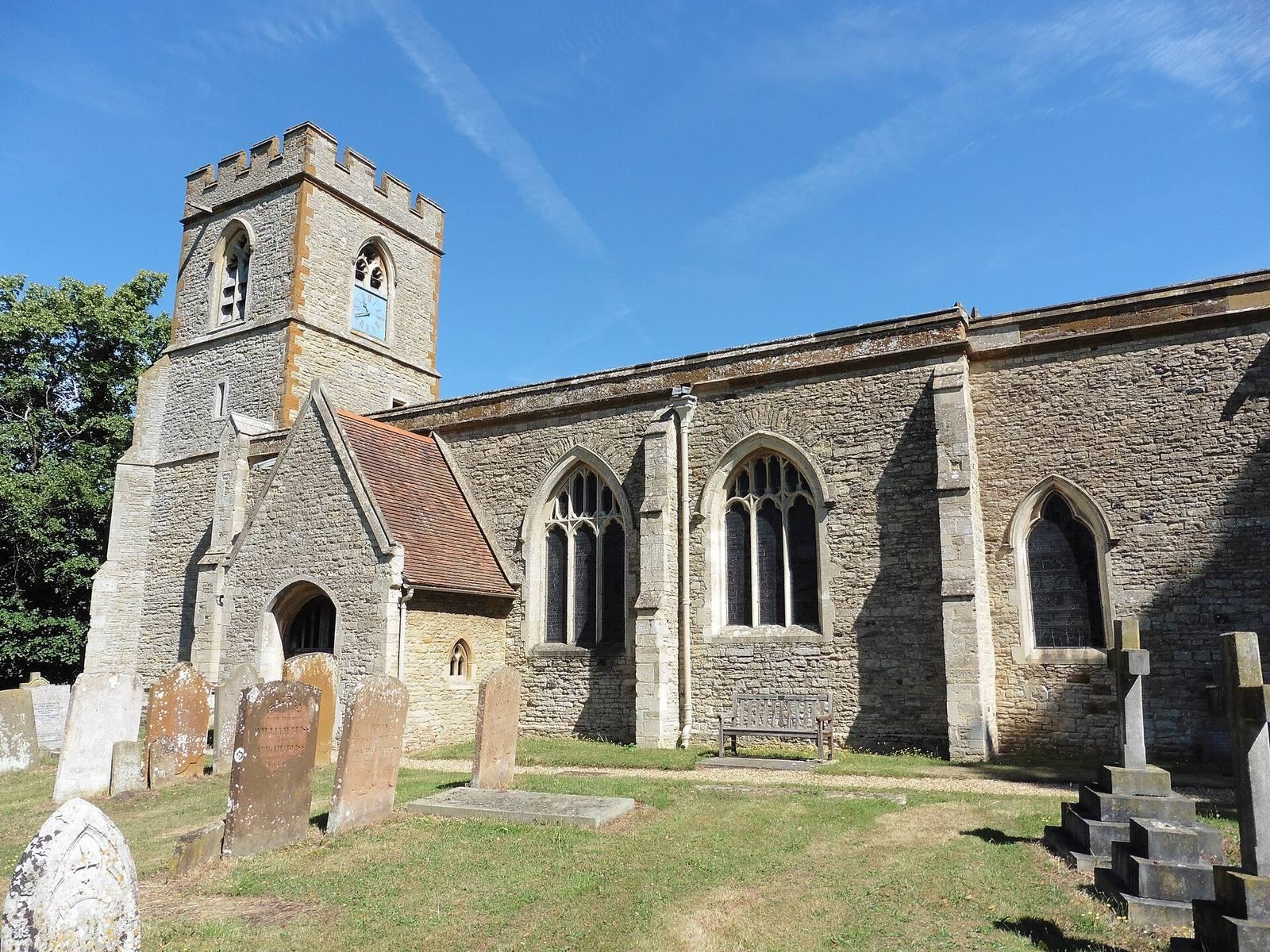
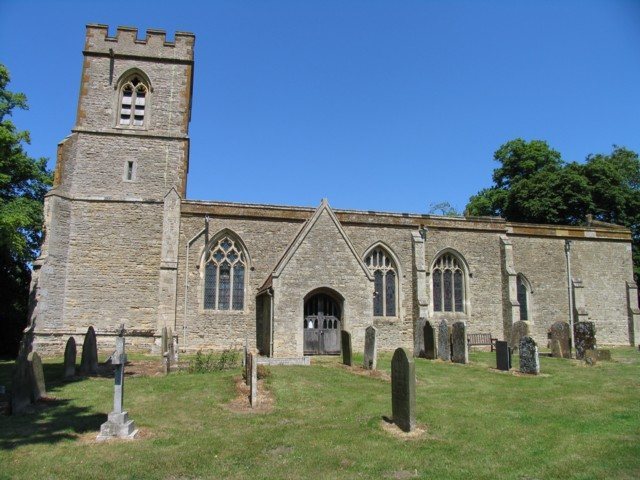
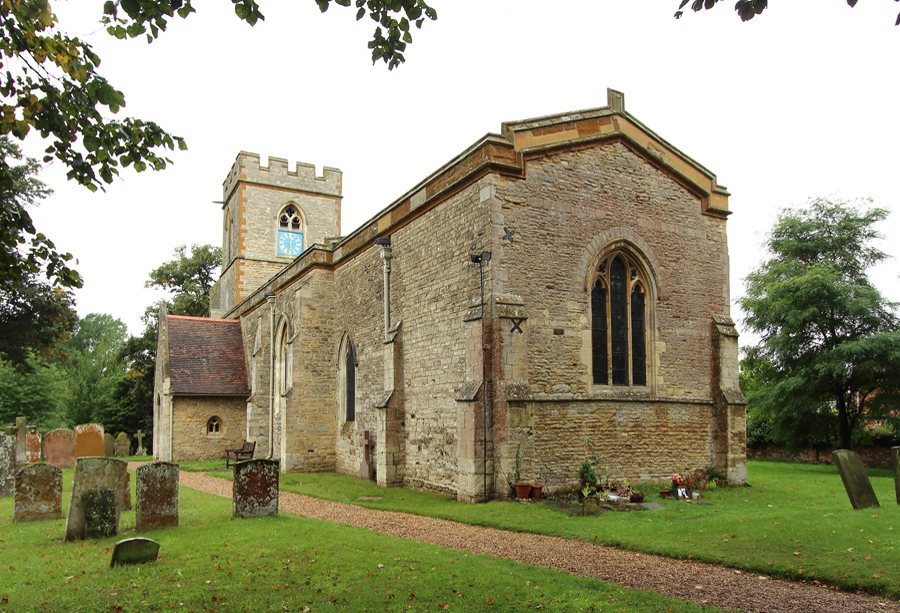
The church is built of stone, with lead roofs and plain parapets. Its plan consists of a nave without side aisles, a south porch, a chancel and a west tower.
Tower, windows and access
The tower rises in three stages, with diagonal buttresses and a parapet shaped with alternating raised and lowered sections. On the south side are three windows, each divided into three sections. West of the porch is a 14th-century window with reticulated tracery, a net-like pattern of stone ornament; east of it are two windows in the Perpendicular style, a late medieval English Gothic style marked by strong vertical lines. A staircase on the north side leads to the rood loft, an elevated gallery associated with a representation of the Crucifixion.
Medieval wall paintings
The nave paintings date to about 1400. On the south wall, Saint George, whose legend includes slaying a dragon, is shown with the creature; his head was lost in the 15th century when the ceiling was lowered. The north wall has a Doom painting, depicting the Last Judgment, and a Pietà, showing Mary mourning the dead Christ. Both were intended as warnings against swearing. Other paintings depict Saint Helena, a Roman empress associated in Christian tradition with the discovery of the True Cross, and Saint Eligius, a seventh-century bishop known for his metalworking.
Fittings and memorials
Pulpit and memorials
The pulpit dates from the late 17th or early 18th century. Beneath the altar are black marble memorial stones. Other memorials include fragments of 14th- and 15th-century brasses, engraved metal memorials, and a 17th-century wall monument.
Stained glass
The east and south windows of the chancel contain stained glass by Kempe, dating to 1894. A south window in the nave has stained glass by A. Gibbs, installed in 1864.
Bells
The church has four bells, which can no longer be rung. The two oldest were cast about 1470 by William Chamberlain. James Keene cast another in 1622, and Anthony Chandler made the fourth in 1655.