Toro Muerto: A Pre-Inca Rock-Art Site in Peru
Site at a Glance
- Popularity
- Medium
- Country
- Peru
- Primary era
- Medieval
- Eras represented
- Medieval
- Civilizations
- Wari
- Site type
- Civic
- Remains
- Rock Art
On this page10 sections
History
Toro Muerto is a pre-Inca rock-art site in the Majes Valley, within Uraca and Aplao districts of Peru’s Arequipa Region. One chronology dates its engravings to AD 800–1000, around AD 900, while a broader proposed span runs from AD 500 to 1200. The carvings are associated with Wari, also called Huari, an Andean civilization that flourished around AD 600–1000. Other attributions link them to the Collaguas and Chuquibambas, pre-Inca groups of the southern Peruvian Andes, followed by Huari groups.
Before the Spanish conquest, the Majes Valley connected the highlands and the coast. Permanent underground water in the valley provided moisture in the surrounding desert.
Recognition and early investigation
Peruvian researcher Eloy Linares Málaga and German archaeologist Hans Dietrich Disselhoff brought Toro Muerto to scholarly attention in the early 1950s. Linares Málaga later proclaimed himself the site’s official discoverer and gave 5 August 1951 as the discovery date. Early records included photographs, hand-drawn copies of some engravings, and a plan of the southern area. Disselhoff presented the site at a German conference in 1954 and published an account the following year.
In 1965, French archaeologists Paule Barret-Reichlen and her husband, Henry Reichlen, investigated the southern area and recorded 190 engraved rocks. In the late 1970s, Cuban geographer and diplomat Antonio Núñez Jiménez undertook extensive photography; the project archive is held by the Antonio Núñez Jiménez Foundation for Nature and Man in Cuba.
Mapping, interpretation, and heritage status
In 1998, the Arequipa regional office of Peru’s National Institute of Culture made a detailed topographic map, marked the site boundaries, and inventoried about 2,000 rocks. In 2000, Muriel Pozzi-Escot photographed and documented 1,151 rocks in the central area.
From 2003 to 2018, Dutch researcher Maarten van Hoek examined the interpretation and dating of some motifs, as well as how the engravings were made. Between 2008 and 2016, Daria Rosińska of the University of Wrocław and researcher Luis Héctor Rodríguez Díaz studied the landscape and its cultural features. In 2015–2016, Karolina Juszczyk and Abraham Imbertis Herrera inventoried another 1,650 rocks. Their work produced the first orthophotomap, a geometrically corrected photo map at consistent scale, of the southern and central areas, along with 3D models and tracings of the carvings.
Peru’s Ministry of Culture declared Toro Muerto national cultural heritage on 29 January 2002. On 5 August 2019, UNESCO added it to its Tentative List for possible future nomination as a World Heritage site.
Remains
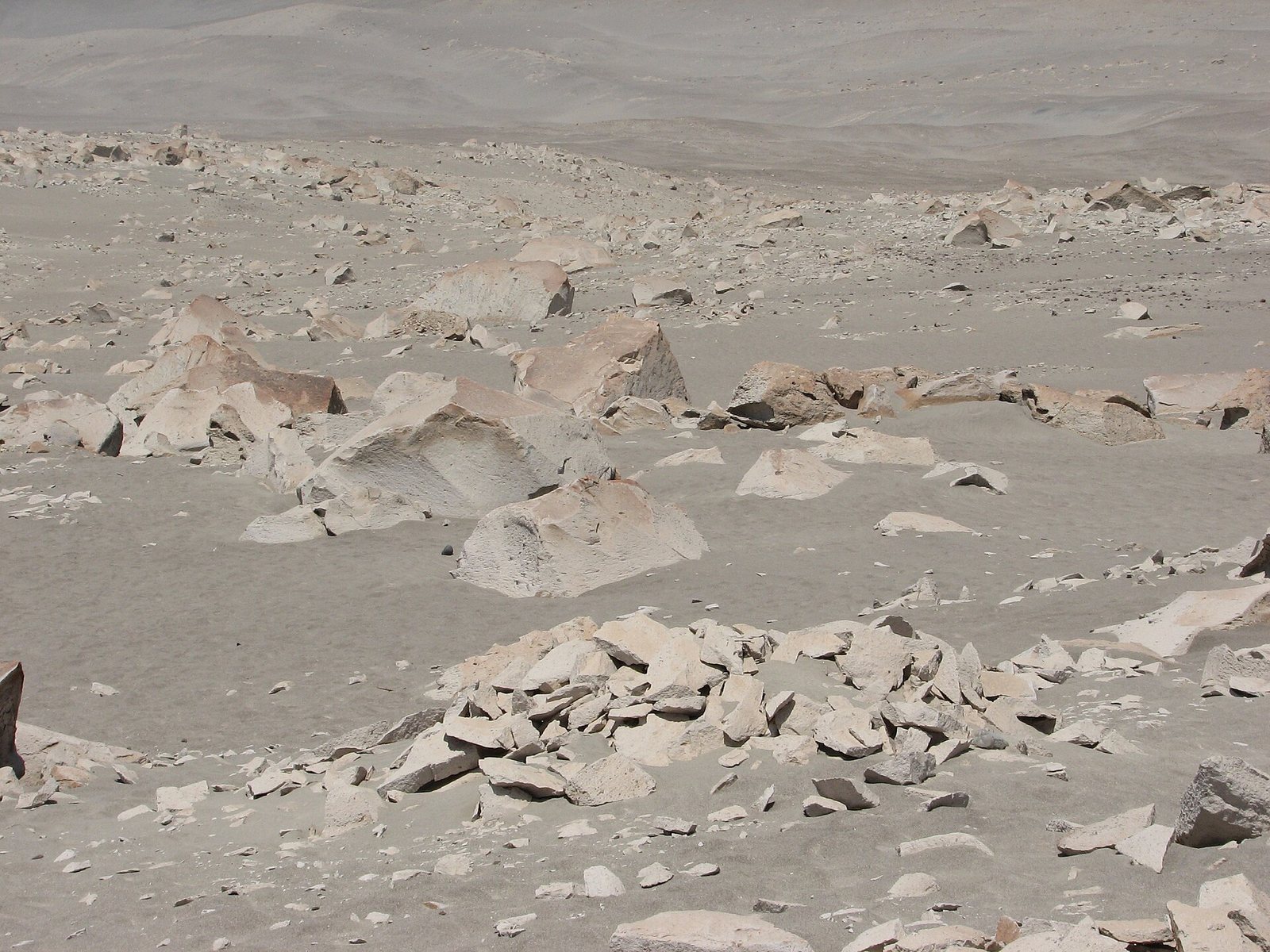
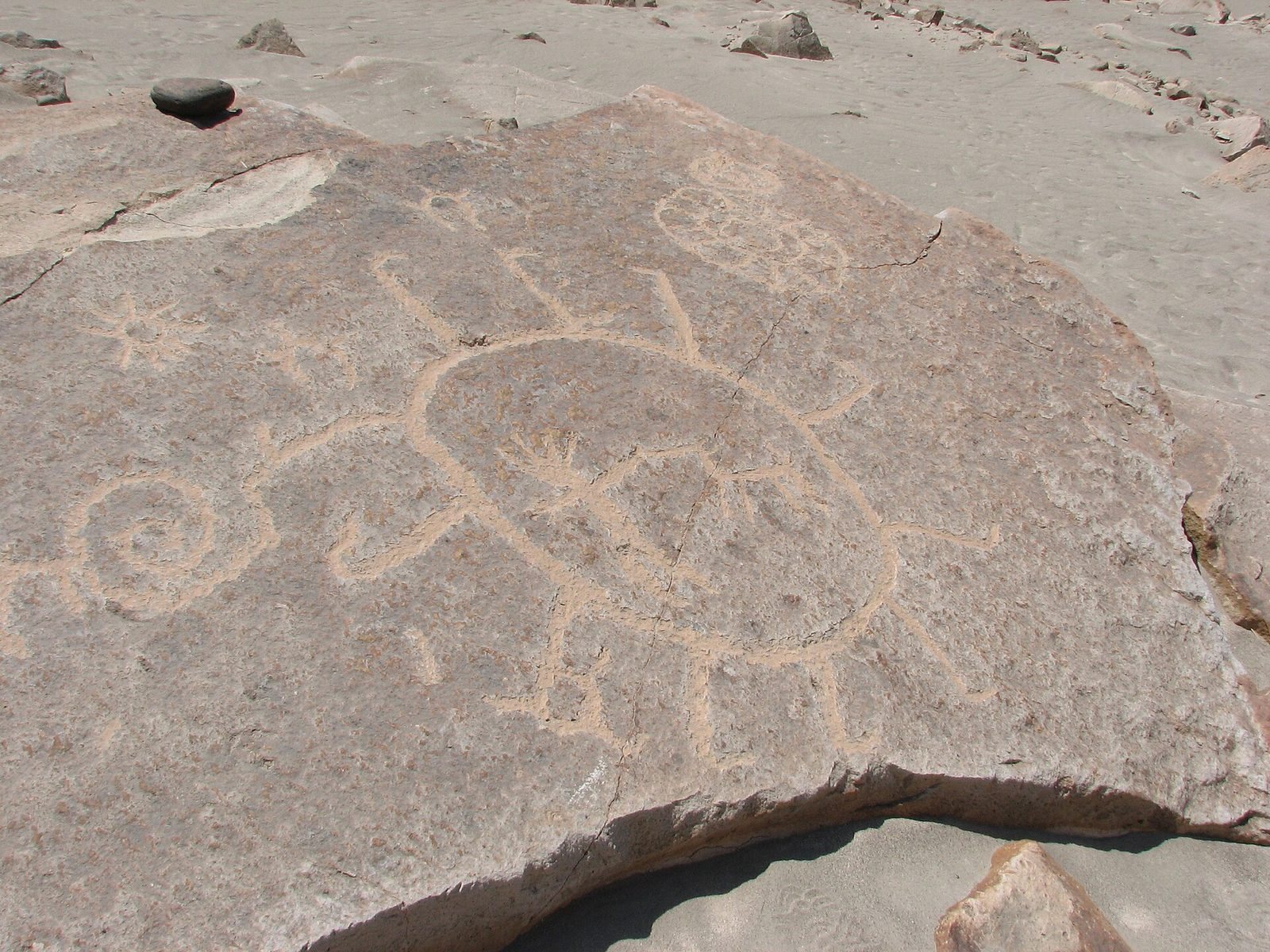
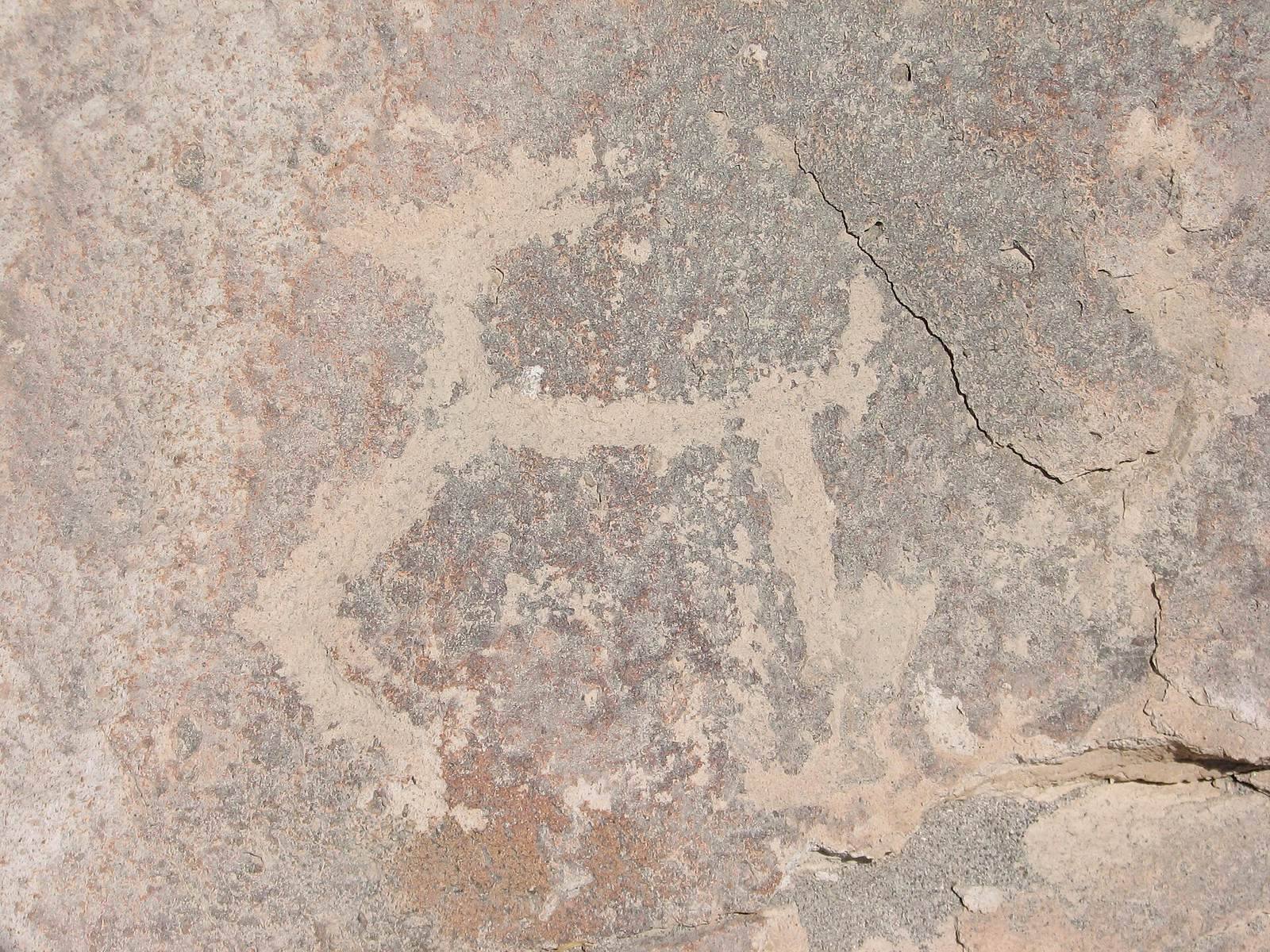
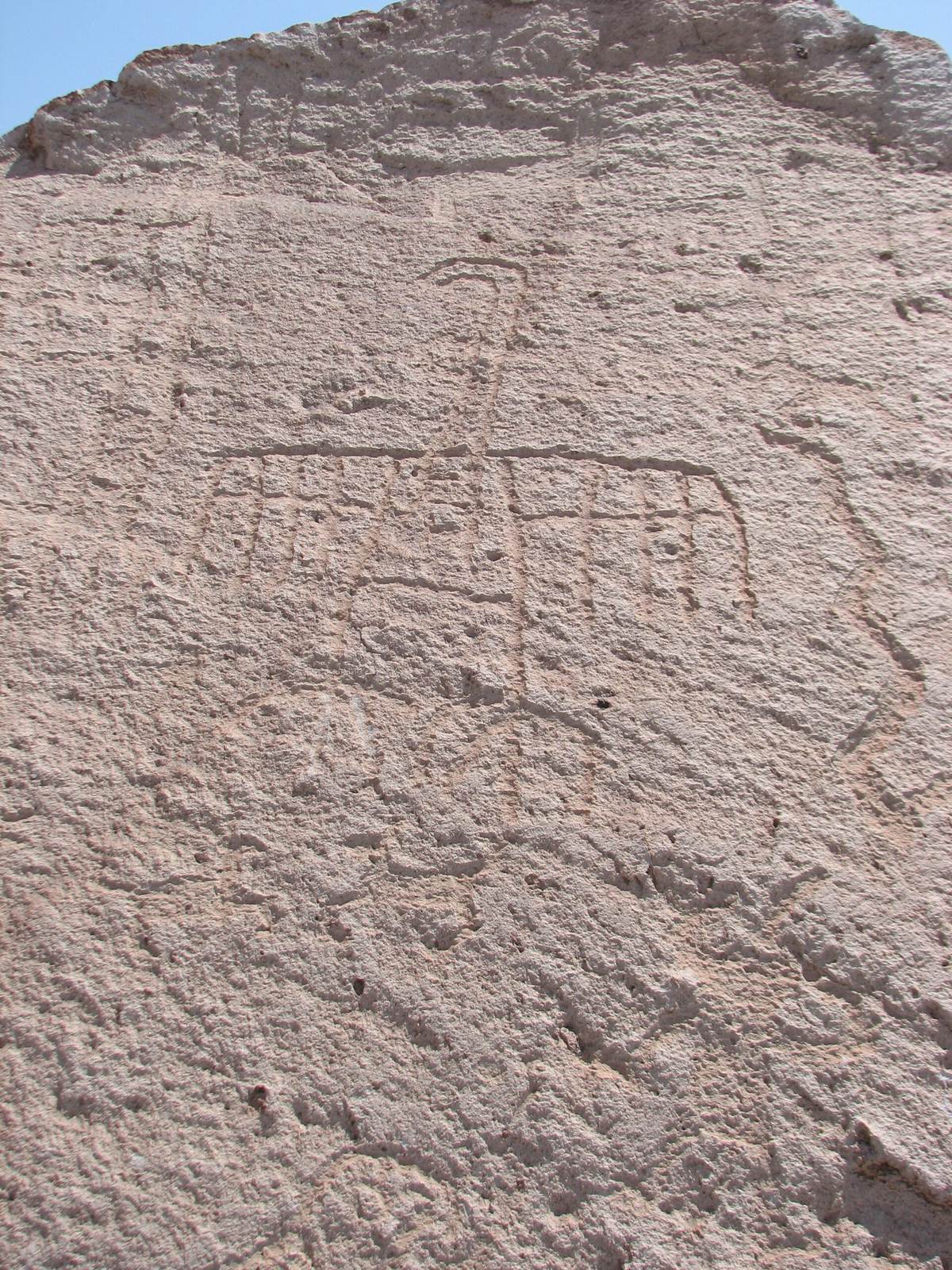
The site extends across several square kilometres of a desert ravine in the Majes Valley, at elevations of about 400–800 metres. The central area has the greatest concentration among roughly 3,000 engraved volcanic rocks, with estimates for the site reaching as many as 6,000. Volcanic stone is abundant in the area, a feature linked to the nearby Chachani and Nevado Coropuna volcanoes. The engravings were cut deeply into the rock by striking through an intermediate tool, as well as by scraping. Their tones range from dark brown, almost black, to light sepia and creamy white.
Engraved imagery
Human figures
Human images include men with trophy heads or cut throats, and figures wearing feather-shaped or radiant headdresses. Some have exceptionally large hands, masks or bodily adornments, garments marked with wavy lines, or serpentine shapes emerging from the armpits. Other figures hold camelids or display the phallus. One person touches a bird with the left hand, while other people dance hand in hand. Some figures have enormous fingers on all four extremities.
Animals
Animal carvings depict spotted and unspotted felines, birds at rest or in flight, fish, snakes, and lizards. South American camelids, including llamas and alpacas, appear alone, with herders, inside circular corrals, or nursing their young. In caravan scenes, one animal’s muzzle is joined to the tail of the next.
Crosses and geometric designs
Cross motifs include Greek crosses, whose four arms are equal in length. Some have a central square and dot, others contain rays, and further designs show hooked blades or concentric crosses. Geometric carvings include squares enclosing circles, squares containing a cross filled with dots, circles joined by straight lines, and sun-like forms with a central dot.
Wider landscape
The site’s wider archaeological landscape includes cemeteries, paths, resting places, and traces of irrigation canals.
Stone tools
The 1965 investigation recovered stone tools, some of which may have been used to make the engravings. They are held at the Musée du quai Branly in Paris and the National Museum of Archaeology, Anthropology and History of Peru in Lima.