Tuchenn Pol: A Megalithic Burial Mound in France
Site at a Glance
- Popularity
- Very Low
- Country
- France
- Primary era
- Stone Age
- Eras represented
- Stone Age
- Civilizations
- Unclassified
- Site type
- Burial
- Remains
- Burial Mound
On this page9 sections
History
Prehistoric use
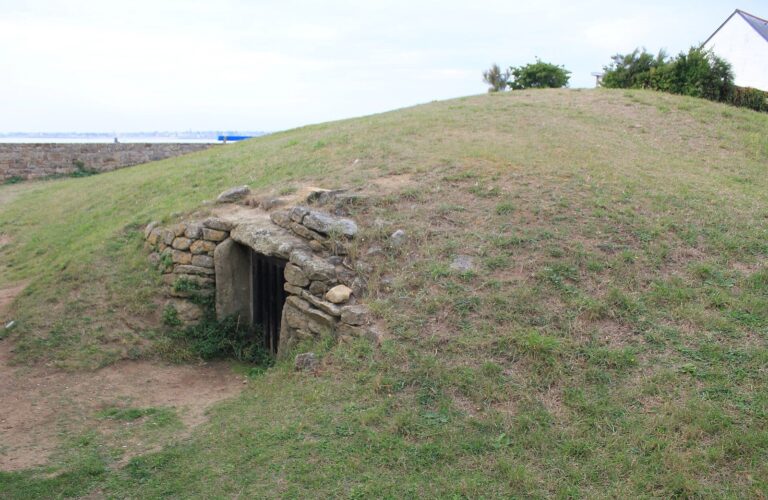
Tuchenn Pol is a megalithic burial mound at Ploemeur in Brittany, France, associated with pottery from the Middle Neolithic. It belonged to a prehistoric group of burial mounds and a circular stone monument. The circle may date to the Early Iron Age, perhaps the sixth century BC, but its date is uncertain. Inhumation, or burial of the body, remained prevalent in western Brittany before Hallstatt D3 and La Tène A, two phases of the later prehistoric Iron Age.
Excavation and later damage
Commander Le Pontois, a French military officer and prehistoric archaeologist, excavated the three large mounds and the stone circle in 1891. The circle was investigated again in 2004, when excavation clarified its construction. The complex was damaged during the Second World War and by work at a nearby kaolin quarry. Only two of its three large mounds remain visible, and the site is now incorporated into a golf course.
Remains
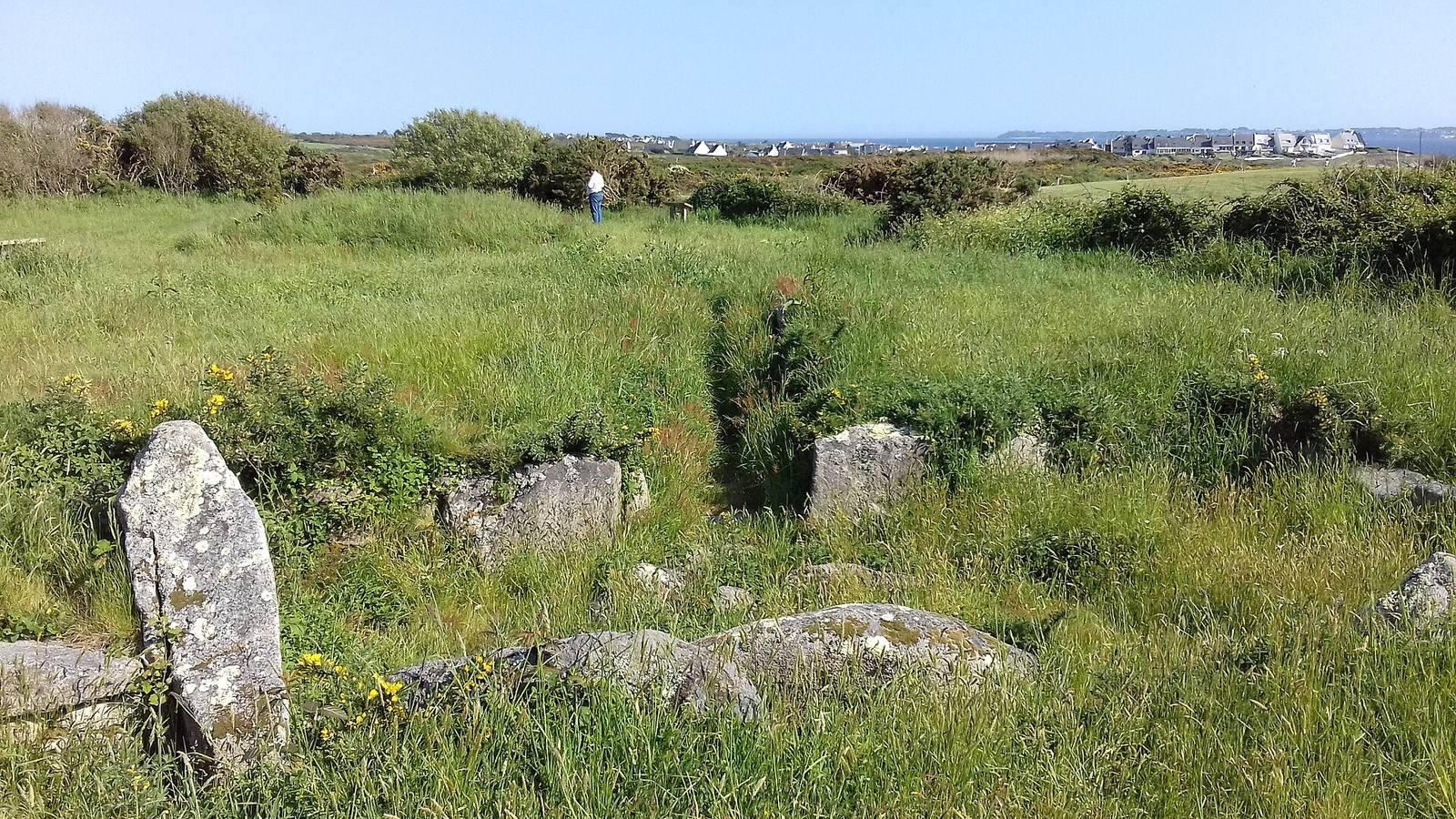
The archaeological complex lies on both sides of Route de Kerpape, about 350 m south of Kerham village. Its mounds were arranged along a line running from north-northeast to south-south-southeast. Tuchenn Pol is circular and measures approximately 27–28 m across.
Mound burial structures
Passage and chamber
Le Pontois’s survey recorded two burial structures within the mound. In the first, a passage about 4 m long and 1 m wide enters obliquely from the southeast and runs northwest to a rectangular chamber measuring 5.50 by 3.20 m. The chamber is aligned northeast–southwest, with a small cell at each of its northern and eastern corners. Both passage and chamber had paved floors, and the chamber had two paving levels.
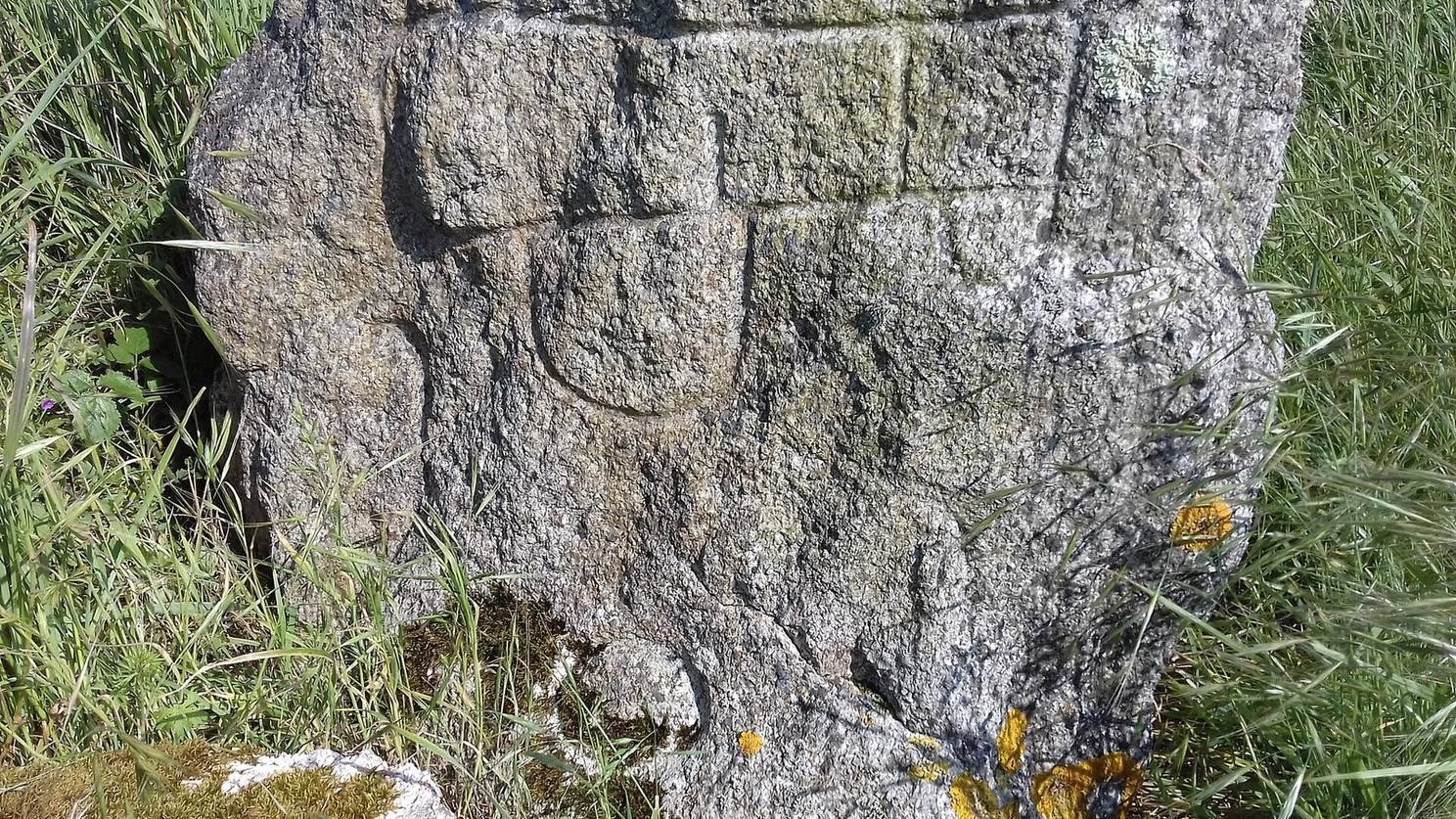
Five upright stone slabs, four in the main chamber, and a standing stone shaped to suggest a human figure bore carvings of axe-and-plough forms, crook-like motifs, and geometric designs. A stone with cup-shaped marks was also recorded. At least two carved stones were taken to a museum in Saint-Germain-en-Laye; stones left at the mound were later plundered.
Southwestern structure
The second structure lies southwest of the first and is incomplete. Its passage faces southeast, and its chamber was probably rectangular.
Circular stone monument
Le Pontois described this monument as two circles of small upright stones, about 8 m and 12 m in diameter, with a possible entrance on the east. A photograph made before excavation suggests that it stood no more than 1 m high. In 2004, excavation identified a circular facing wall, 8.20 m across, corresponding to the inner circle in Le Pontois’s survey. It survives to three courses, though part of its western quarter is destroyed. The medium-sized blocks measure 0.25–0.50 m long, with dressed sides and a pecked outer face. A central pit, 2.80 by 1.20 m and aligned northwest–southeast, may have resulted from Le Pontois’s excavation or may be a burial disturbed by that work. Less than 0.45 m of the monument remained after the 2004 excavation.
Excavated finds
The 1891 excavation recovered several polished axes, including two made of jadeite, and green callaïs beads, a stone commonly identified as variscite, that formed an 18 cm necklace. Other finds included a 275 mm flint blade from Grand-Pressigny, spindle whorls, and pottery sherds used to reconstruct two footless vessels. Some archaeological material is held at the National Archaeological Museum.