Vinger Church: A Wooden Parish Church in Norway
Site at a Glance
- Popularity
- Medium
- Country
- Norway
- Primary era
- Early Modern
- Eras represented
- Early Modern, Modern
- Civilizations
- Denmark–Norway, Norwegian
- Site type
- Religious
- Remains
- Church
On this page7 sections
History
The earlier church at Hov
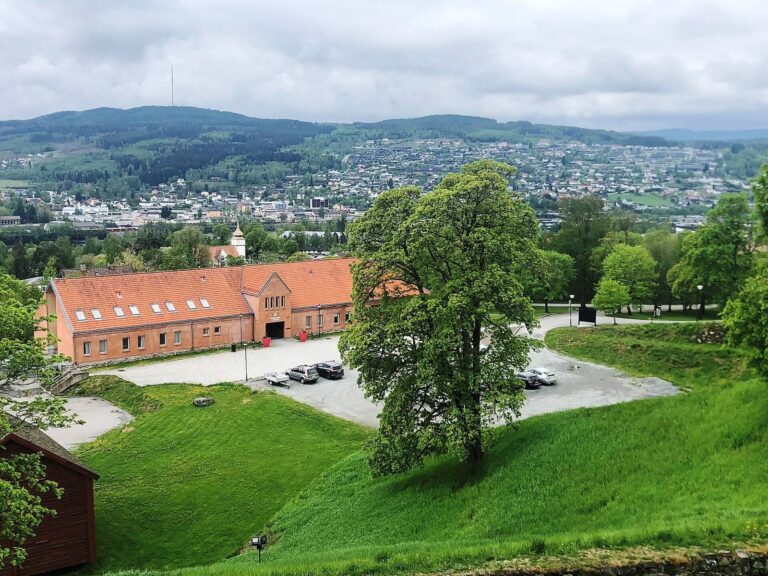
Vinger Church is a wooden parish church in Øvrebyen, Kongsvinger, Norway, built in 1697 near Kongsvinger Fortress. It replaced an older church across the Glomma River, whose flood-prone position had become inconvenient as the settlement grew on the river’s western side.
The first church at Vinger was probably a stave church, a medieval timber building supported by upright posts, erected in the twelfth century at Hov, about one kilometre from the present church. Written records mention it in 1227, but that is not its construction date. During the Catholic period, it was dedicated to John the Baptist. Vinger also served as a meeting point for pilgrims: one route followed the Glomma from the west, while another approached from Eidskog and Sweden before continuing north to Nidaros, the medieval name for Trondheim.
The older church began as a long building and, before 1676, gained two wings that gave it a cross-shaped plan. Its position beside the river left it vulnerable to repeated floods, with water sometimes rising three to four alen, a historical cubit-like measure, up its walls. Once the growing town developed around the fortress on the opposite bank, crossing the river could also be dangerous when the ice was unsafe.
Construction and public role
Plans for a replacement church took shape in the 1690s, and construction began in 1697 on higher ground closer to the town and fortress. Johan Nicolai Møllerup, commander of Kongsvinger Fortress, laid its foundation stone on either 4 or 7 June. Bishop Hans Rosing consecrated the church on 6 January 1699. It was first called the Church of Our Savior. Services transferred there, and the old church, left to deteriorate, had been demolished by 1730.
Vinger Church served as a garrison church, meaning it was used by a military garrison. In 1814 it also became a polling place for Norway’s first national elections. Voters chose electors, who then selected representatives to the Constituent Assembly at Eidsvoll, where Norway’s constitution was drafted.
Alterations and present role
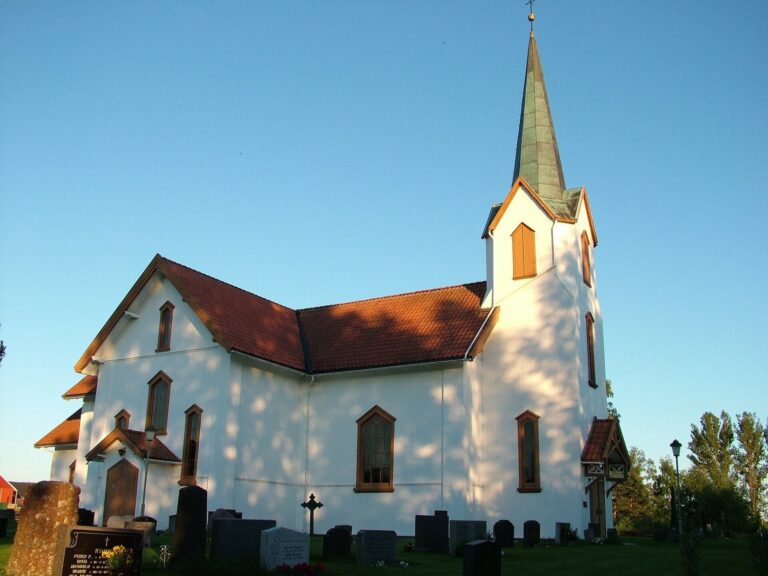
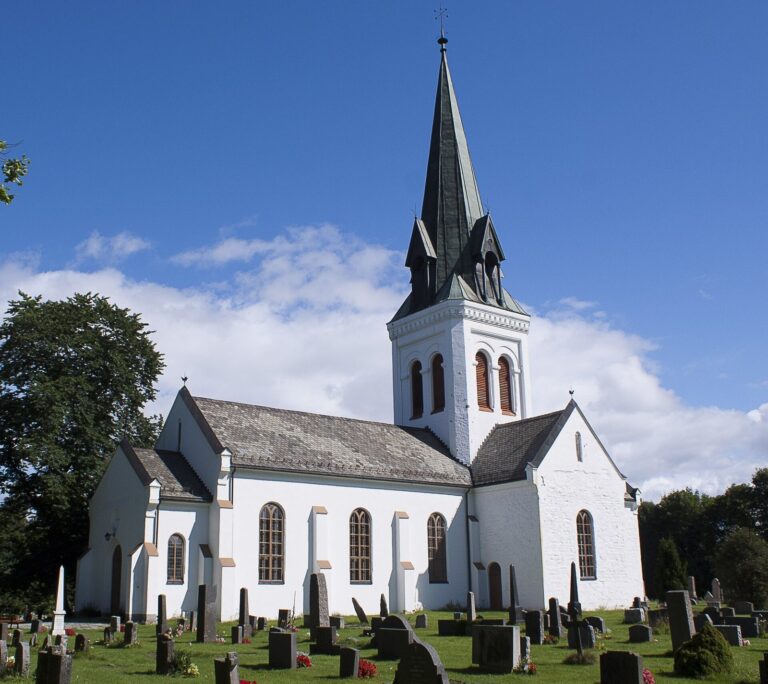
By the mid-nineteenth century the church was in poor condition and underwent renovation in 1854–1855. Its exterior changed from brown-red to white in 1868–1869, and further alterations followed in the 1890s and 1963–1965. The furnishings have also been replaced over time. The church serves Vinger Parish in the Solør, Vinger and Odal Deanery, within the Diocese of Hamar. It belongs to the Church of Norway and follows the Evangelical Lutheran tradition. The building is automatically protected as Norwegian cultural heritage.
Remains
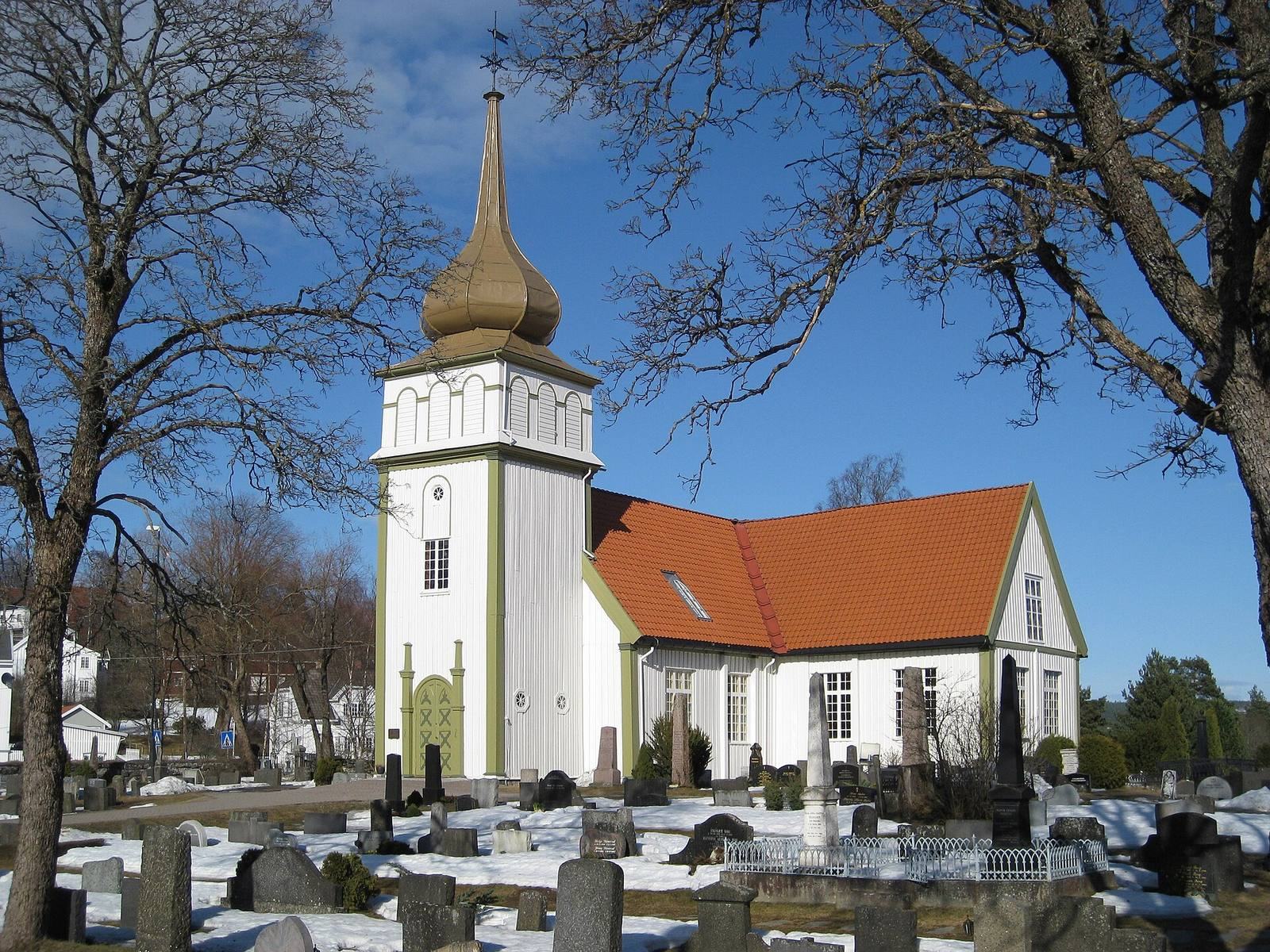
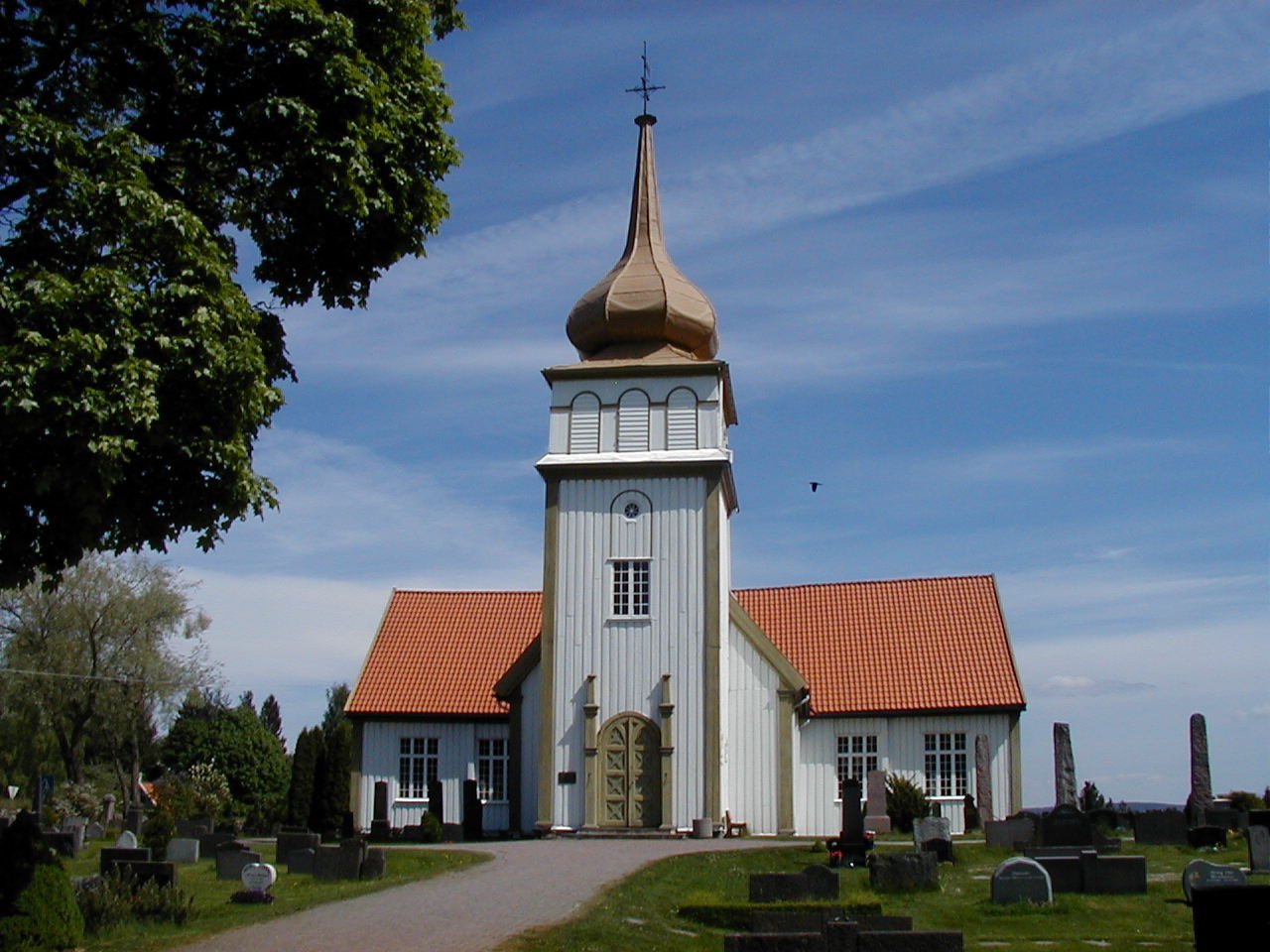
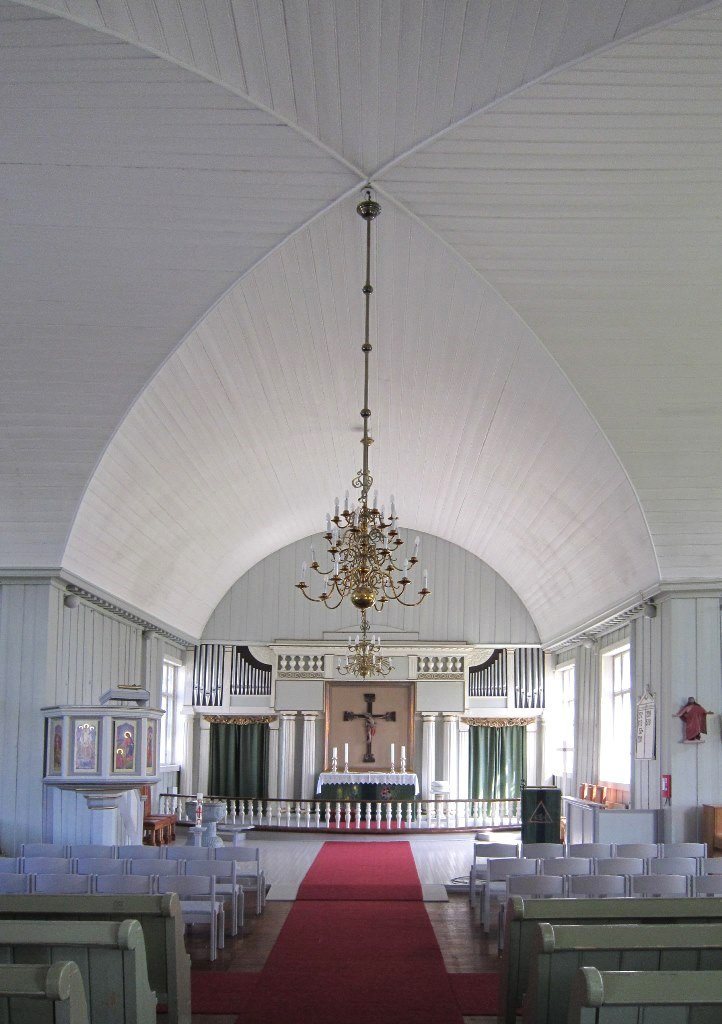
The church stands on high ground above the Glomma, just south of Kongsvinger Fortress. Its wooden structure has a cross-shaped plan, with log-built walls and timber-framed gables. A bell tower rises at the west end and is capped by an onion-shaped dome. The building has seating for 450 people.
Interior fittings
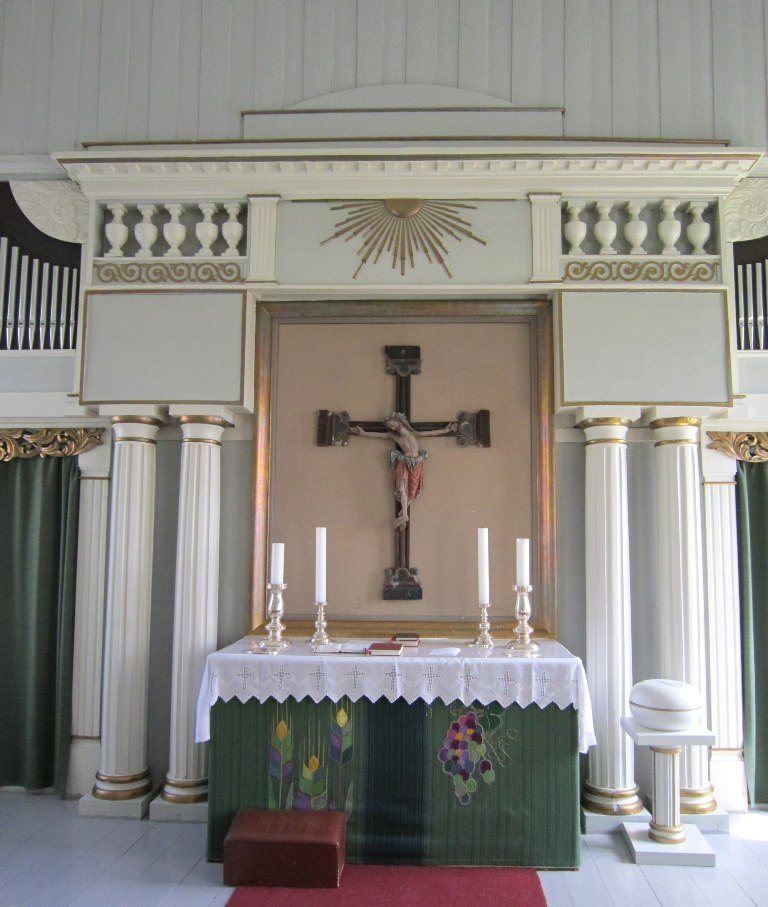
A soapstone baptismal font dates to approximately 1175–1250. The altarpiece consists of a crucifix set within a frame. An organ made by Ålems Orgelbyggeri entered use in November 2013.
Churchyard and adjoining grounds
A churchyard lies beside the church. To its north are a crematorium and an urn grove. Construction of the crematorium began in 1971; it came into use in 1973, was formally handed over in 1975, and was later enlarged. The space in front of the church, once used as a military drill ground, is now a parking area.